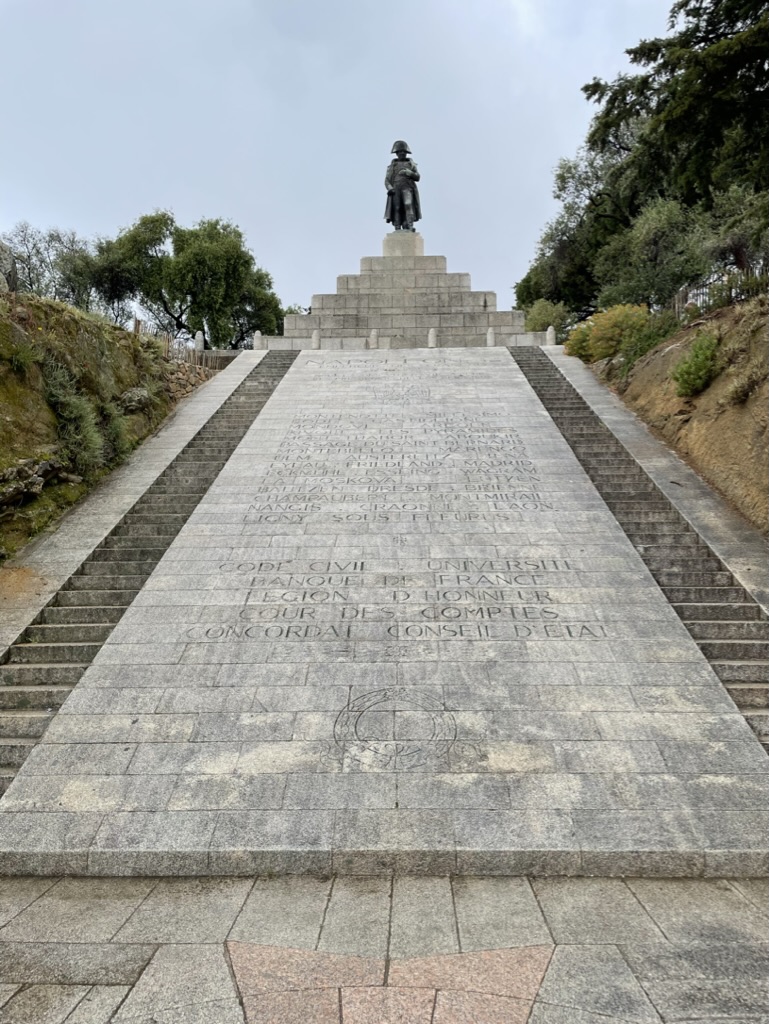
There’s a fellow here in Ajaccio, the capital of Corsica and the birthplace of Napoleon Bonaparte, who dresses up like the former emperor and will pose for a picture with you for a few coins. An epaulet-less, tattered uniform and the trademark bicorne hat are his only costume and he looks like he needs a shower and a shave. He’s no match for the high-end impersonators you might find at other important historical sites and he comes across as more of a pest than anything. He’s essentially a beggar who wordlessly beckons you to take a picture by imitating Bonaparte’s famous pose (at attention, hand inside jacket) and I can’t imagine he’s sanctioned by the local historical society. You’d think, given the great number of tourists that pour through here, that the city would hire at least one portly, height-challenged man in full, historically accurate regalia to greet the throngs of Europeans and Americans leaving their cruise ship for a day on the town. (Believe me, the thought has crossed my mind to invest in the right costume and make some tax-free euros myself down on the wharf but I fear I’m too tall to pull off the act.) Ajaccio has got a pretty nice thing going here on many levels but they’ve let it go to seed in a way that’s a little disappointing. But let’s start from the start, when we arrived here in Corsica a couple of weeks ago.
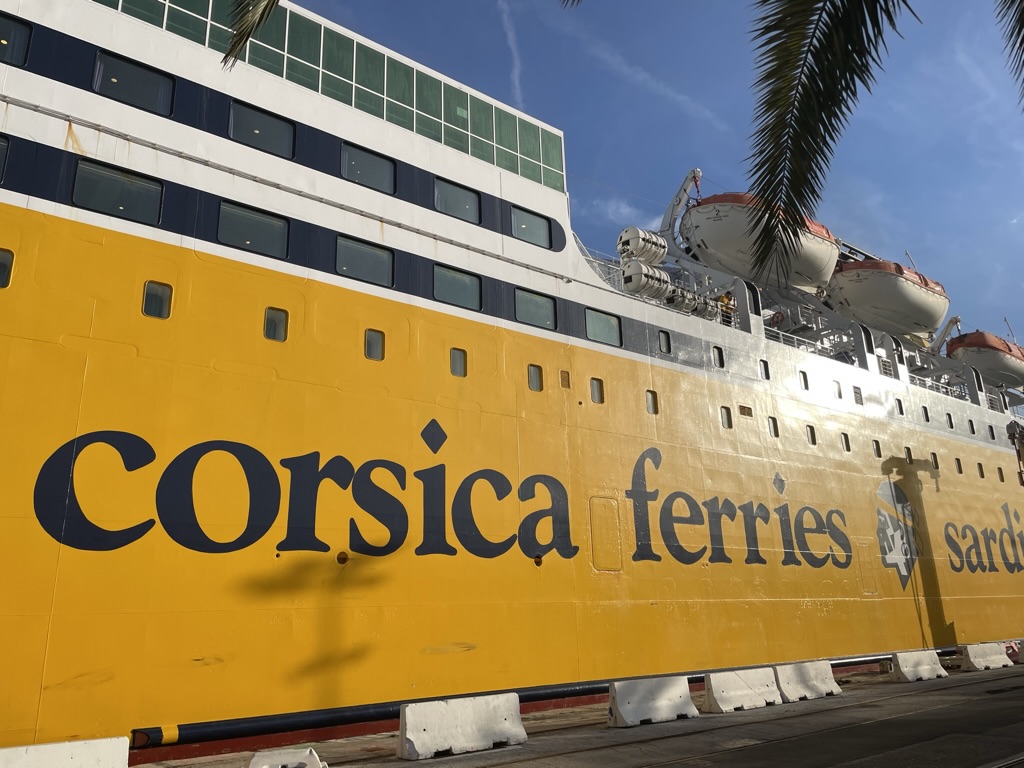
Looking back, I’m not sure why I chose to include Corsica, a large Mediterranean island that is part of France, in our itinerary: getting there requires an overnight ferry ride and I get seasick on anything from a kayak to a container ship. But I have long been intrigued by Corsica and Sardinia, these two large islands south of France and west of Italy: they always sounded so exotic and isolated and I figured it would be best to visit while we had the car — public transport is almost nonexistent on both islands. We ended up in Corsica not because we found an interesting apartment to rent there but really because it was the shorter ferry ride from our prior stop in southern France. As soon as I booked the crossing — an 11-hour journey — I got a prescription for a Scopolamine patch from my doctor since it’s the only drug that keeps my mal de mer under control.
Ajaccio was an anomaly for our trip: I’d been trying to avoid cities early in our trip, preferring outlying areas to make best use of the car, but this was a big port — and tourist — city, a huge change from our rural outpost in Provence. I figured the urban setting would be a good contrast and help us decide which we ultimately preferred.
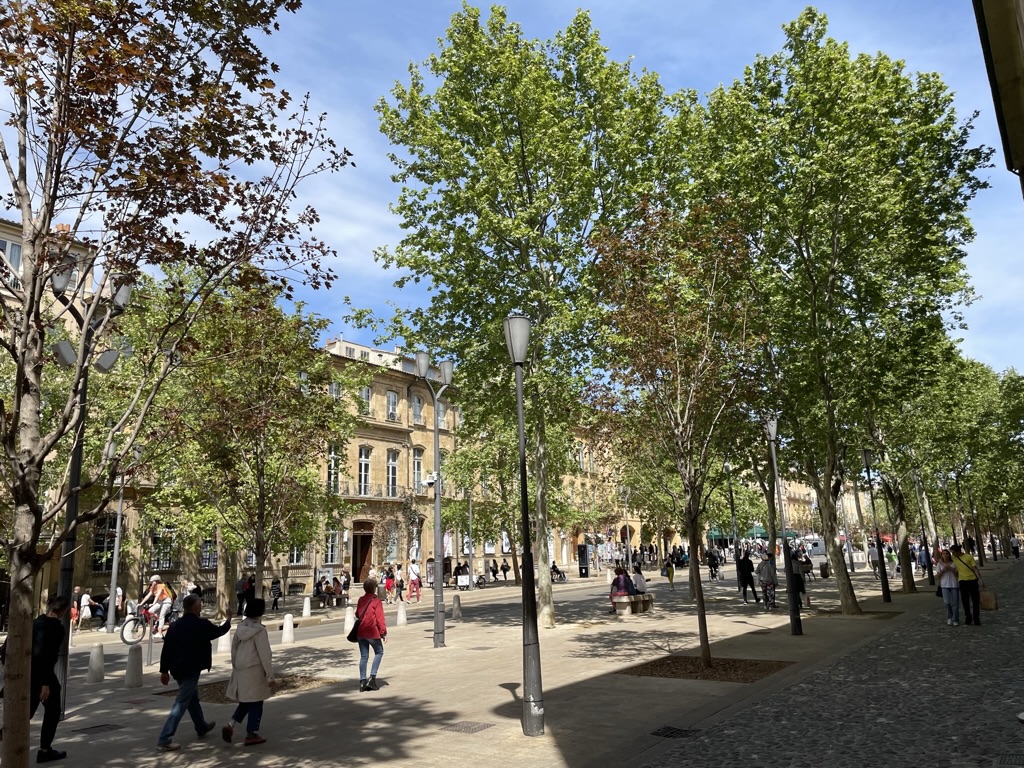
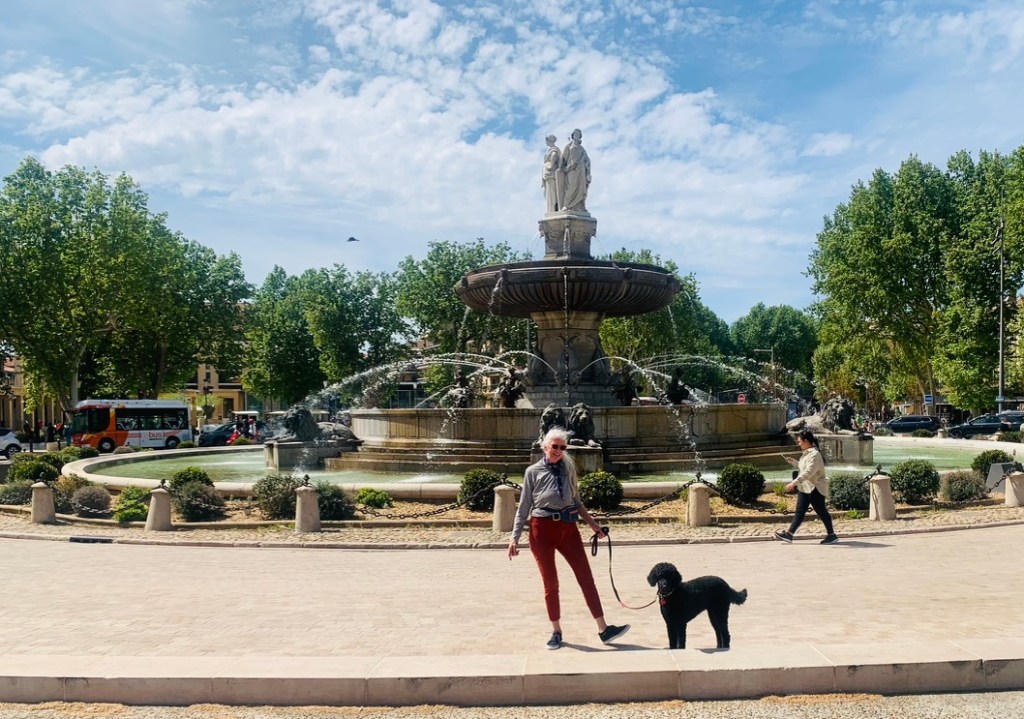
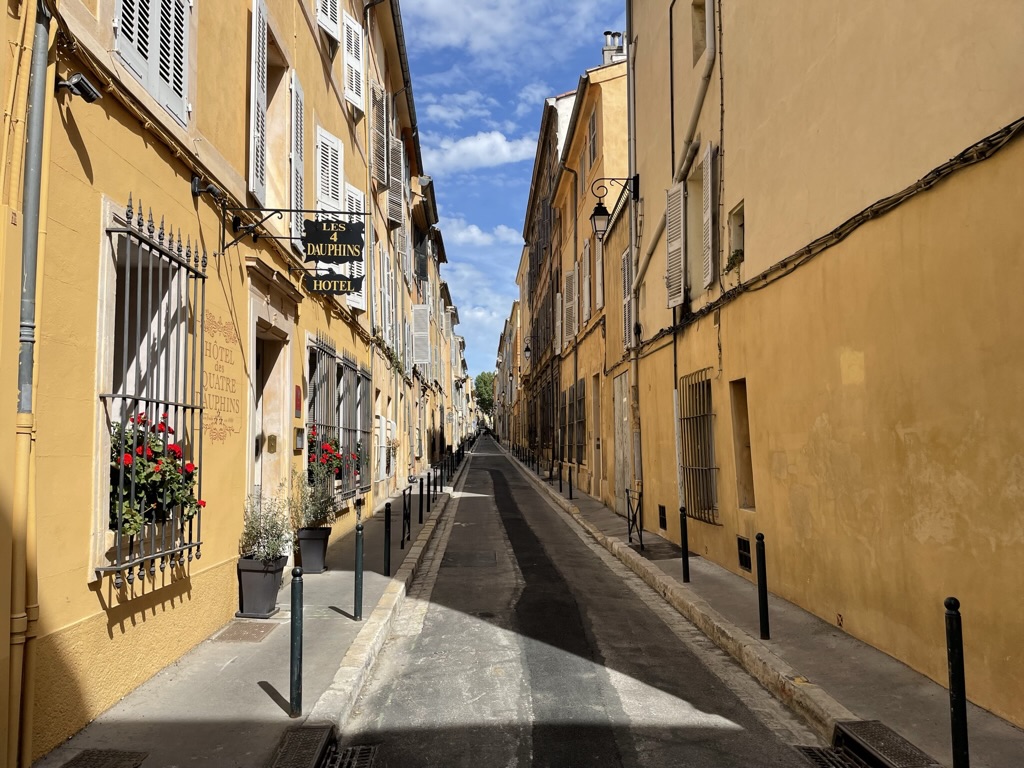
On the way to the ferry port in Toulon we stopped in Aix-en-Provence for a coffee and a walk around the city. It’s a really beautiful place and it was teeming with life during the midday break. Back on the highway, we started to run into traffic and it was then that I realized my faux pas: I’d planned to travel to a popular tourist destination on the Friday before the long Labor/May Day holiday. I’d booked every other one of our travel days midweek to avoid just this kind of situation but somehow screwed up this one. Eventually, we made it to the terminal in plenty of time and took our place in line with everyone else in mainland France heading for Corsica.

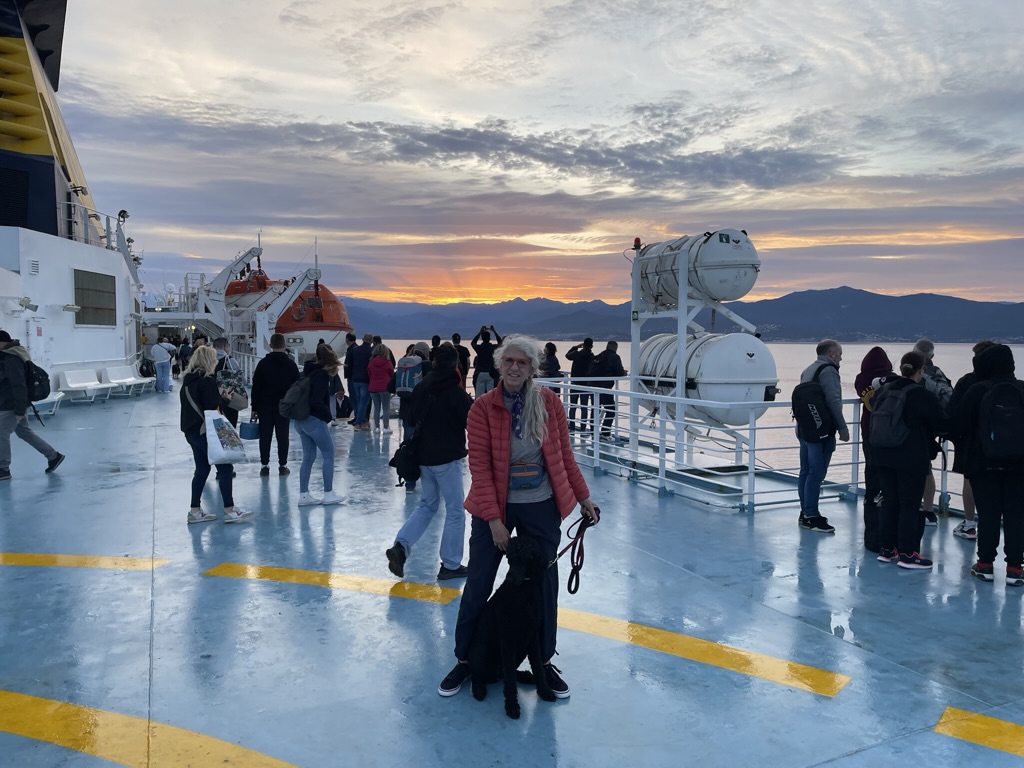
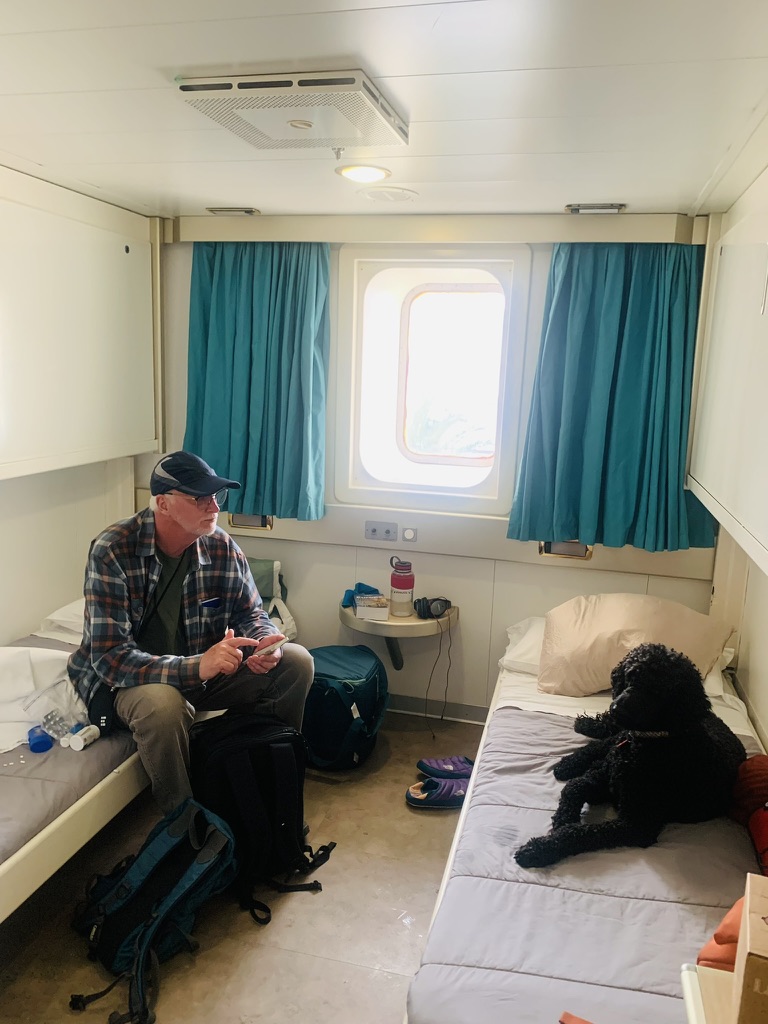
We boarded and grabbed Coco and our overnight bags and found our little cabin at midships, which had all the comfort and charm of a college dorm. We headed up to the cafeteria-style dining area and grabbed some lasagna and a small bottle of wine before taking Coco up to the pet relief deck and, while she summed up the other dogs, we watched the French Riviera disappear into the sunset. Luckily for my sensitive inner ear, we had very smooth seas and, unless you looked out our porthole at Le Med a few feet below us, you wouldn’t even have known we were at sea. The chaos began when we were told by the captain that we were approaching Ajaccio and it was time to return to our cars. The crew had neglected to open the doors to our part of the car deck and hundreds of us were lining the (I’m sure there’s a nautical term for them) staircases, which were stifling in the Corsican humidity. Eventually, the crewman with the key found us and we spilled onto the deck, now twice as tightly packed as when we left last night, and made it to our car just in time to get the signal to disembark into the bright Corsican morning sun.

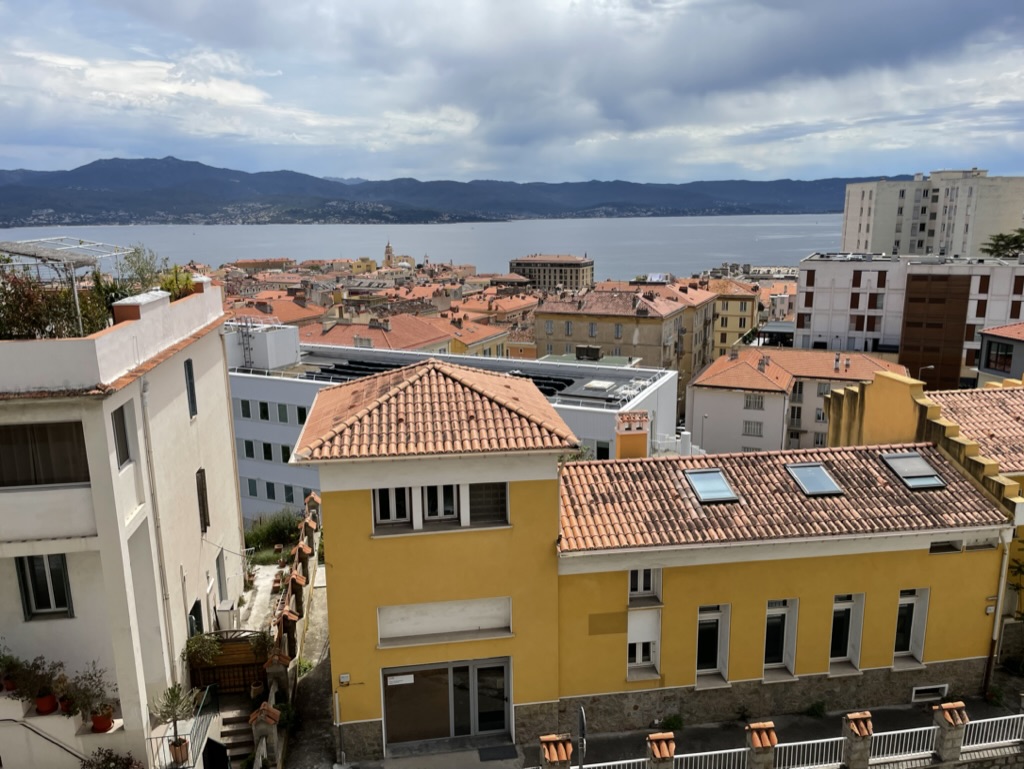
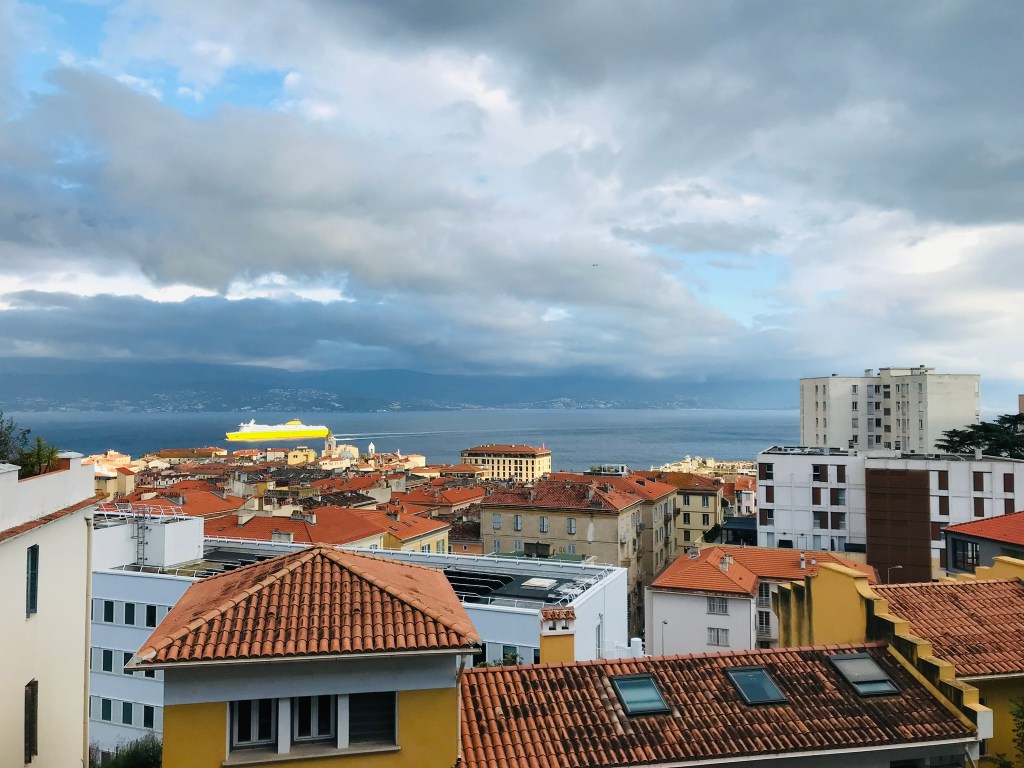
Our apartment is a smartly, if impractically, decorated studio in the hills above the old town of Ajaccio. Christian, the guy who rents it out, is obviously enamored of high-end furniture and kitchen appliances and the instructions that come with the place include several PDFs of the manuals needed to understand the induction stove and the oven. Our balcony has great views of the city, the harbor, and the hills and mountains that almost encircle the city and we can keep a close eye on the maritime traffic in and out of the port. It’s a stunning vista and is really the reason that I chose the place, ignoring some details that I probably should have taken into consideration. Our oven, for instance, is a steam oven, something that we’ve never seen before, and it’s really, really unsuitable for how we usually cook. I remember reading about it on Airbnb and figuring that, in addition to steaming, it would also roast but I was wrong. The french fries — excuse me, frites — that we bought as a quick and easy side dish for our entrée only got soggier the longer they cooked and we ended up just mashing them. It’s probably a great and healthy way to steam fish and vegetables but Denise is deathly allergic to all fish and we are used to cooking our veggies in an air fryer so it’s pretty much useless to us. The stove top is induction, which works great so we have adapted our menus to be completed there. There’s no microwave, toaster (the French don’t really “do” toast, apparently), dishwasher, or garbage disposal but the shower is great and the bed and pillows are Eve Memory Foam, the most comfortable pillow I’ve ever used. I called the company the next day to order more pillows but they don’t ship outside of the UK. (Christian must have smuggled them into Corsica.) Pictures in link.
Our place is on a busy street that eventually winds down to the center, but we have a shortcut staircase that joins the upper and lower part of the switchbacked avenue, allowing us to reach the main street in a couple of minutes. I think Coco is a little unnerved by the traffic that speeds down our street — I know I am, and the Corsicans don’t respect pedestrians the way their mainland countrymen do. In Provence, you just had to motion toward the crosswalk and traffic stopped; in Corsica, you have to establish yourself in the crossing before the brakes are applied and, even then, you get the feeling the driver is slowing down mostly to avoid having to do the insurance paperwork required after a pedestrian death.
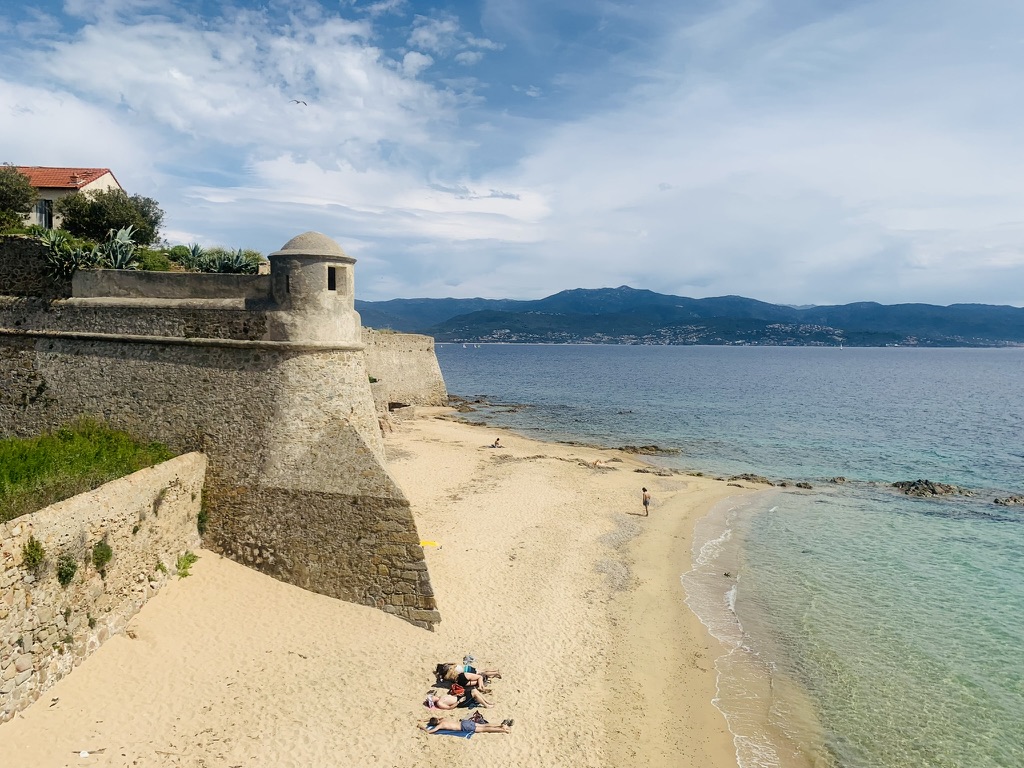
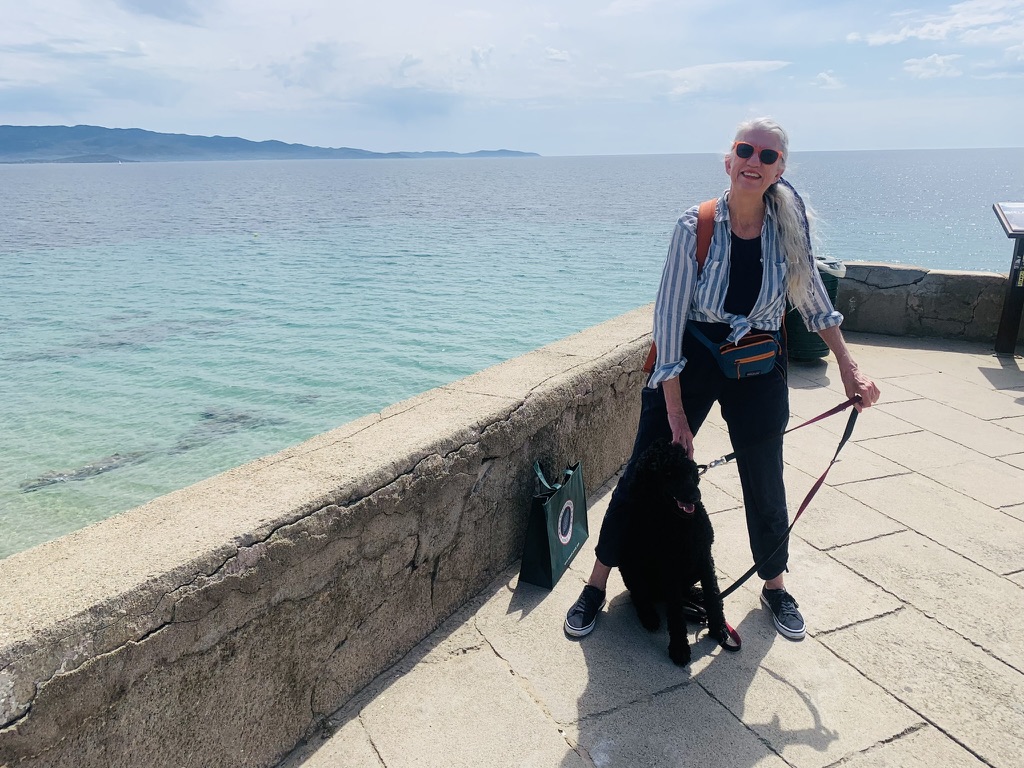
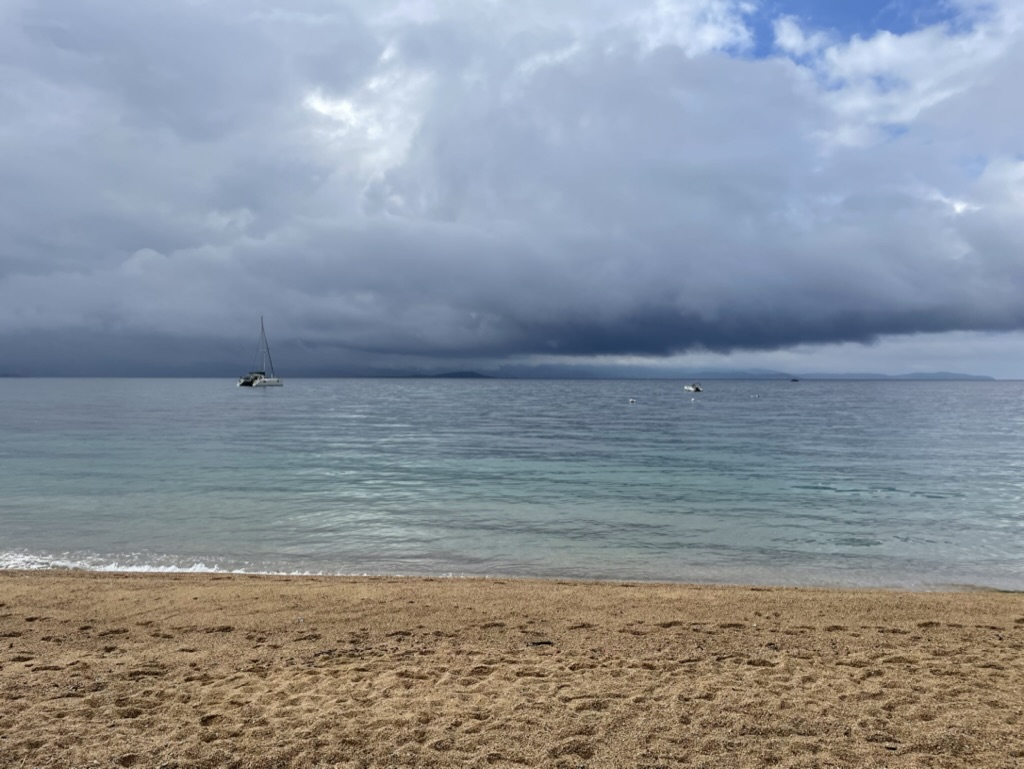
Part of the challenge of the trip is accepting the slower pace and lazy days. We are usually taught to feel guilty about inactivity but I’m embracing it and finding it very enjoyable.. On our morning walks, we usually have to fight our way through the construction, traffic, and sidewalks full of tables to make it to the seaside promenade, where we relax and take in the lovely views the bay offers. It’s really a dramatic setting, with the city rising out of the sea before becoming the mountains in the near distance, usually covered with a dramatic-seeming cloud cover suggesting a violent storm tormenting hikers on the GR20, Corsica’s famous hiking trail.
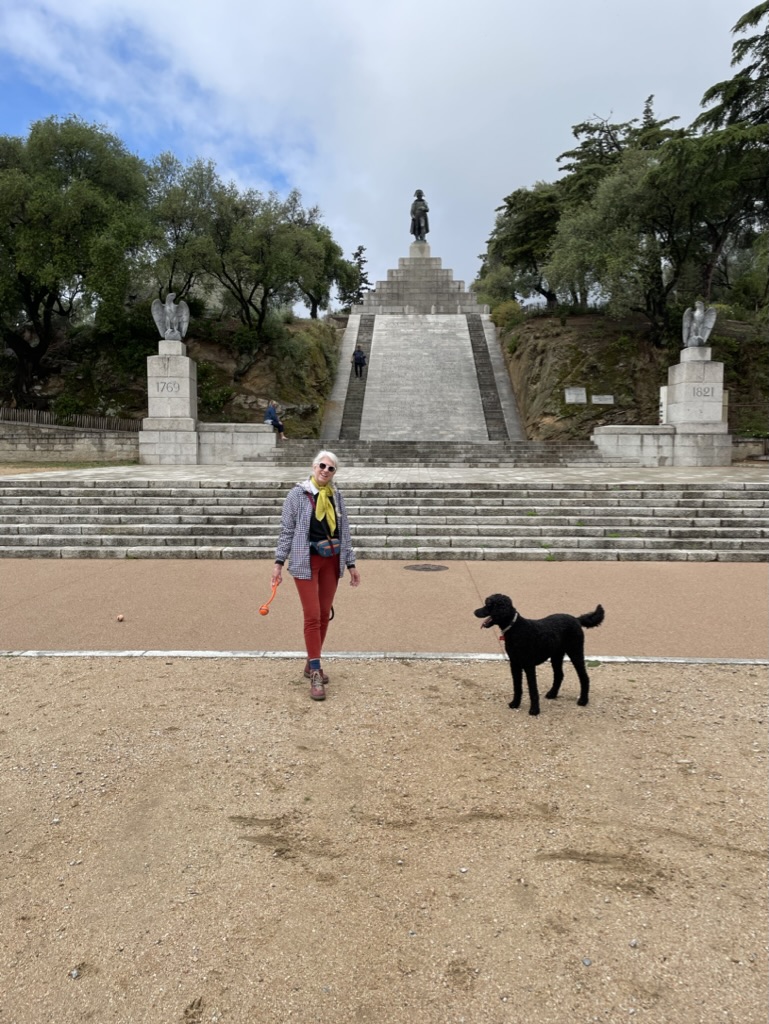
After a ball-throwing session with Coco, we make our way through the old town to the ferry terminal to check out today’s visiting ship and shop at the nearby farmer’s market. The stalls are full of local produce as well as the rustic saucissons and cheeses from the Corsican countryside. After that, we usually find a boulangerie for a fresh baguette and head back up the hill to our place for lunch. After some food, some writing, physical therapy, and a nice nap, we head back out, usually ending up at Place D’Austerlitz, where there’s always a spirited game of pétanque or six going on. The statue of Napoleon watches over the contests, making sure that no one cheats. (Everyone cheats, or tries to.) The players are mostly older guys but there’s a contingent of younger dudes as well and it’s taken very seriously by all involved. After we’ve had our fill of their arguments, we head home once again and cook a simple meal for dinner.
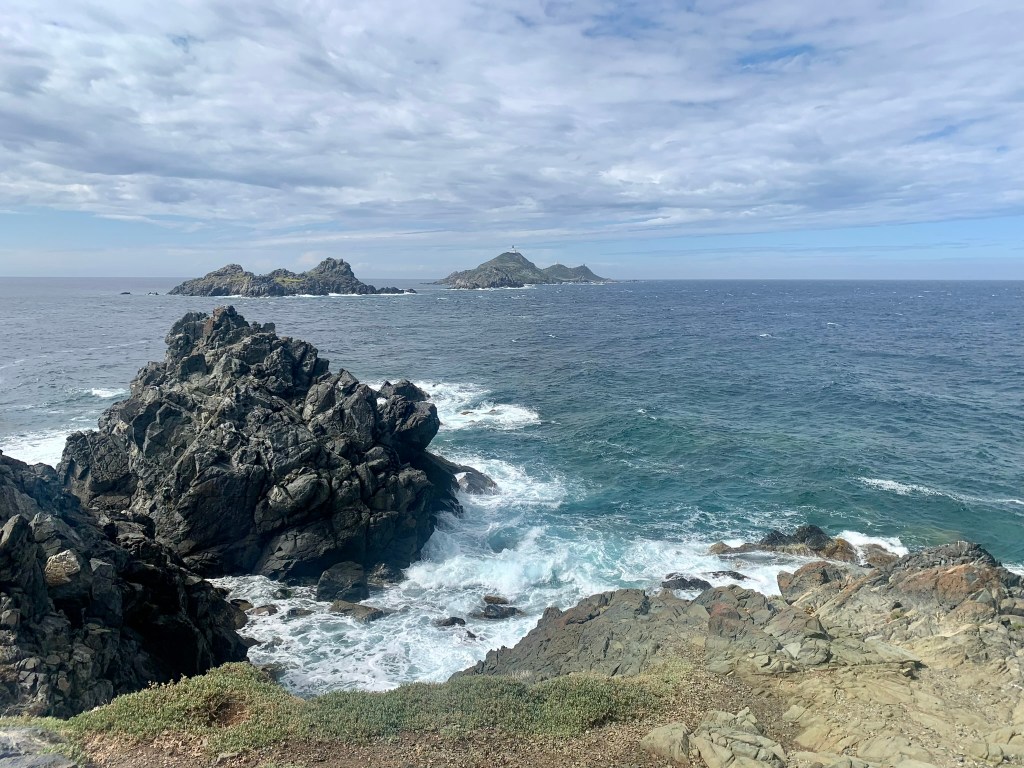
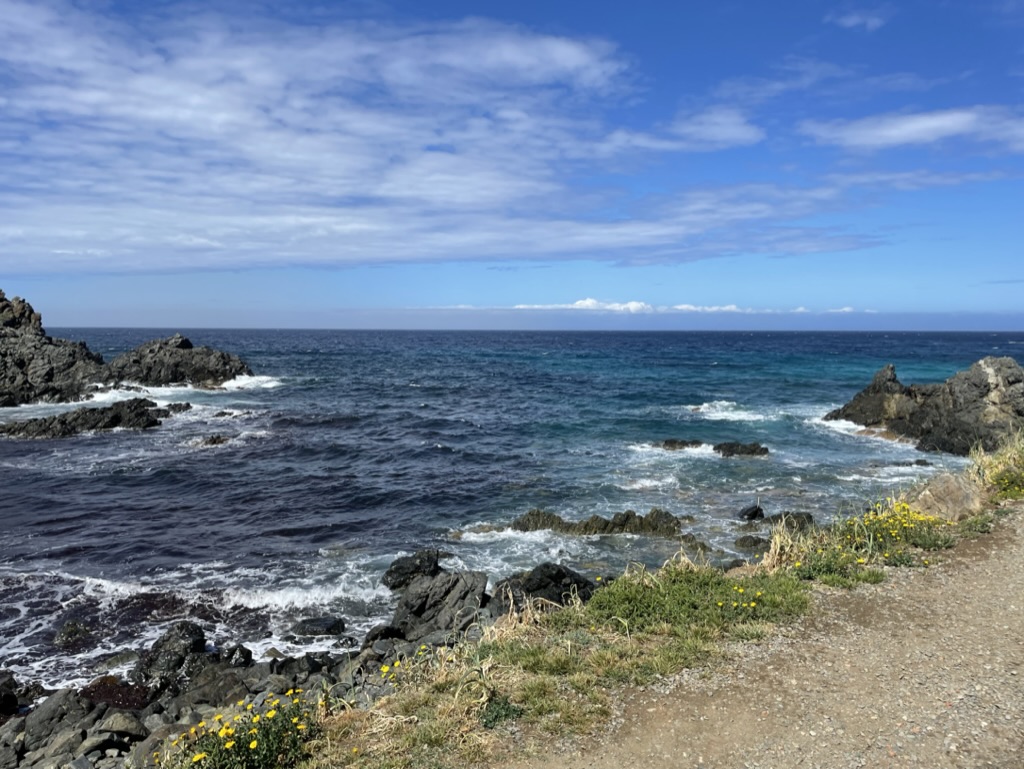
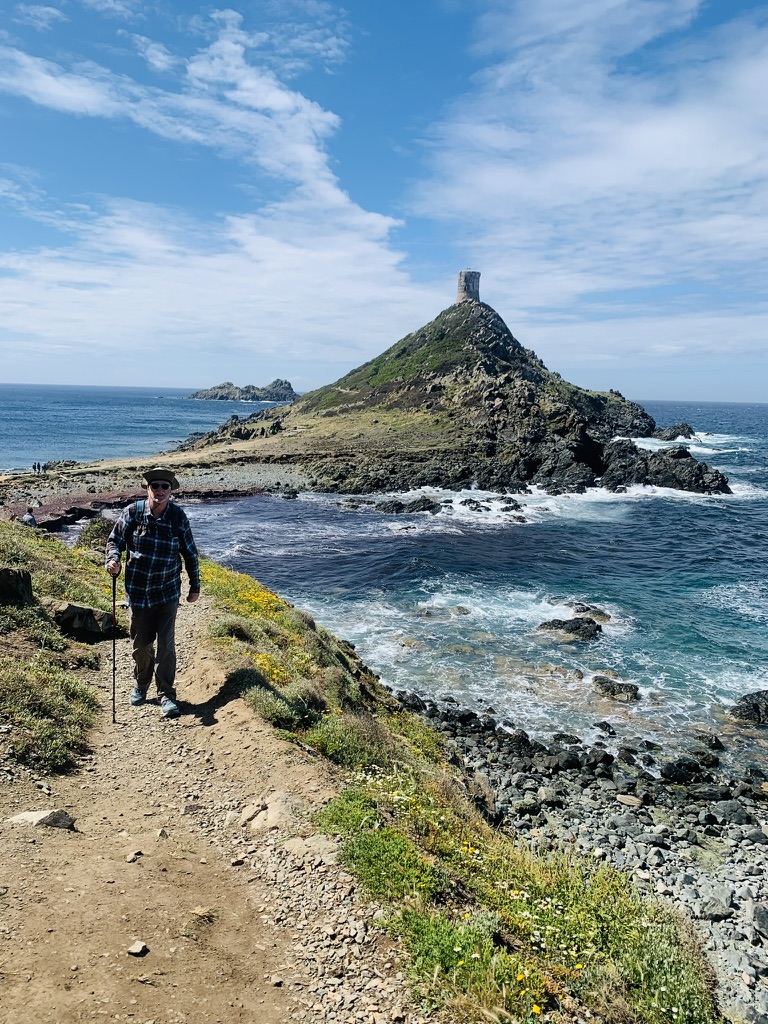
Of course, not every day is lazy and, just as I am in charge of the macro planning of our trip, Denise has taken over the micro planning. She does a ton of research on what hikes and sights we shouldn’t miss and we schedule them out a few days in advance, always with the weather in mind. Our first big hike was out to see the Isles Sanguinaires, a beautiful archipelago about 20 minutes from our house. The hike takes you up and around a couple of hills overlooking the islands and the skinny trail takes you very close to the edge of some high cliffs over the sea. The Mediterranean is impossibly turquoise and clear, allowing you to see to the bottom of the seabed in most places. A few days later, we came back to walk the coastal trail from the gift shop to Capo de Feno but the hot sun prevented us from making it to our beach destination. Coco is usually a trooper but that day she just didn’t have it in her and we had to baby her back to the car. Her sixth birthday is coming up in July so maybe she’s starting to slow down.
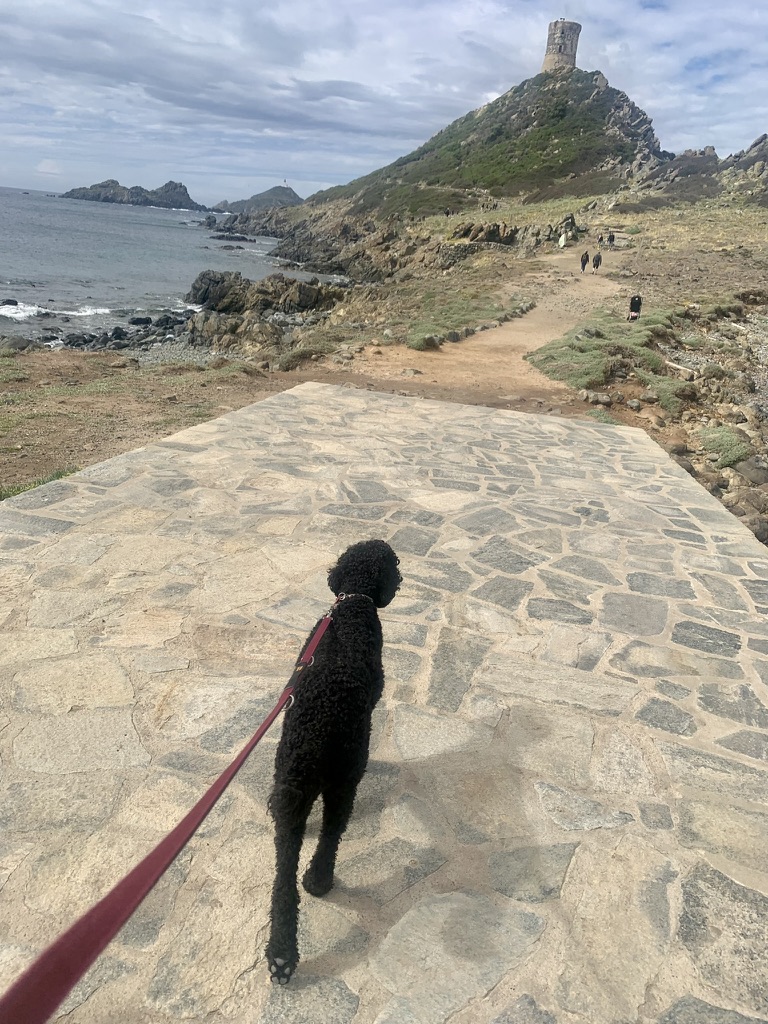



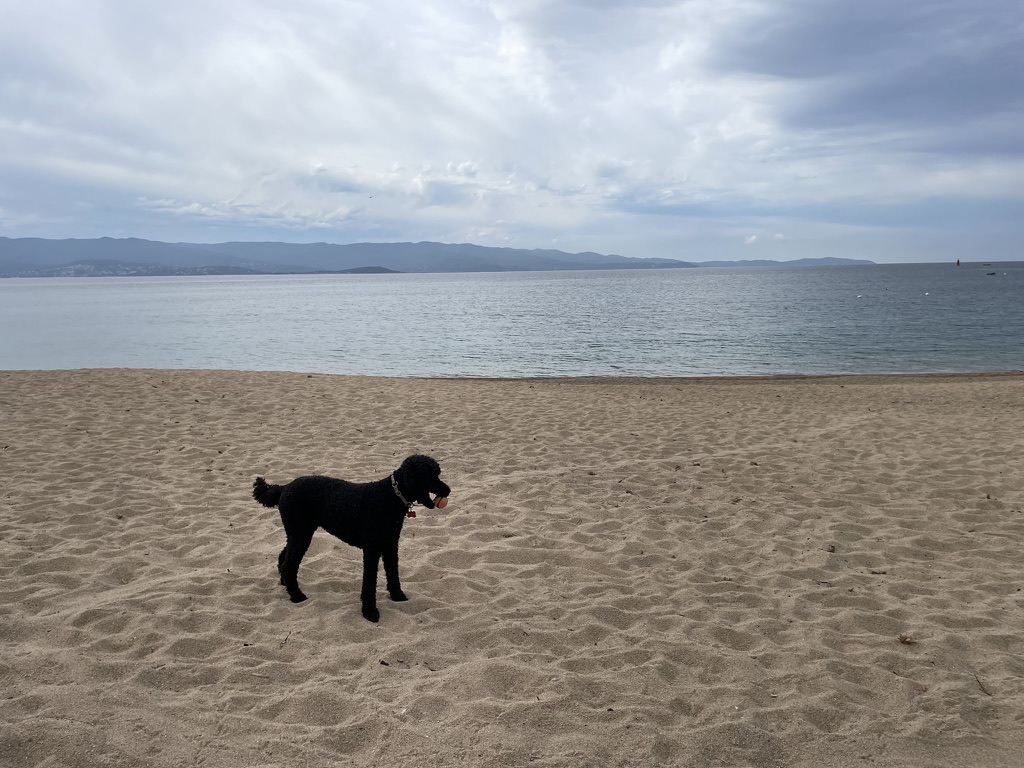
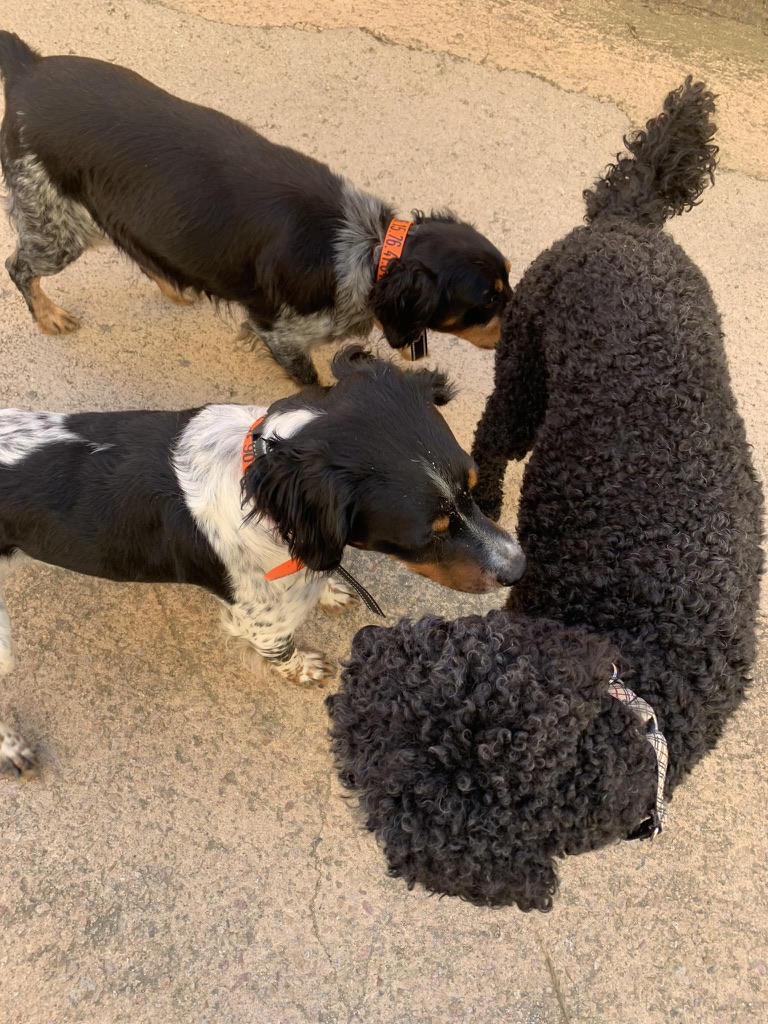
Speaking of Coco, she’s the hit of the town, with adoring fans — especially schoolchildren — stopping what they’re doing to come over and pet her. We gather that full-sized poodles — or Caniche Royal as they’re known in France — are a rarity on the island (and, indeed, in France as well) so she’s a bit of a novelty. Of course, she loves the attention and sits patiently while everyone pets her and “ooh-la-las.” There are a lot of dogs here but mostly of the miniature variety. It seems a little strange to us that the dog owners here don’t regularly pick up the poop on the sidewalk but you learn to watch carefully for the caca. Stepping in some poop is said to be a sign of luck in France but I have no interest in that kind of good fortune.
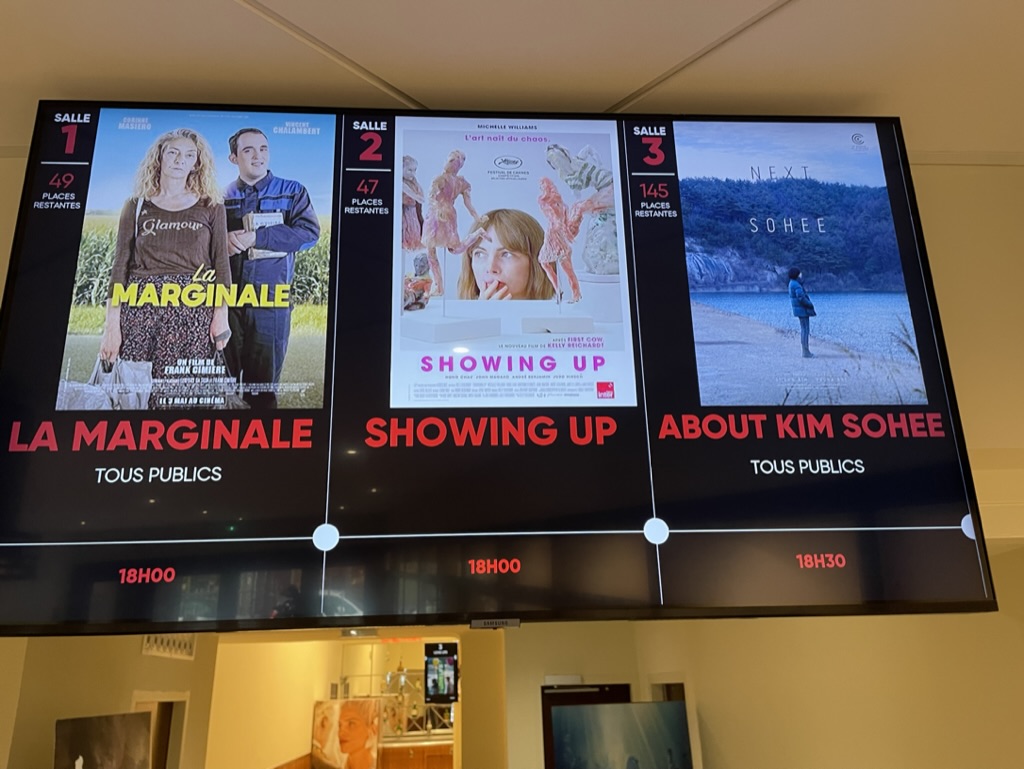
We took advantage of a cool, cloudy afternoon to slip into a movie theater and see my old friend Kelly Reichardt’s latest movie Showing Up. Luckily, the film was subtitled, not dubbed, and we were able to enjoy it in our native tongue. It’s a really interesting and thought-provoking movie — among her best, in my opinion — about the creative process, with Portland as a backdrop. I am so happy that my former roommate, the beginner film student who made our band’s first video in 1987, now has movies that open at major theaters in America, Canada, and France. Denise and I both highly recommend you see it.
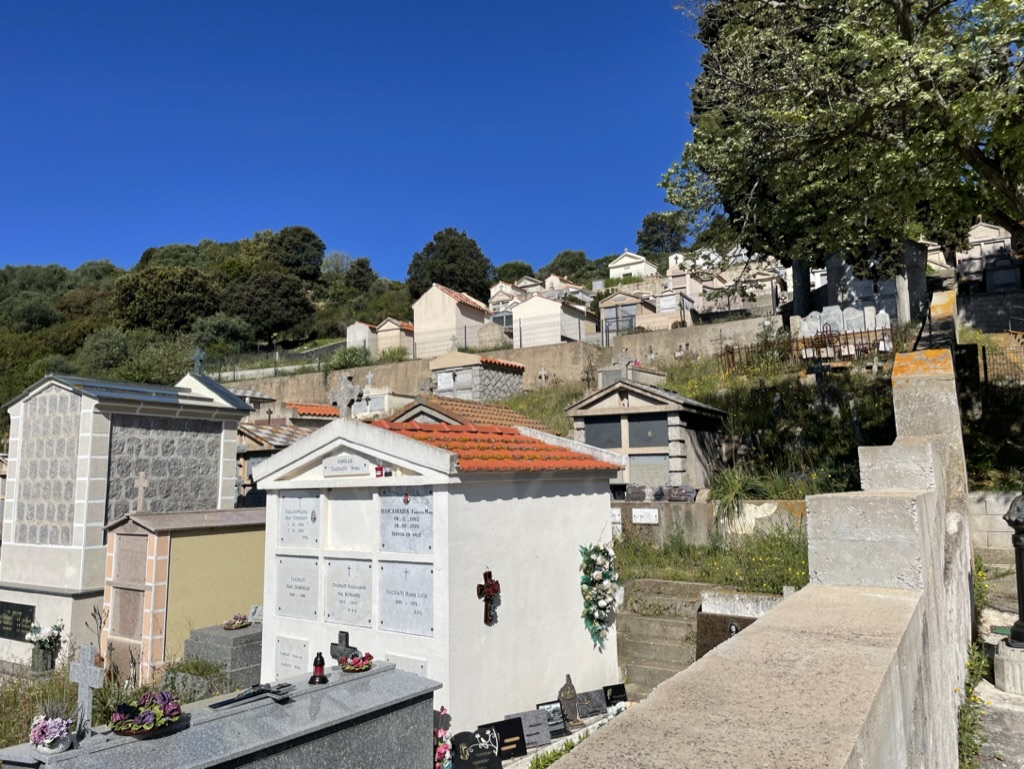
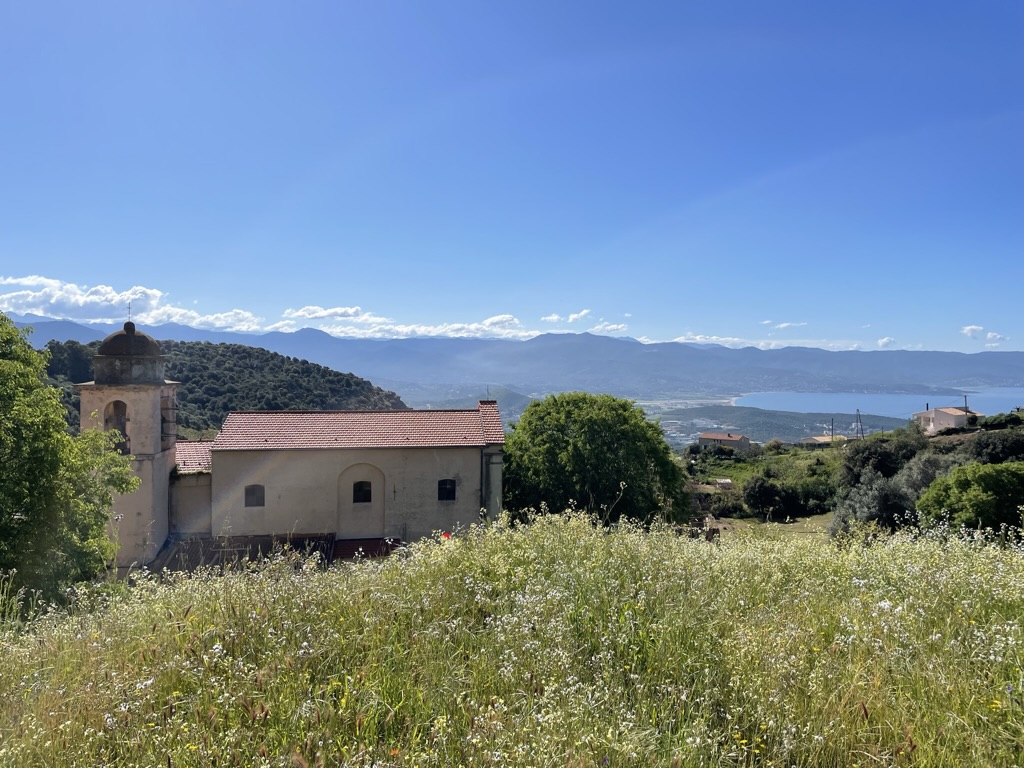
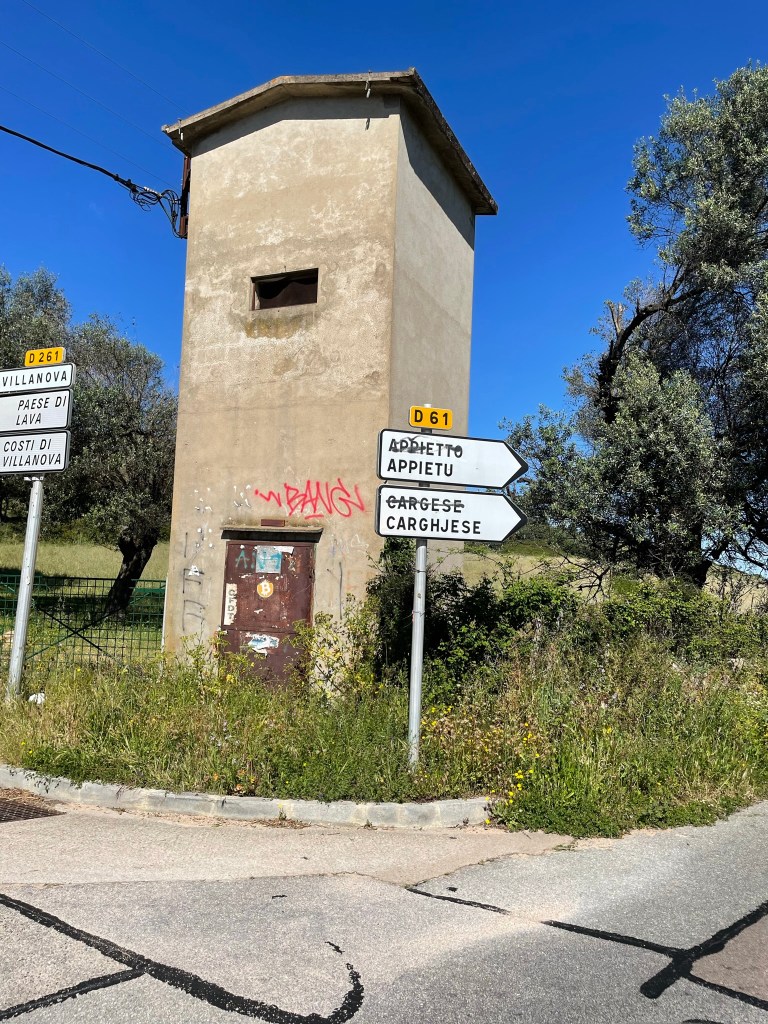
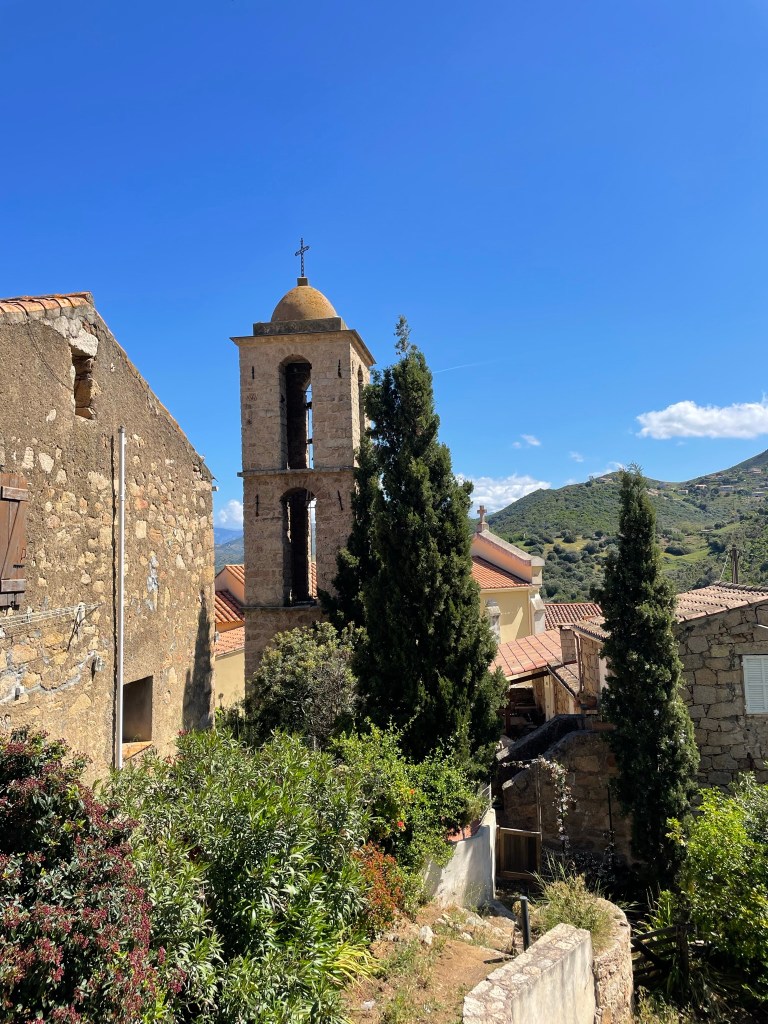
One morning, we took a car trip up into the mountains north of Ajaccio and discovered the sleepy towns of Alata and Villanova. Alata was recommended by the Office of Tourism map but it was hard to see why: it was a tiny place with a couple of dozen houses and one café, which was shut. The views back to Ajaccio Bay from the cemetery above town were pretty spectacular but otherwise… Our next destination, Villanova, was perched impossibly high in the mountains, and we wondered what inspired people to build a village so remote. It almost seemed like an impractical challenge — a bar bet lost — as there was no farming or grazing. On the narrow, winding road up to town, we passed an older woman on her bike and marveled at her climbing skills. We met her in the town square shortly afterwards and discovered that her biking secret was the electric motor. She didn’t speak any English and our French is not quite conversational but, after some stumbling around, she asked if we spoke Deutsch and I was delighted to be able to dust off my high school German. She said she was 85 years old and made the ride every day (impressive, even with some voltage help) from her village below the town. She explained that most of the residents of Villanova were seasonal, coming up in the summer to form a sort of artists community and then abandoning the town again when the freezing winds of winter came. None of the craftspeople were selling that day so we took some pictures of the ancient campanile and strolled around town, meeting all the local dogs who wanted to check out the cute visiting poodle. The view from the town included a huge solar farm on an adjacent hillside and a nearby bay with a beach — plage in French — so we headed down the mountain to check it out (the beach, not the solar farm). It turned out to be a lovely, secluded stretch of sand that was just gearing up for the summer season. I’ll bet that, in July and August, the place is swamped with people taking advantage of the gorgeous waters.

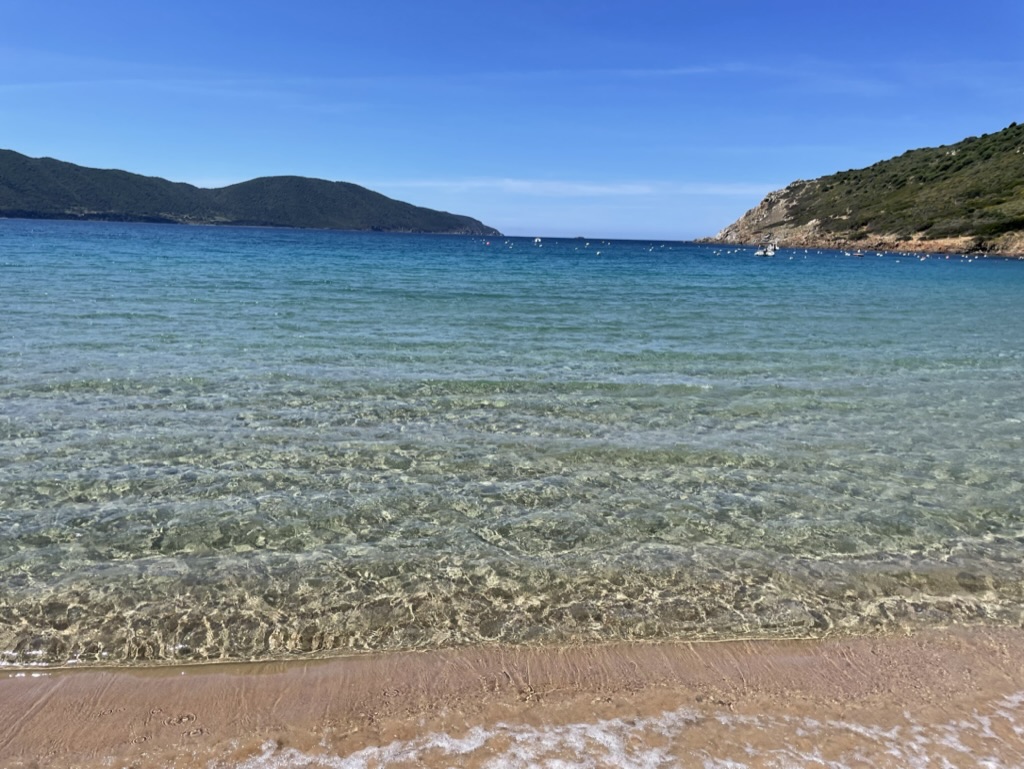
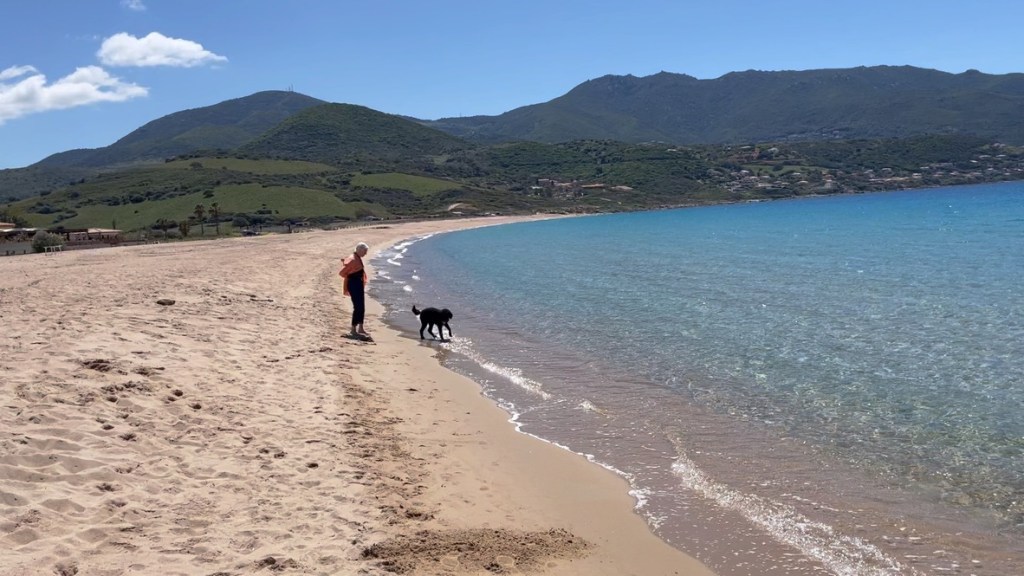
On Monday morning, we awoke to a quiet, traffic-free street; a strange calm seemed to envelop all of Ajaccio. A quick internet check told us that it was Victory Day, celebrating the end of World War II in France, making it their second bank holiday in May, and the month was only eight days old! The French play hard though, and there were a few foot races through the hills above the town ranging in length from 10 km to an amazing 60 km. We’ve walked some of those rocky trails and I can’t imagine navigating them while running. In the afternoon, when we walked down into the town square, a car rally was wrapping up, featuring drivers from all over Europe. A group of town fathers, all dressed in Napoleon-era gear that would make our panhandling friend jealous, stood on a stage, ready to present the winners with their trophies.
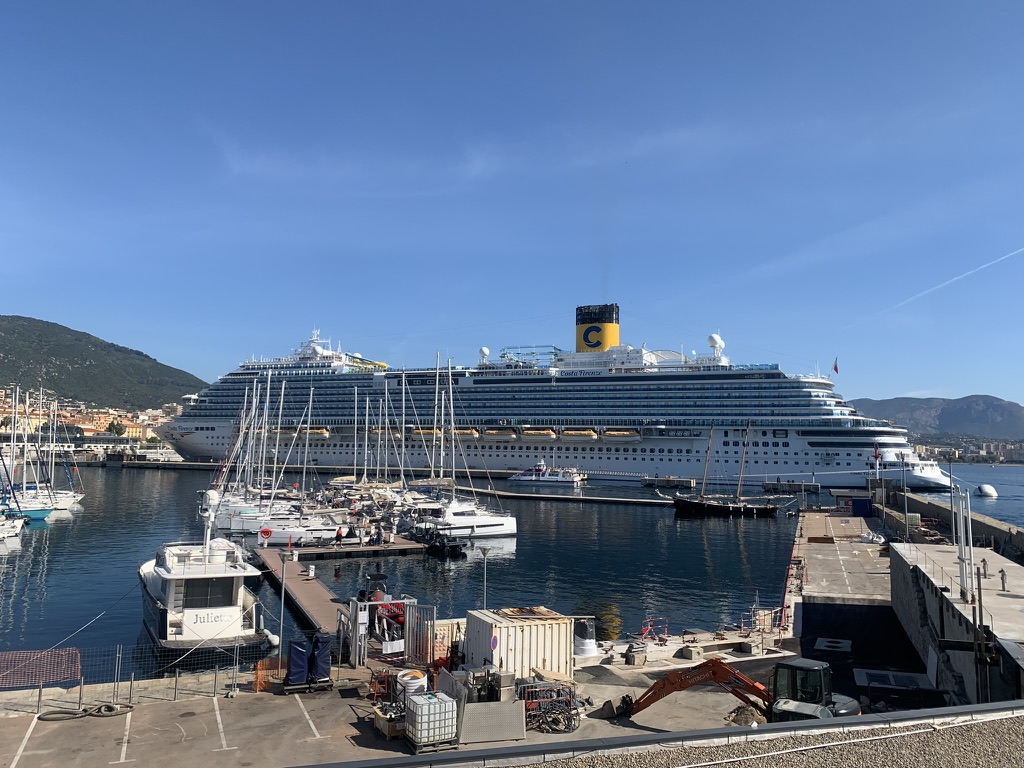
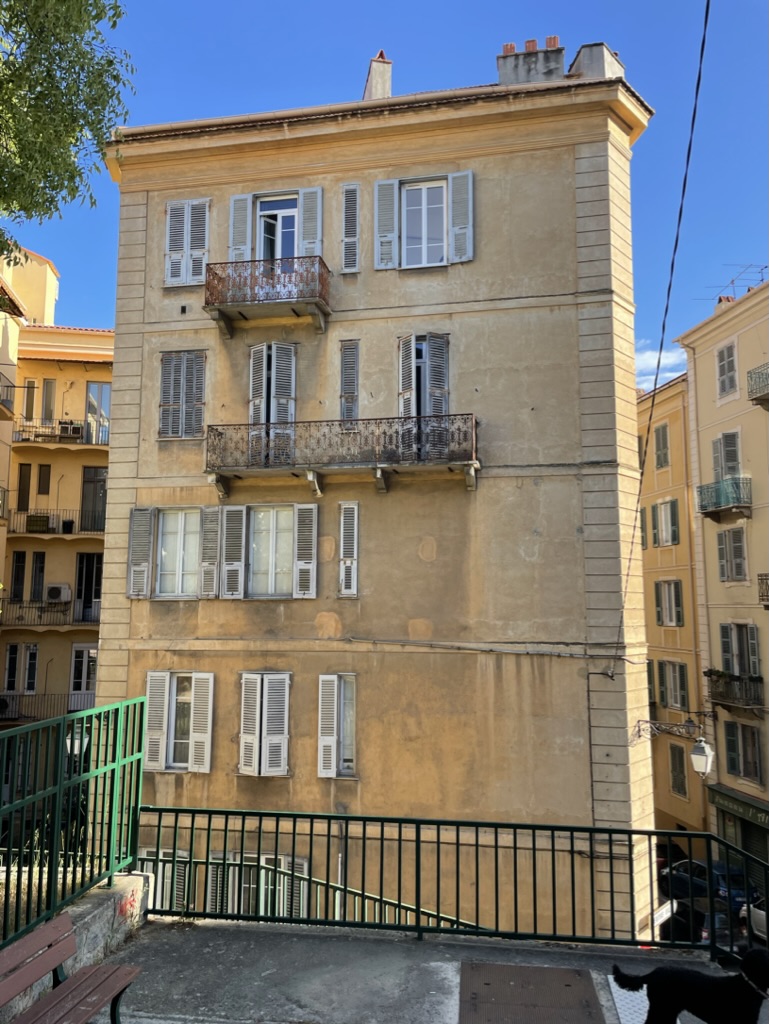
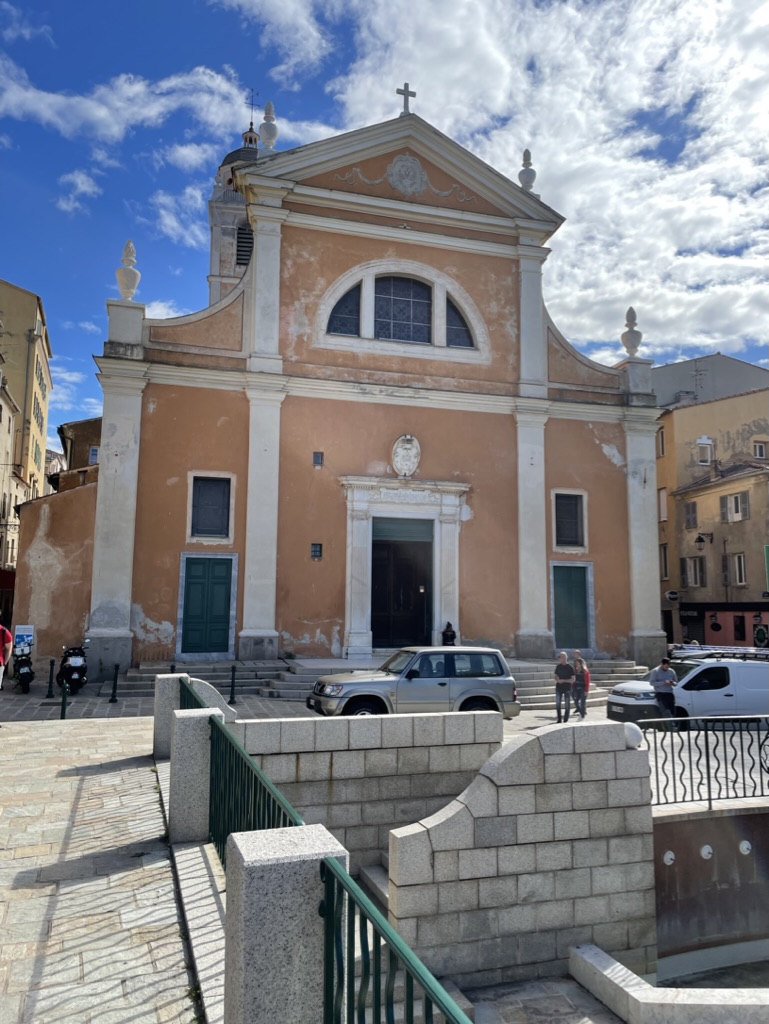
With everything closed up and no cruise ship in the harbor for a change, we could see Ajaccio for what it is: a bit of a faded jewel on the Mediterranean. The natural setting is unquestionably beautiful — the bay, the mountains — but, at some point, the city let the development get out of hand and the hundreds of (mostly) ugly apartment buildings that climb the hills really tarnish the overall picture. The waterfront citadel that could be a historical centerpiece is crumbling a bit, a testament to lost potential. There’s loads of examples of that kind of civic “improvement,” even right here in nearby cities, but Ajaccio seems to lack drive. The city seems more concerned with widening the roads to accommodate more tourist cars than it does in preserving its history or even just cleaning the streets. Even the humble church in which the real Napoleon was baptized has seen better days and fades into the background of the nearby busy streets. A few blocks away, Bonaparte’s childhood home is overrun on all sides with tacky gift shops. So perhaps it’s fitting that the image of a down-market impersonator is the one that sticks with me when it comes to Ajaccio. It reminds me of a quote from the little corporal himself: “The reason most people fail instead of succeed is they trade what they want most for what they want at the moment.”
Next installment: day trips south to Bonifacio, east to Corte, and north to Cargése, with some Corsican lessons learned.
 Calculating Route...
