We made our way back to the Mezquita-Cathedral, this time on a guided tour. We learned a lot about the building but mostly we figured out that these tours are chaotic and feature really bad audio. The guides do their best but, honestly, it’s better to do some reading and self-explore. The place was packed in the week between Christmas Day and New Year’s. All of Spain is on holiday and descends on the city. Buff Jesus is baptized by a ripped St. John while his hairdresser fluffs his locks.
Hello again! As Denise, Coco, and I get settled back into life in these United States, we wanted, as completists, to fill you in on the last months of our trip. Córdoba, Valencia, and Port-Vendres were so special that we didn’t want to forget a single minute! We’ll pick up the action where we left off: just after Christmas in Córdoba.
We squeezed a lot of adventures into our last month in that great city, so it’s probably better that we focus on the pictures and let the captions do most of the work. However, we would like to mention a couple of cultural items that stood out for us. During the Christmas season back home, the stores and radio stations generally stop playing holiday-themed music after the big day, but not so in Spain. Here, the celebrations continue until the Epiphany on January 6th. This is actually the big gift-exchanging day for the Spanish and everything is closed down — of course. So if you love Christmas songs, come to Spain in December (and January)!
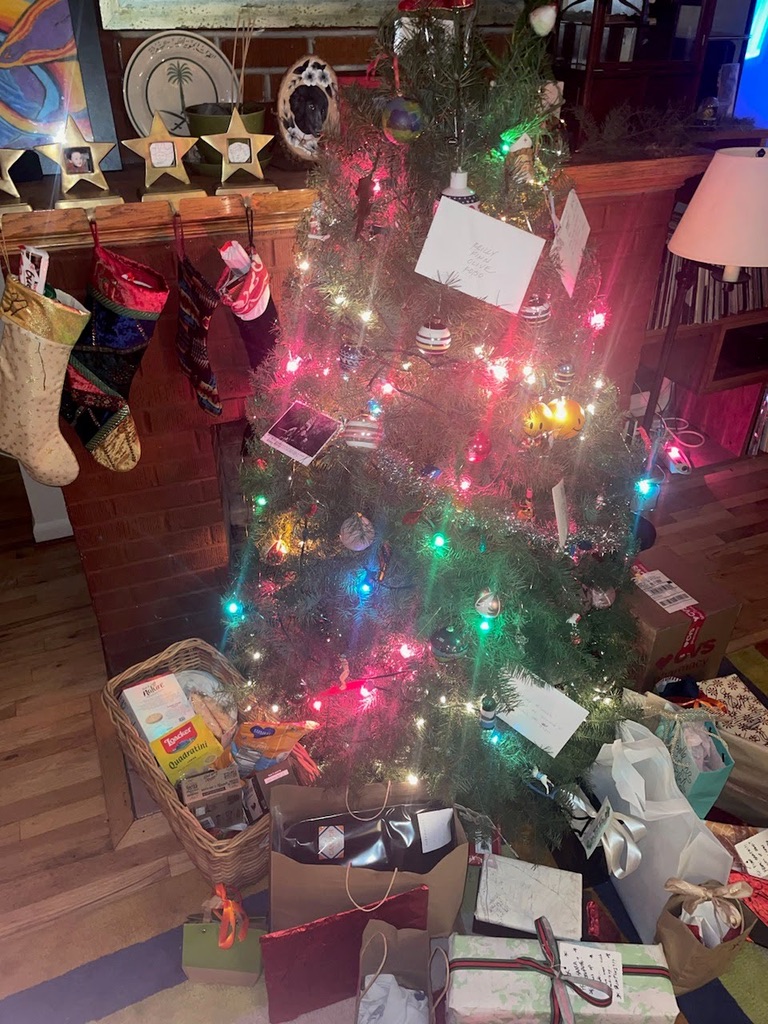
This was the Christmas tree scene back in Portland, where Reilly, Finn, Kobe, and Olive exchanged gifts.
We watched some Spanish-language TV but couldn’t resist the pull of the D-Max channel, which broadcasts “reality” shows from the US, UK, and Canada in English. Our late afternoons became about catching up with Gold Rush, a Discovery Channel show that features awful people doing awful things to the planet, all in search of the ‘lil yellow nugget. That was followed by Homestead Rescue, featuring the rough-edged Rainey family from Alaska, who swoop in and save families who have bit off more than they can chew in an attempt to live off the grid. It’s worth noting that almost all of the families revealed that the reason they are living this challenging life is because they lost everything in the housing crash of 2008-2009. The Raineys set them straight, however, with some good, old-fashioned ‘Merican ingenuity and miraculously save the homestead just before the seven-day deadlines comes around. We workshopped our own show, called Expat Rescue, in which we help struggling Americans who have decided to live overseas by showing them how to transfer money via Wise card and navigate the seemingly endless aisles of Carrefour. Coco, of course, would play a big role in helping their pets adapt to the unfamiliar continental dog parks. Talks with Discovery Channel are ongoing. The third show was Wheeler Dealers, in which two British guys team up to buy, refurbish, and then sell classic cars. They are both very charming in their own Brit way and somehow always manage to buy low and sell high!
Alright, let’s get into the heart of the post: the pictures, every one of which, as Sir Rod Stewart reminds us, tells a story, don’t it?
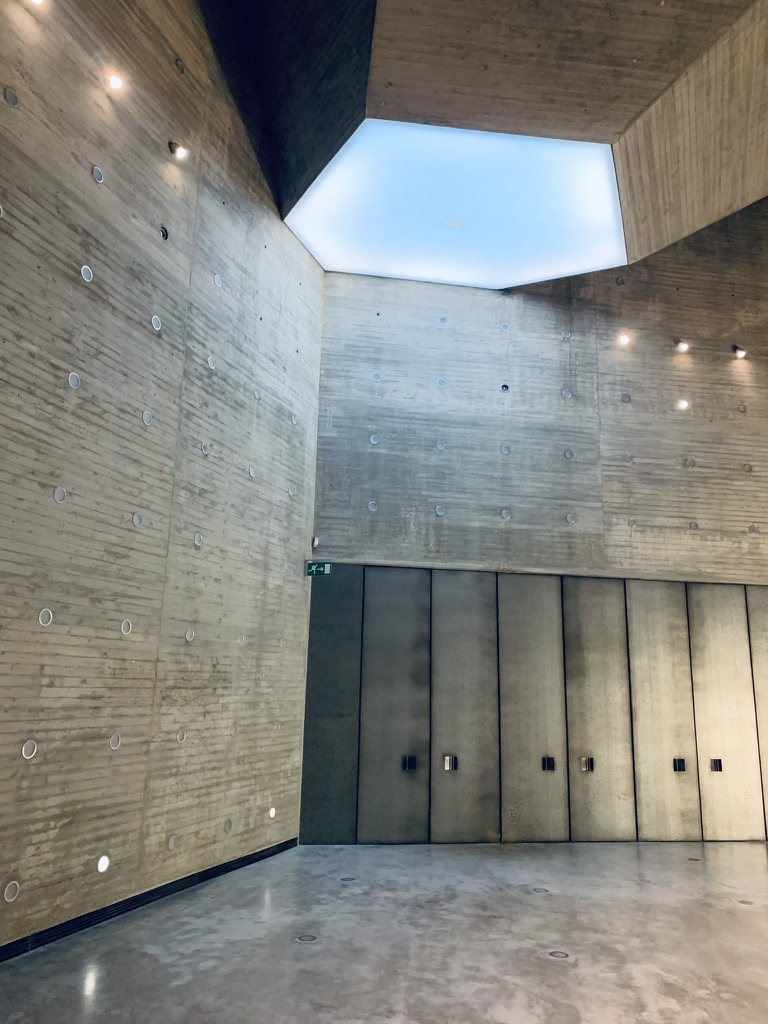
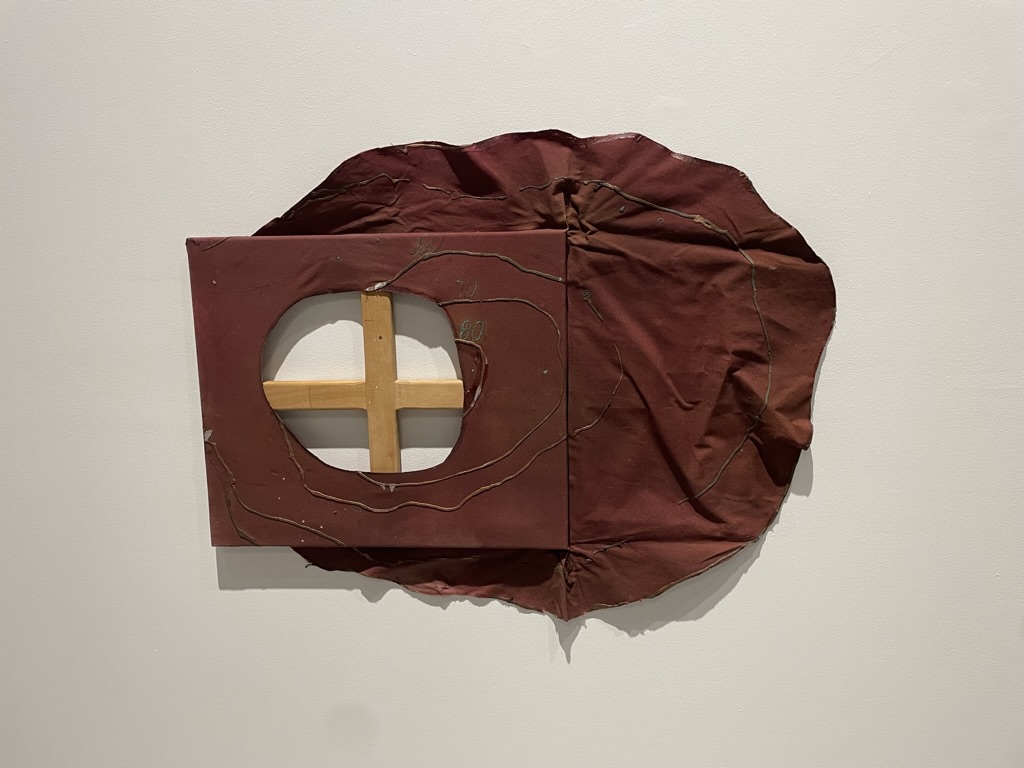
Centro De Creación Contemporánea De Andalucia. It’s an architecturally-significant building with some great exhibits. And it was free for all!
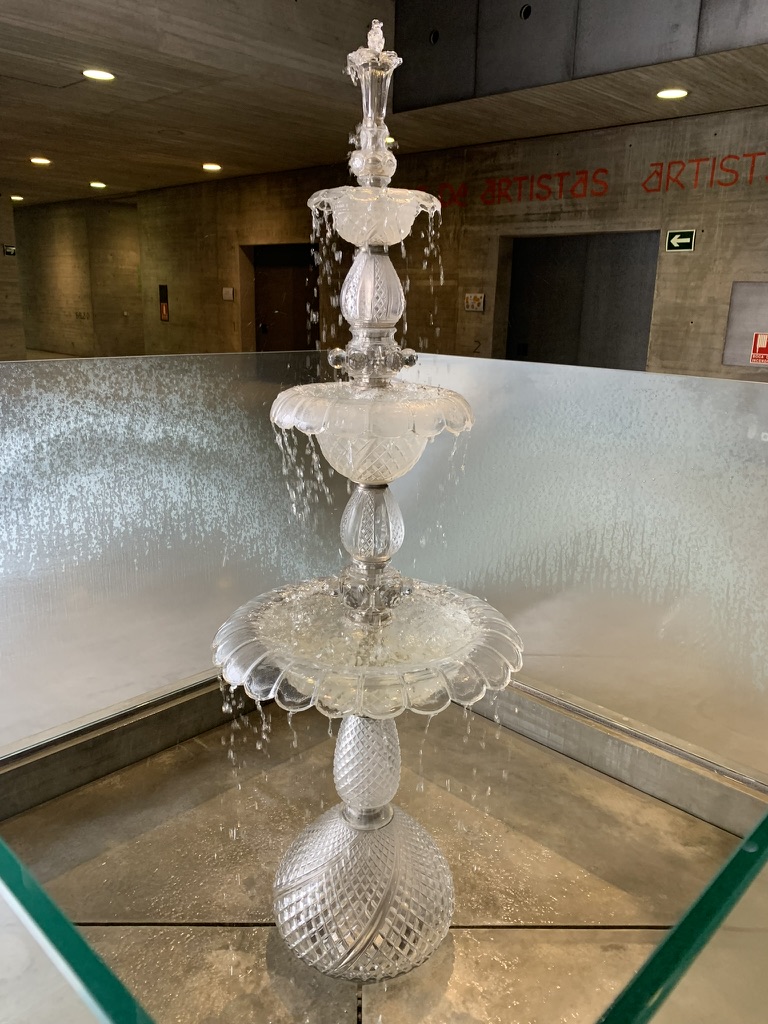
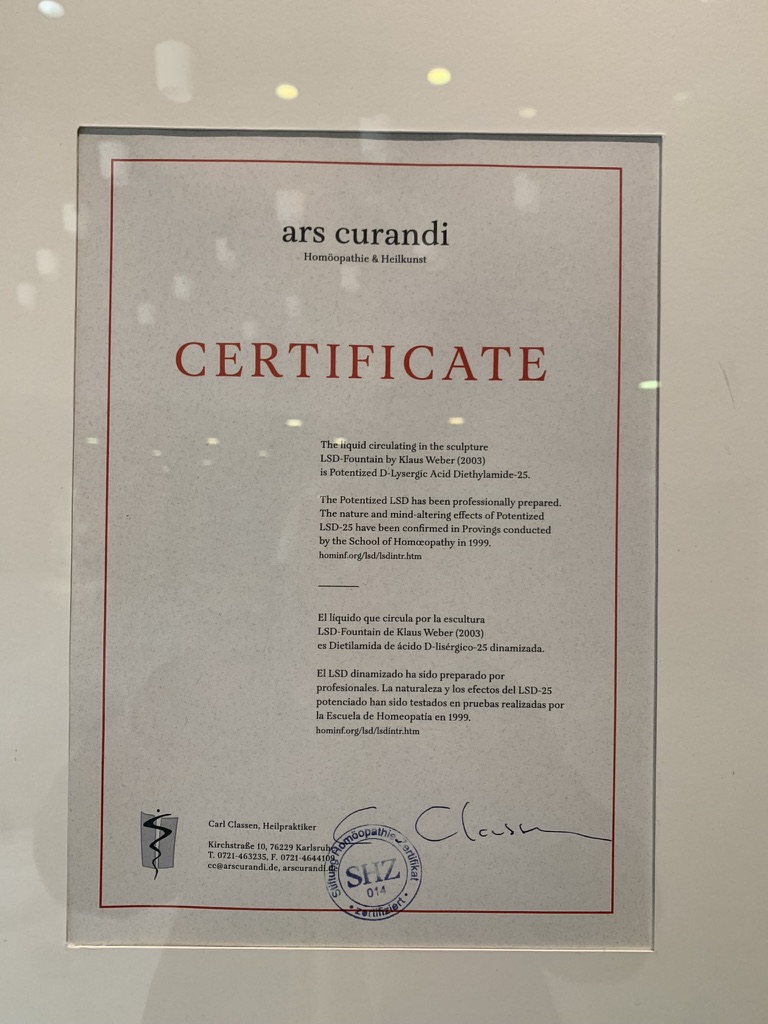
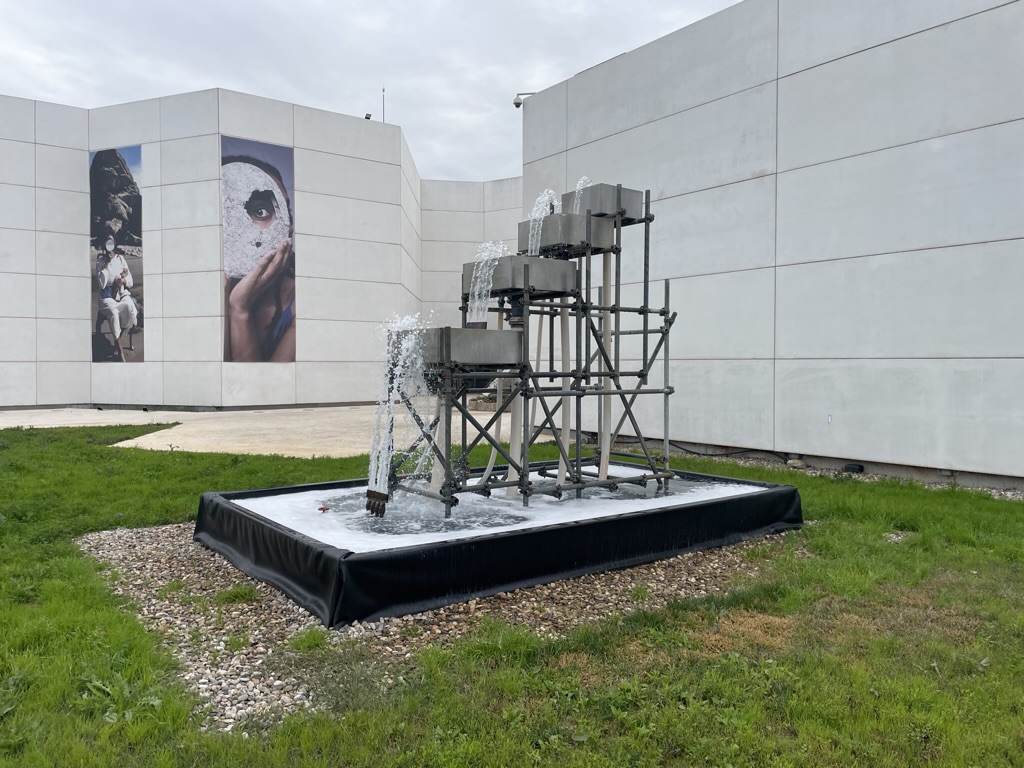
Fountain of LSD. See Certificate
Certificate
Art
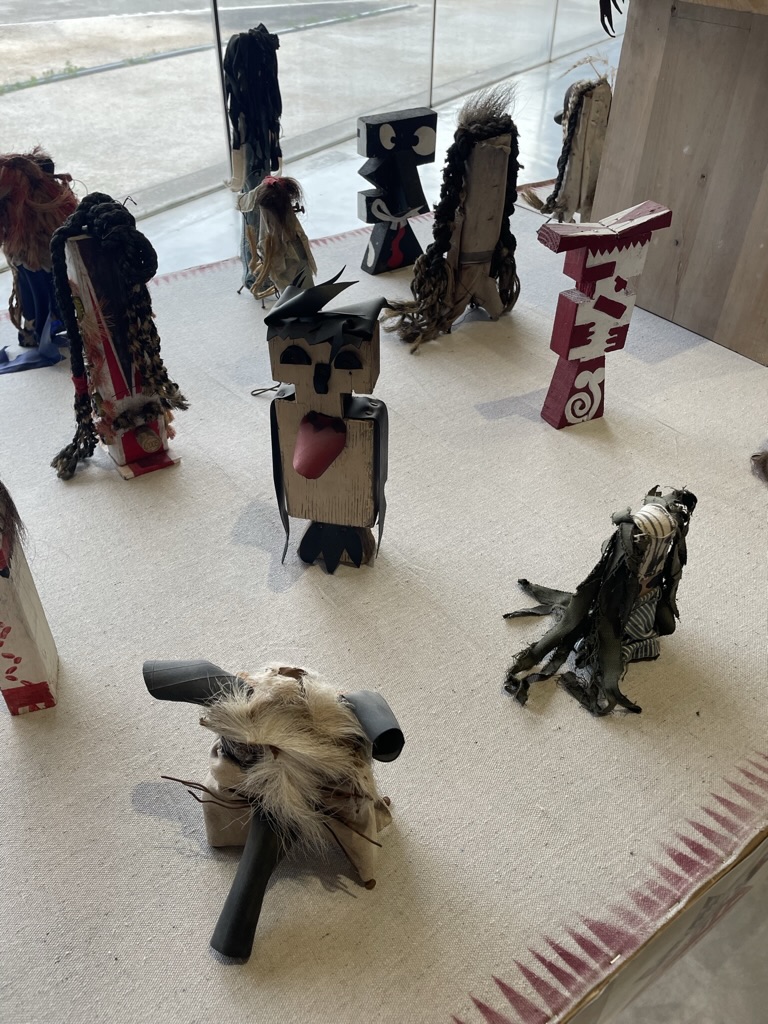
Native American totems
Outdoor sculpture
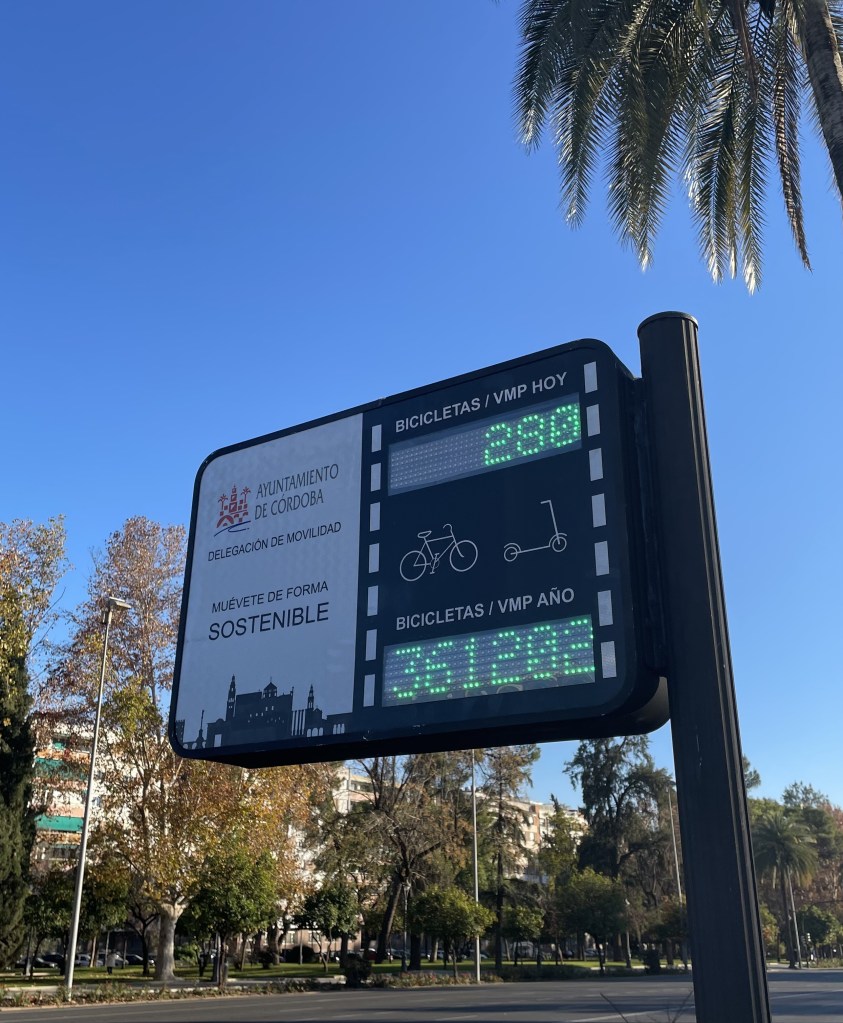
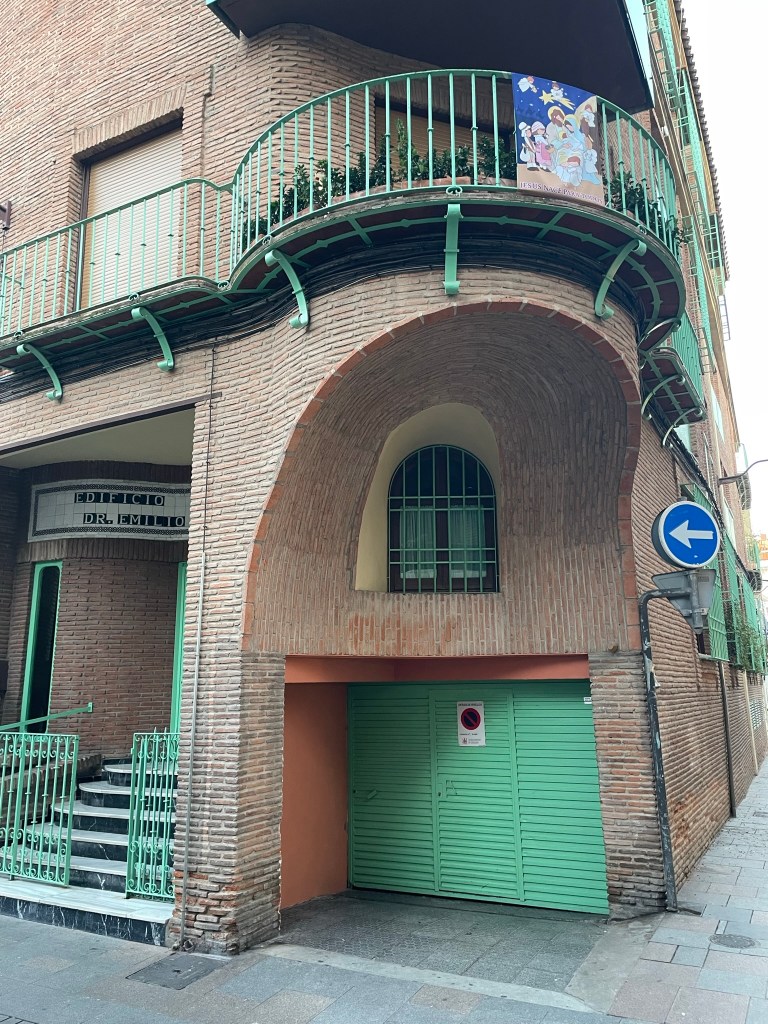
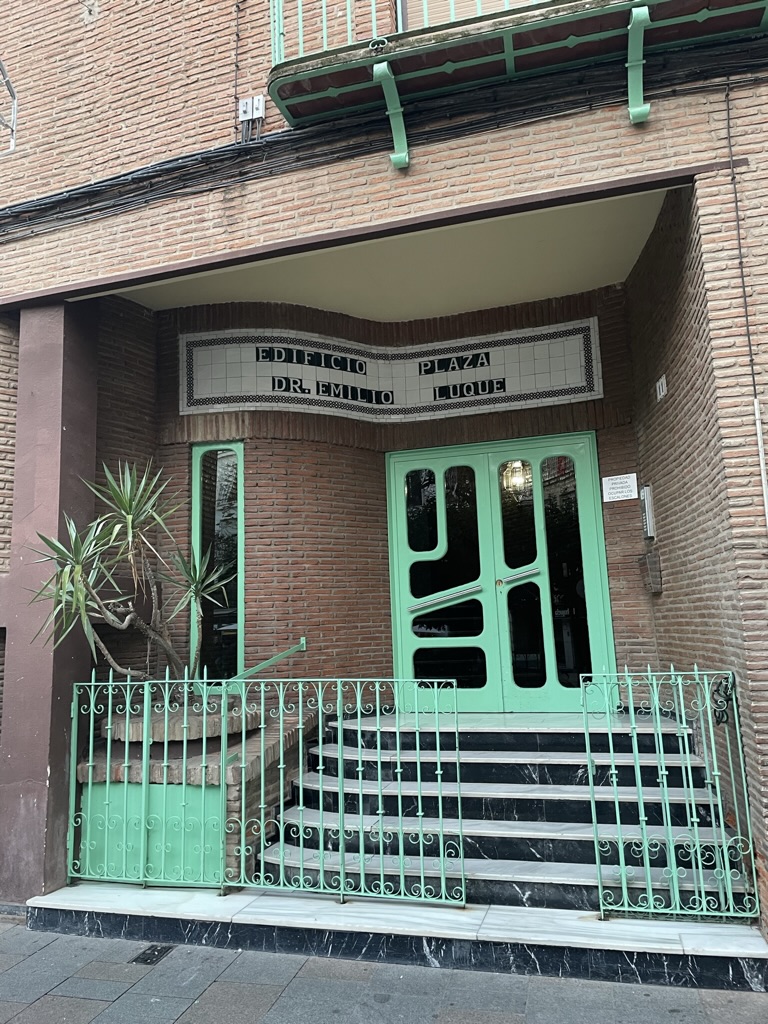
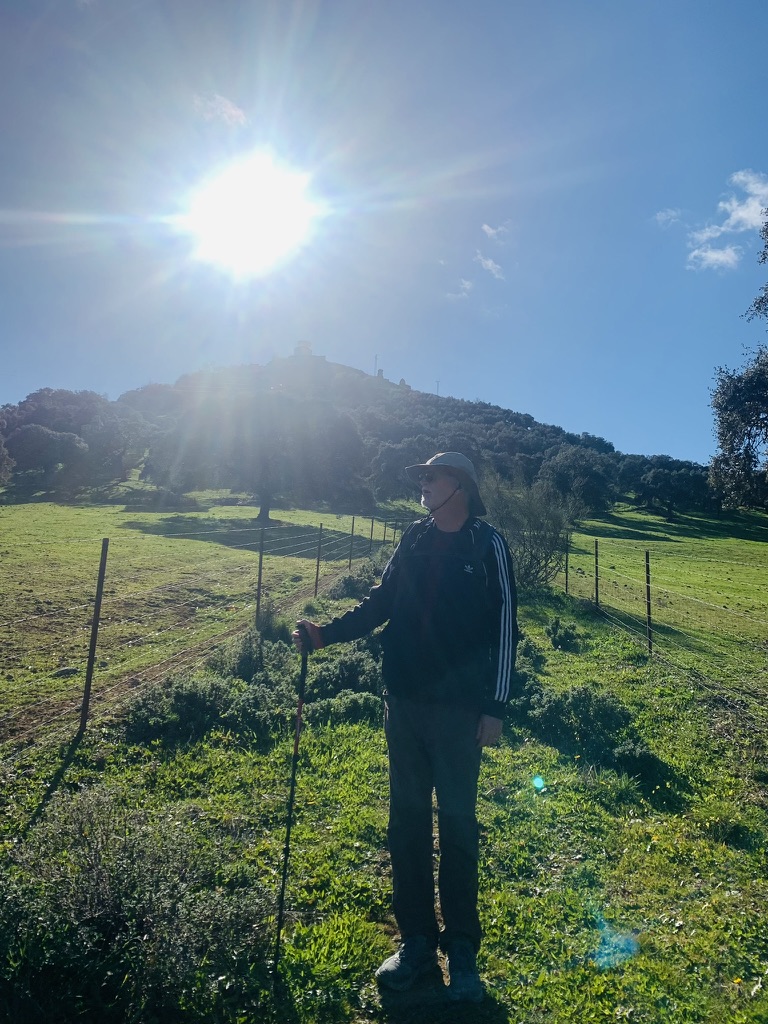
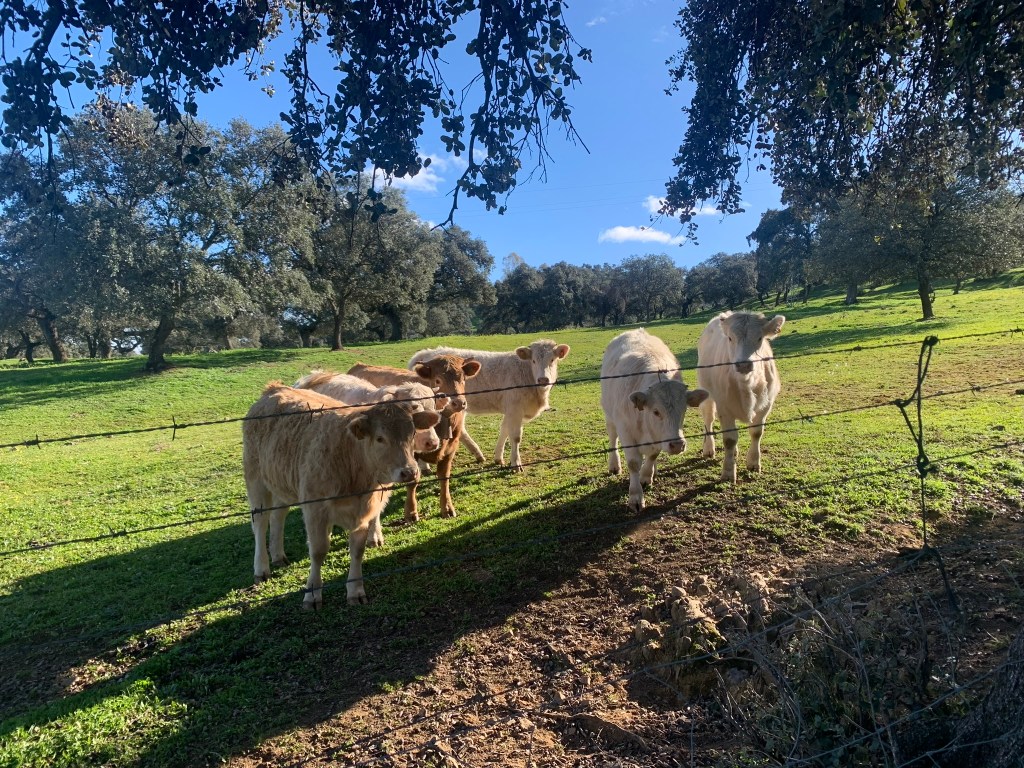
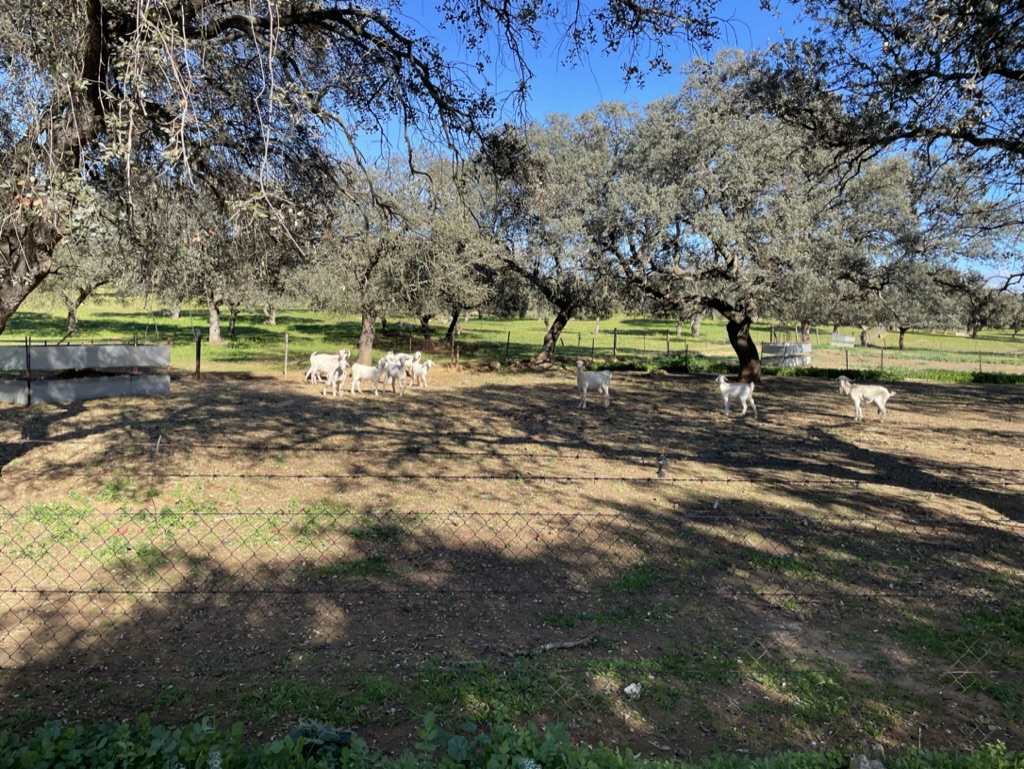
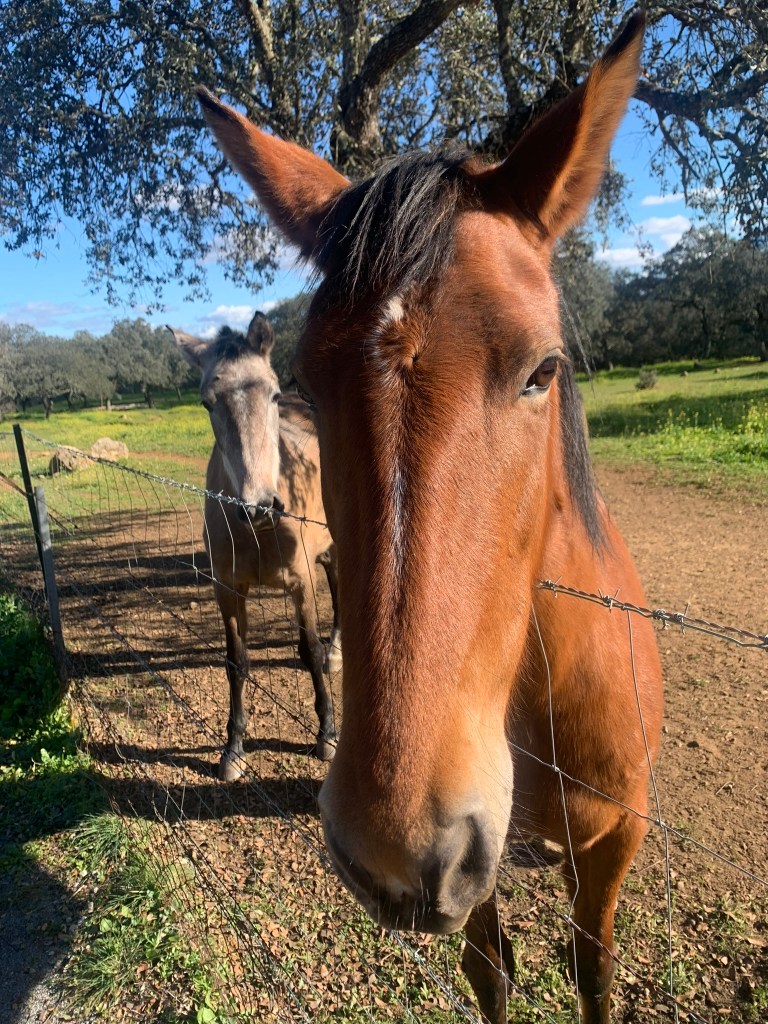
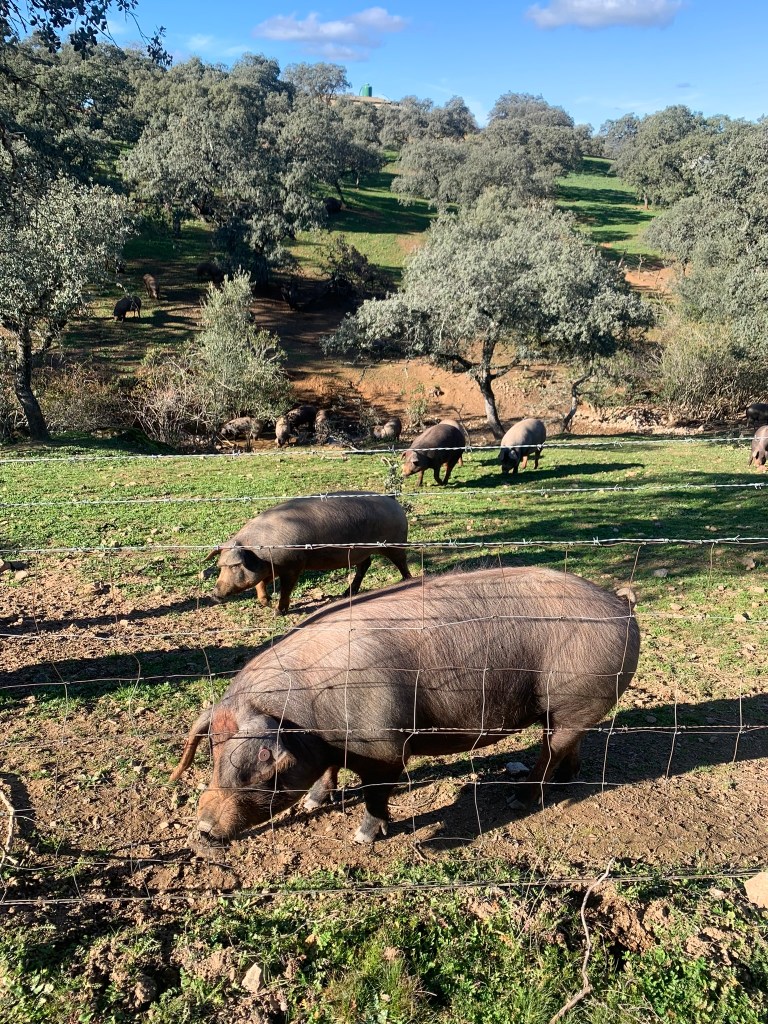
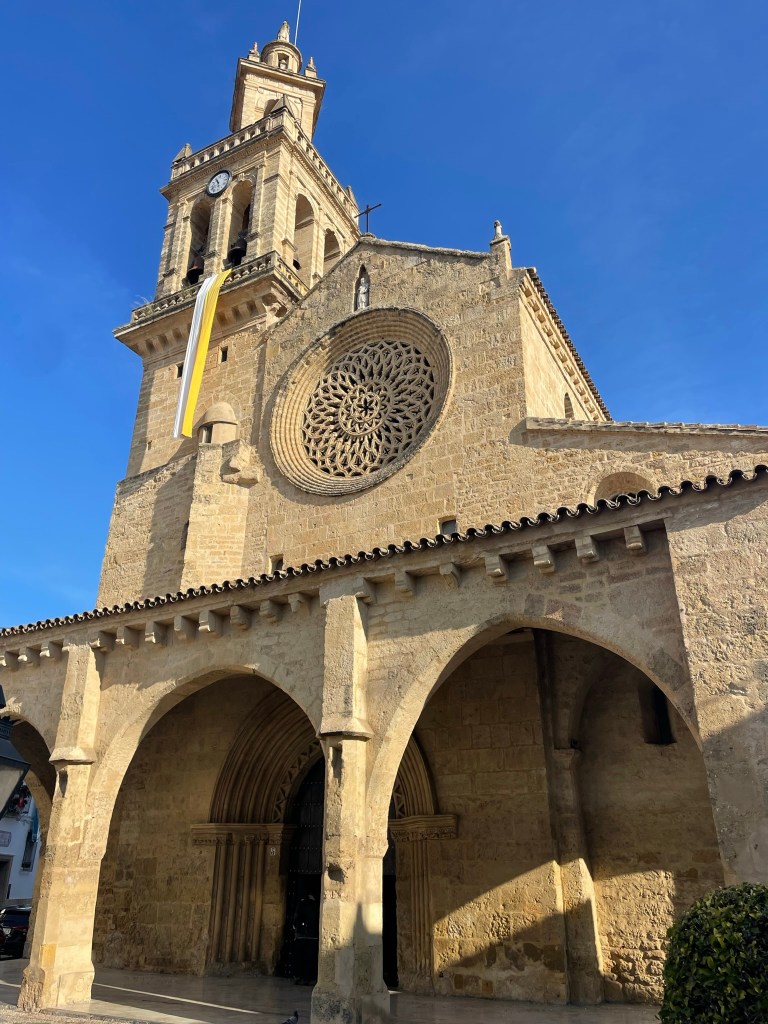
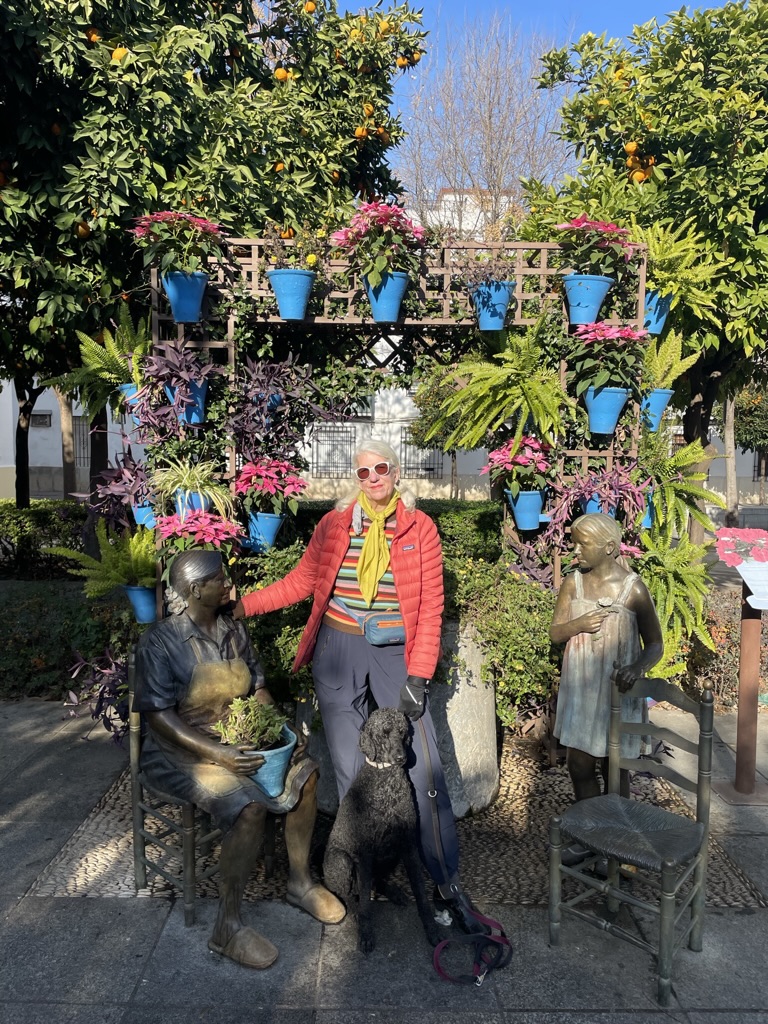
Sign that tracks bike and scooter traffic. Impressive numbers! Very cool doctors office: side view Dr. Luque wins “coolest office” hands down.We never get tired of this kind of stuff…The facade of giant downtown department store El Corte Ingles shimmers in the daylight.We took a New Year’s Eve Day hike starting from the small town of Obeja. We came to call it “The Hike of the Seven Animals,” for reasons that will become obvious. Although Steve could be added to the total for an even eight….Animal number one. Of course, there are cows everywhere in Spain. These girls agreed to have their picture taken. Animal number two: these goats (and, number three: the sheep next door) were guarded by some ferocious dogs (number four) , who followed us for a while, barking. These friendly horses (number five) lived across the road from the goats and sheep. There was a donkey in a nearby field who represented animal number six, but he was too far away to effectively photograph. I’m afraid that, like the sheep, you’re gonna have to take our word about the donkey. Animal number seven, and our favorite: the black pigs of Andalucia, feasting on the acorns that will fatten them up and turn them into a top-of-menu delicacy. Coco was not amused by these pigs however, and took a very wide berth around them. The whole hike was about five miles and took us back to the church at the top of the town. Most of the walk took place on the Ramos finca. Gracias Señor! AFC. This is one of Córdoba’s earliest churches, built under Ferdinand III. Iglesia de San Lorenzo. Denise joins the ladies in a public art tableau, celebrating patio culture.
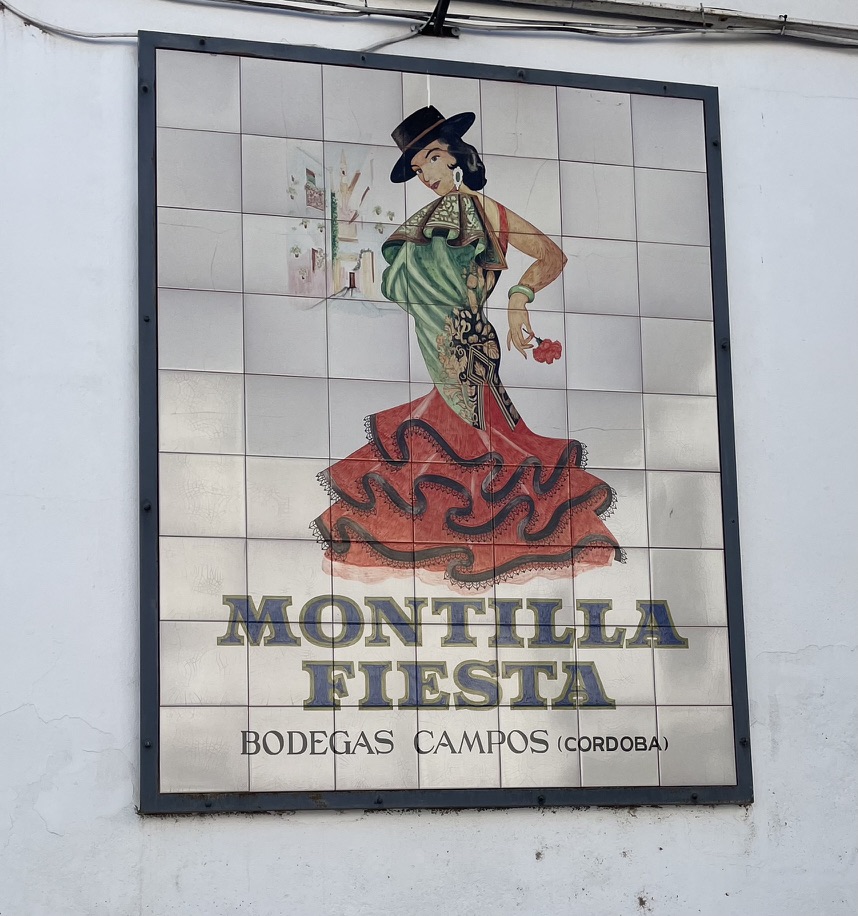
tiled liquor ads
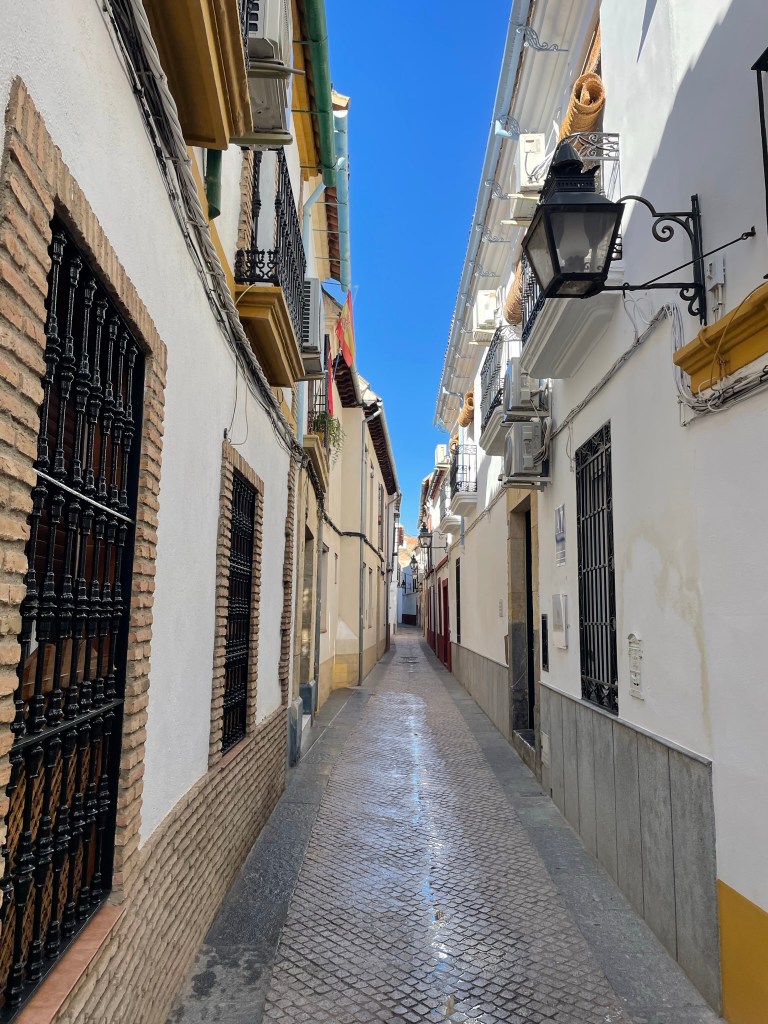
Cordoba alley
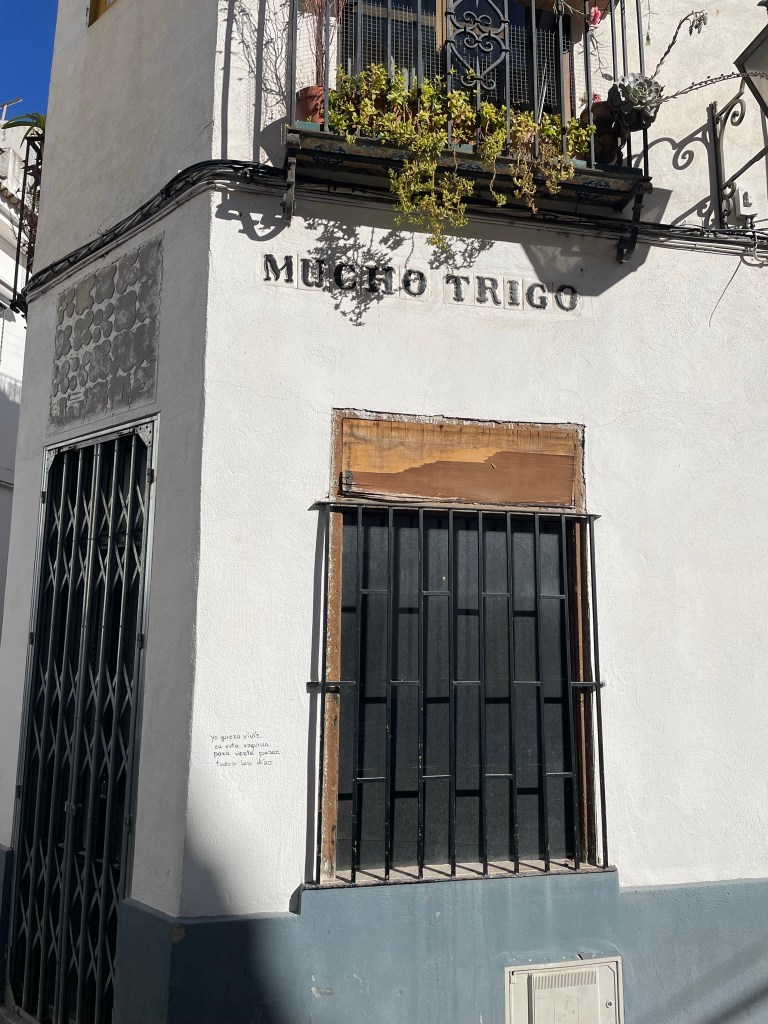
too much trigo!
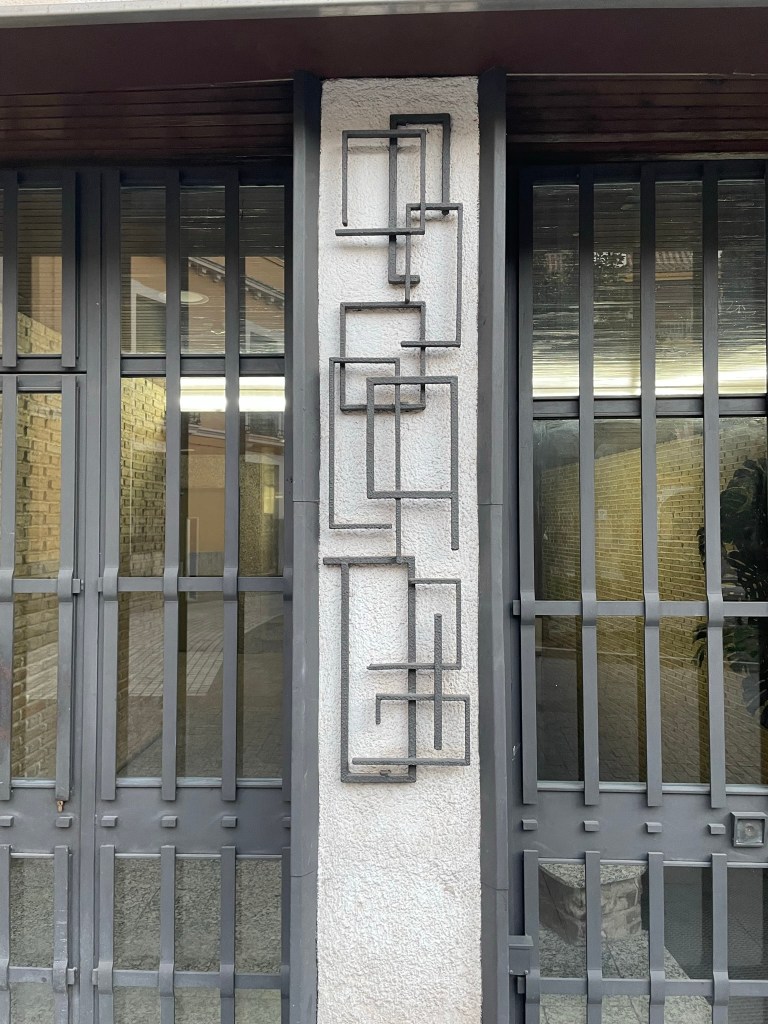
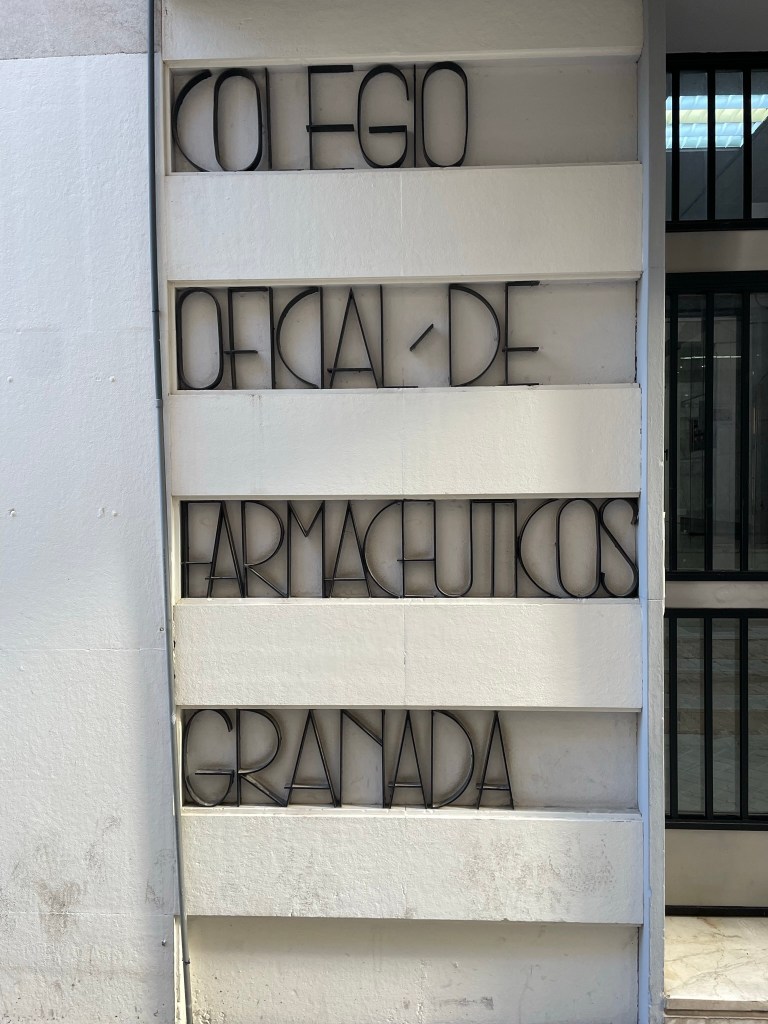
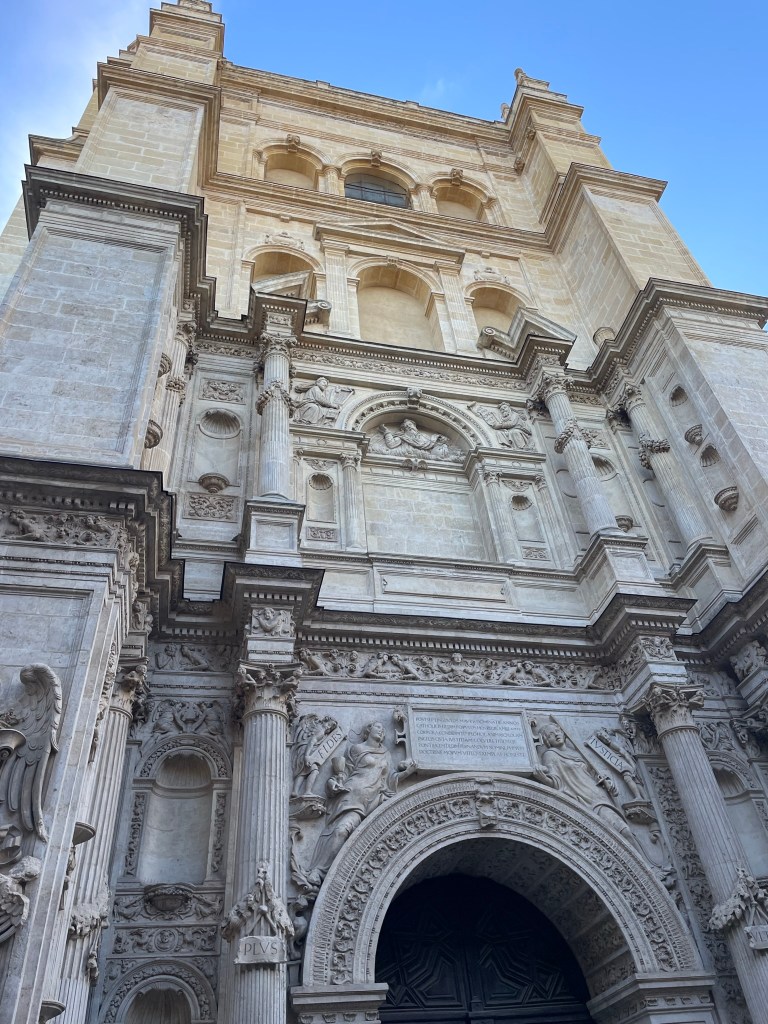
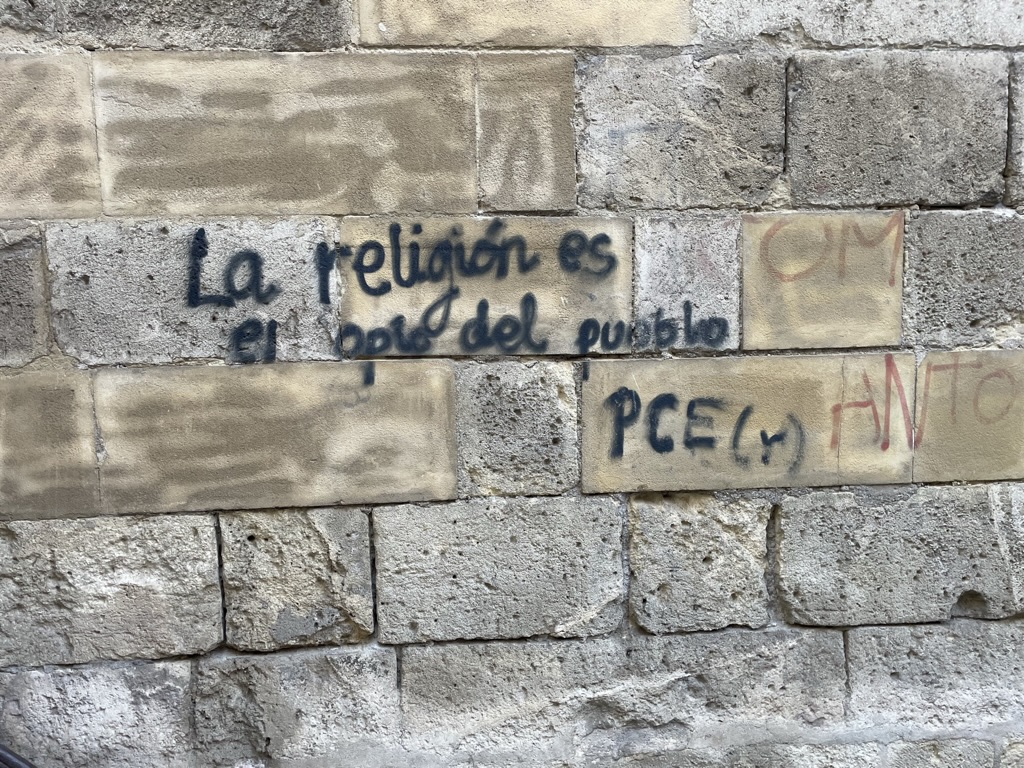
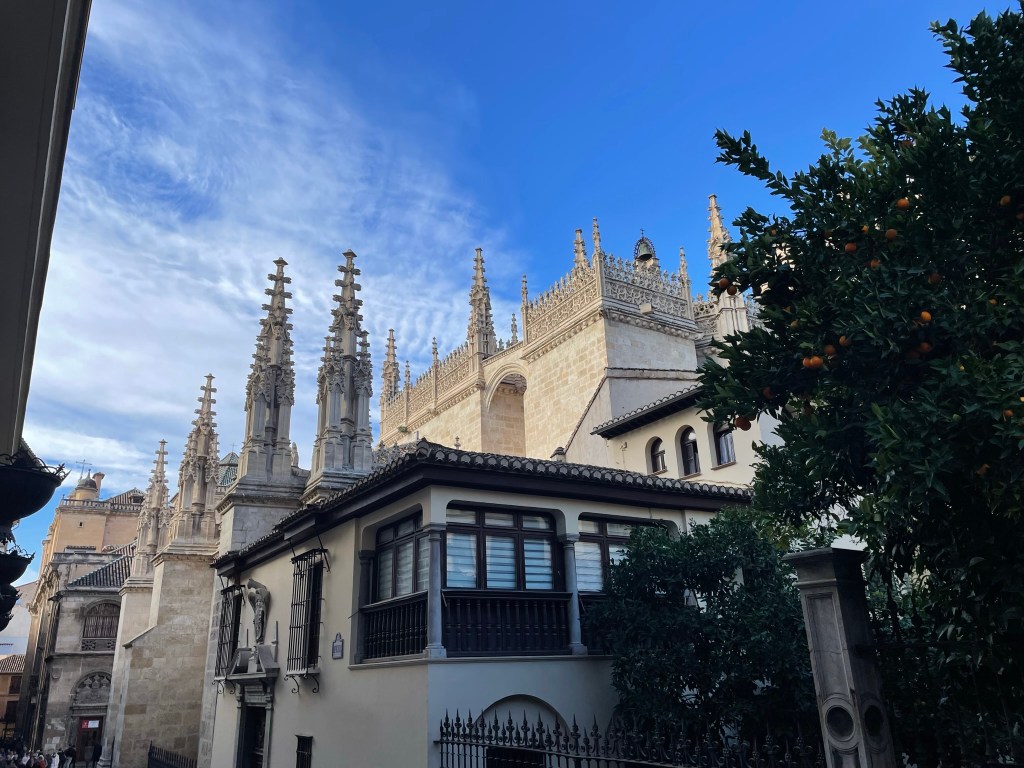
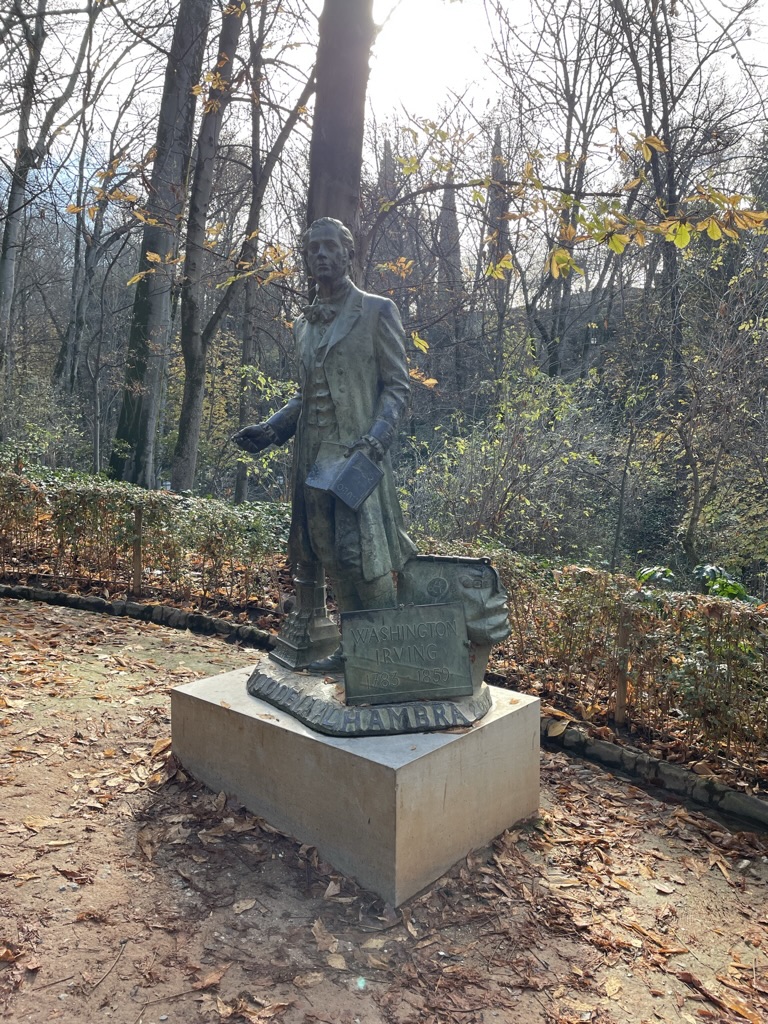
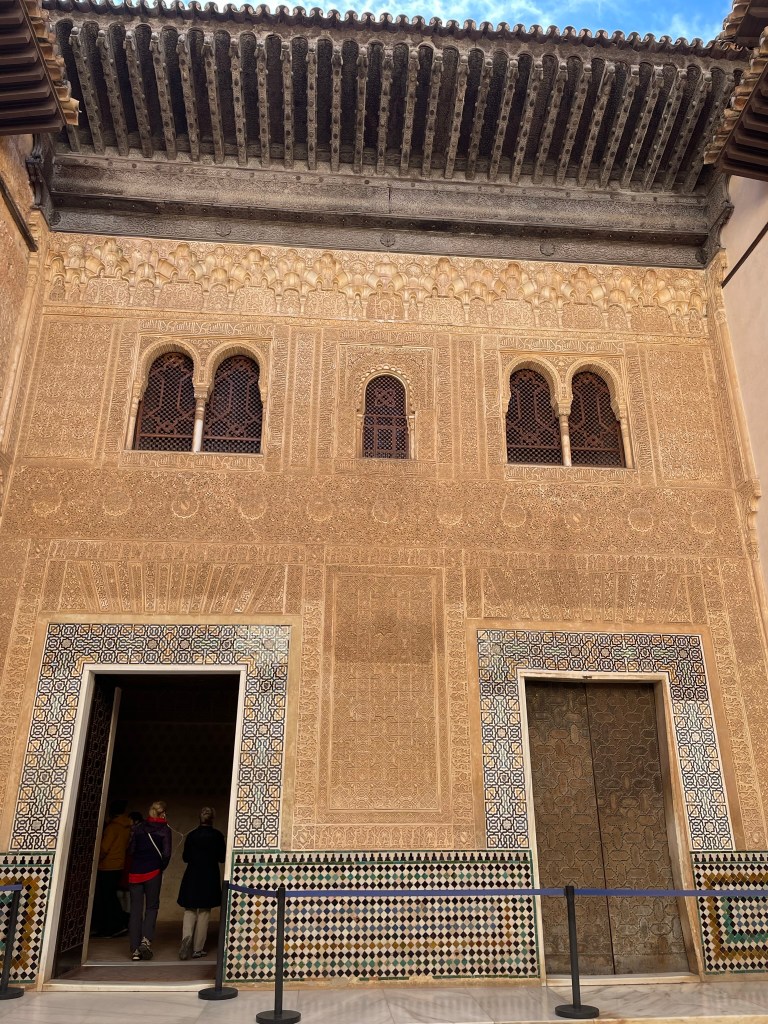
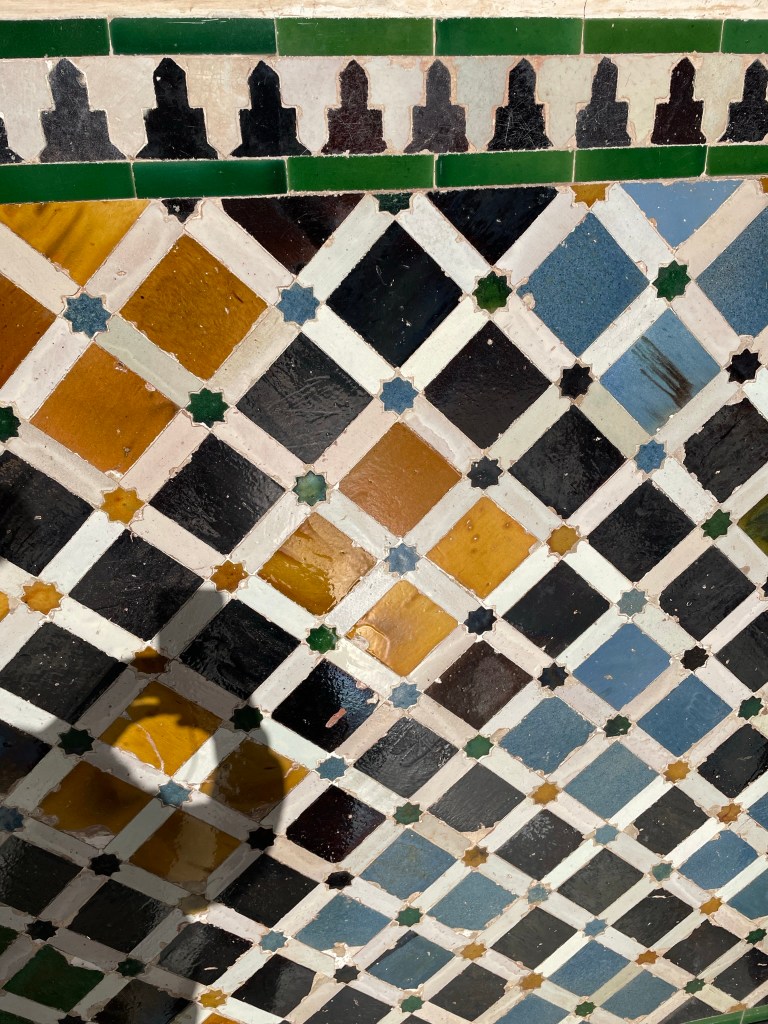
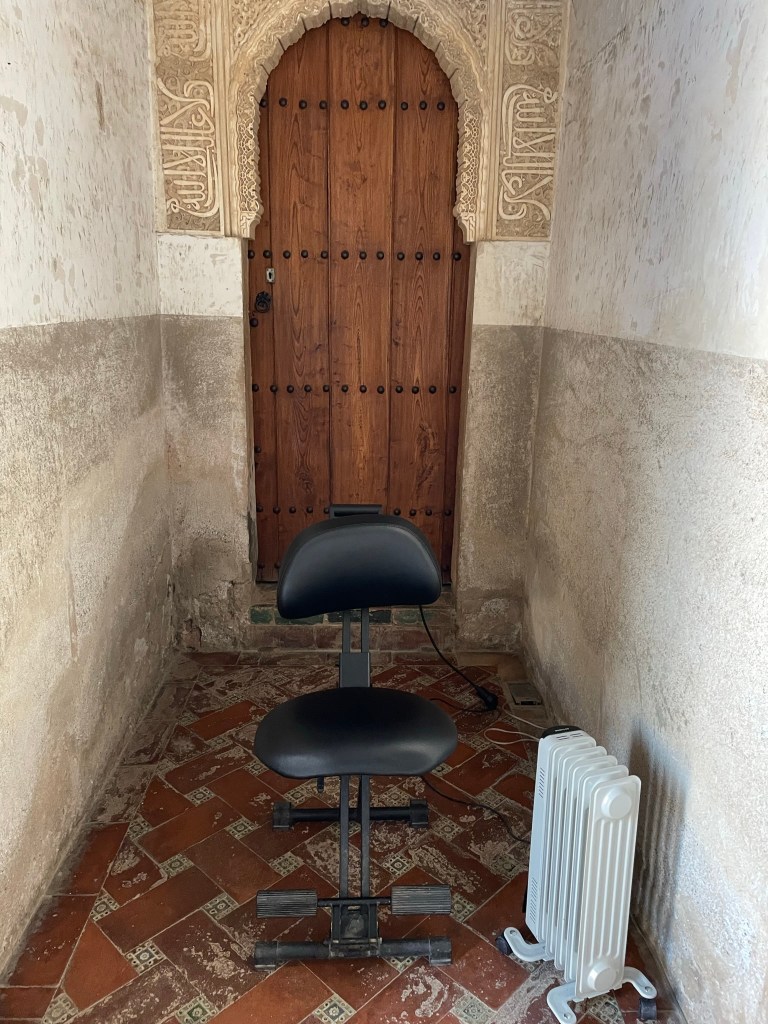
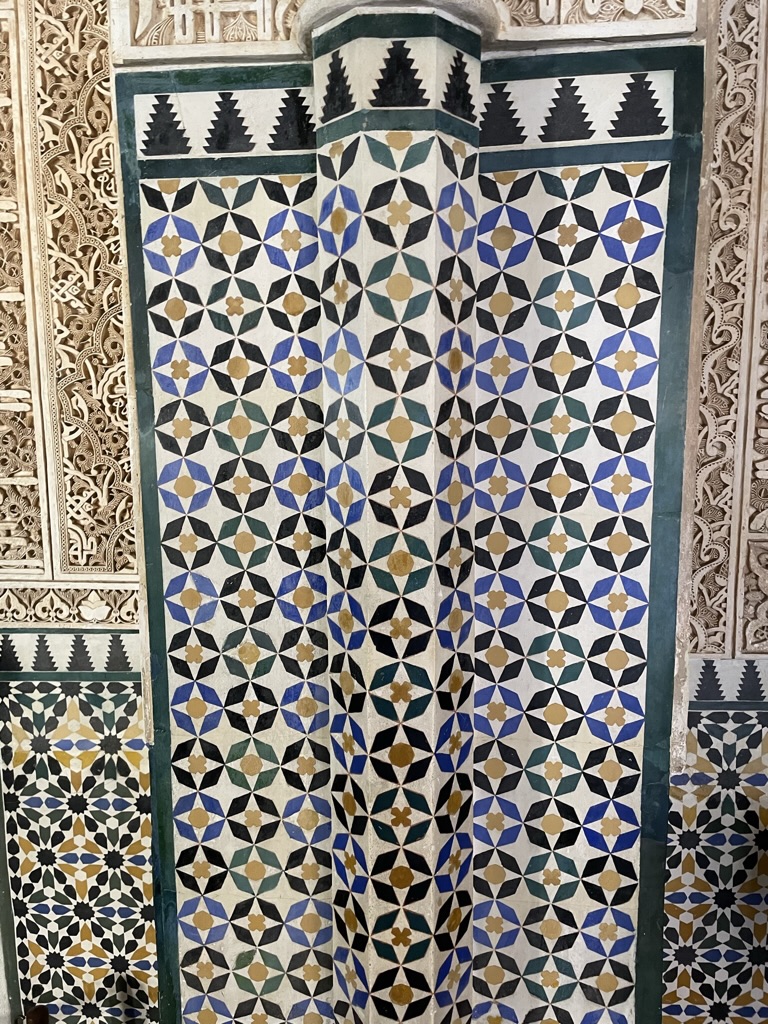
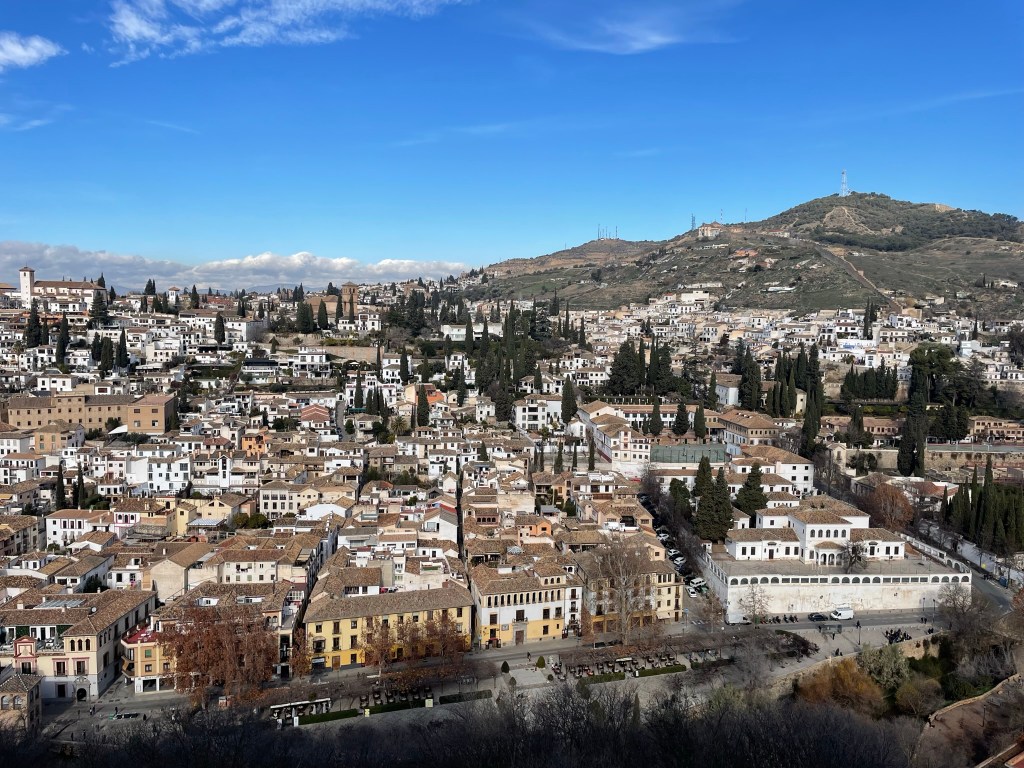
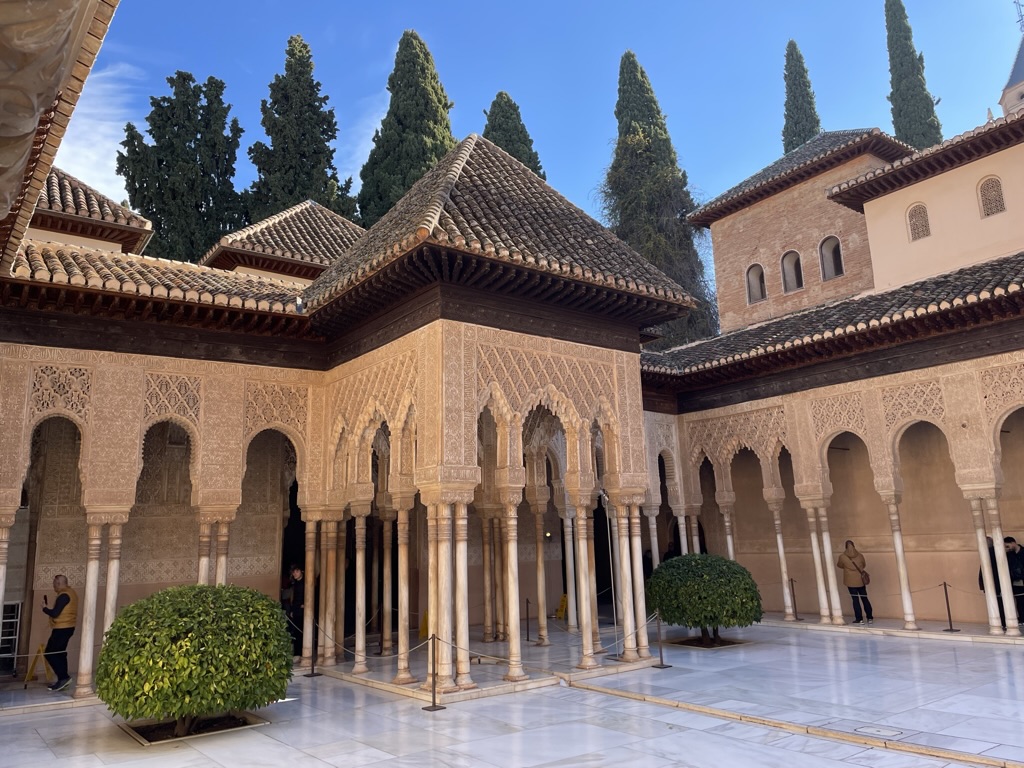
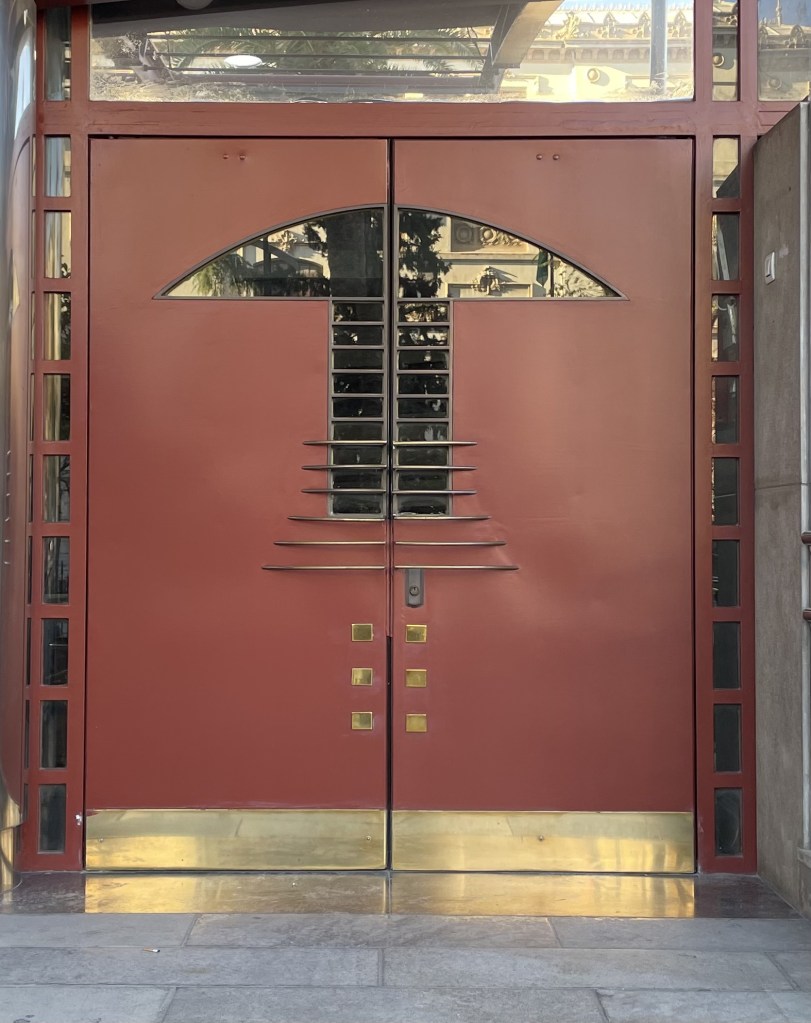
Steve had missed out on our visit to the Alhambra many years ago due to gastric distress, so he boarded a train to Granada on a brisk but sunny day and spent the day wandering the city and the historic Alhambra. One of the grand buildings of GranadaIt doesn’t matter what language you write it in, it’s always true. The spires of the Cathedral of Granada. On the road up to the hilltop Alhambra, you encounter this statue of American writer Washington Irving who led the campaign to restore the palace to its’ former grandeur, putting him in the same category of reverence that Woody Allen occupies in Oviedo. I can’t tell if this is a floor, ceiling, or wall. but I love it. The most important job in the Alhambra was that of the security guard, who was handomely rewarded by the Sultan with an ergonomic chair and a space heater from the local Hiper China. Definitely a wall. I would totally let the Moors decorate my house. The city of Granada from the terrace of the palace. Alhambra interior courtyard. Symmetry was keyOn the walk back to the train station, I noticed these doors on the Ministry of Finance building.
WE INTERRRUPT THIS BLOG POST ABOUT CORDOBA, SPAIN FOR BRIEF LOOK AT THE SIDE TRIP DENISE TOOK TO MADRID TO SEE FRIENDS ANDREA, ERIC, AND COLOMA….
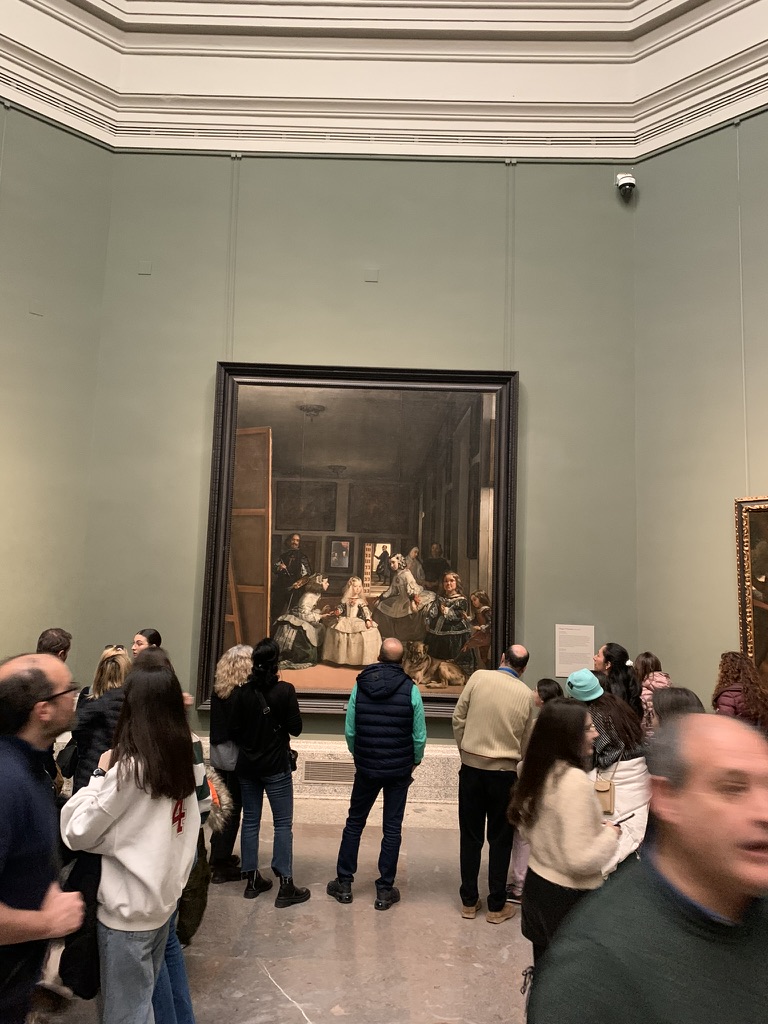
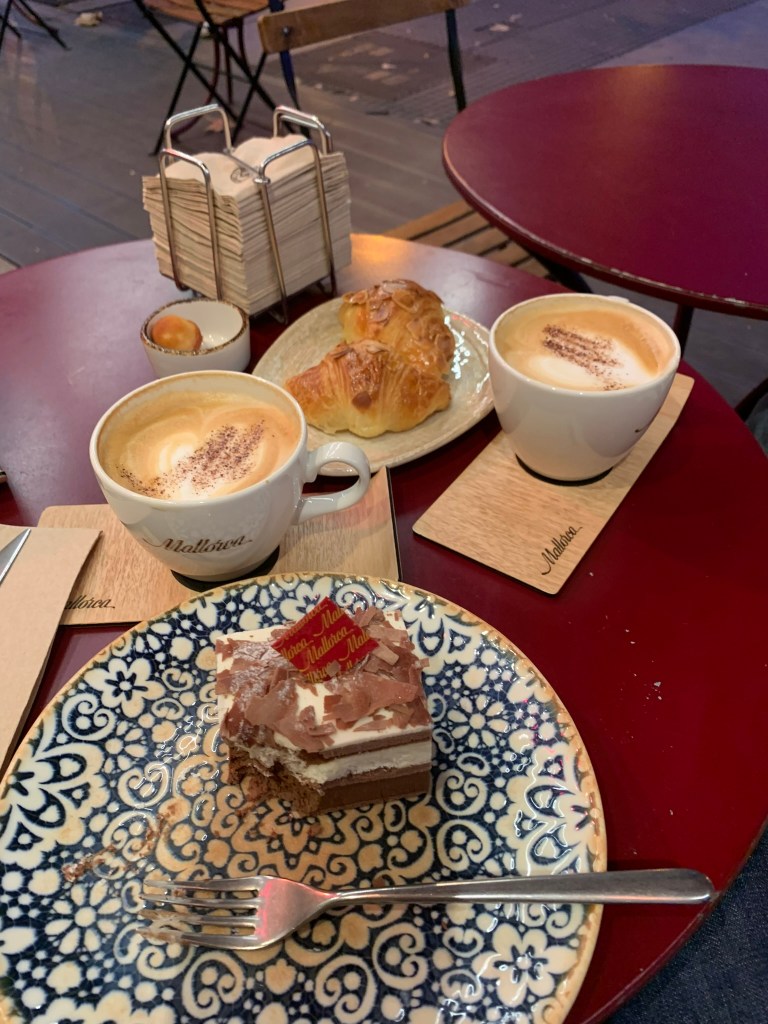
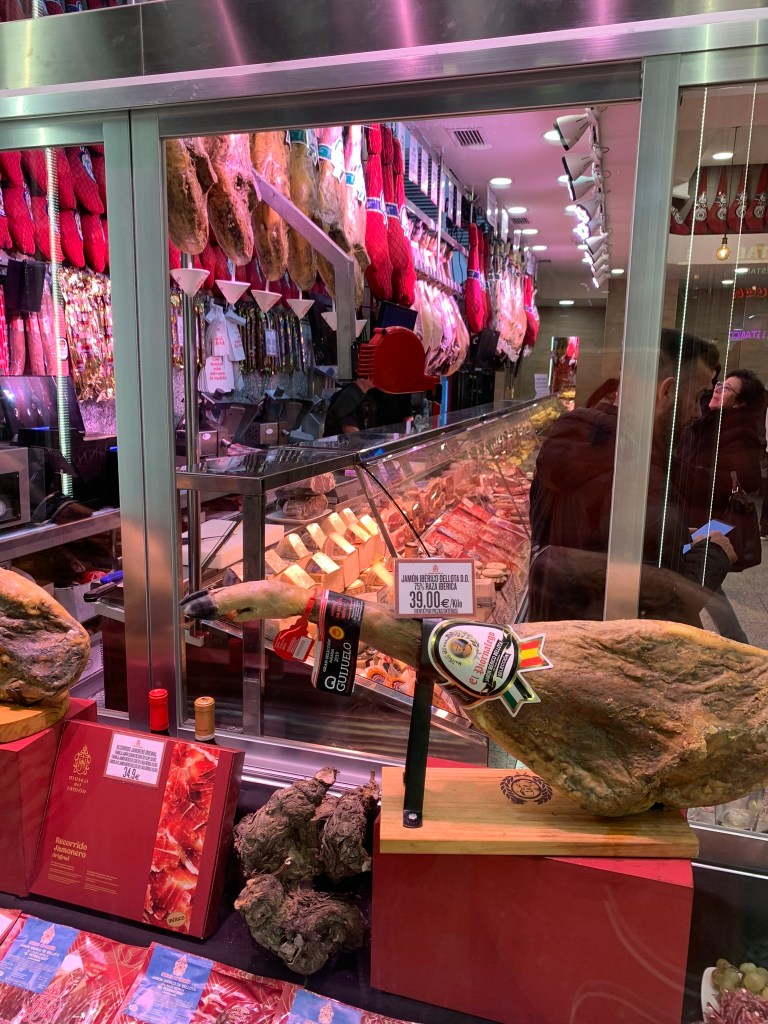
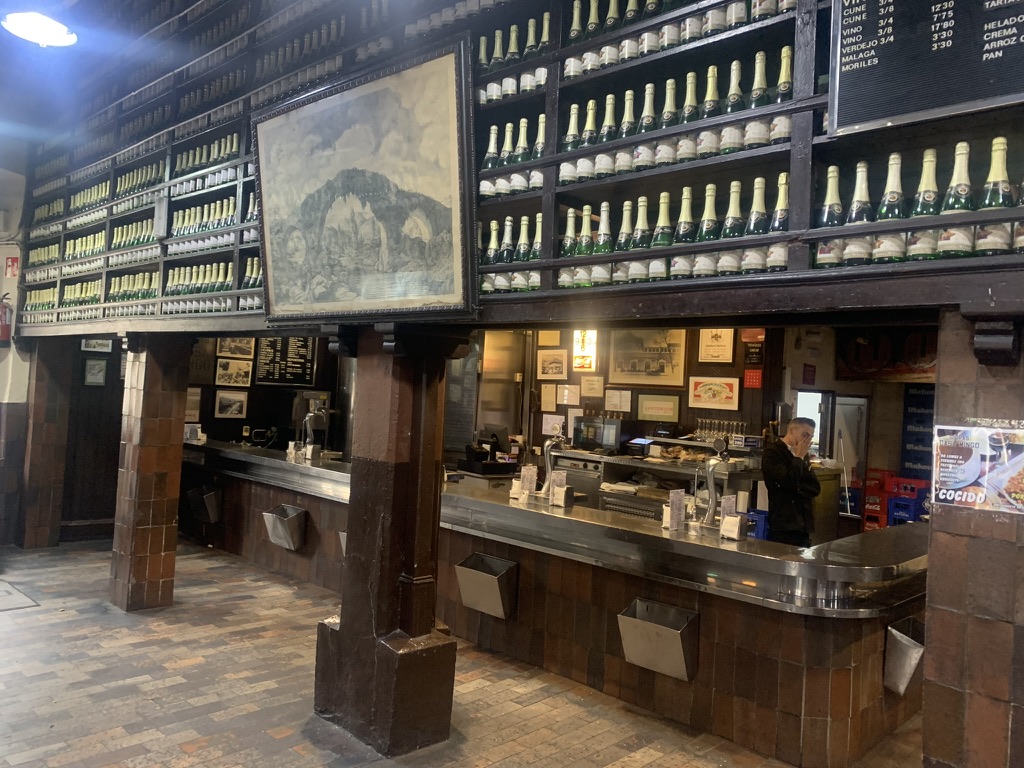
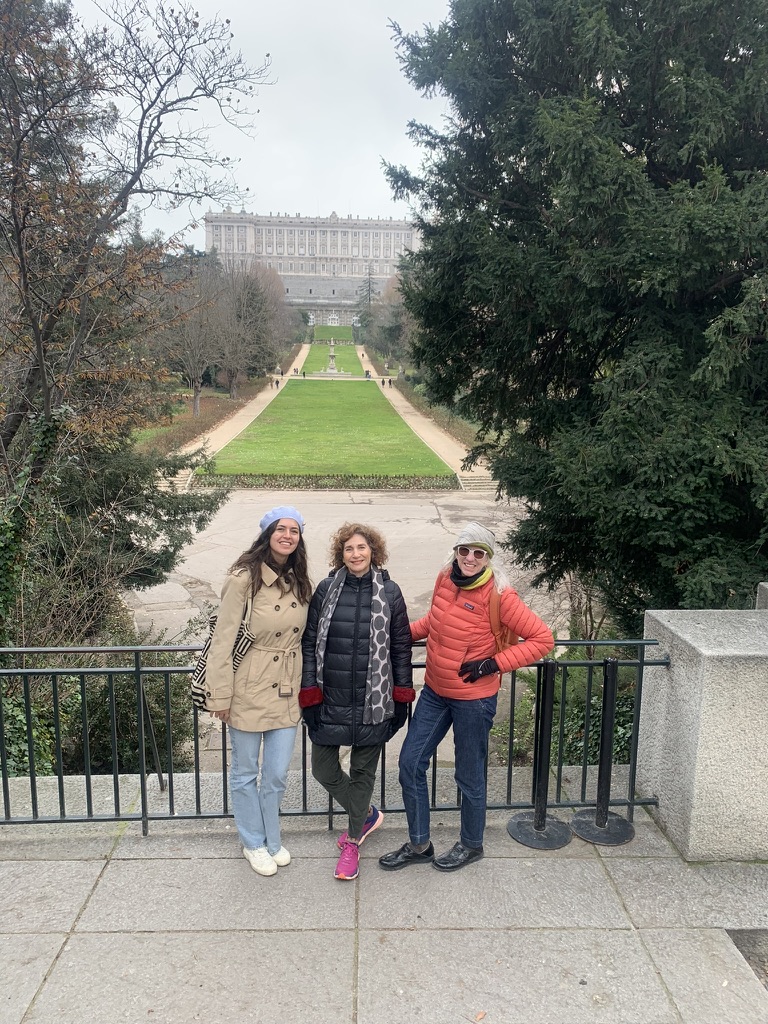
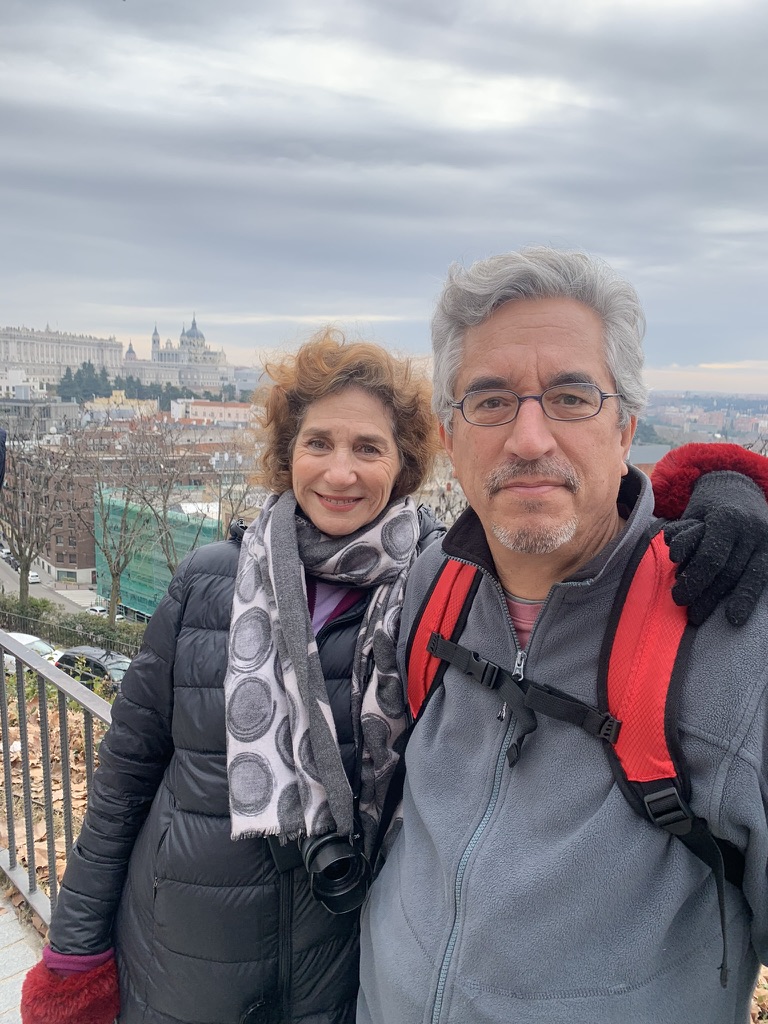
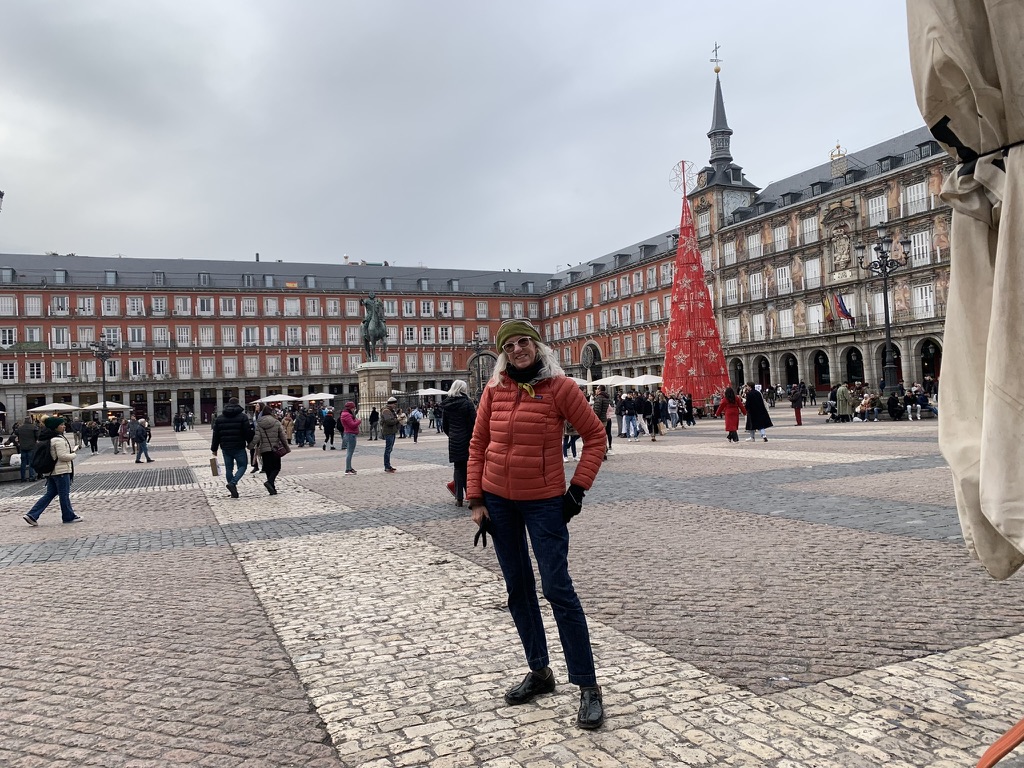
When you get a chance to visit the Museo del Prado in Madrid perhaps you will make a bee line to the Valezquez room, as I did. Interestingly, the museum also happened to have a special exhibit in another wing titled “On the Reverse” that was a fascinating look at the hidden side of the canvass paintings in the Prado collection. Needless to say, this very recognizable work by the Spanish master happened to fit neatly into the theme. Indulge me for a minute while I talk about fashion – particularly the exsquiste genious of Loewe. It’s a Spanish luxury brand but was actually founded by a German in the 1870’s who took the demand for Spanish leather craftsmanship to international heights. I took my freinds over to the Loewe flagship store on Calle de Serrano and it was a feast for the eyes. The Madrileño’s take their afternoon coffee very seriously. It’s all very sweet!If you visit Eric and Coloma in Madrid you will be taken to the very best hole-in-the-wall tapas bars…and there are many, many to enjoy in Madrid! The tapas crawl is a very real deal and its quite natural to go here for this, there for that. This spot was the place that serves THE BEST tortilla in the entire world. This may look like a glamour purchase, but honestly it’s the kind of thing people just have in their larder. A big hunk of jamon ready to slice and carve as needed…which is pretty much all the time. A window display in Madrid. Very pretty, I say. This was an enchanting bar that was not open yet but I ducked in to take a pic. Three queens at the royal Palace in Madrid My dear Spanish pals, Eric y Coloma, against the backdrop of the city on a cloudy day. I’ve know Eric since I was a young teen. I’m giving some serious Plaza Mayor vibes here…right?
THAT CONCLUDES OUR TOUR OF MADRID. WE NOW RETURN TO YOUR REGULARLY PLANNED BLOG EXPERIENCE HIGHLIGHTING CORDOBA, SPAIN.
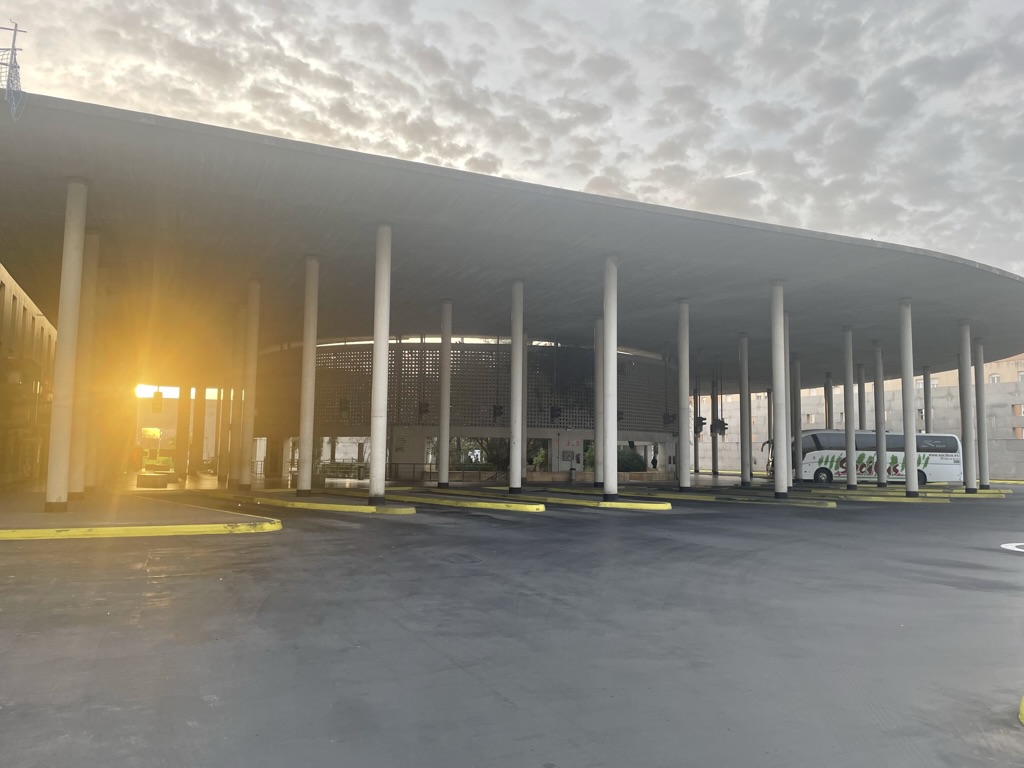
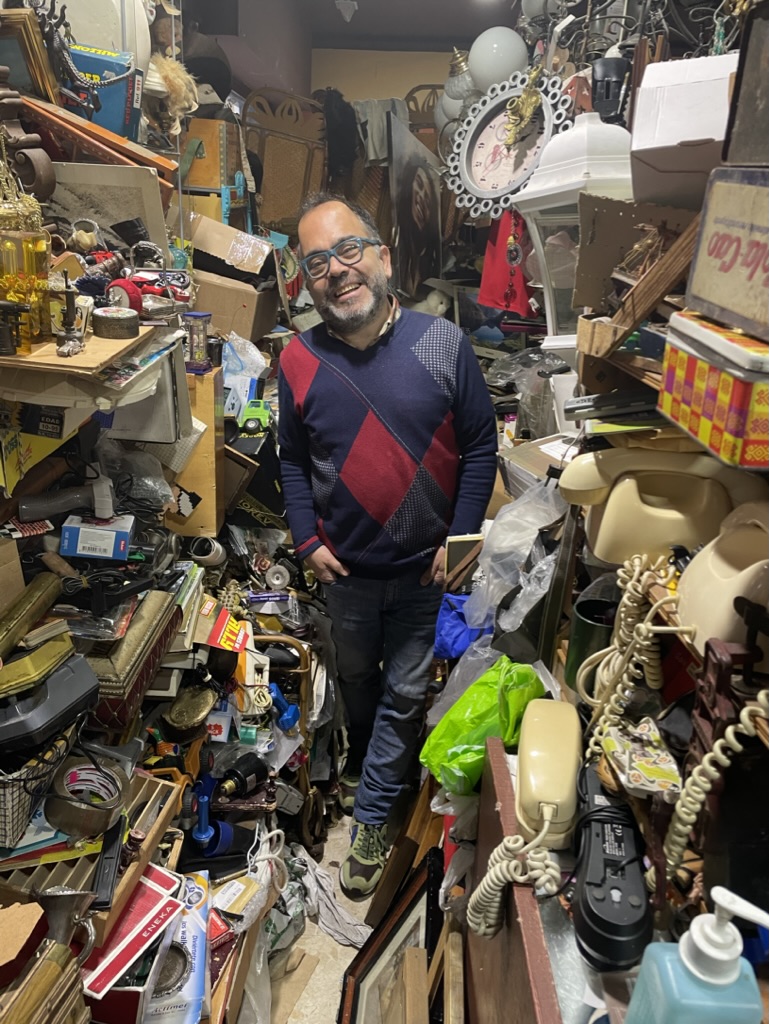
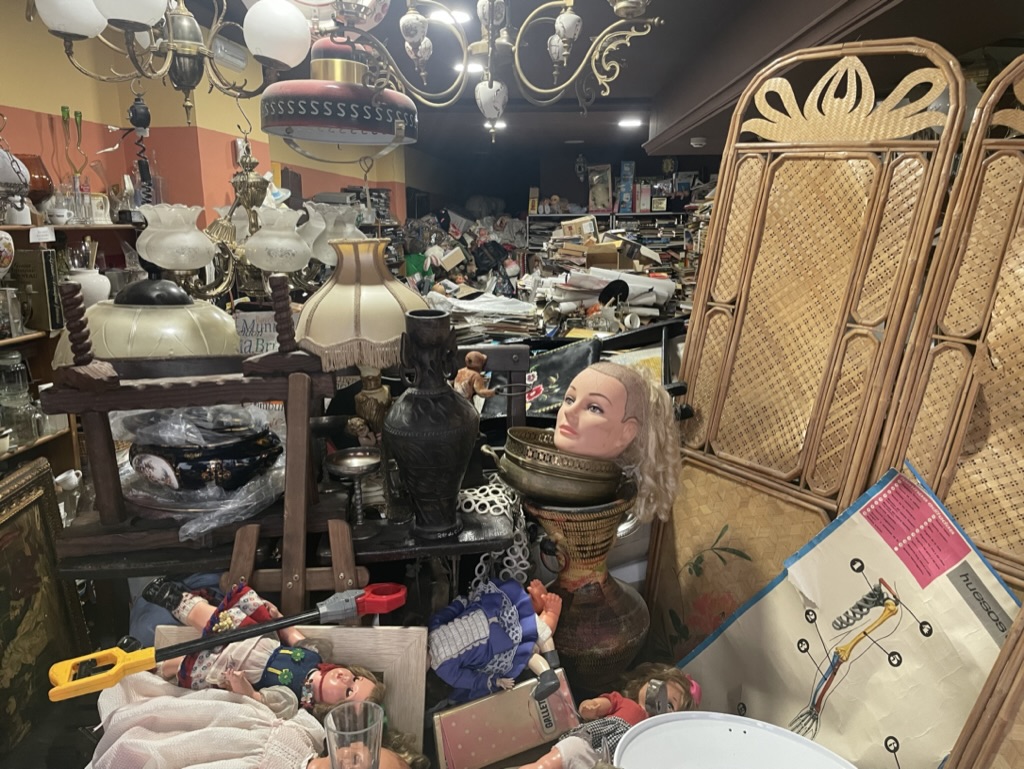
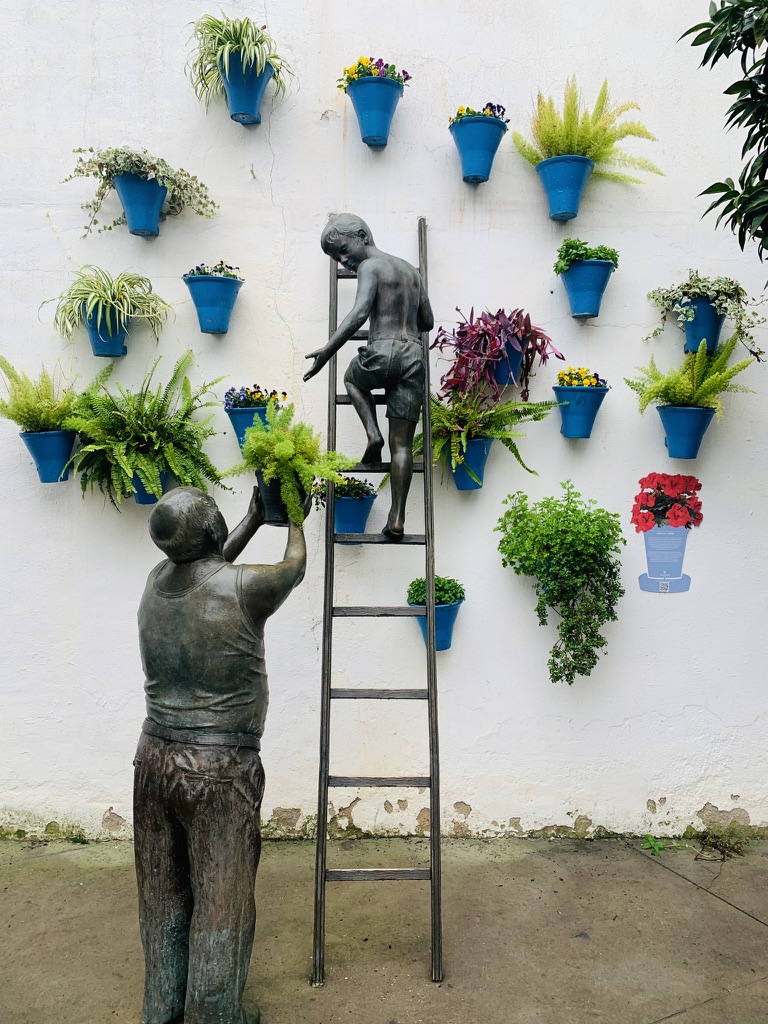
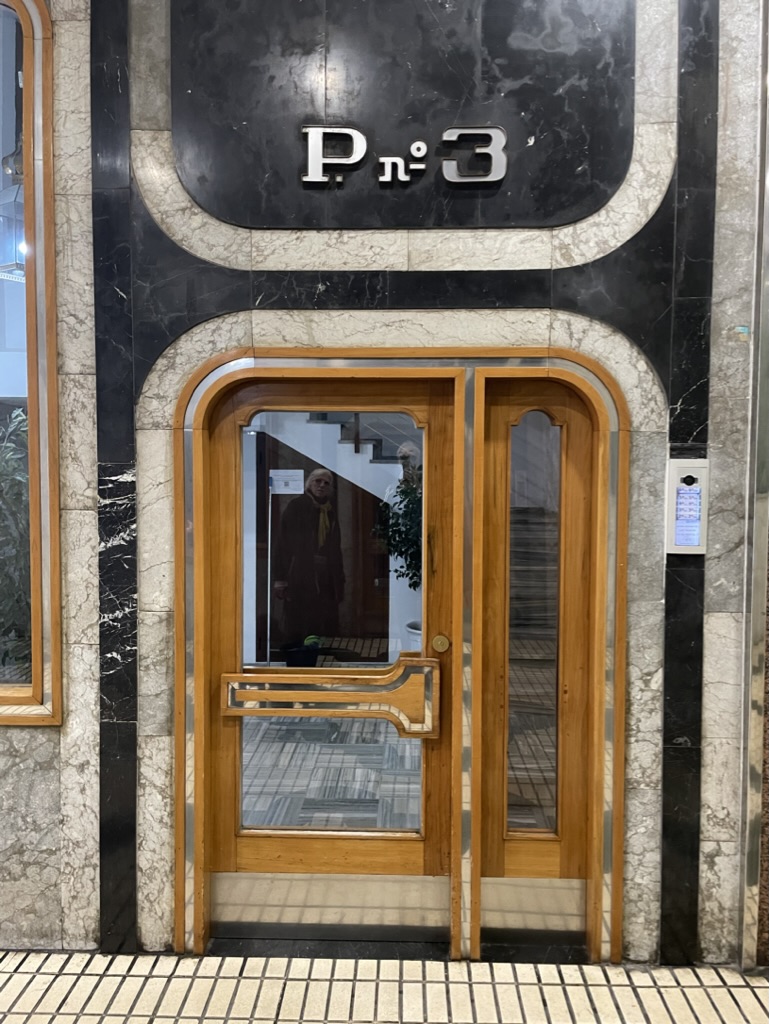
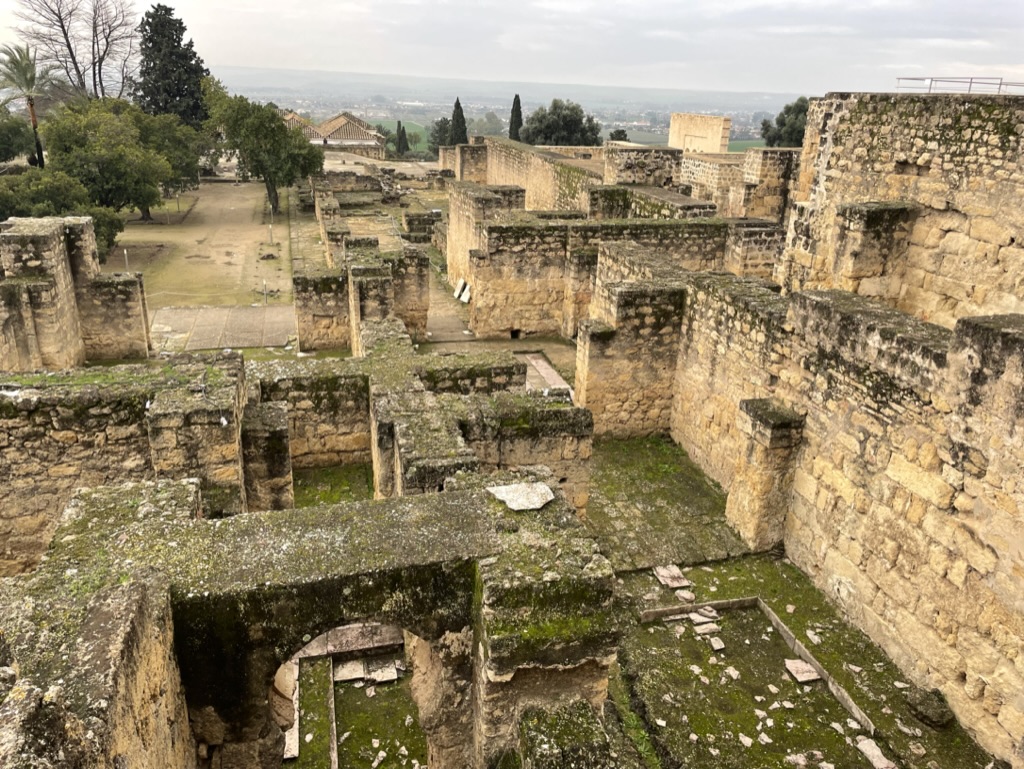
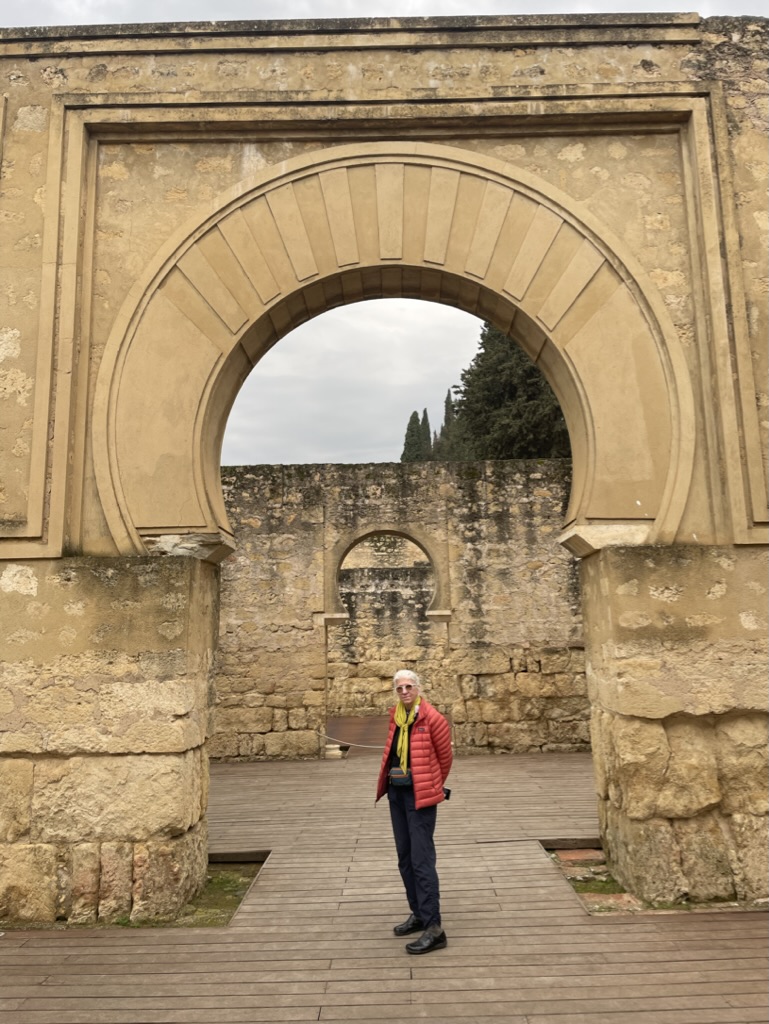
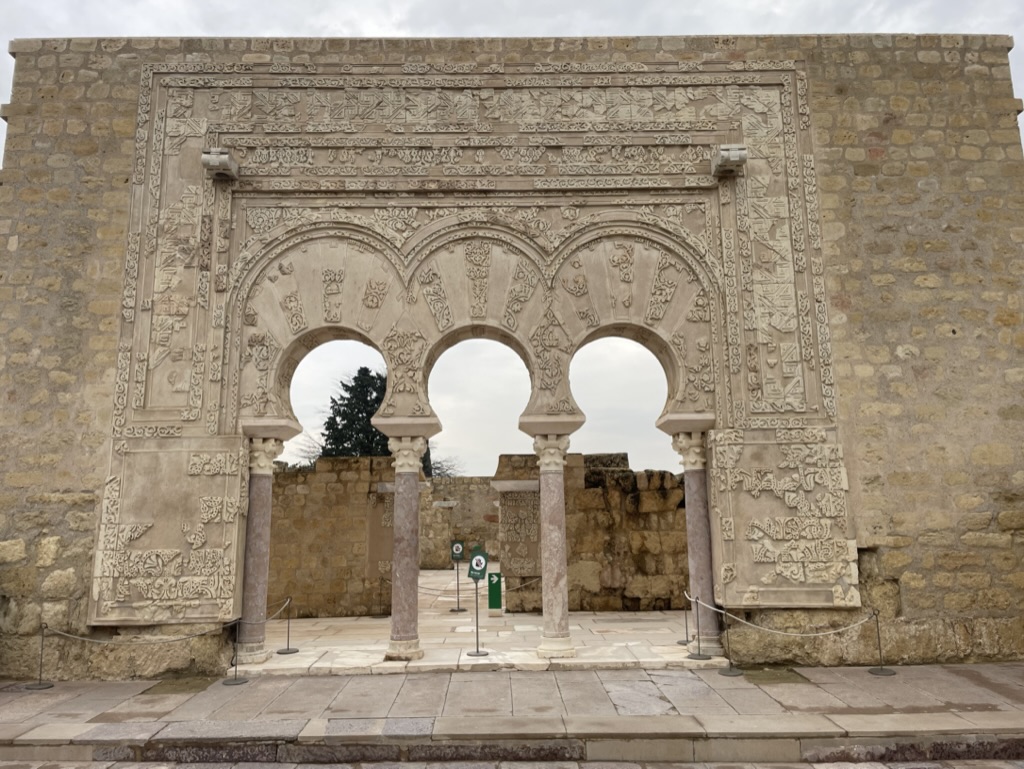
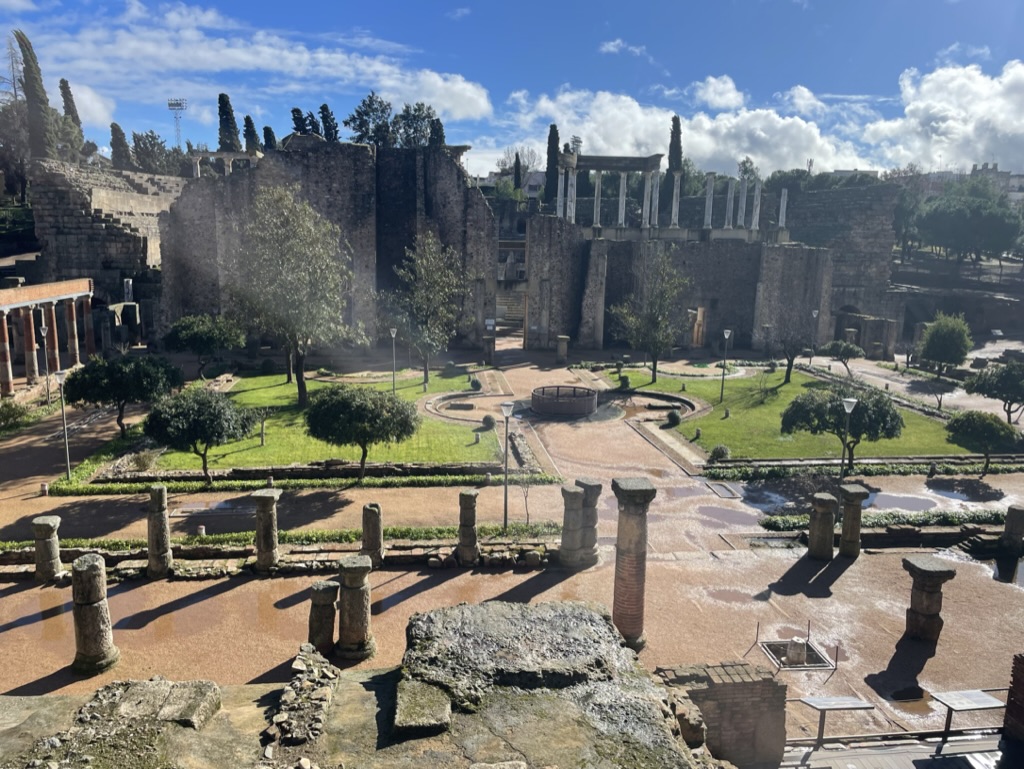
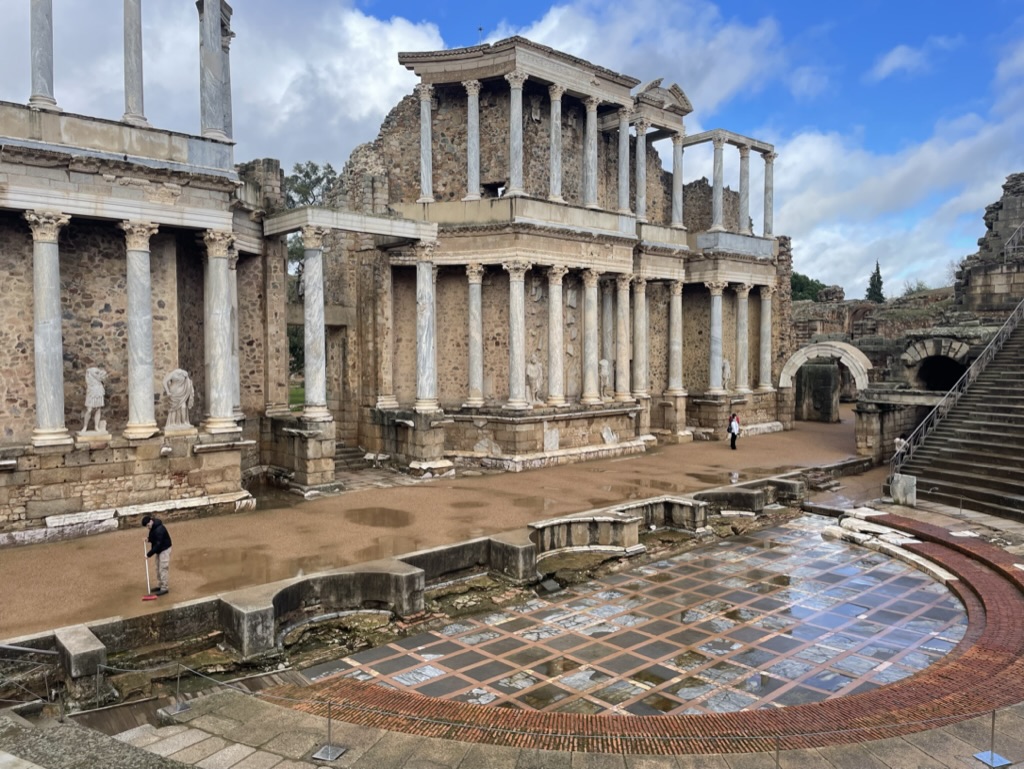
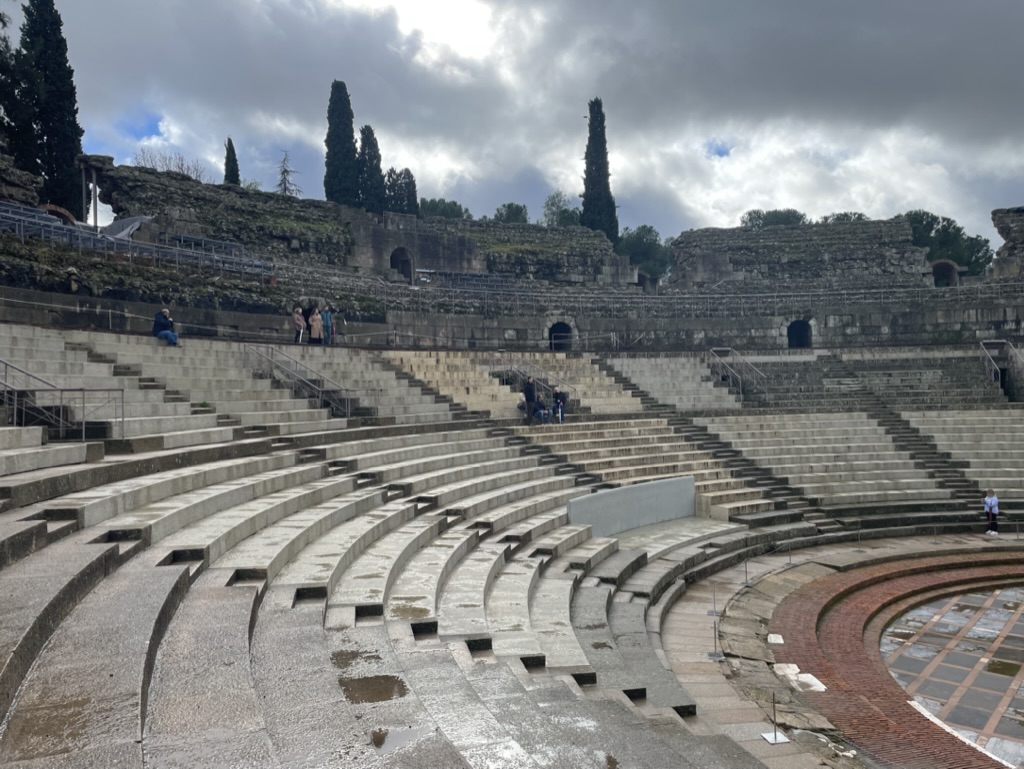
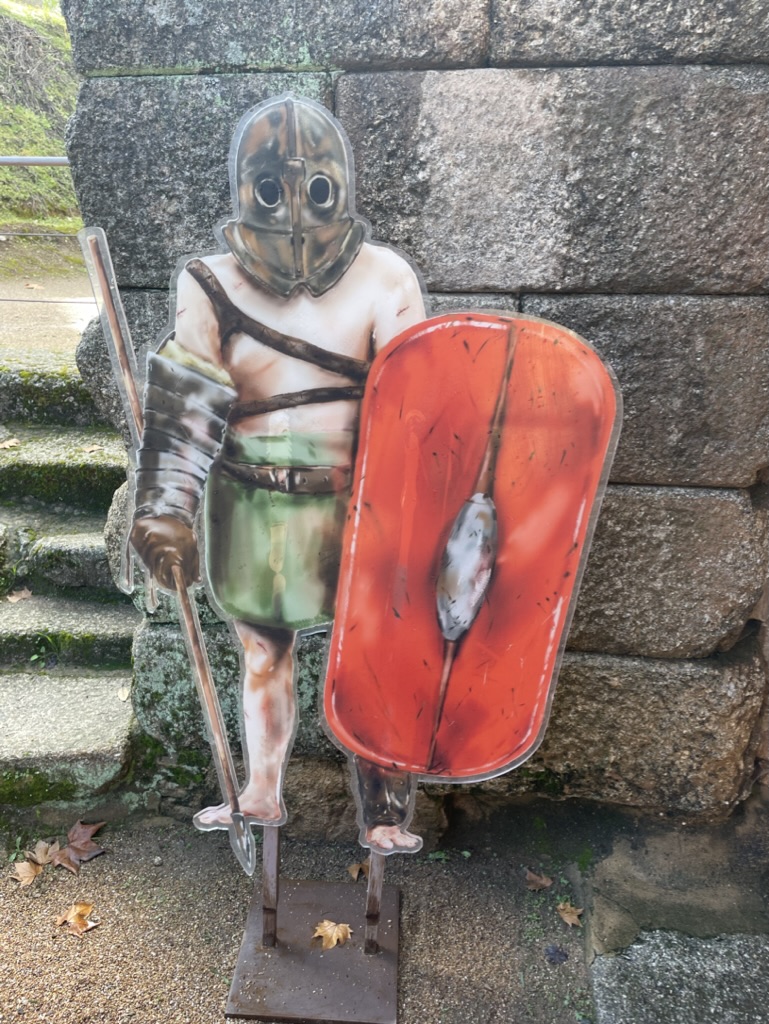
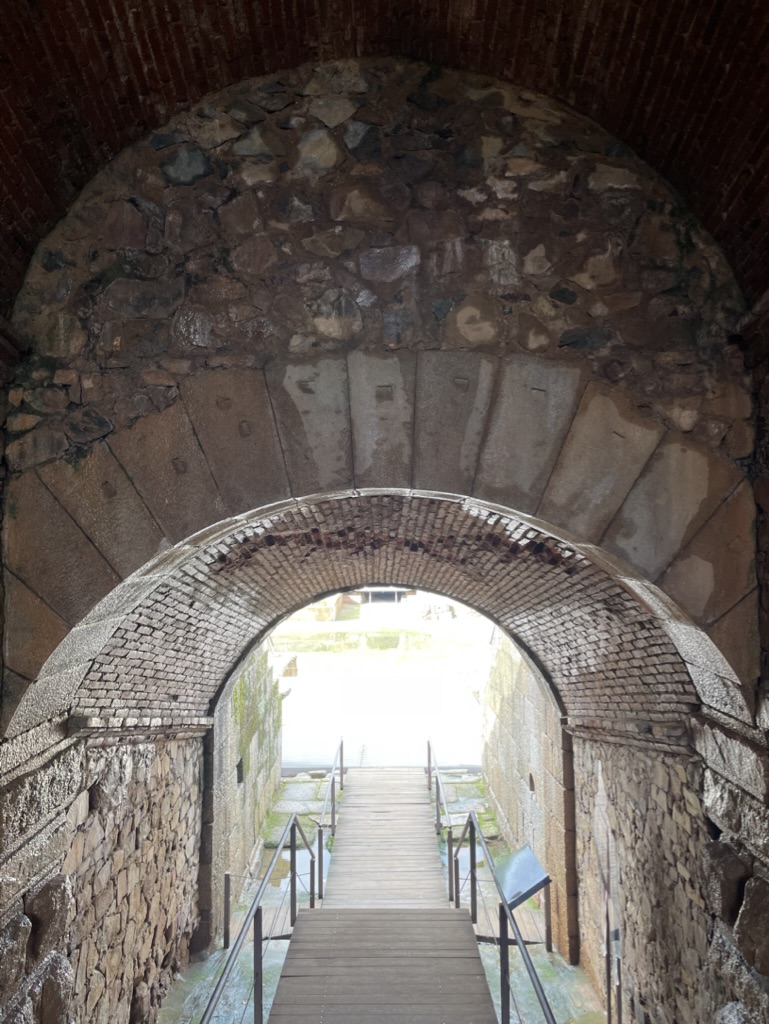
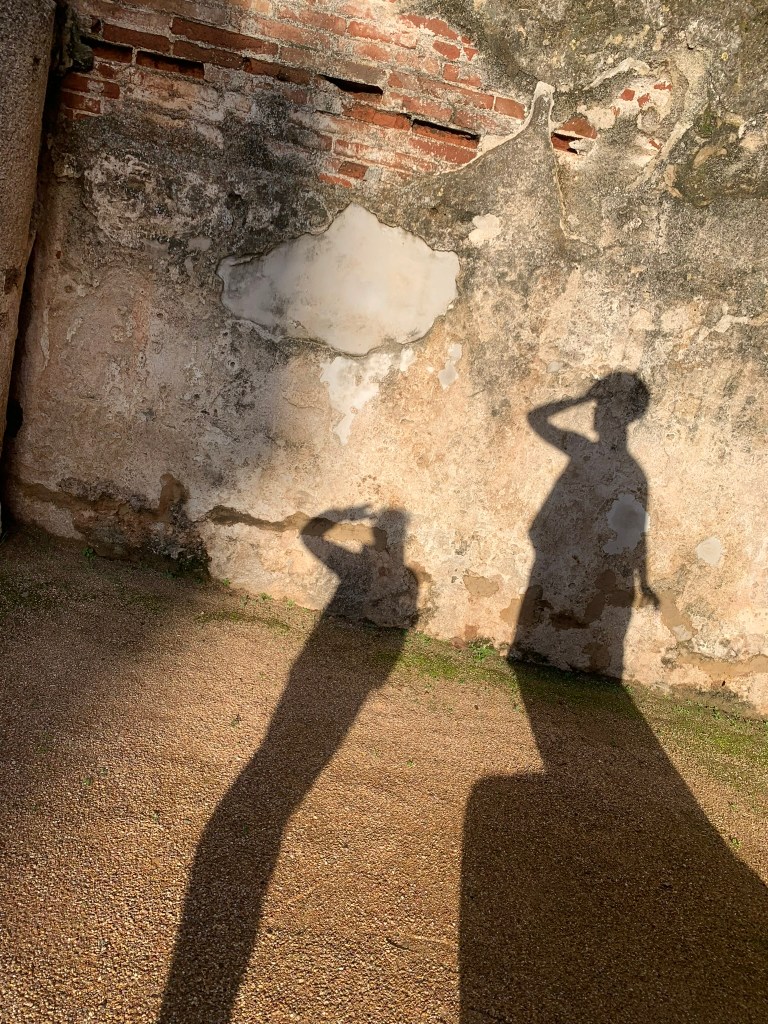
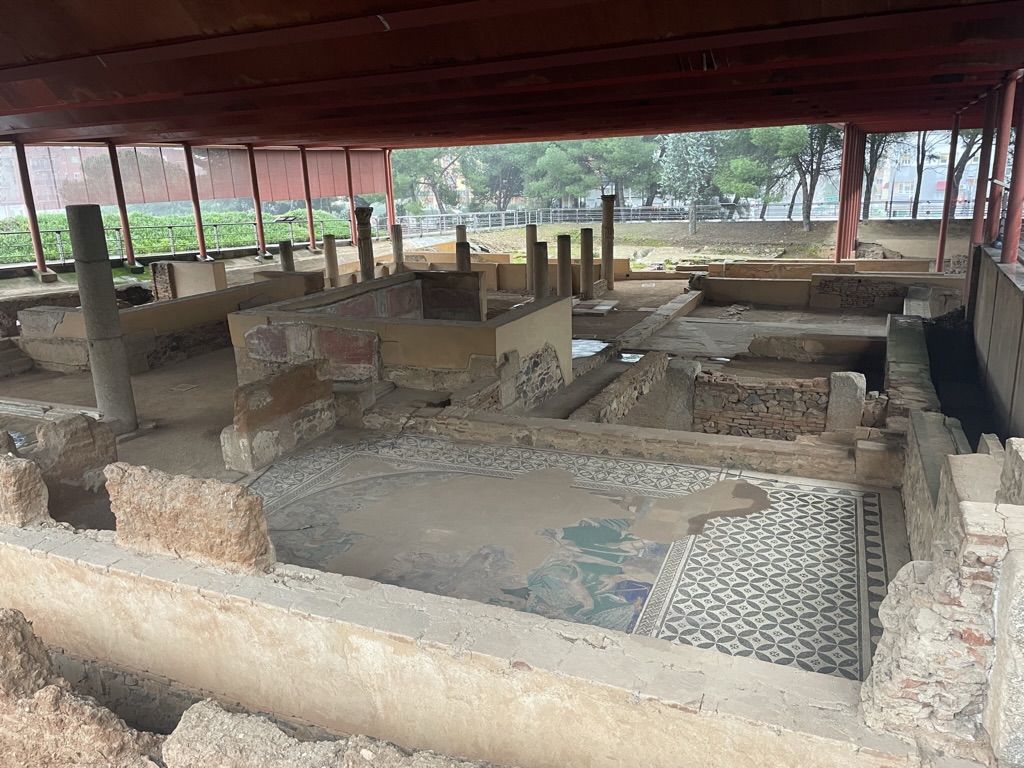
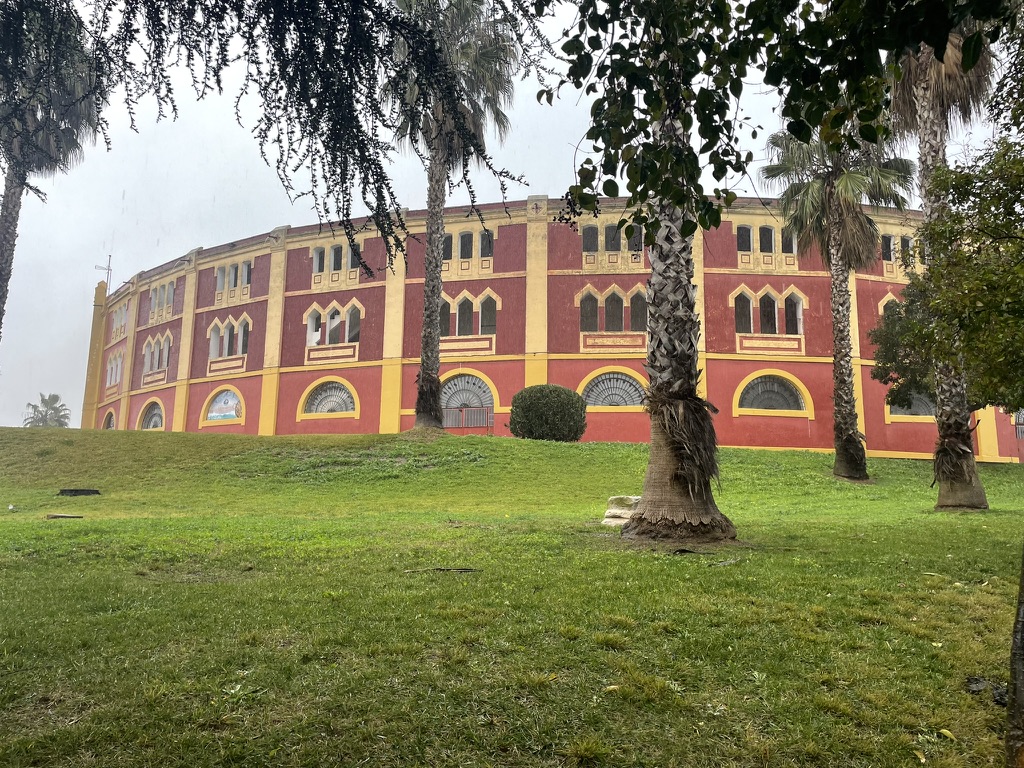
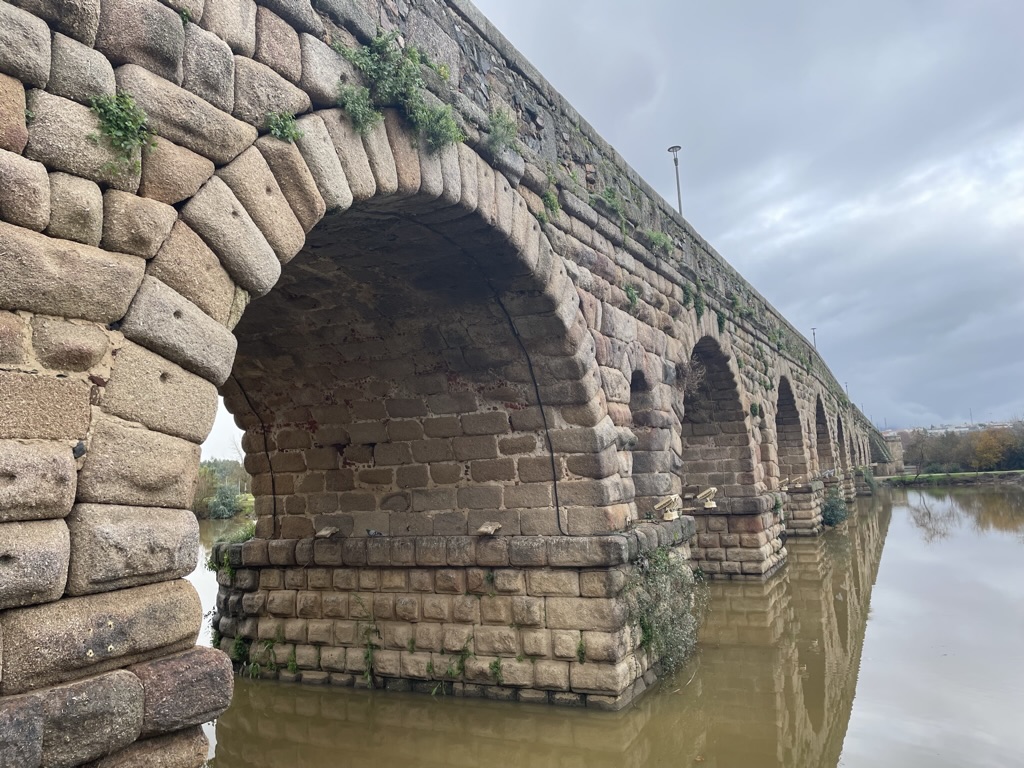
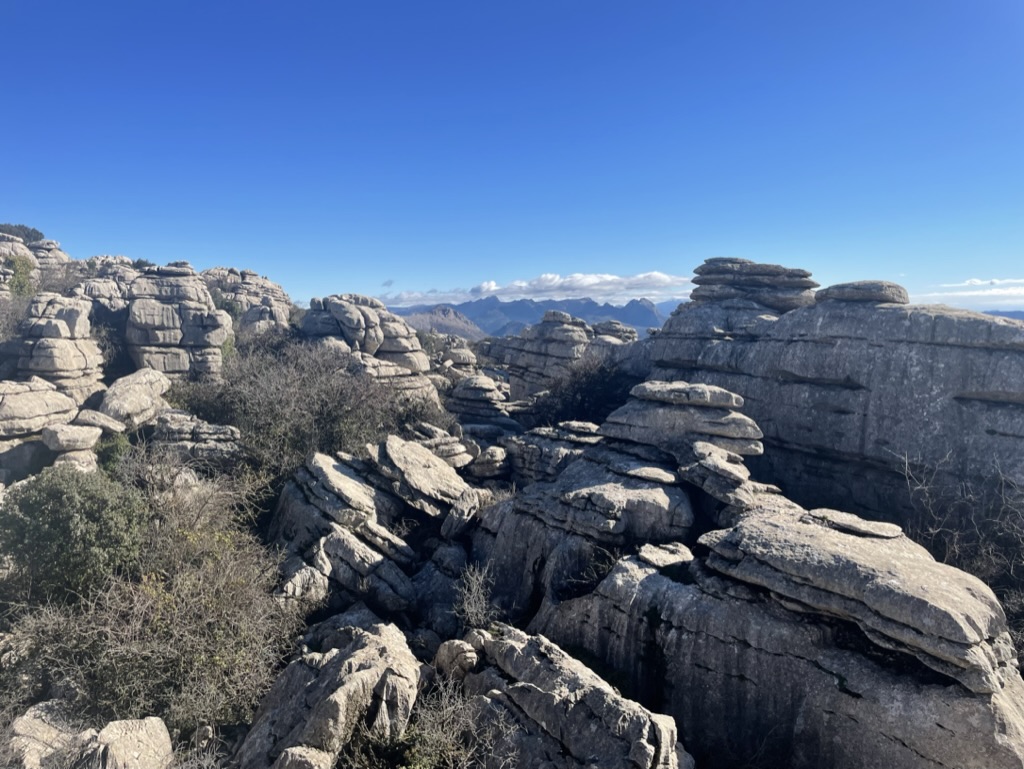
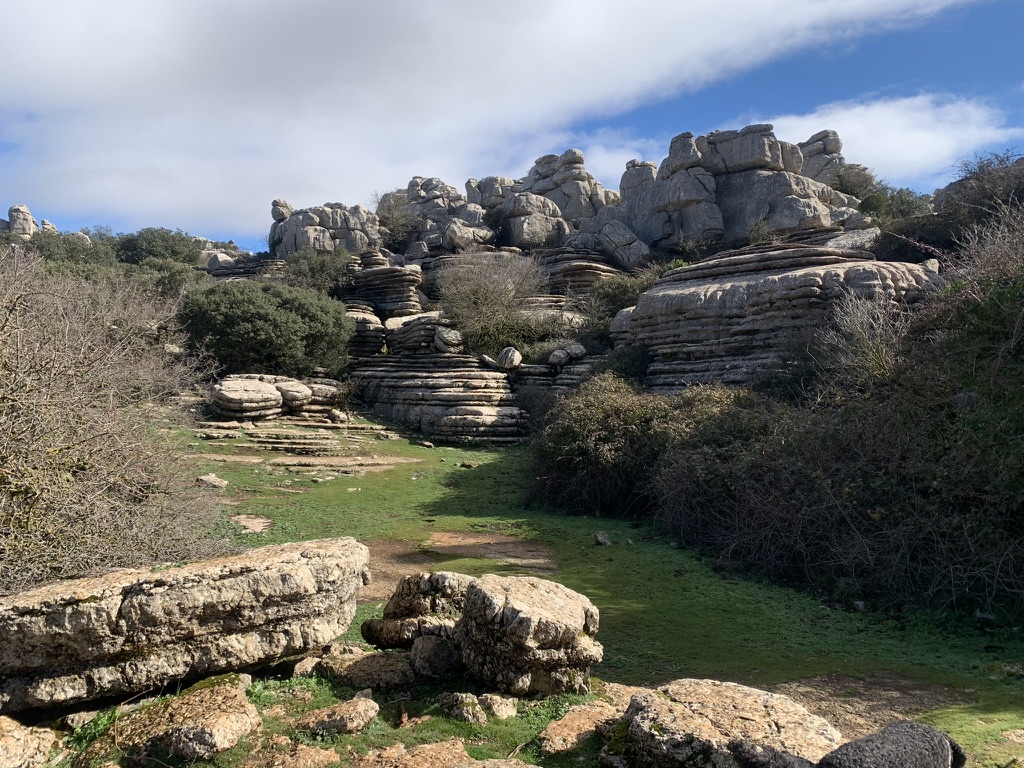
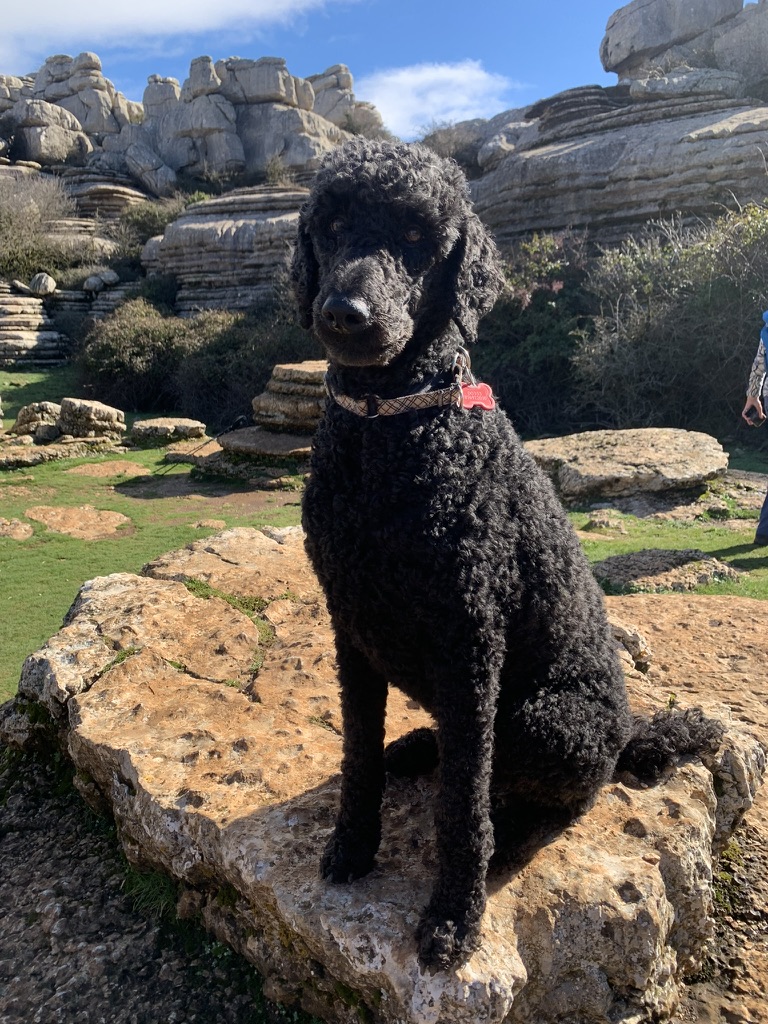
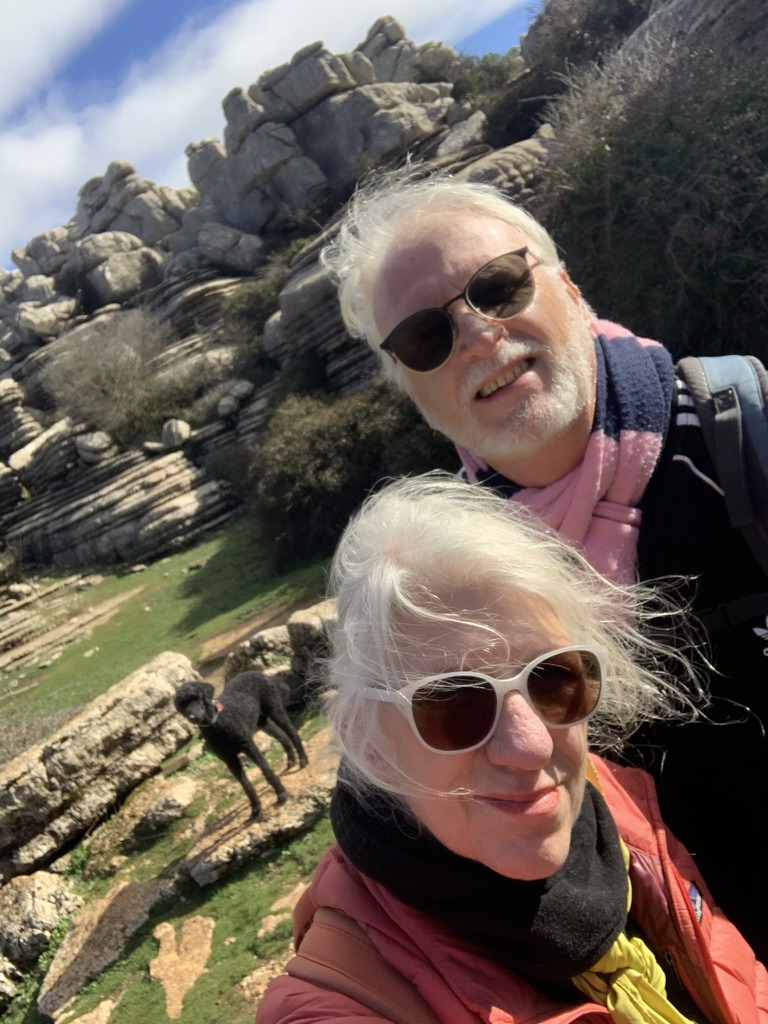
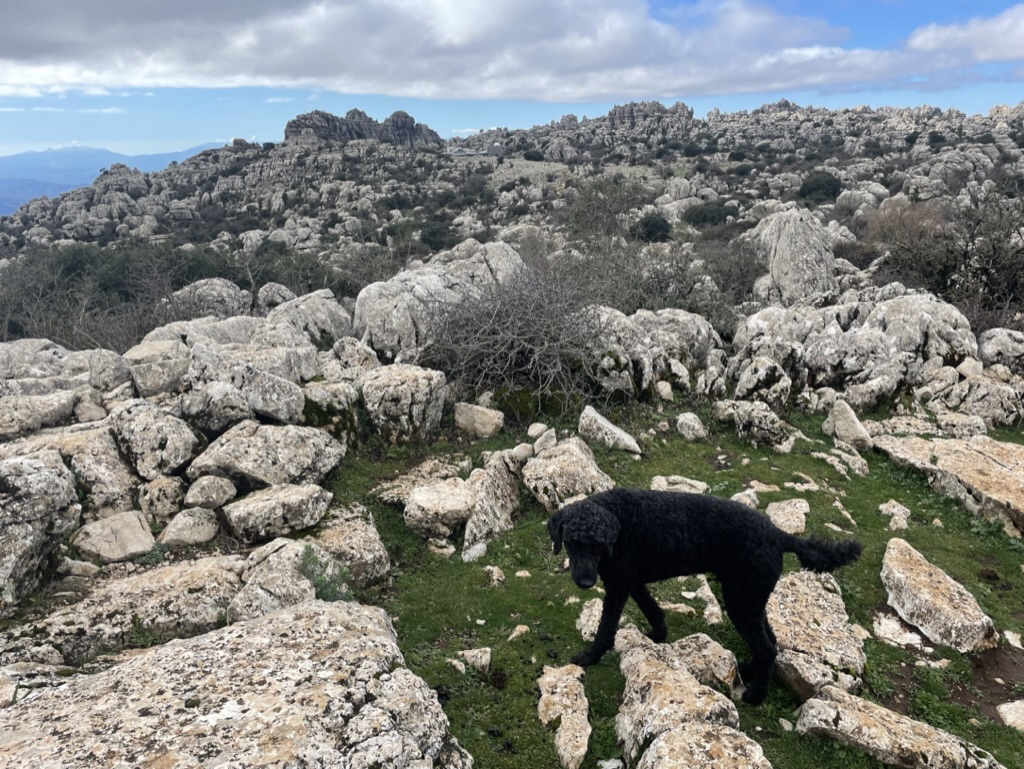
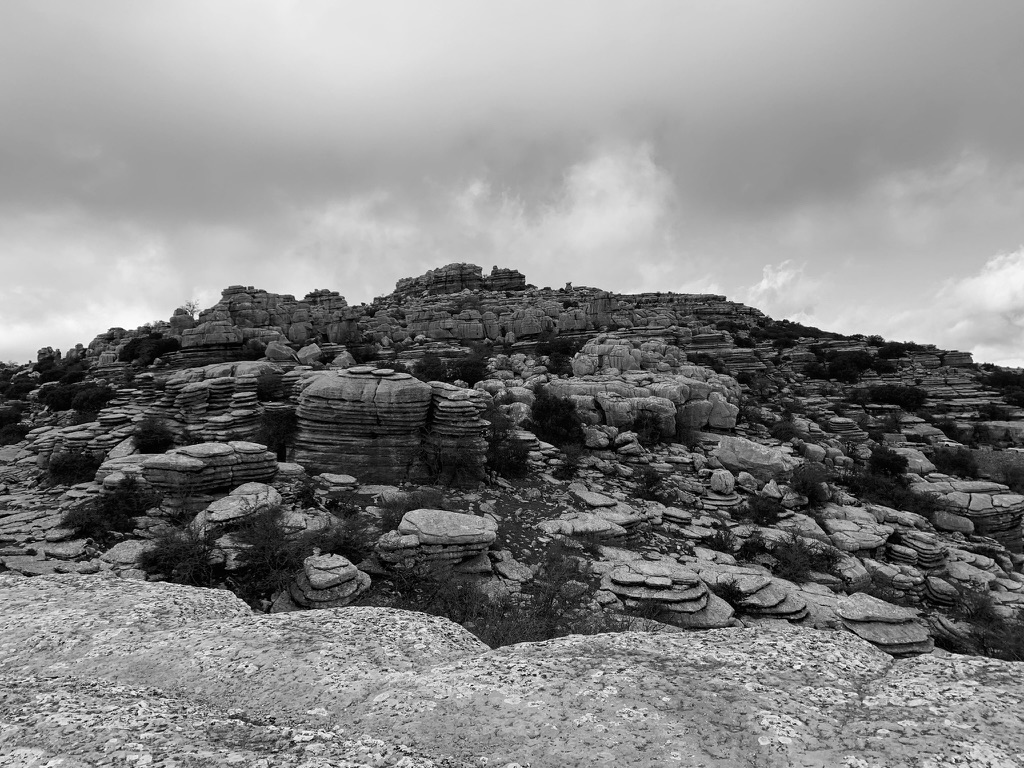
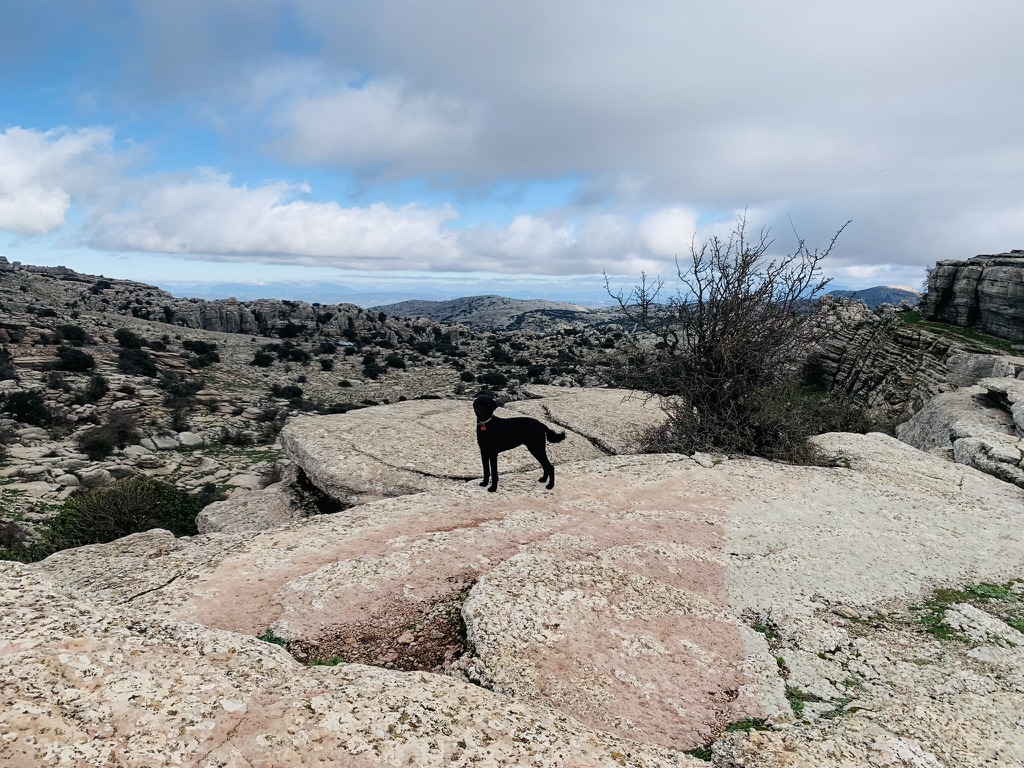
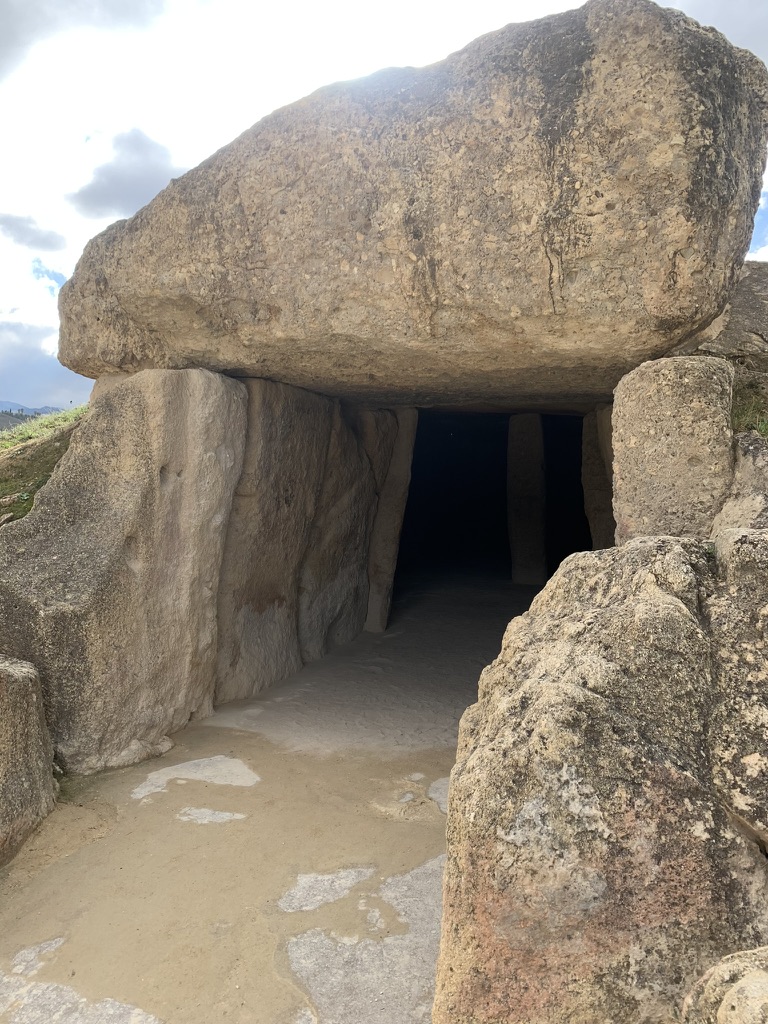
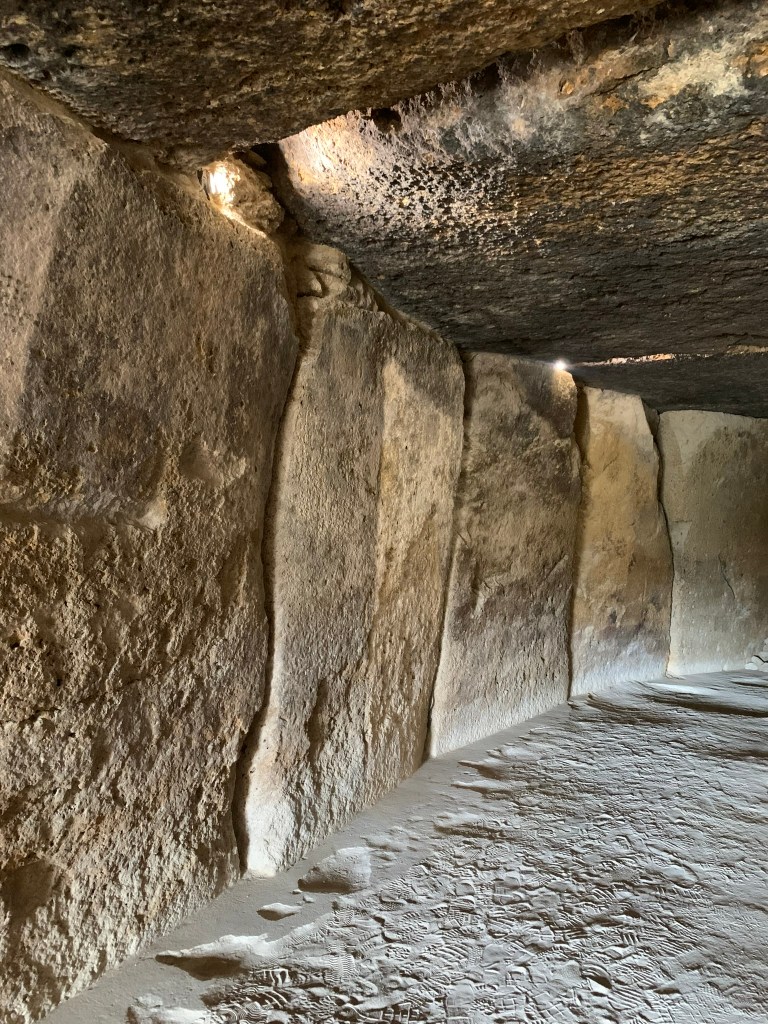
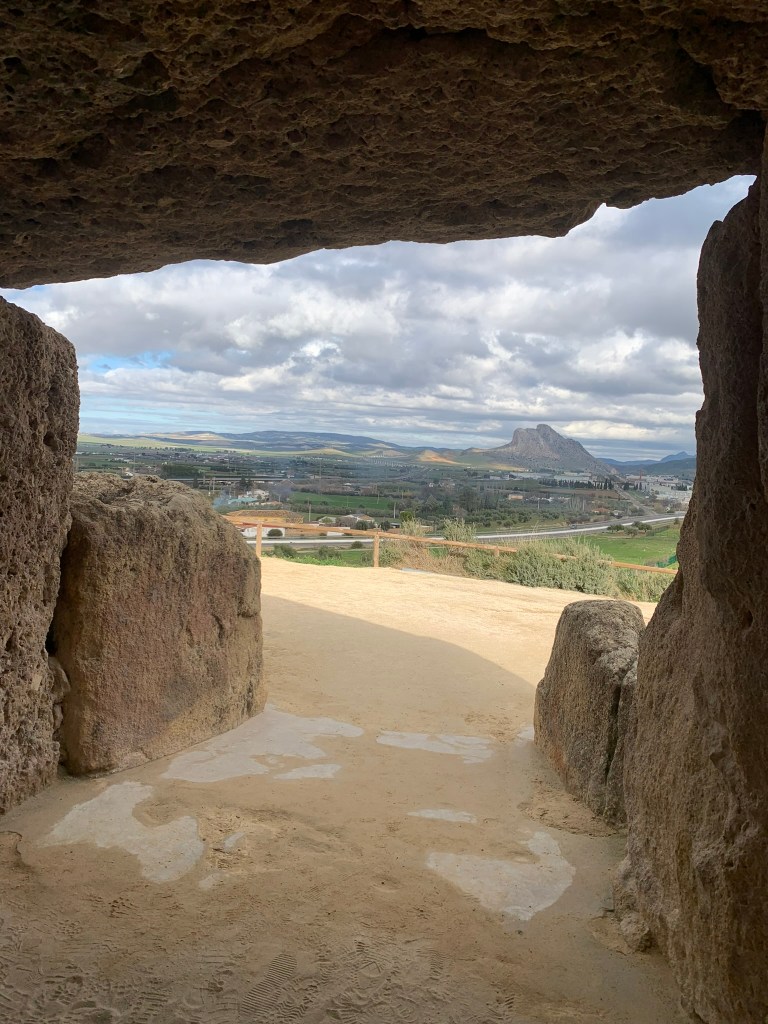
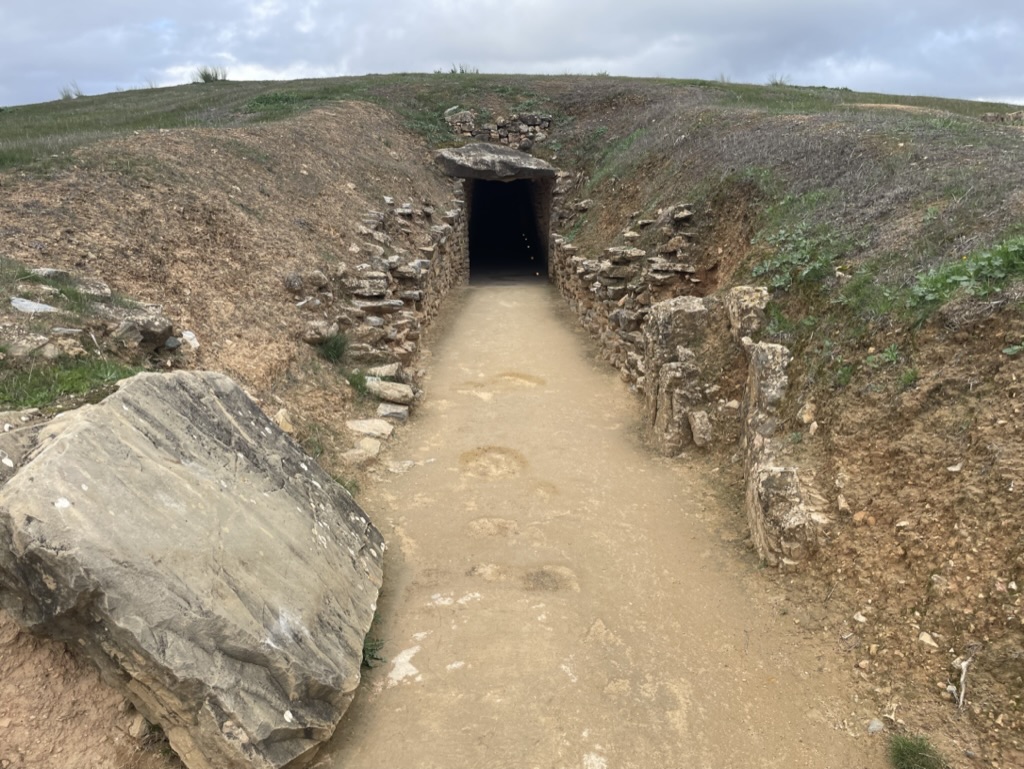
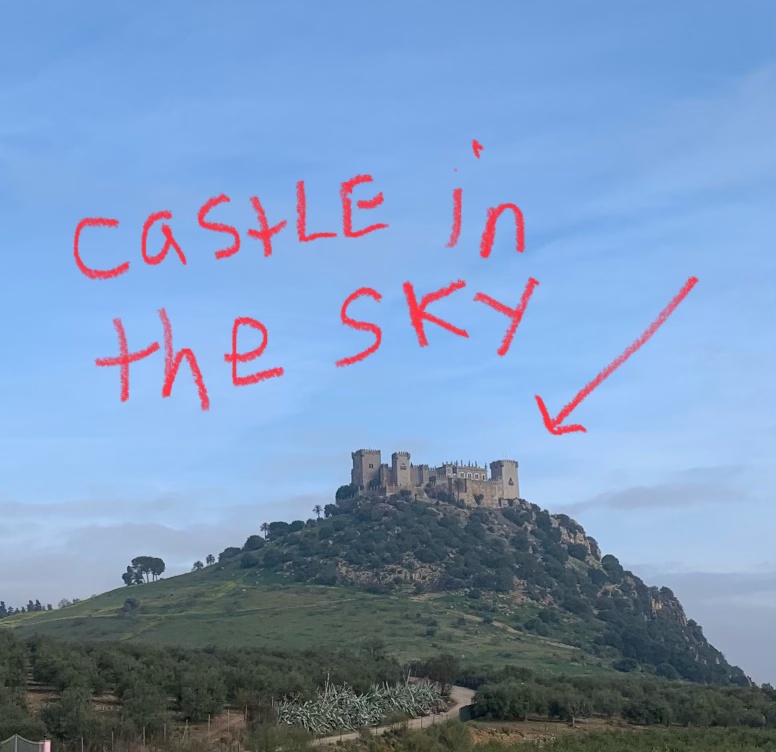
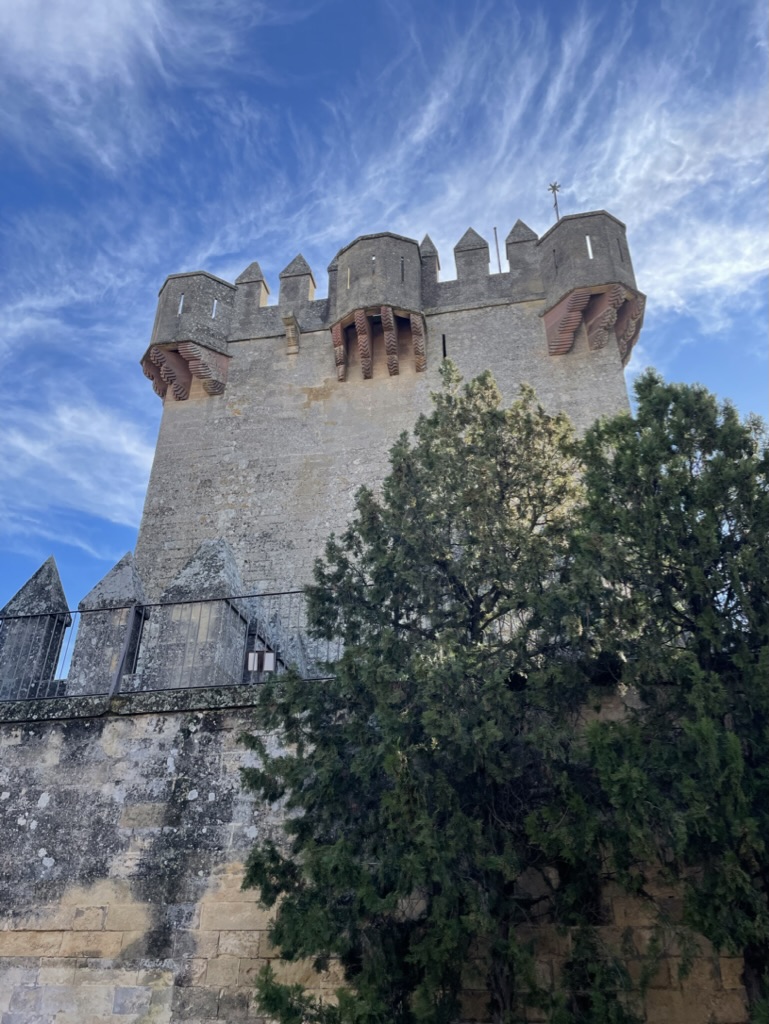
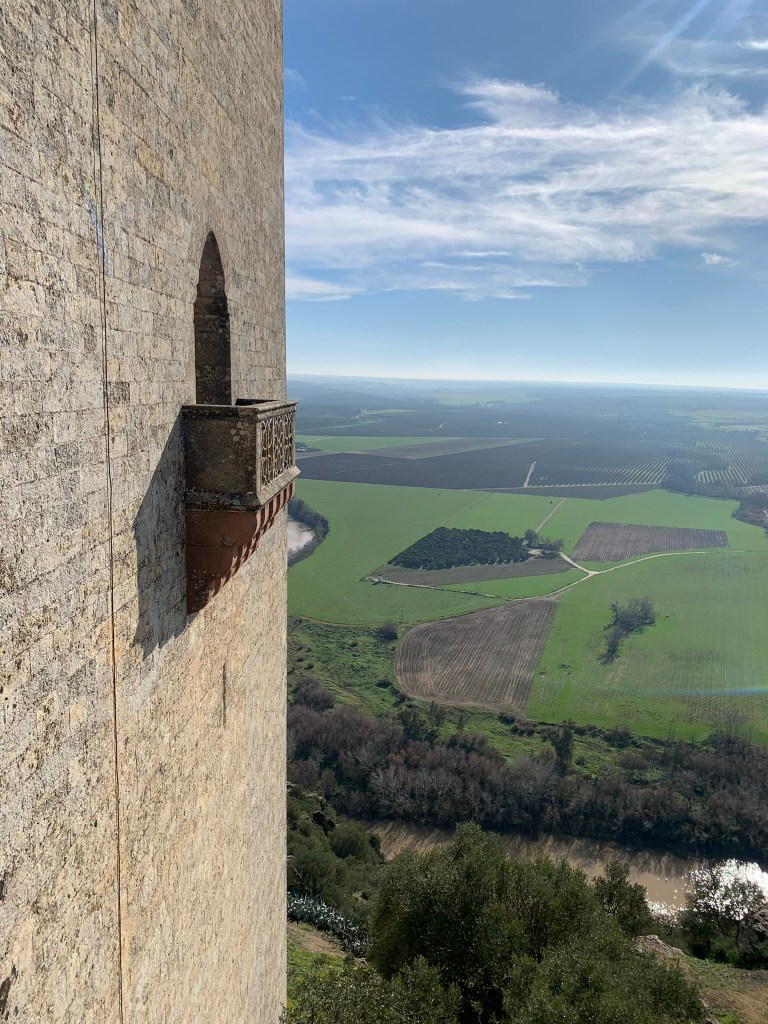
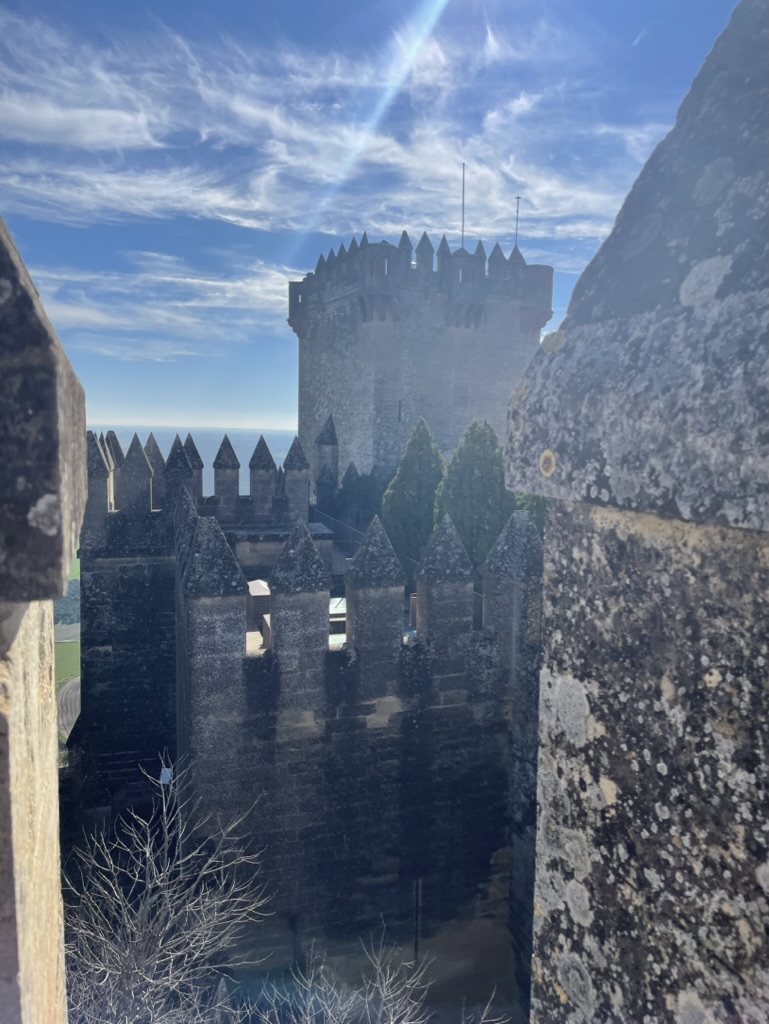
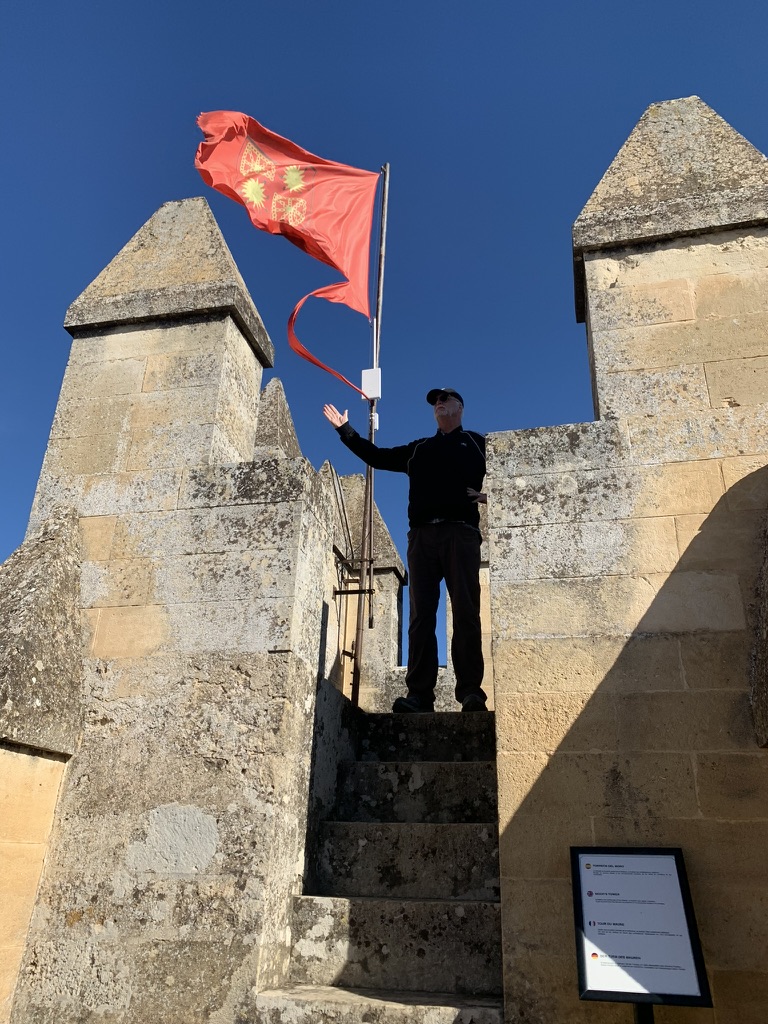
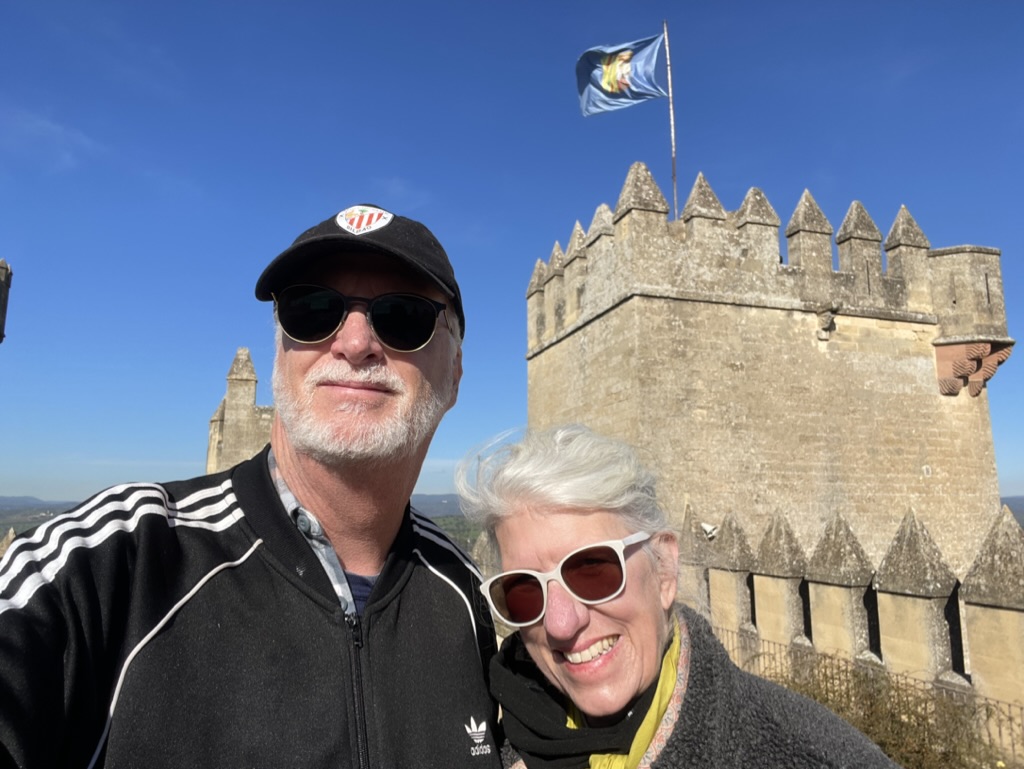
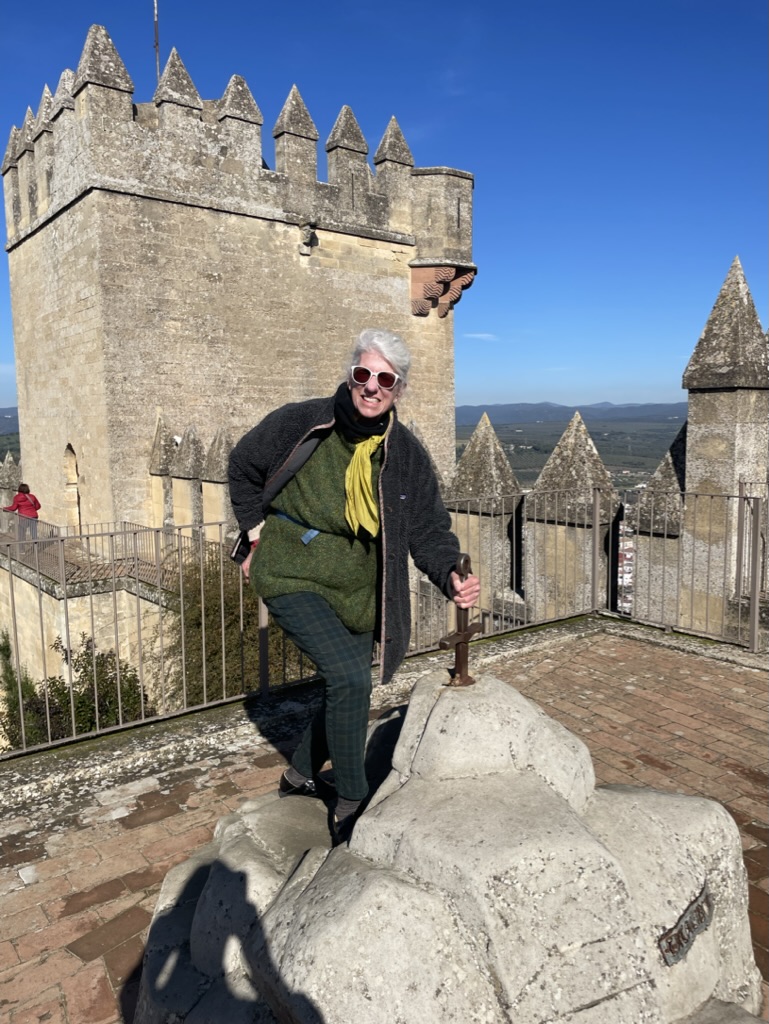
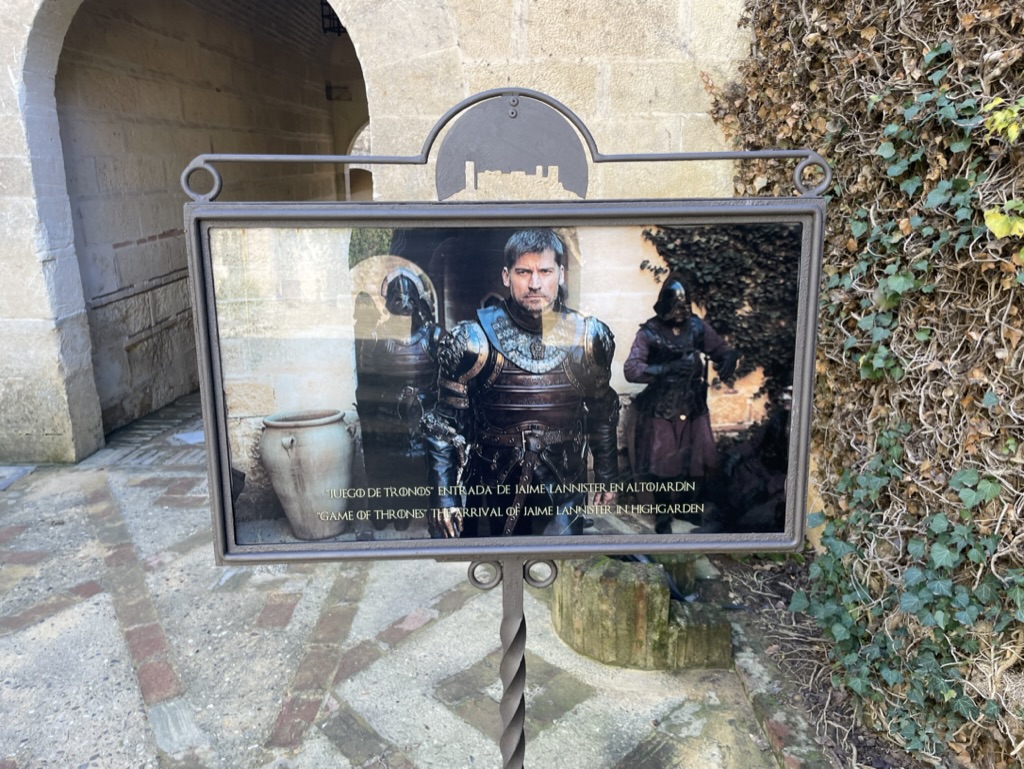
Meanwhile, while Denise enjoyed herself in Madrid, Coco and I explored Córdoba. Here’s the bus station.Denise: “One thing I love to do is explore odd ball shops. This one in Córdoba was a gem. It was simply a pile high of every weird junk drawer item and kitschy knick-knack that you could imagine. The guy who ran the shop was so charming and affable. I just could not help but wonder “WHY is this place here?” Anyway, I found some weird treasures and made a new friend! The stuff went on forever…The Córdobés are proud of their patios. Potted plants hang from every veranda and this lovely public sculpture is an homage to the care that is taken to keep the narrow streets of the city covered in blooming plants and vines year-round. Such a delight!Despite being under Franco’s rule, the designers of Spain kept up with the lastest mid-century trends.The next few shots are of the Medina Azahara, the ruins of a fortified palace-city on the western edge of Córdoba, tucked into the foothills of the Sierras. This was an entire city, built in the 10th century to house the Caliph and the citizens of Azahara. However, after he died, it fell into disrepair and is still undergoing excavation and restoration. Amazingly, they still let you walk through the ruins that overlook Córdoba. You can tell that Spain doesn’t have the robust tort law system that we enjoy in the USA. Denise among the ruinsThis, and the next few pictures are from our trip to Mérida, a small city in the Extremadura region of Spain., about a three-hour drive from Córdoba. They have remarkably well-preserved Roman ruins at several sites, none more spectacular than the Teatro Romano, which you invited to freely stroll through. They still do performances here in the summer, as they did back when Jesus was in short pants. The excavation started in 1933 and it was declared a UNESCO World Heritage Site in 1993. Narrow passageways lead to underground holding areas for the gladiators. This is the costume of a Secutor gladiator, waiting to start the fight. Most of the gladiators were prisoners of war, slaves, or criminals. If they survived their time in the gladiace, they were set free. Just kidding, they all died a violent death in the amphitheater. This is the gangway that from which the gladiators entered the ring. The stairs, I think, were added centuries later. A couple of roman statues in the setting sun….The one on the left is tribute to Denicia, goddess of poodles. Another Roman ruin in Mérida: this is a home that was unearthed in the 1960s during construction of a government building. This was a single-family home during Roman times, later subdivided by the Visigoths, who were always looking for ways to save on rent. Oh man, I wish we had had more time to explore this, the bullring in Mérida. As it was, I had to brave a Spanish monsoon just to get the picture. The old Roman bridge in Mérida. Later civilizations used stones from the Teatro to repair the bridge as it aged. More Roman ruins, but the city of Mérida built their city hall on top of these old homes. The next few shots are from the El Torcal del Antequera nature reserve, north of Malaga. It’s an amazing place and considered one of the impressive karst landscapes in Europe. There’s a trail system that takes you up into the rock formations but the slippery conditions caused us to think twice about risking it. For the record, Denise was game but Steve, ever the pragmatist, vetoed the hike, citing the potential cost of a helicopter rescue. Coco, like the poodles of the Jurassic age, enjoyed the scenery. I’m pretty sure The Flintstones was filmed here. Karst, karst, poodle, and more karst. This is what it would have looked like before color film was invented. Coco loves the open spaces of Spain. And for those who are fans of the Neolithic era, may we present the Dolmen de Menga, located just outside the town of Antequera, province of Malaga, Spain.. This is one of several megalithic burial mounds in the region dating from 3750 BC. It’s one of the largest ancient megalithic structures in Europe. The structures are built with 32 megaliths, the largest one weighing about 180 tons. It begs the question….”how in the hell????” (Steve: obviously aliens!) You definitely have to duck in order to enter the dolmen. Well, at least Steve does. Dolmen view. Just for context, these are all within Antequera city limits, and this mound is right across the stret from a gas station. Not far from Córdoba is the Almodovar Castle, which we first took to be a very well-preserved fortress but, as it turns out, it had undergone a very extensive remodel in the early 1900s. One of the descendants of the original family had lots of money and undertook the massive task of returning the castle, which lay in ruins, to its former glory. It’s a very cool place nonetheless, and it gets quite a few visitors thanks in part to having being used for some scenes in the HBO series Game of Thrones. A scene from Game of Thrones: attacking this castle was no easy task, even in modern days. Parking is limited in the upper lot and the lower lot is a good hike to the entry gate. Parapets, or some such shit. This balcony was featured in a famous scene from GoTMaster of his domainThe King and Queen. Remove the sword from the stone and the castle and kingdom are yours! But check out the bill to heat the place before committing.There are reminders of the Game of Thrones sets everywhere. Back in the city and saying “adios” to our most excellent host. Juan Manuel.
Off to Valencia, Spain, where we spent a week seeing Denise’s family, some old friends, and this lovely Mediterranean city.
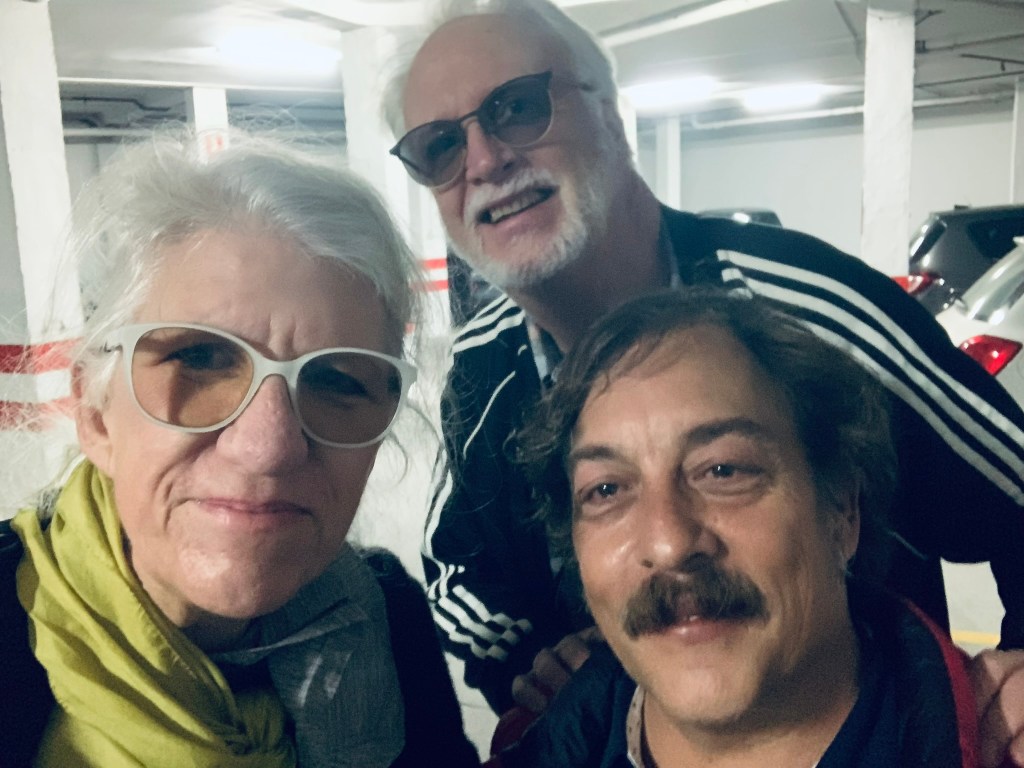
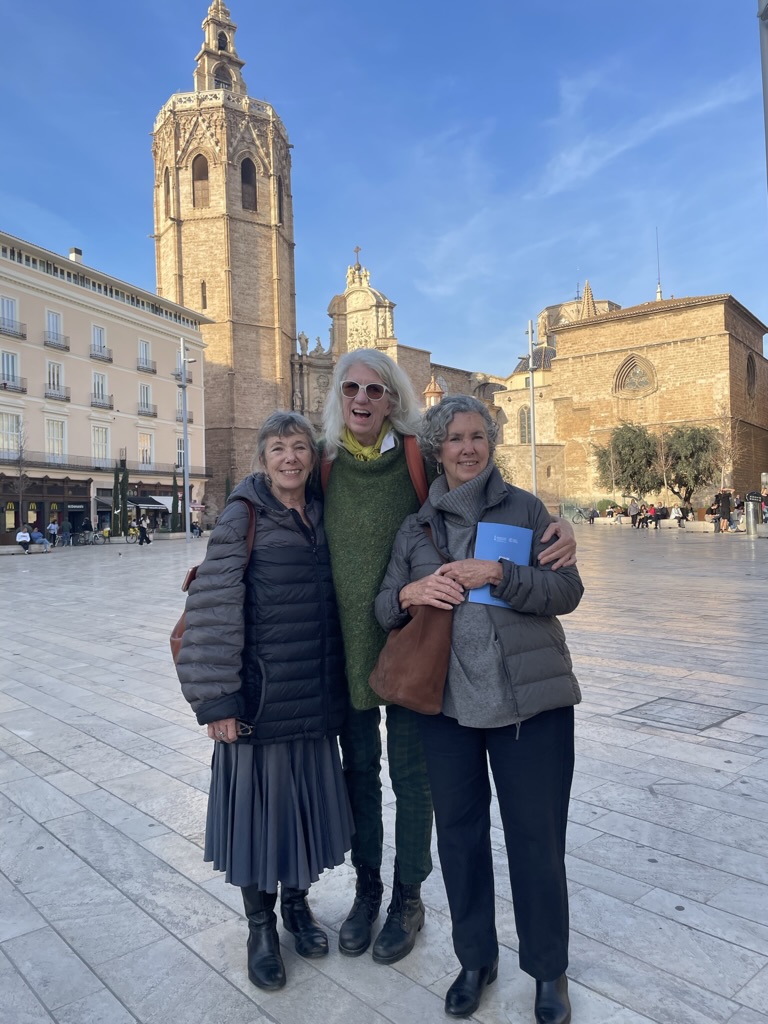
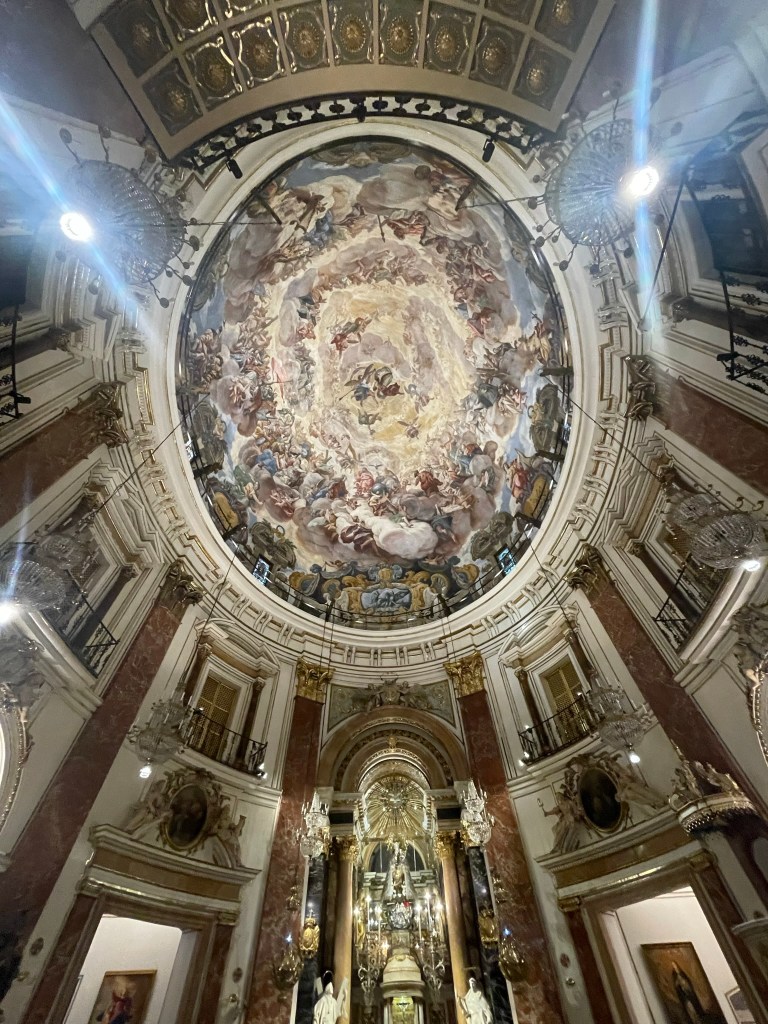
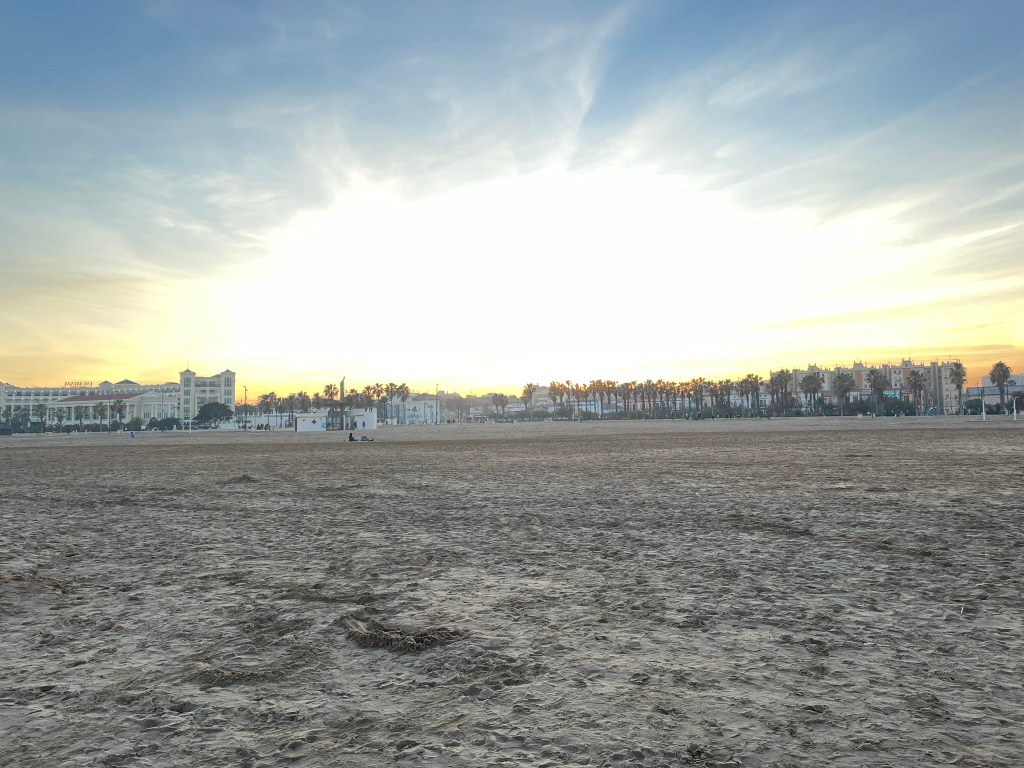
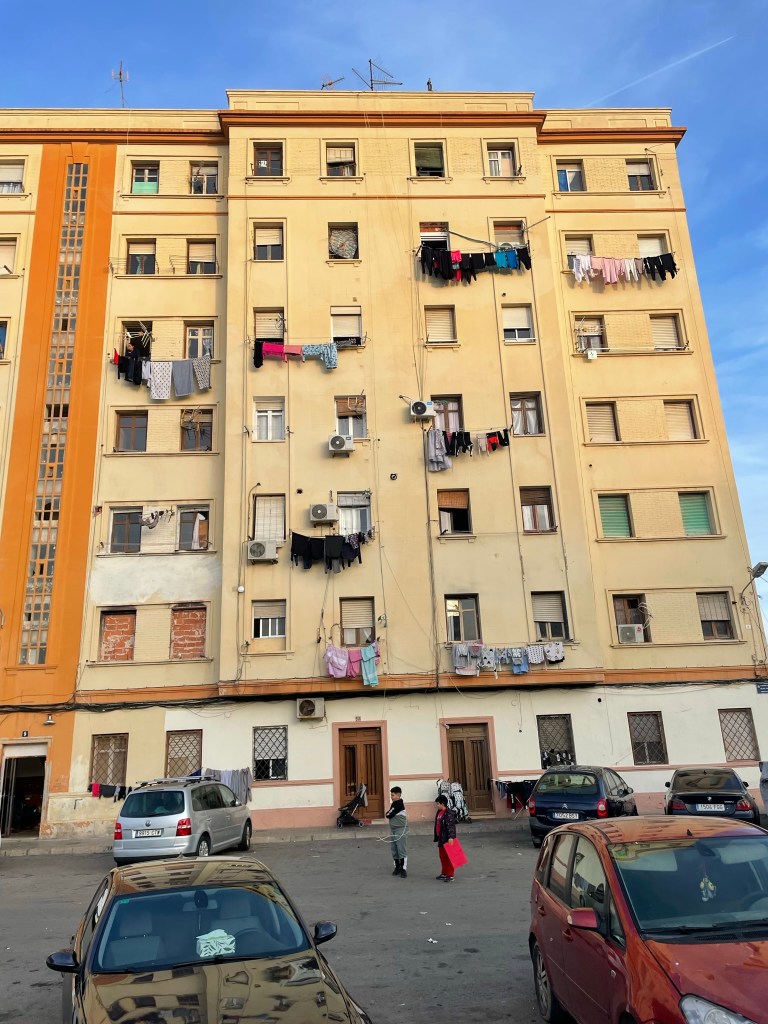
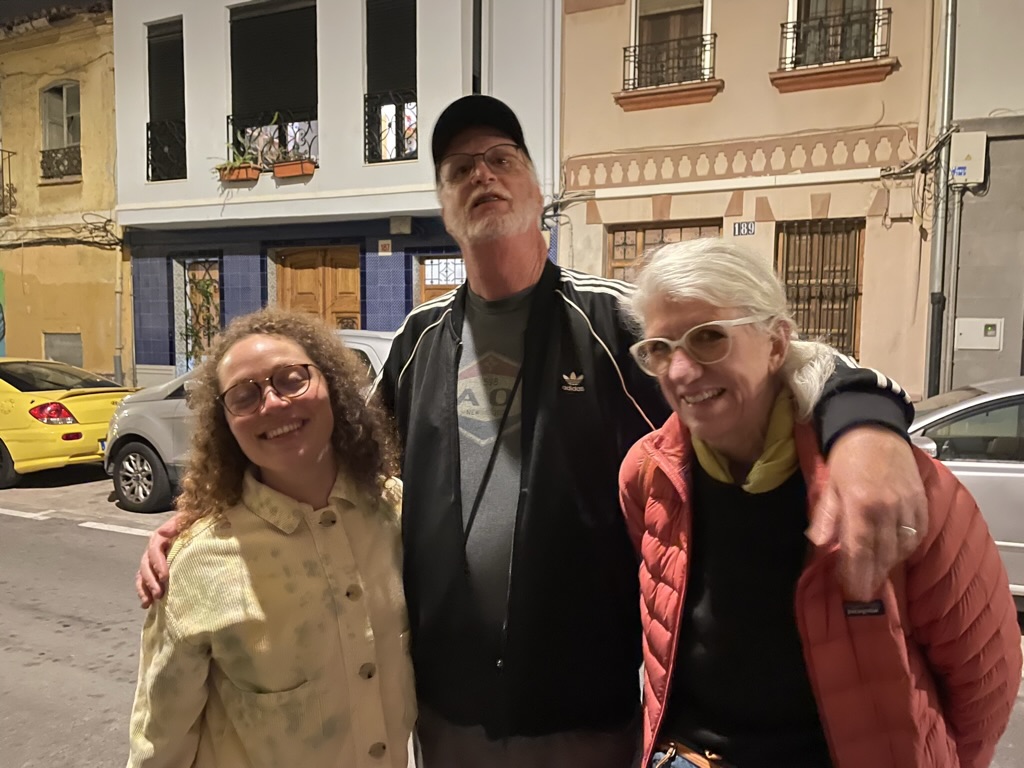
Denise and her cousins Martha Schum and Sara Schum Dirks in front of the Cathedral of Valencia. Martha has lived in the city since the 1970s. The ceiling of the Basilica of Valencia The beach at Cabanyal, looking back at the neighborhood. Flexpats allowed This is a building in Cabanyal, Valencia near the beach that is occupied mostly by Roma families. The city plans to demolish the structure but life goes on in the busy apartment. With our friend Gabi, taken by her husband — and my old friend — John. They have lived in the apartment behind her for a few years. We rented an Airbnb and ended up staying right across the street. Gabi is a well-known distance swimmer and holder of many records in her field. With our friend Gabi, taken by her husband — and my old friend — John. They have lived in the apartment behind her for a few years. We rented an Airbnb and ended up staying right across the street. Gabi is a well-known distance swimmer and holder of many records in her field.
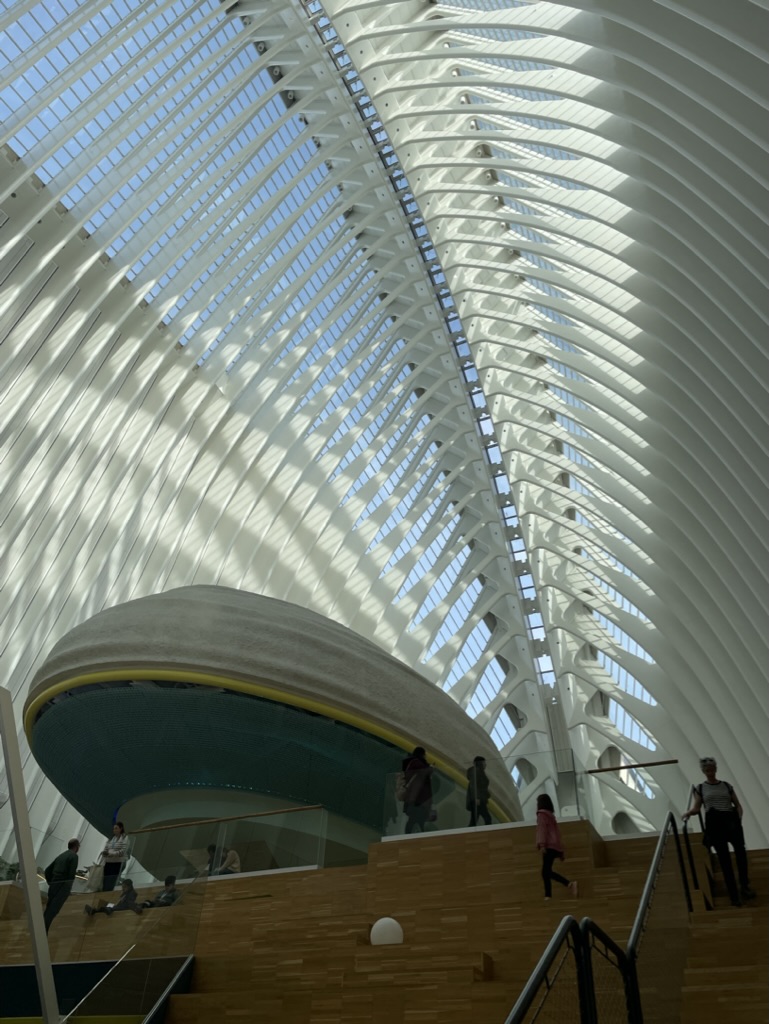
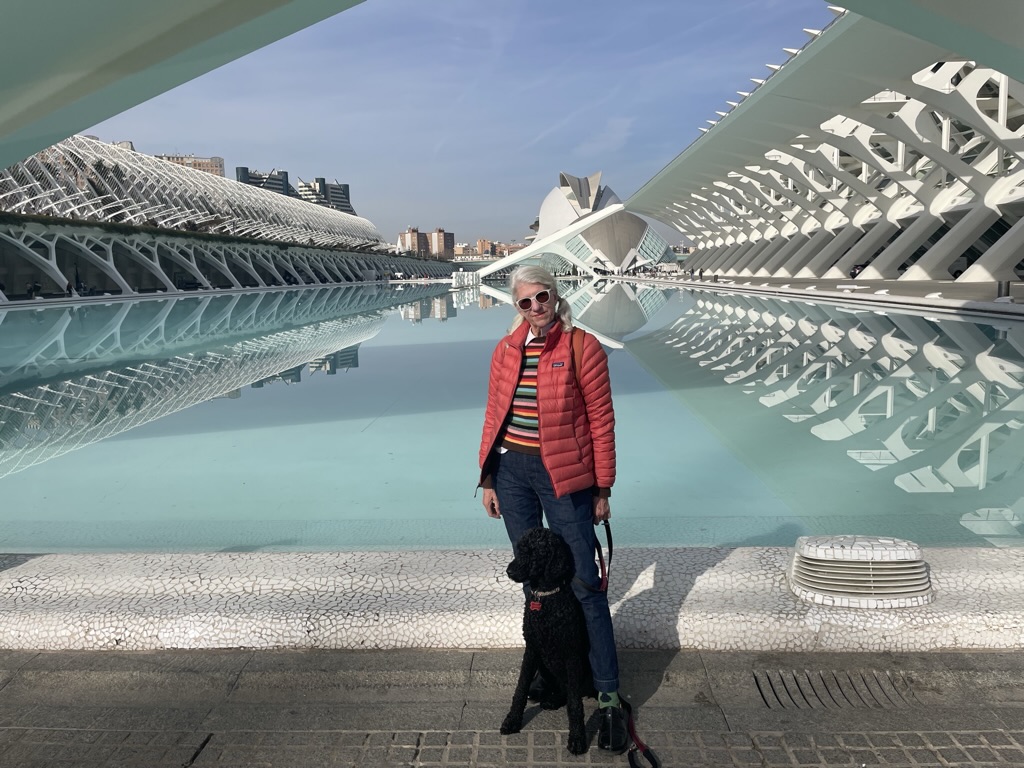
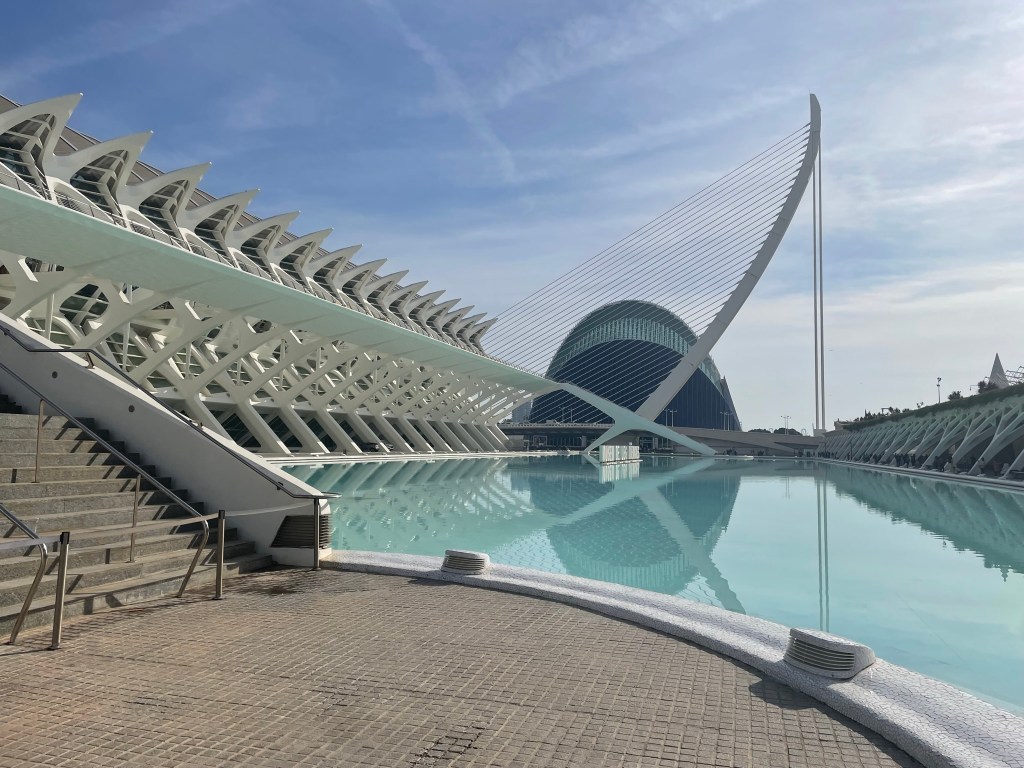
Inside the Caixa Center, an exhibition space on the grounds. Many of the buildings house museums and performance spaces. Very lunarAt this point, Steve had to leave Valencia to return home to Portland. Since Aeroflot was inexplicably closed, he ended up having to flying home via Delta, the next cheapest option.
Denise will pick up the story from here and will soon post about her last few days in Valencia, where she was joined by her brother Tim, and her last few weeks in France, staying in Port-Vendres, near the Spanish border.
Published by Steve, Denise, and Coco: Calculating Route
Welcome to our blog that we’re calling Calculating Route…, a reference to our GPS guide and the general randomness of our travels. Of course, we do have a route, at least through the end of 2023, but we’re trying to keep our options open in the search for a permanent, or semi-permanent, home here in Greater Europe. Off we go!
View more posts
2 thoughts on “Andalusia, Part Two.”
Oh my, such wonderful pictures! Thank you for taking us along with you and Coco!
So interesting to read. I think many of those rocky, mountainous landscapes were where a bunch of Clint Eastwood movies were filmed. And I really love the Moorish influence in the architecture and embellishments. Penny















 Calculating Route...
Oh my, such wonderful pictures! Thank you for taking us along with you and Coco!
LikeLiked by 1 person
So interesting to read. I think many of those rocky, mountainous landscapes were where a bunch of Clint Eastwood movies were filmed. And I really love the Moorish influence in the architecture and embellishments. Penny
LikeLiked by 1 person