We have since moved on from this lovely location to Corsica but these are my memories from our time in Provence. Enjoy! – Denise
Our hilltop village in western Provence, Chateaneuf-de-Gadagne, is located in arguably one of the most beautiful winemaking regions in the world (meaning that everyone will argue that theirs is the most magnificent). According to the French system of designating wine-growing regions, aka appellations, (L’appellation d’origine contrôlée), the village is part of the Côtes-du-Rhône Villages AOC, a step above the generic Côtes-du-Rhône but below the more specific Châteauneuf-du-Pape a little north of us.

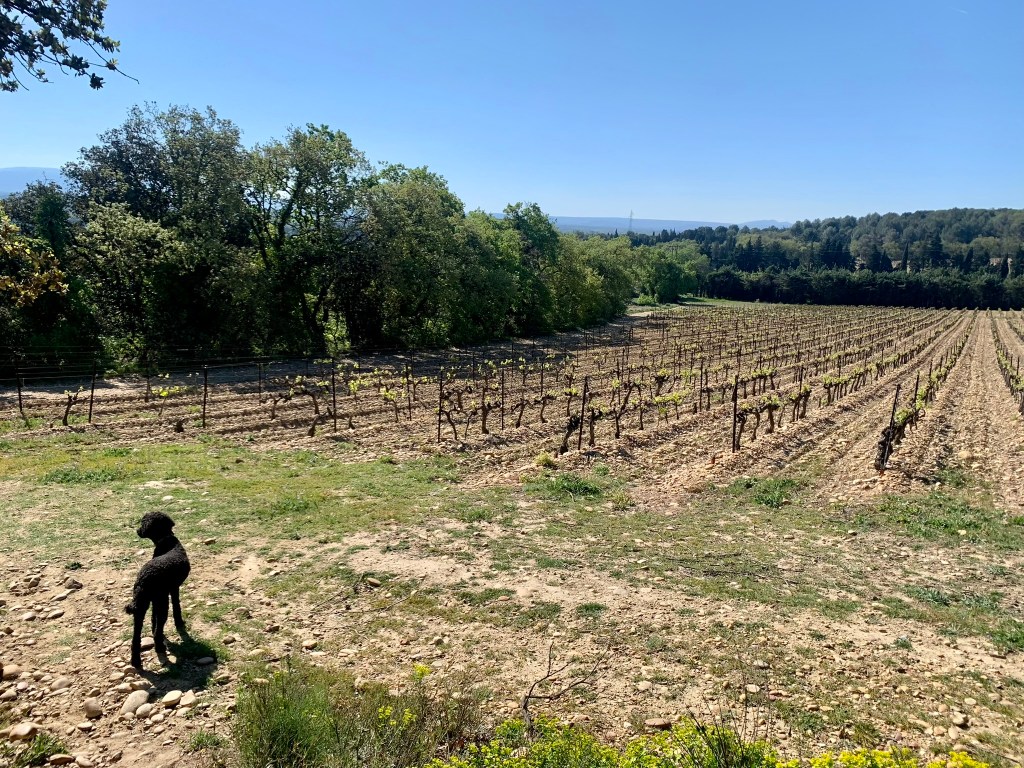
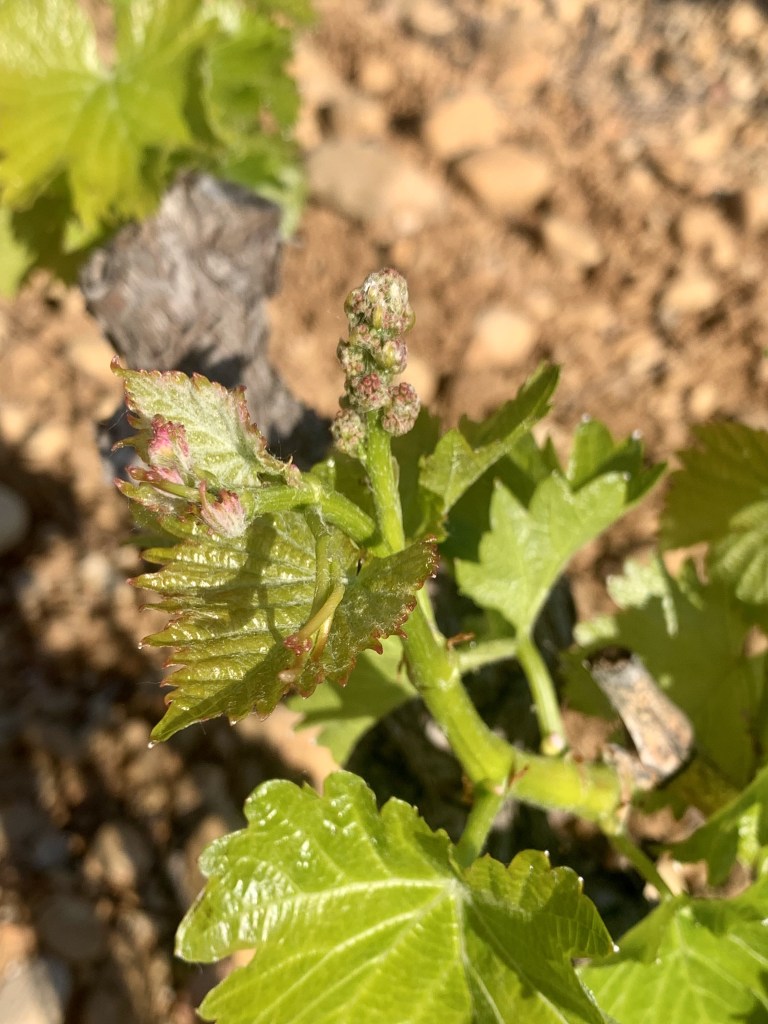
Gadagne, just 20 minutes from the center of Avignon, is ringed by hectares of vineyards and olive groves on all sides and is as picturesque as all get out. The old part of this ancient village is made up of narrow, winding streets with staircases and arched passageways, tucked inside the 12th-century wall of the village, and all roads lead up to the old church, with stunning views of the Luberon valley below, and of the imposing limestone-topped Mount Ventoux in the near distance. It’s spring and everything is starting to bloom, including the grape vines. When we first arrived here on April 1 the vines were bare and wooden and gnarly, and just beginning to show life. But, during our month spent there, we saw them start to come to life.

We are taking daily walks through the hills and follow the rocky paths between vineyards. Coco loves these-leash free adventures and trots ahead inspecting the terrain for us, but always stops to let us catch up. The landscape is scrubby, rocky and, we suspect, brutally hot in summer months but this is a great time to be here and we are drinking up every moment.
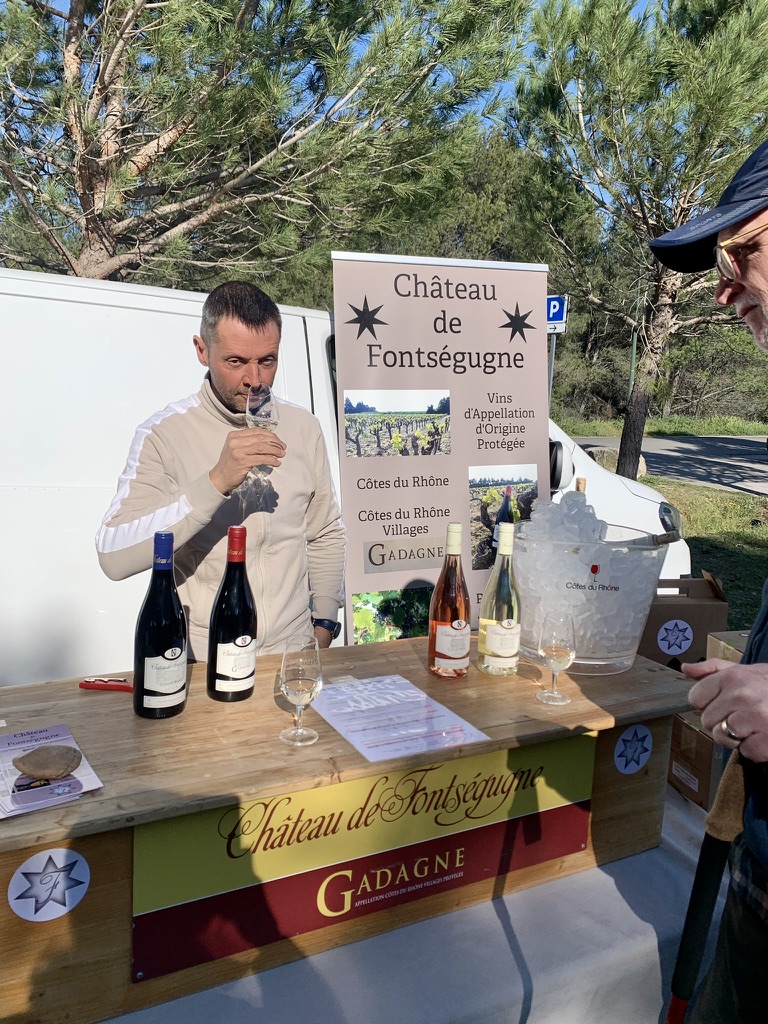
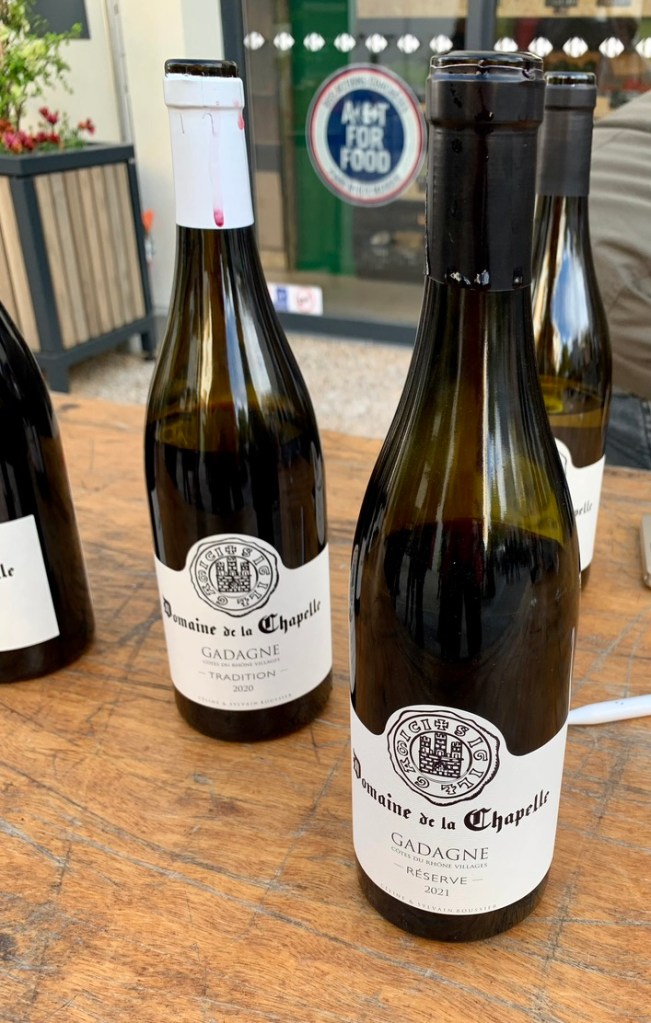
Speaking of drinking wine, there is no shortage of delicious and inexpensive wines to sample here. We have met local winemakers and vignerons (the french term for those who are solely making wine from their own grapes, basically translating to ‘grape grower’) and are we dedicated to buying local not just because it’s the right thing to do, but because suggesting otherwise to a local is an insult. Of course there are big demands on these small producers and they have to push their wares out beyond the local markets to keep everything afloat but the authentic way of life remains intact and we were happy to be swept up in it. We shopped at the farmers market each week and loved seeing different wine purveyors along with the people we had come to know from living in the village.
I think every one of you would agree with me that are certain periods in ones life that are just so perfect that it kind of shapes everything going forward and I’ll share mine: when Steve and I moved to Walla Walla, Washington and I enrolled in the Enology and Viticulture program at the Walla Walla Community College, it was life changing for me. My first year was dedicated to viticulture so I spent a lot of time in vineyards at all seasons of growth and I learned so much, thanks to the late great Stan Clarke who was the most amazing teacher and friend. Then I moved on to enology and I had excellent instruction on the vinificación side of things from Mike Moyer, guiding me though that period.

Steve took this year to study winemaking, too, which made it a special time for the two of us, together in the classroom, learning so much about something we loved. I was fortunate to have great teachers but it coincided with a time when I was also really open to growth and learning new things. I was trying to make something different happen and I worked hard to make it work and so did Steve. Without his good taste and strong knowledge of world wines I don’t think we would have ever ventured into our own winery operation but Steve really has a nose for wine, and I mean like the kind of nose that sommeliers have when they do that recall thing. Steve has that ability to remember and discuss a wine we had at dinner 20 years ago. He has the recall and the curiosity and together we have shared that throughout our marriage.

Once we both had some formal wine education we formed a winery called Trio Vintners (with a fellow WWCC grad) and it drew on all three of our strengths: marketing, operations, vinification, sales and viticulture. Those years in the winery were amazing, even though it was a tough go and sometimes a financial challenge to make ends meet. All this is to say that spending this time in Provence during the spring growing season, back amongst the vines everyday was just so pleasant. And it reminded me that I had retained a lot of my viticulture training.

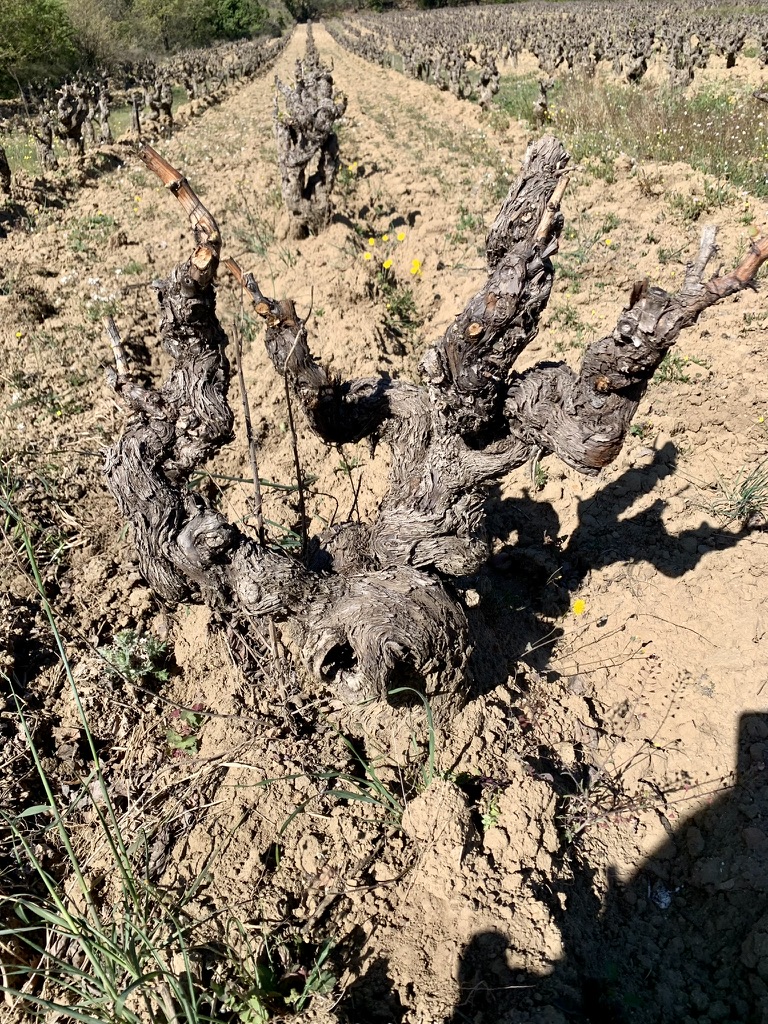
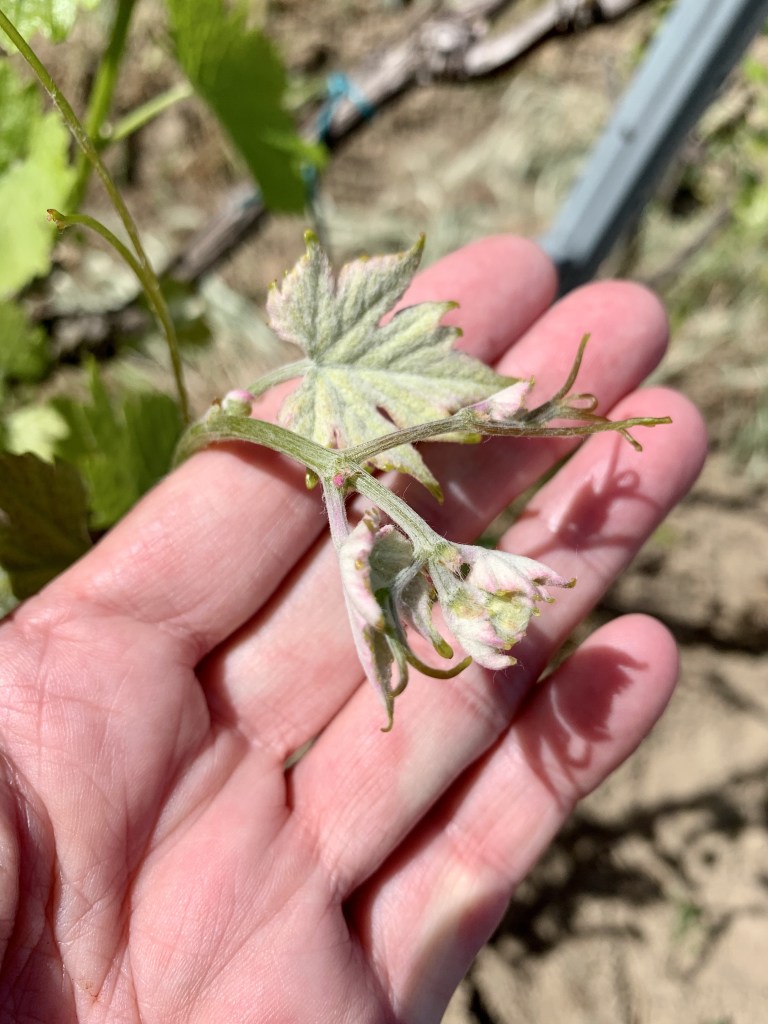
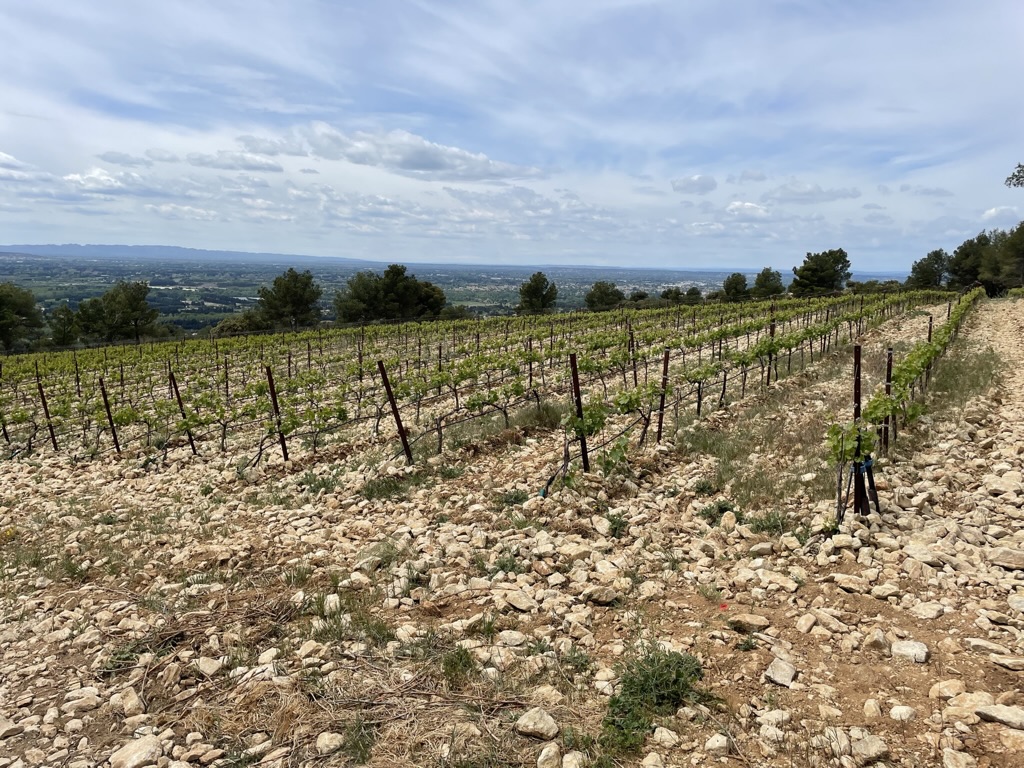
Most of the vineyards we walked through were, on average, fairly small compared to the kind of larger plantings we are used to seeing in California, Washington or Oregon. These were more like plots, maybe 2 hectares (or five acres), and usually bordered by trees or low growth scrubby yellow flowered bushes. The red varietals planted in this region are Grenache, Syrah and Mourvèdre, while the whites are generally Grenache Blanc, Roussane, Marsaunne, and Picpoul. The soil in most places was always very rocky, with grapefruit-sized river rocks mounded up to form rows. It barely rained the entire month we were there, so the ground was always very dry but dew formed every morning on the delicate buds.
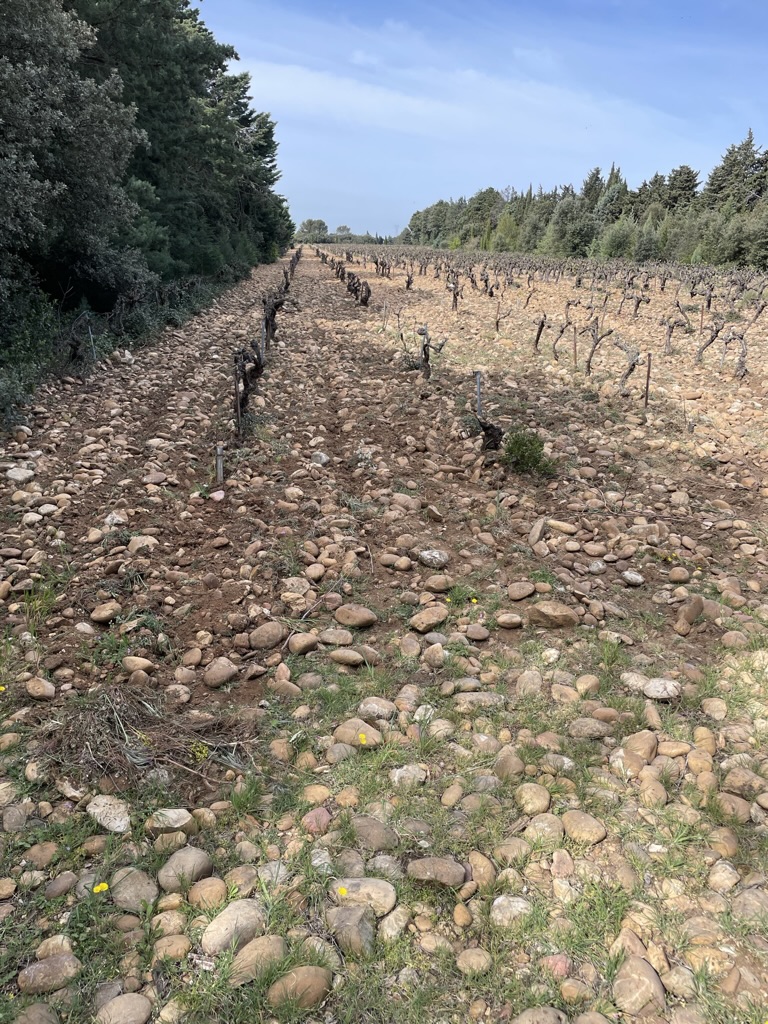
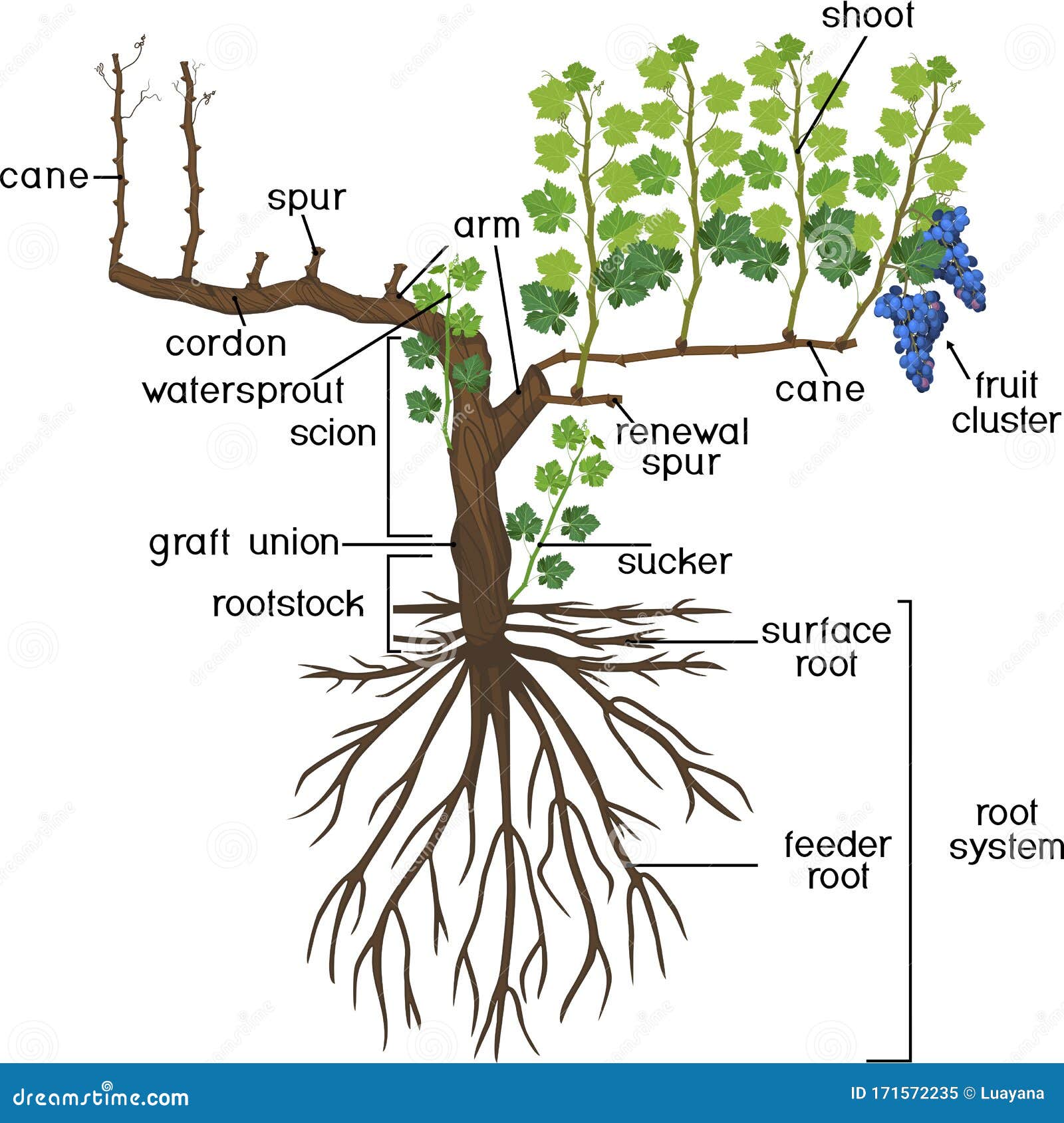
We observed several styles of pruning and training canes on the vines, but for the most part vines were not trained to wires like we are used to seeing in the States, and instead were low to the ground and head pruned. We looked closely at plants to count the number of cuts that had been made to optimize and balance the fruit growth. We looked at the spaces between rows and could tell what mix of grasses the growers were placing there to mitigate pests infestation. The vines themselves were mostly old and woody, but occasionally we would see new plants that we could tell were only into their third or fourth year, obviously newbies by this region’s standards.
We were even more surprised to see completely abandoned vineyards that were now overgrown, with the plants showing long, unpruned canes from the previous years. When I asked someone about the number of abandoned vineyards in town they explained that sometimes vineyards were handed down to new generations who simply could not keep up the work or, more commonly, enterprising people who put in new plantings only to discover how difficult the job was. In school, we had been taught that maintaining a healthy vineyard was a year-round job and we have tremendous respect for the growers who were out in their fields every day, inspecting the progress of the vines.

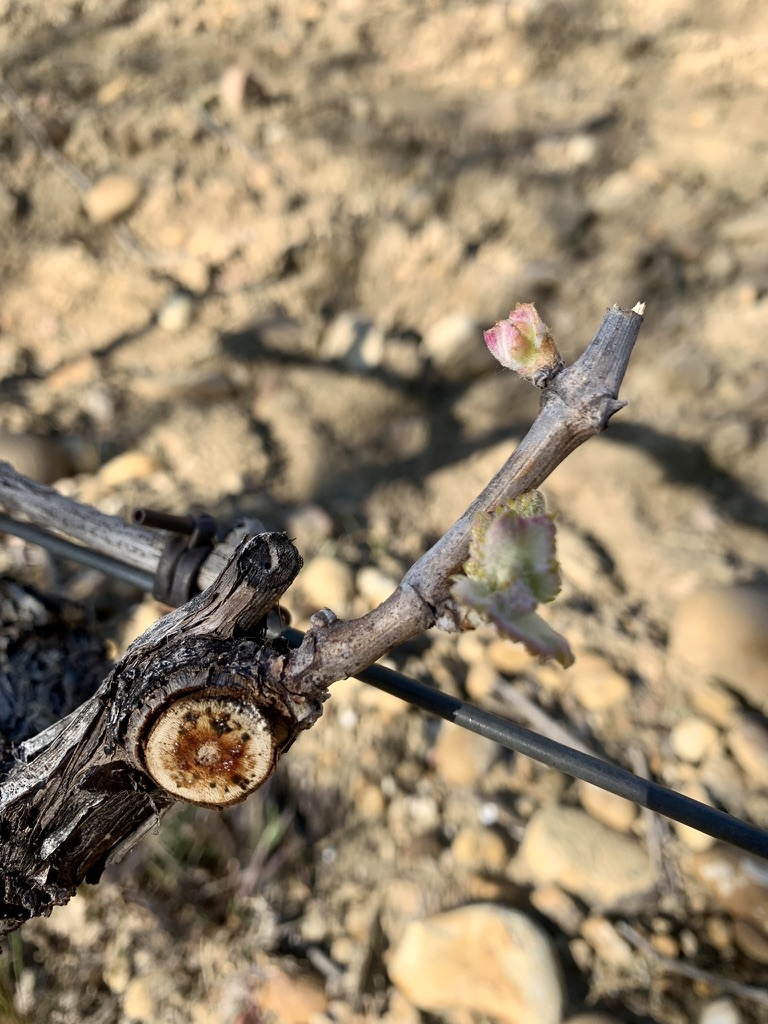
By the time we left the area in late April, every vineyard was in full bloom with lots of greenery on the shoots that come up off the cane. The buds that were so small and fragile just four weeks earlier had turned into the beginnings of the grape clusters that would be harvested in the late summer or fall. Even without much rain, the vines were flourishing, doing what they are supposed to do, but too much water stress can damage the plant over the summer. Every vigneron will be watching the plants closely over the next few months for signs of struggle or disease. Most of these vineyards are farmed organically but the farmers still have to apply sulfur to avoid powdery mildew which can destroy the fruit.
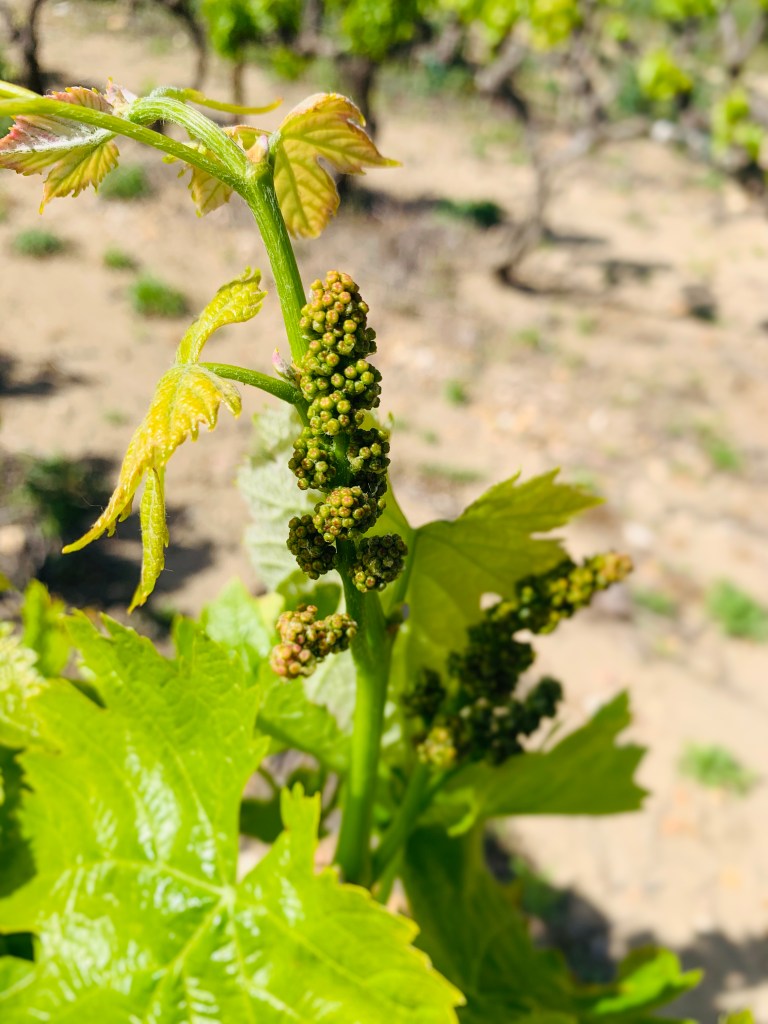
In all our wandering we only saw one vineyard with built-in irrigation lines and it was a newly established one at that. It makes sense that any new vineyards planted nowadays must be irrigated as drought and climate change are impacting agriculture all over the world. The growers we talked to about this express a quiet worry; there’s not much they can say or do about it: climate change is here. Installing irrigation is, of course, very cost- and labor-intensive and the water is scarce and expensive.
Driving around mainland France, you’re never far from a vineyard or a grove of olive trees. It’s not unlike driving through rural Iowa: Oh look, a cornfield! Many of them appear to be family-owned and worked. Some are so small that they must just be for the personal consumption of the farmers and their families. I also wondered about how all these grapes would be harvested as there’s no way machine harvesting can occur with head pruned vines. Someone solved that mystery for me when they explained that for the more commercial growers, harvest is done by migrant workers from Spain and Africa. The small family operations make it by pulling in friends and some suggested we return in the fall to get in on that action!
I absolutely want to return to this part of France one day, perhaps next year, to drink in the terroir and all that it offers. Meet us there!

 Calculating Route...
Fascinating post Denise! The photos really brought this blog entry to full bloom. Bon appitite!
LikeLike
Denise your knowledge of this craft is impressive and I can see you going back here to be a part of the harvest! Keep up this wonderful journal of you adventures!
LikeLiked by 1 person
Wow! You guys are in your element. Sending lots of love
LikeLiked by 1 person
Such an evocative post on a whole new (to me) facet & season of a place that’s already well-fixed in my heart. It is hot there in July but the sunflowers & lavender make it worth sweltering, by the way. Thanks, Denise!
LikeLiked by 1 person
Thanks for sharing your history of vines and winemaking past and present. Such beautiful recollections.
LikeLiked by 1 person
Nicely written post, loved reading it. Couple of questions- 1. Did the irrigated vineyard have Drip Irrigation? 2. Who’s Cezanne? 3. What are top wines of your winery?
LikeLike
Yes, it was drip irrigation. Cezanne? some hack painter. We don’t have our winery anymore.
LikeLiked by 1 person