Somedays — such as our trip to Bonifacio — Denise and I plan our trip down to (almost) the last detail, and others, like this Sunday drive, we just point the car in the general direction and hope for the best. It was a beautiful day, the shops were closed and, after our mountain-centric road trip, we wanted to see some coastline, so we headed north with a loose plan to have a picnic on the water. We didn’t expect to uncover a dark Corsican secret along the way.
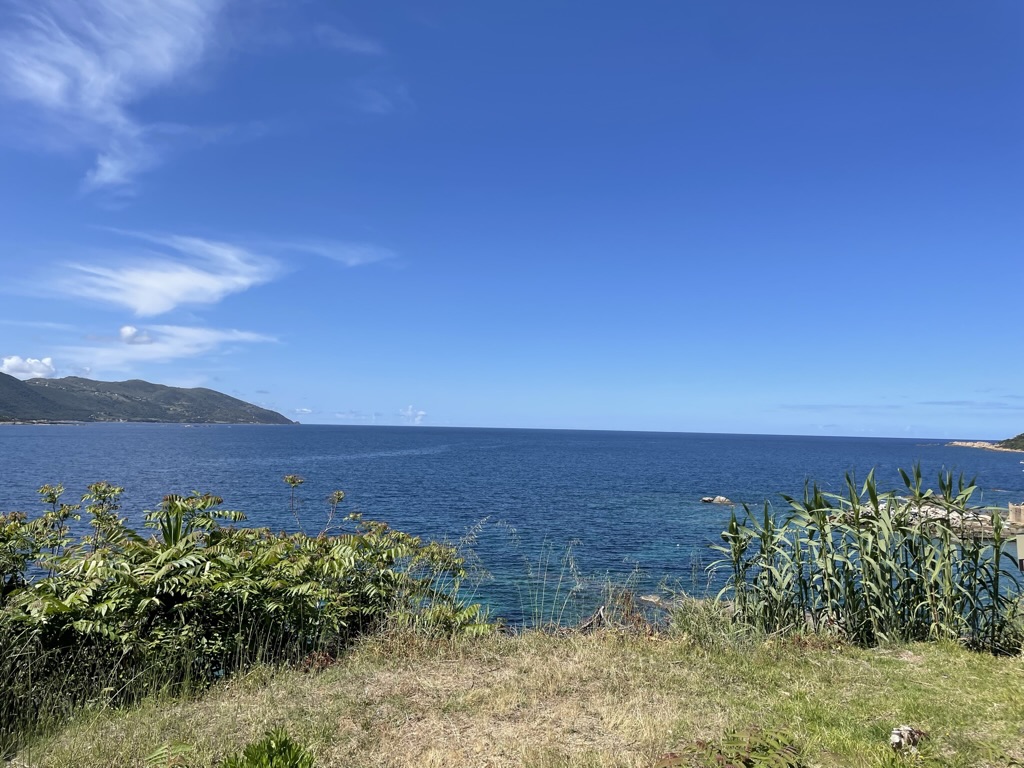
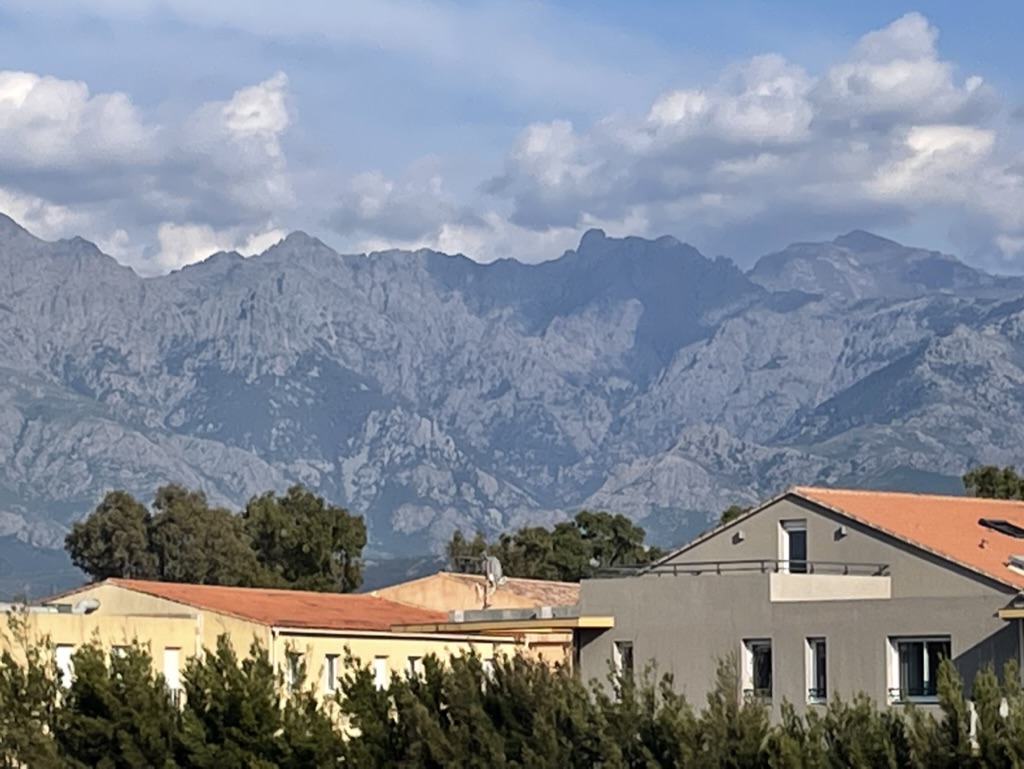
Have I mentioned before that Corsica is an incredibly beautiful place? The mountains come right down to the sparkling, blue Mediterranean, creating almost non-stop spectacular scenery. The first part of the drive was a repeat of our trip to the hilltop of Villanova but, once we got closer to the coast, our jaws just remained open in constant amazement of the vistas all around us. Ancient villages clung to the sides of mountains, high above the sandy beaches of towns such as Tiuccia, Esigna, or Sagone. It is truly one of the most beautiful places I’ve been to (and I’ve been to, like, four other places so… ).
We started getting hungry around Cargése so Denise directed us down to a marina below the hillside town where we could watch the boats come and go while we had our picnic lunch. We’d gotten in the habit of packing some salami, cheese, chocolate, water and fruit whenever we were going to be on the road at lunch because, as we discovered one day, the midday meal at restaurants was a big — and pricey — occasion . Every bistro on the island offers a lunch menu that looks more like dinner to us, and the prices aren’t cheap: most plates started at 22 euros. On previous trips to Spain and Portugal, we found lots of good three-course midday meals (menu del dia) for half that price so this was a bit of sticker shock. It doesn’t seem to phase the French, who take to the cafes every day of the week in droves for big meals but we are children of depression-era parents and cheapskates! That kind of bistro lifestyle seems appealing but it’s not in our budget or diet. After all those rich meals, it’s no wonder that the workers need a couple of hours before returning to work!
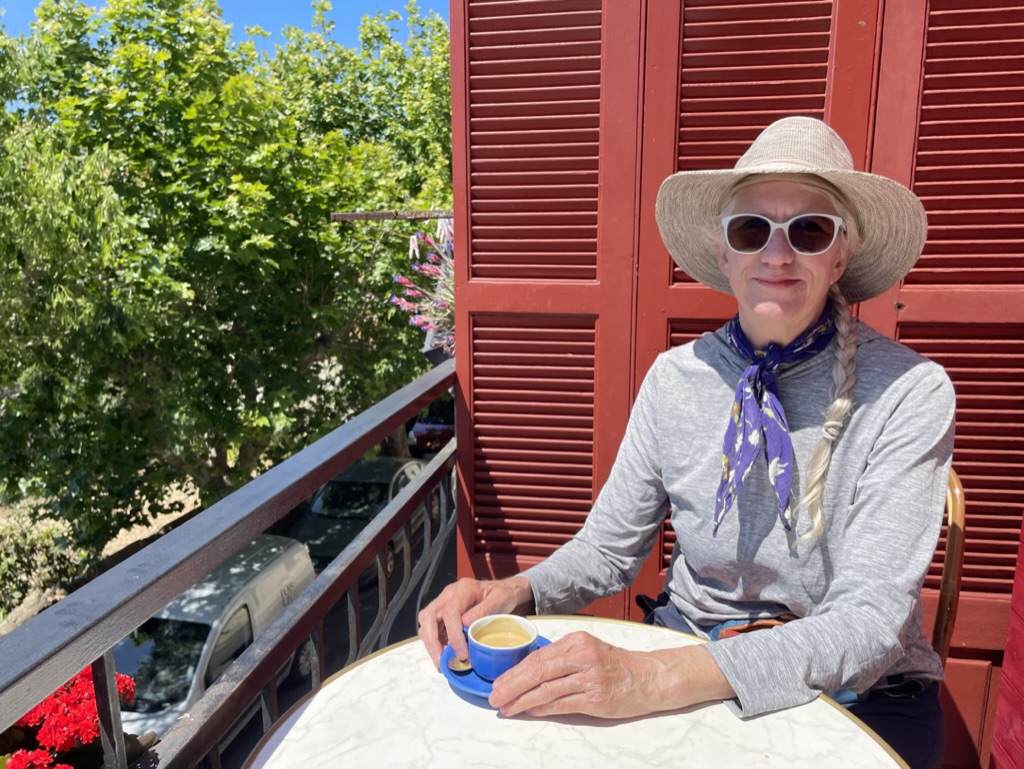
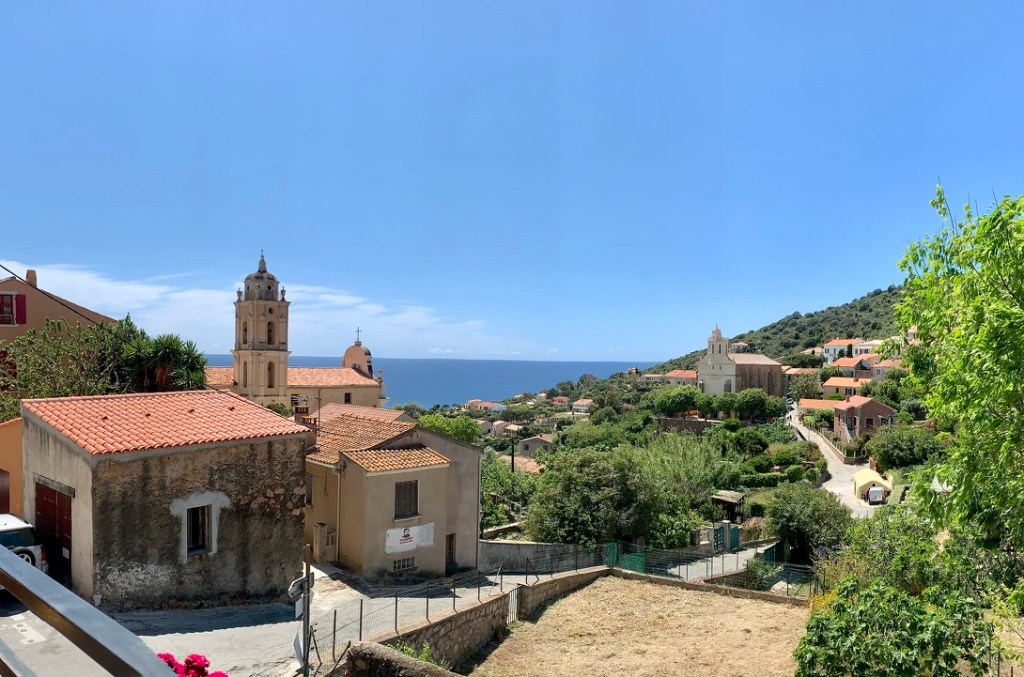
We found a nice spot for our picnic and then explored the harbor, one of the jumping-off points for tours of the Scandola Nature Reserve. We’d heard great things about the area but they wouldn’t take dogs on the boats so we’d have to try another day. After that, we headed up into the town and found a cafe overlooking the harbor for an espresso. The proprietor didn’t look happy that we’d disturbed the soccer game he was watching on a portable TV behind the bar, but eventually brought us our coffees as we took in the view. From our balcony, we could see two churches in the town, facing each other, unusual for such a small town (Pop. 1280). Every village in France has a church but this was the first time we’d seen two, much less so close together and we decided to investigate further.
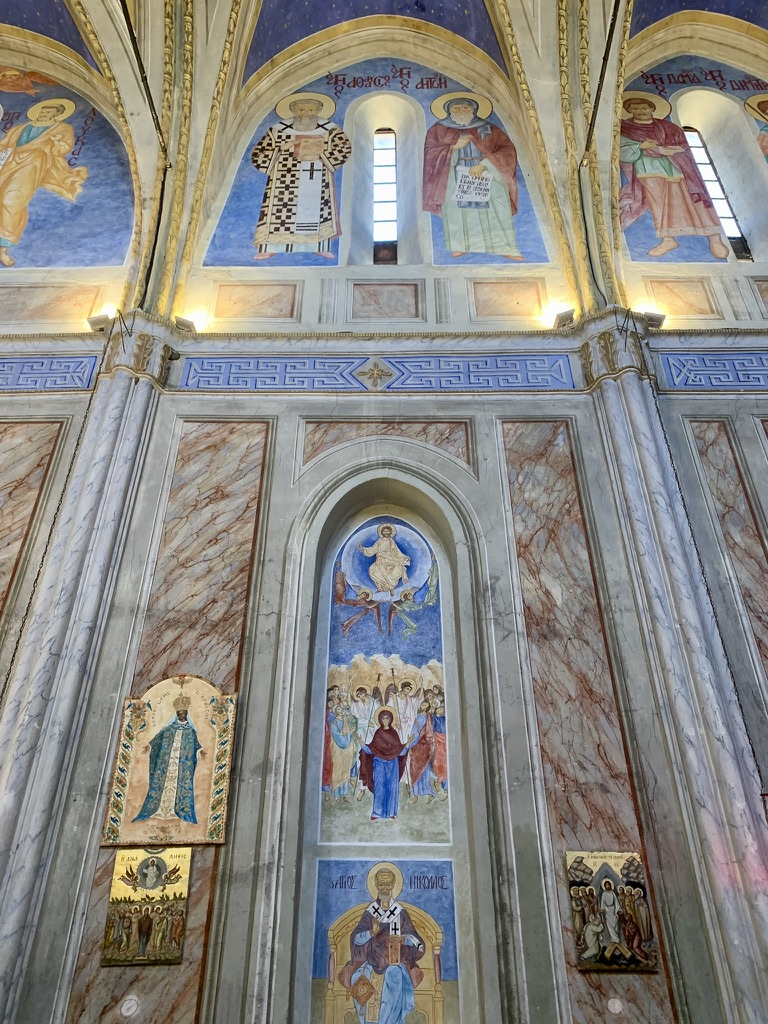
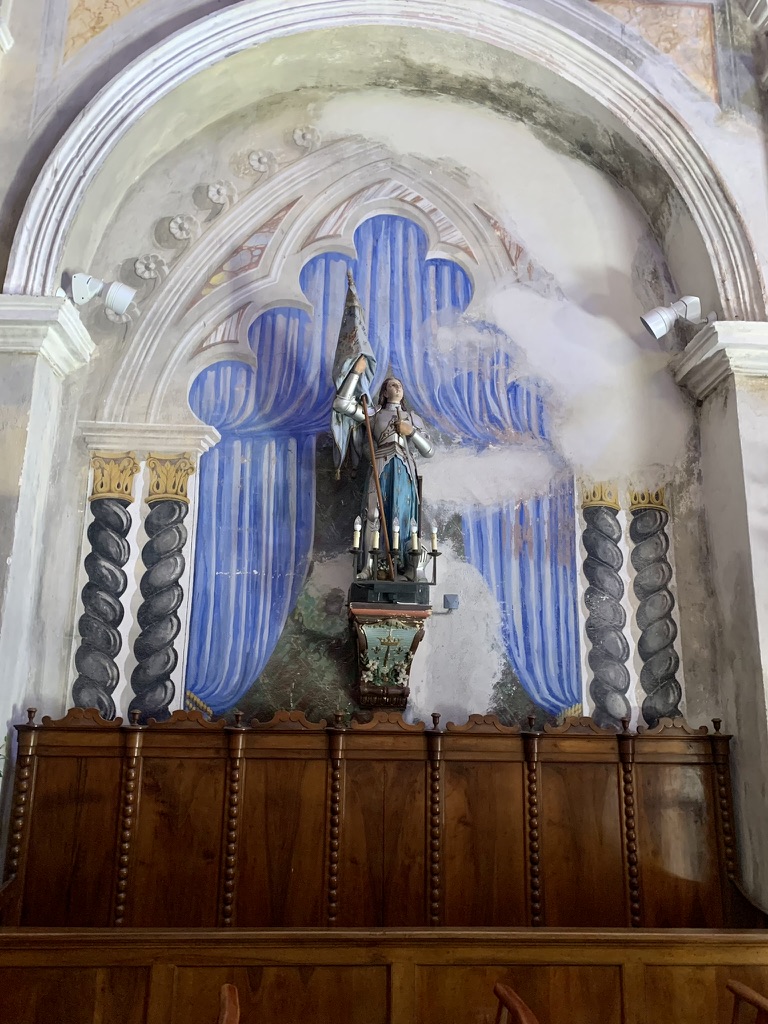
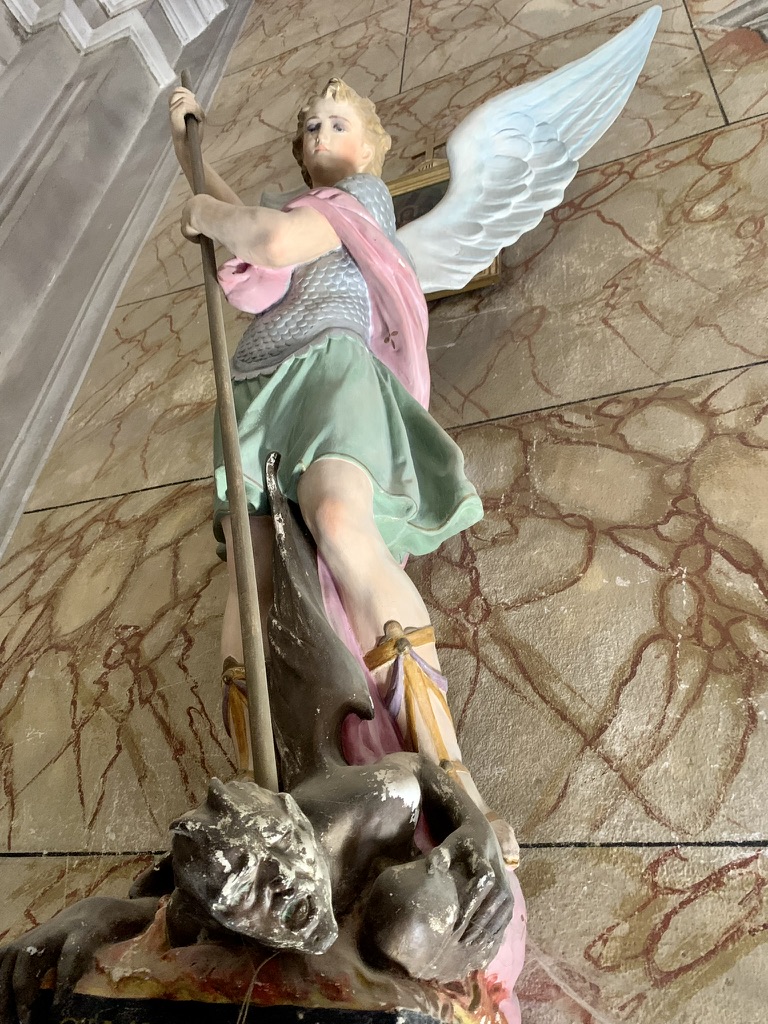
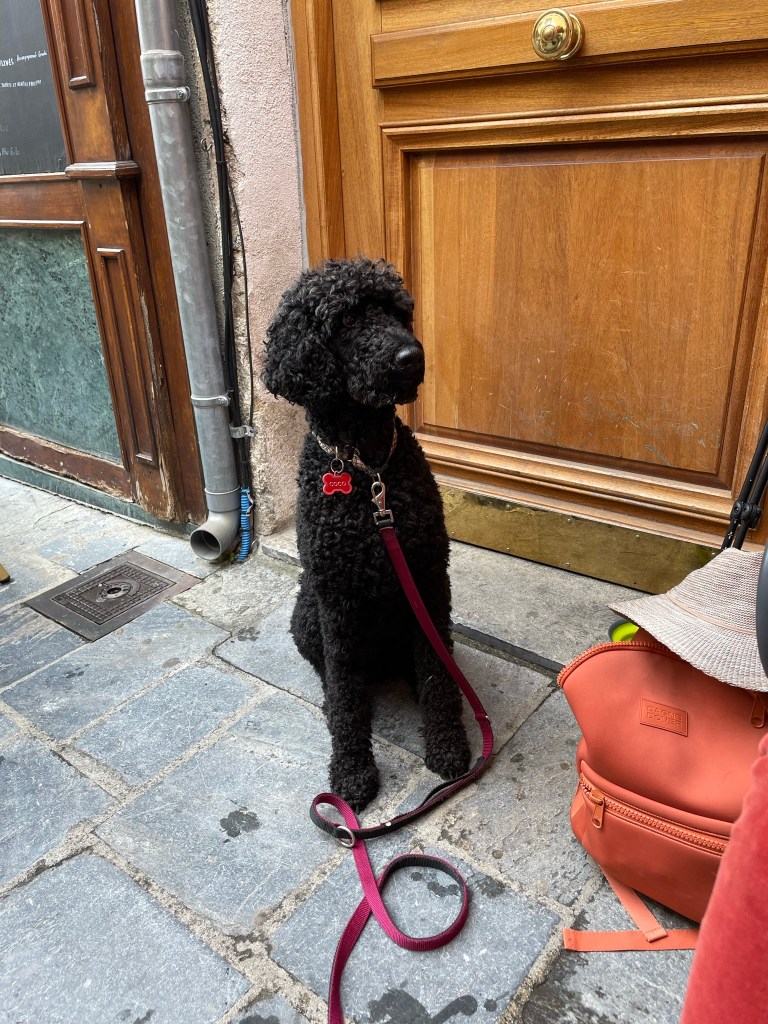
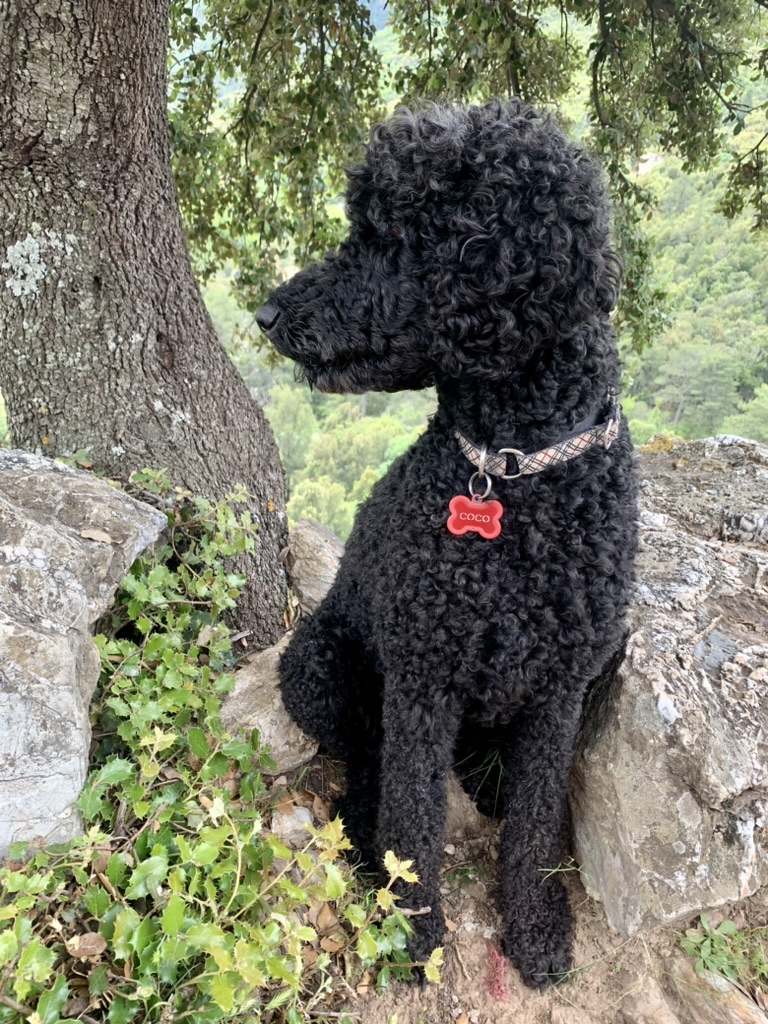
The first one we came to, and the simpler of the two, turned out to be an Orthodox church. The artwork on the nave, apse, and vaulted ceiling were colorfully patterned and ornate, with scenes depicted in a flattened perspective, as it the style in these churches. There were only a few people in the church and we quickly figured out that we’d stumbled into a private baptism ceremony. Afterwards, we had a nice broken English-broken French chat with the father of the baby who explained that the town had been founded by Greek fishermen who wanted their own church. While he was Roman Catholic (as are most of the inhabitants of Corsica), his wife was Romanian Orthodox and so they had to drive up from Ajaccio to this, the nearest church of that faith. While we spoke, his toddler son took a shine to Coco and started playing with her like she were a toy or doll. Coco was very patient although I swear I saw her roll her eyes at one point. Next, we walked across the way to the empty Roman Catholic sanctuary where the iconography was presented in the form of statuary, VIP saints looming from on high, and the Big Guy himself stationed on the cross in dramatic 3-D. These figures created a theatrical effect that might have made more devout visitors swoon. Sitting outside on the steps, we could imagine the priests of each church spending some time each Sunday after mass staring across the ravine separating the two houses of worship, checking out the attendance figures for the opposing parish.

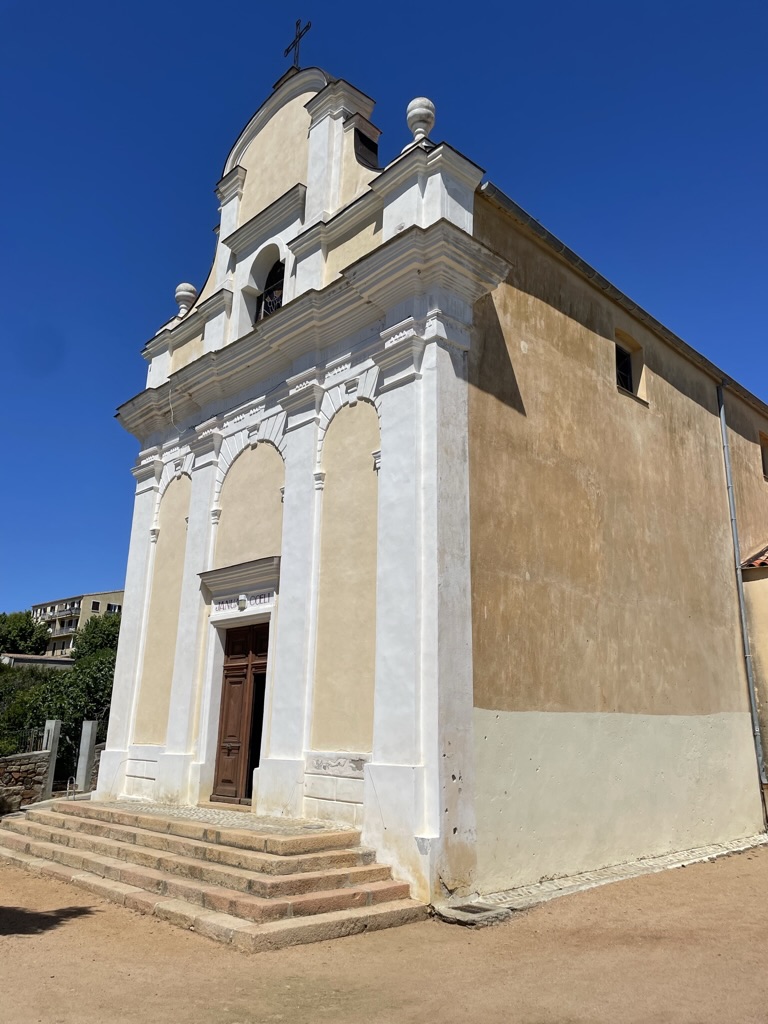

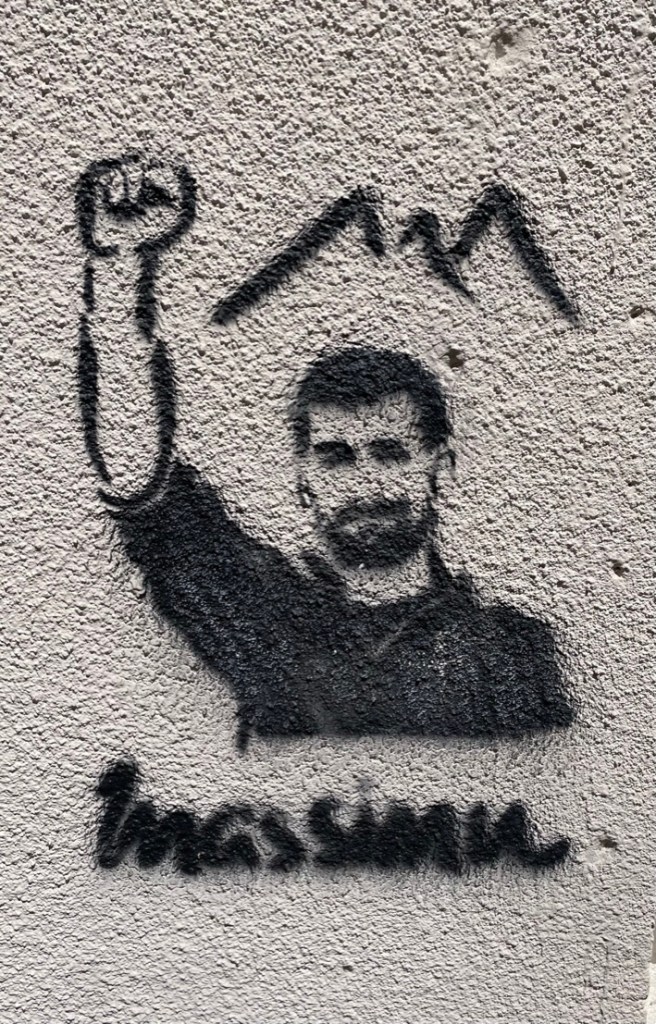
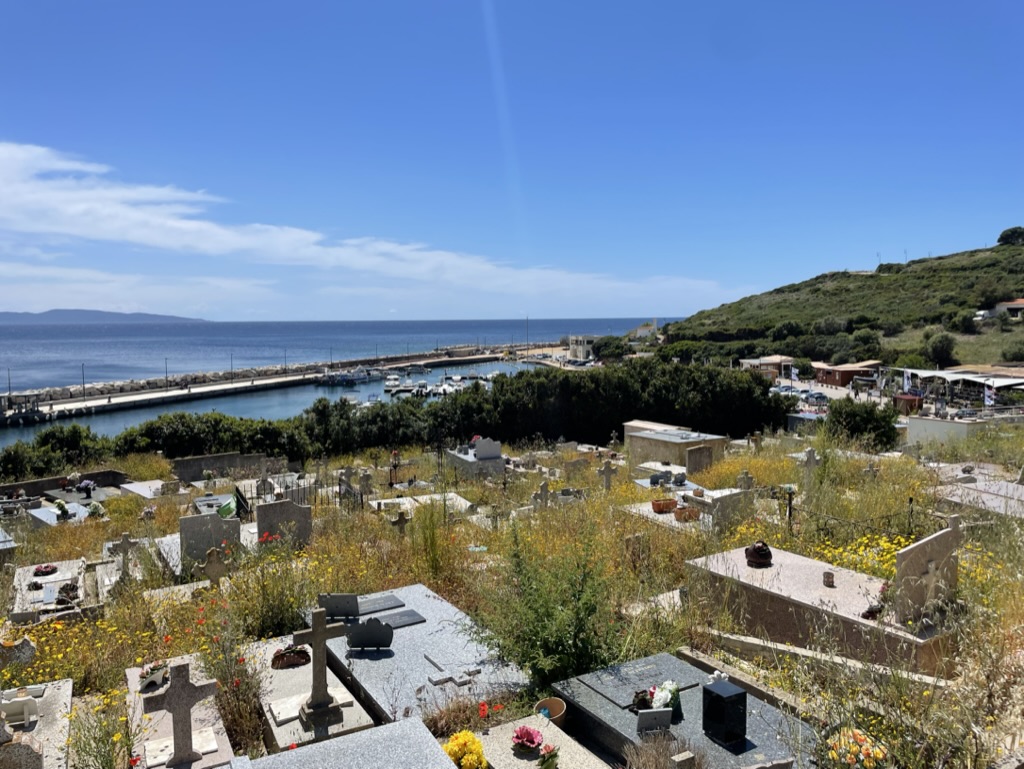
Now for the Corsican intrigue: As we strolled back to our car, we started seeing spray painted stencils on most every building with a figure of a man with his fist raised defiantly, the word “Massimu” underneath, and we wondered what was the context. A quick DuckDuckGo search turned up a New York Times about his 2019 murder at the hands of the local organized crime syndicate. We were astonished to find that the young environmental activist had angered the “mafia” by speaking out against seaside development and the local drug trade and paid the ultimate price — he was gunned down a short distance from where we had just picnicked, his funeral was held in the same Catholic church that we had just visited, and he’s buried in the cemetery we walked through just above the harbor. The assassination had set off protests all over Corsica, forcing the government to at least face up to the previously-ignored mafia problem. Everywhere we went after that, we saw stencil or spray painted messages about Massimu, his memory still fresh in people’s minds, although the killer was still at large.
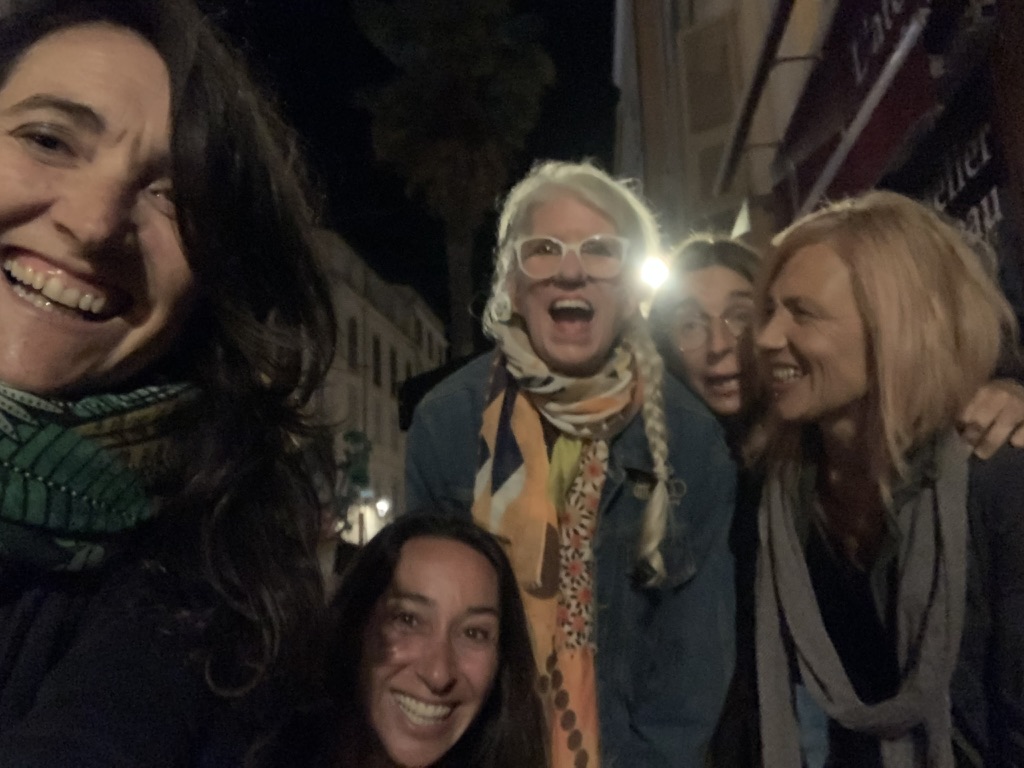
Denise had the whole mafia situation confirmed a few nights later over drinks with a new friend of hers, Brigitte, the proprietress of an Ajaccio art gallery: the local protection outfit (not affiliated with the Italian mafia) had a real presence in the city, often stifling any new businesses who didn’t want to get involved with criminals. It’s an ugly underside to the island and not the only place in France that had mob problems: even the leafy, relaxed-seeming Aix-en-Provence was terrorized by an extortion racket a decade ago. We were learning that France might not be as genteel as it first appeared.

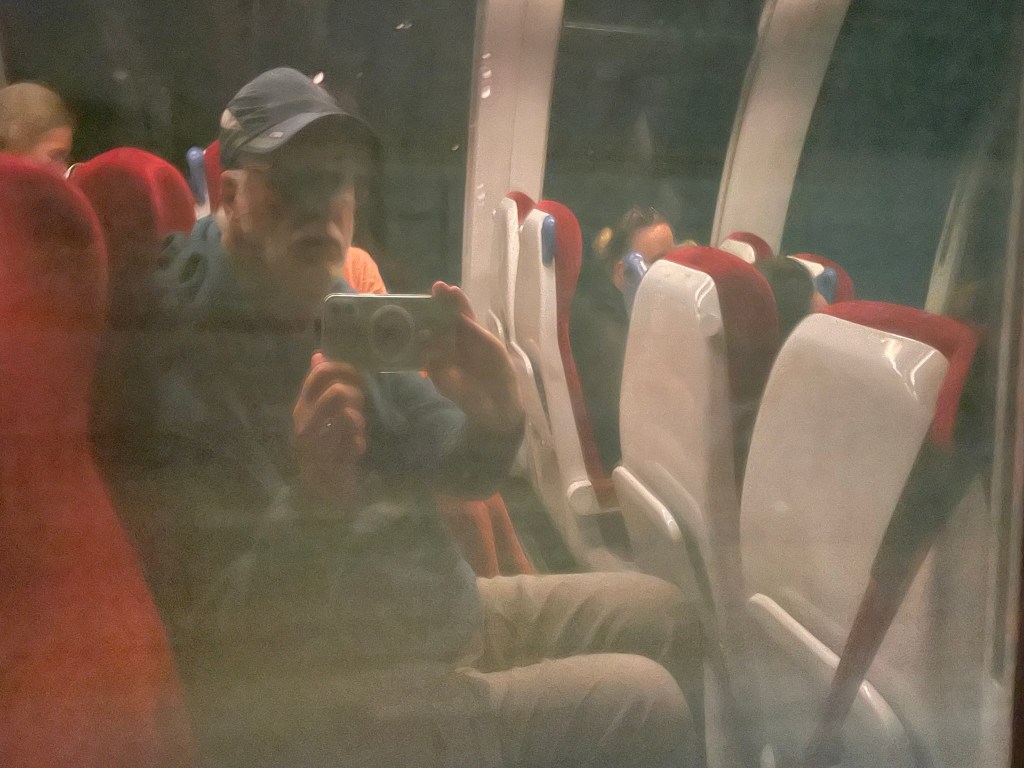
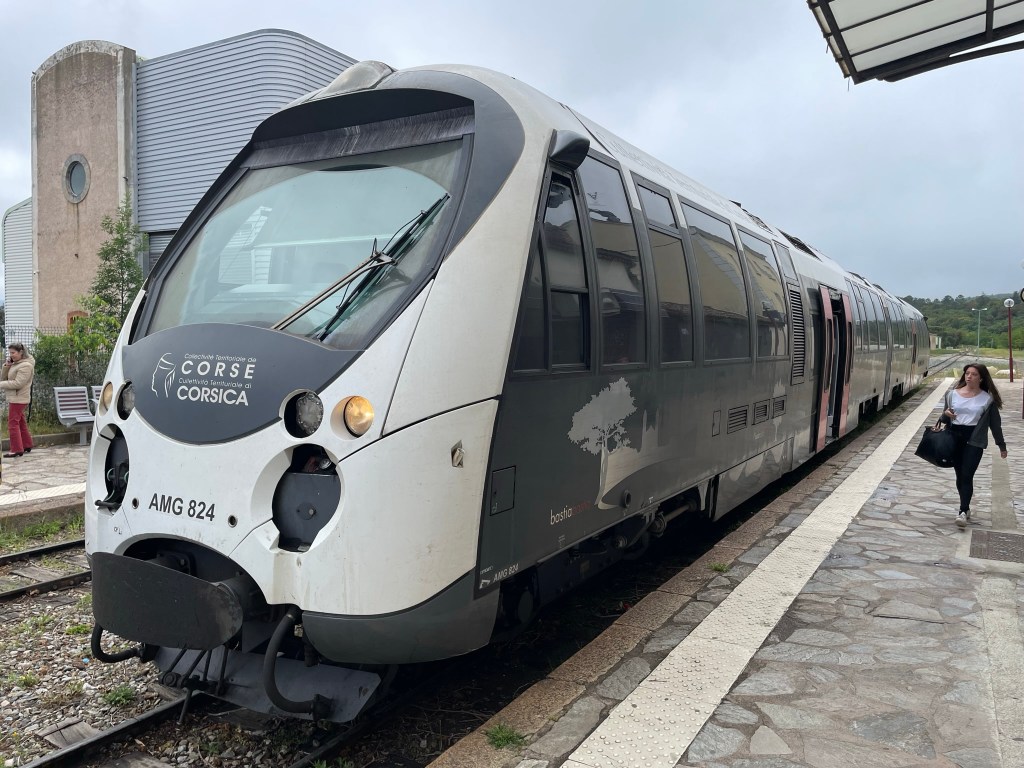
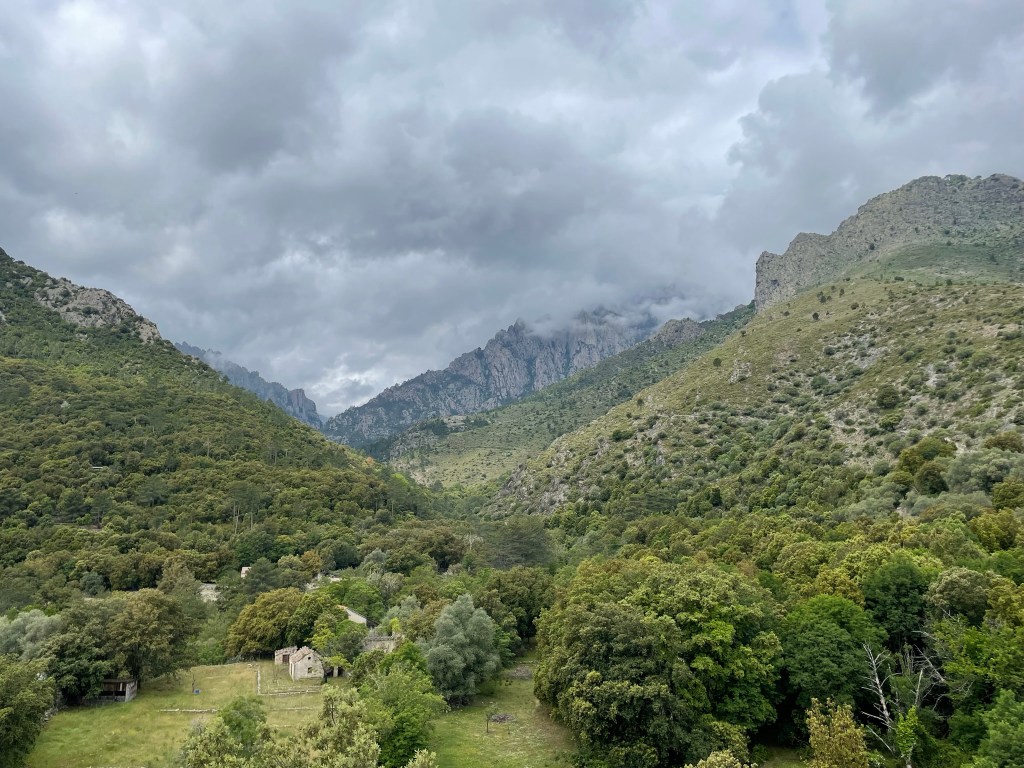
Our next Corsican adventure required rising at dawn to catch a train up to the university town of Corte, in the mountainous center of the island. It’s a charming narrow gauge — actually meter-wide — train system they have here, nicknamed “Trinnichellu” (“shaker” in Corsican- a very apt descriptor of the ride). It’s amazing that it ever got built, considering the challenges of construction through terrain rising to 8,000 feet. It’s been threatened with extinction many times but somehow continues on. Our packed train seemed to be mostly students en route to class at the University with a few tourists and hikers — the train crosses the GR20 at a few points — rounding out the early morning passengers. The train goes through the light-industrial exurbs of Ajaccio before beginning the climb up the mountains and, after that, the scenery rarely lets up. The train goes through quite a few tunnels and over as many bridges and you are frequently looking out your window at spectacular mountain ranges. From my window seat on the left side of the train, I could see the heart-stopping drop-offs on the edge of the tracks: any derailment would certainly have sent us plummeting down steep slopes to certain death, but what’s a train ride without some risk, right? For the roughly two-hour trip, the cost for both of us and the dog (allowed only with a muzzle which we removed shortly after boarding) was 23 euros each way. Both Denise and Coco suffered from the rocking motion of the train but I, usually the one most susceptible to such things, did fine. Maybe it was the excitement of the historic Chemin de Fer Corse — my grandfather was a fireman on the Boston & Maine line when they still ran steam locomotives — and I’ve always loved any train ride. In fact, the style of the cars they use here remind me of the old Budd Liners that I rode from Canton to Boston.
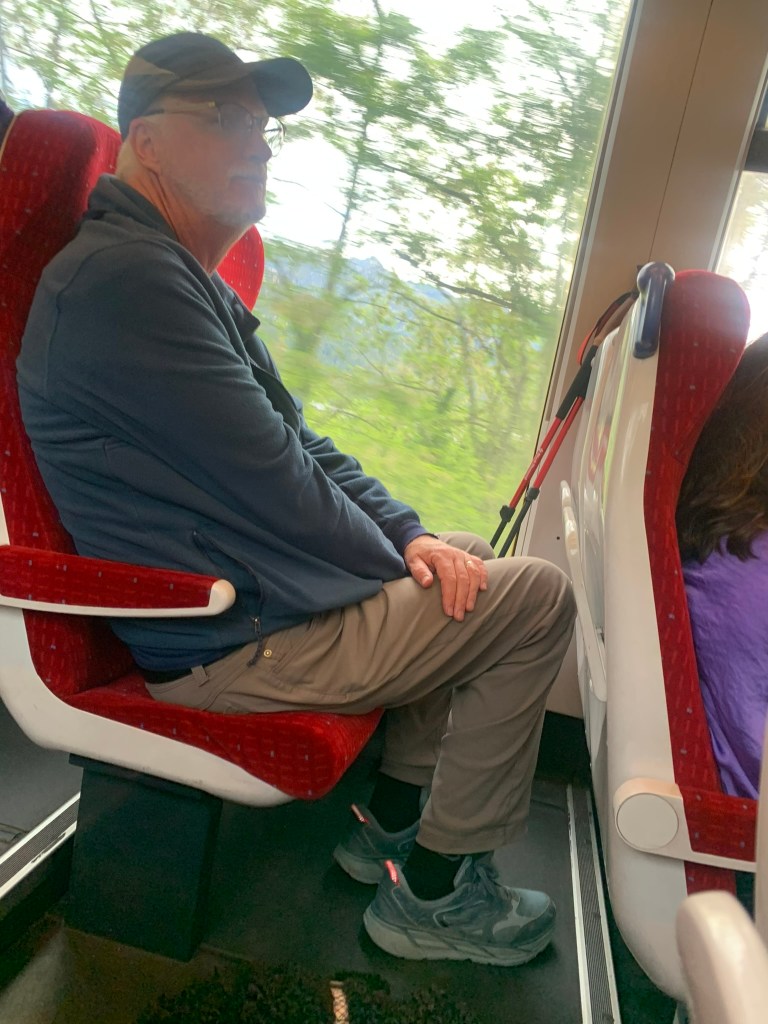
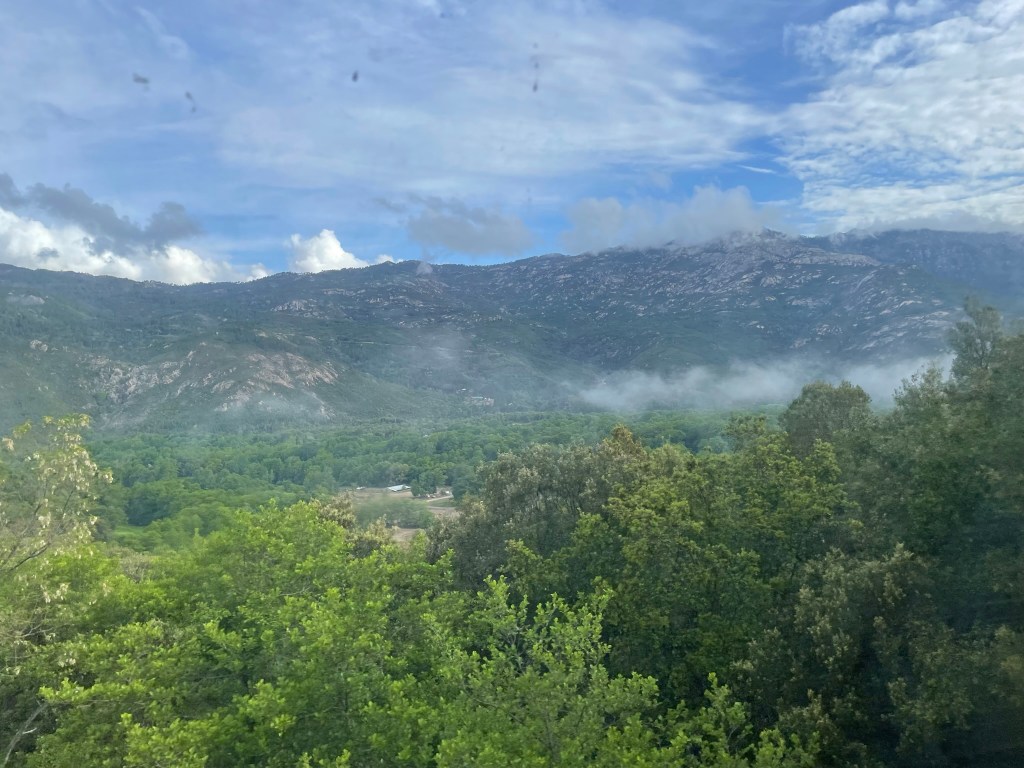
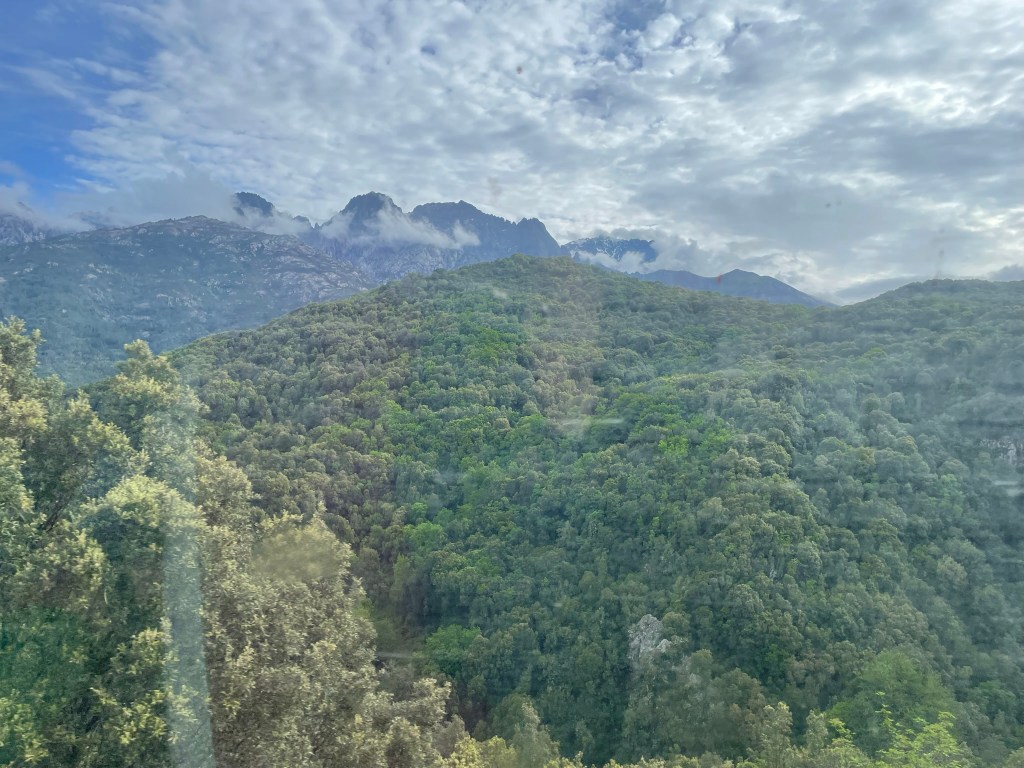
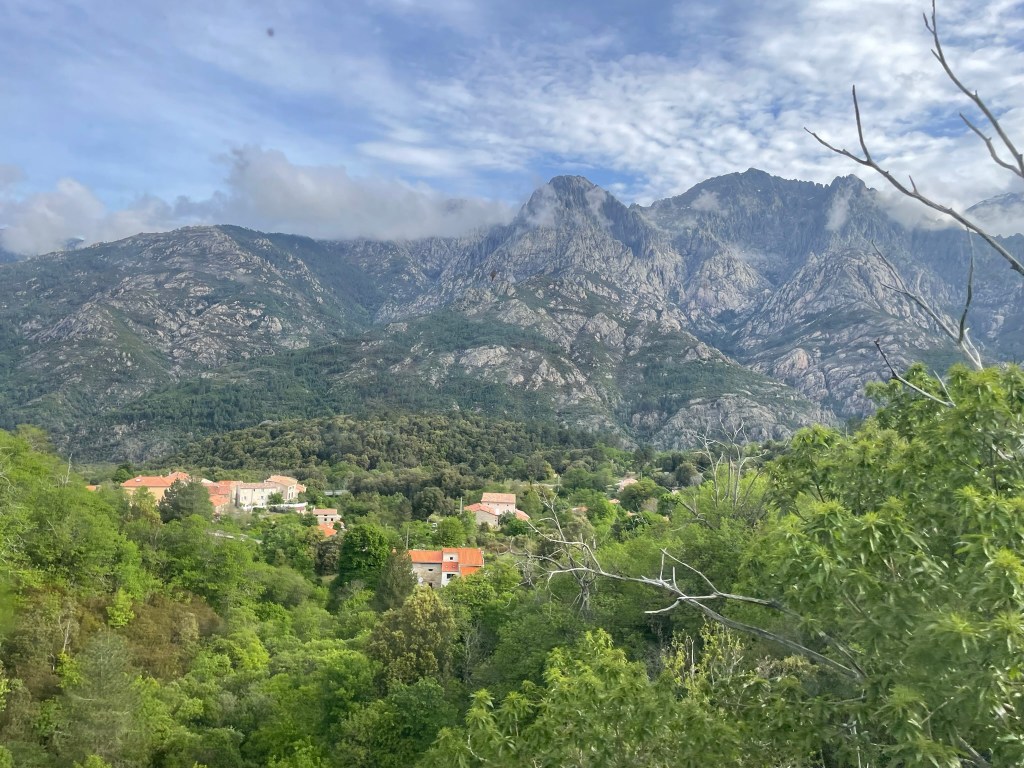
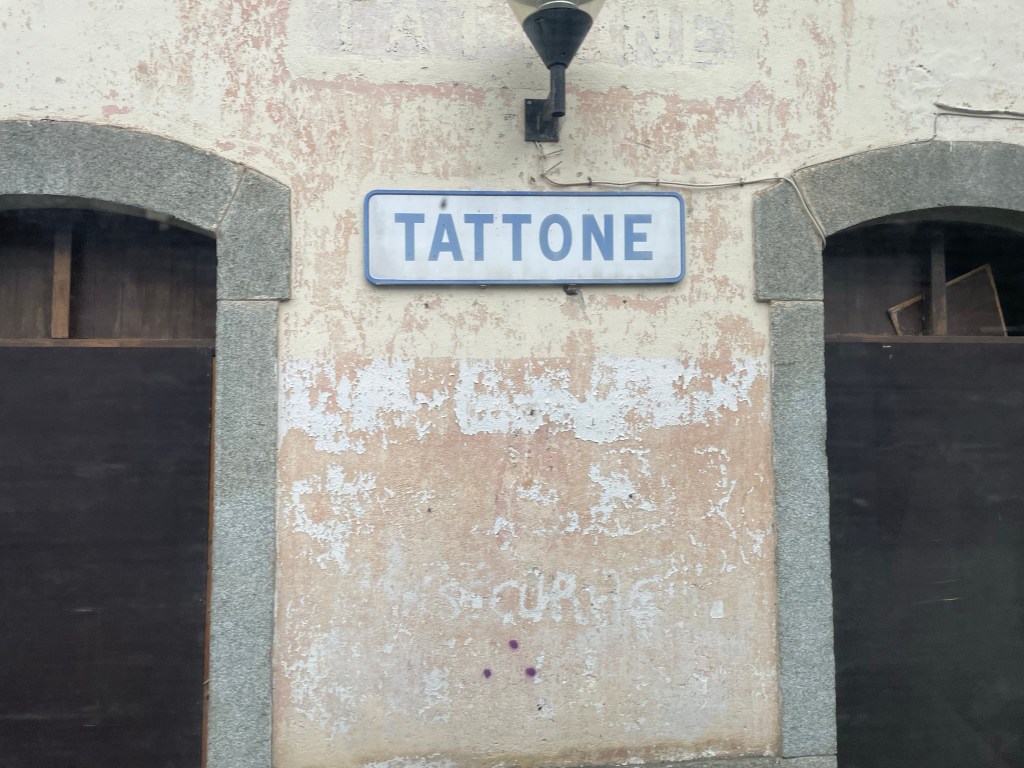

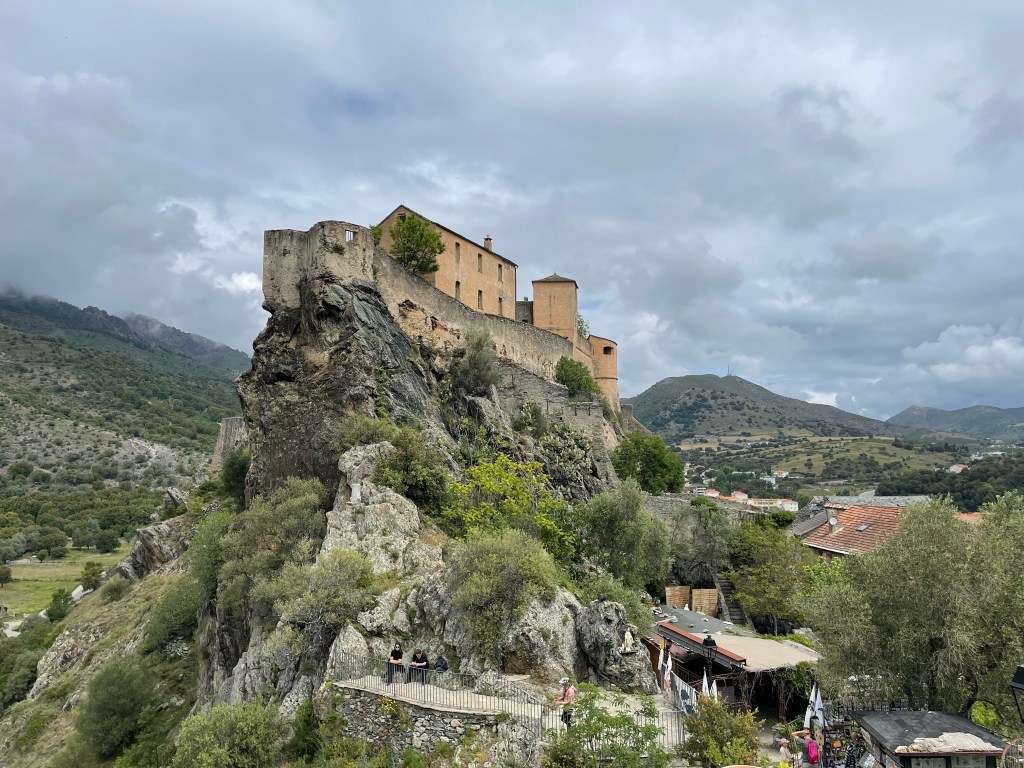
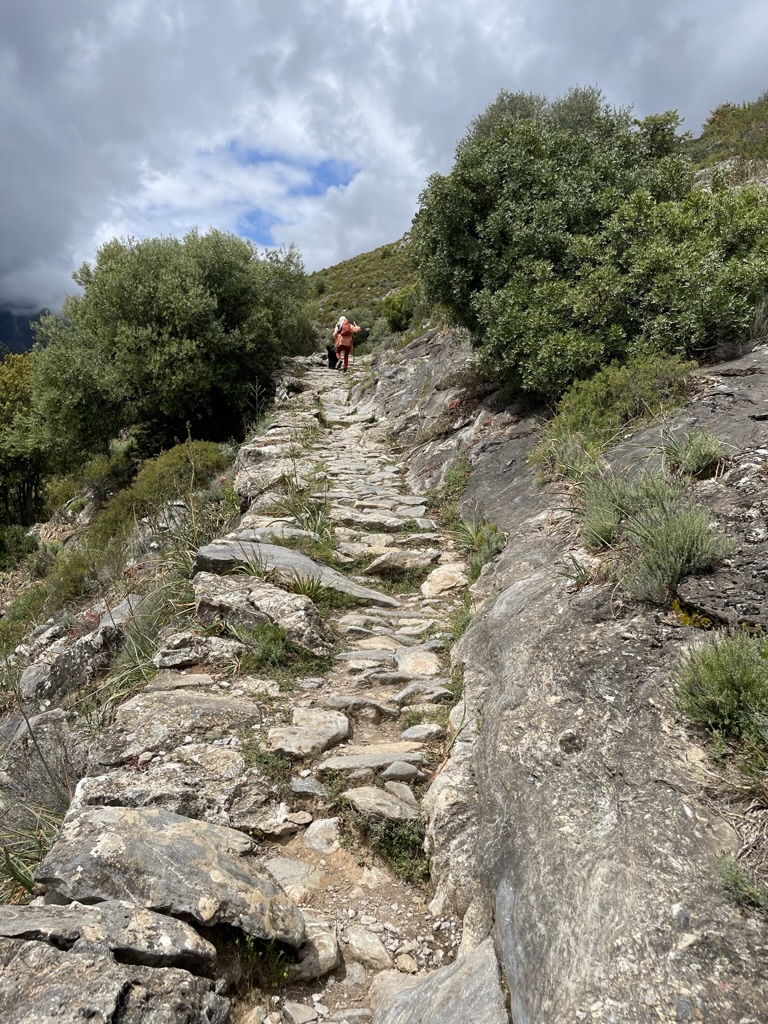
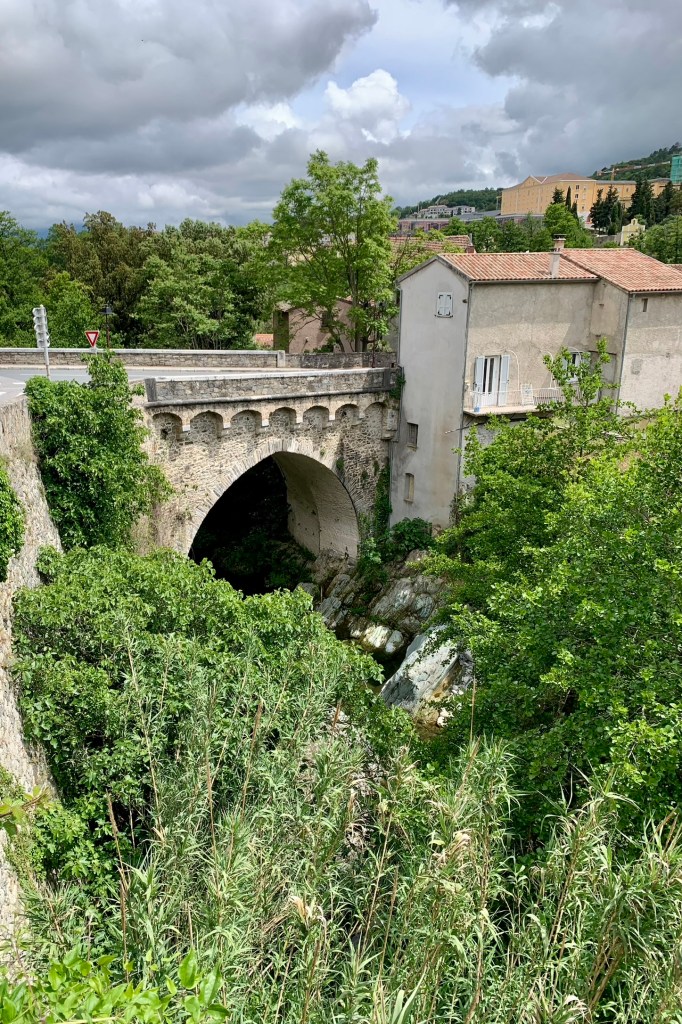
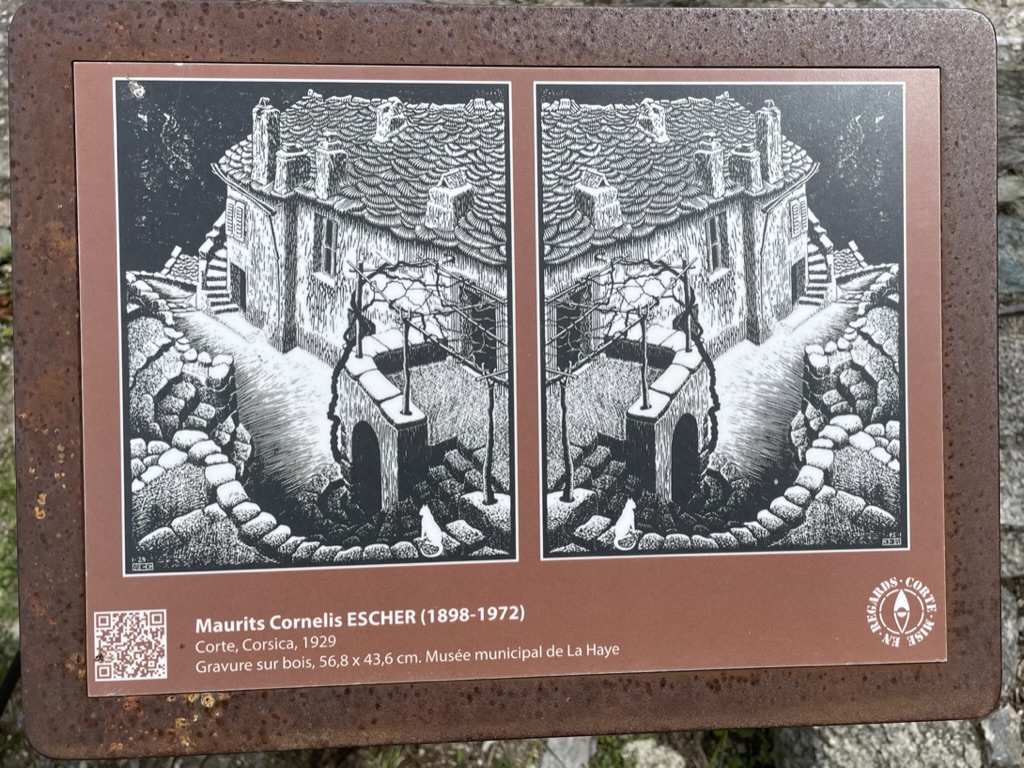
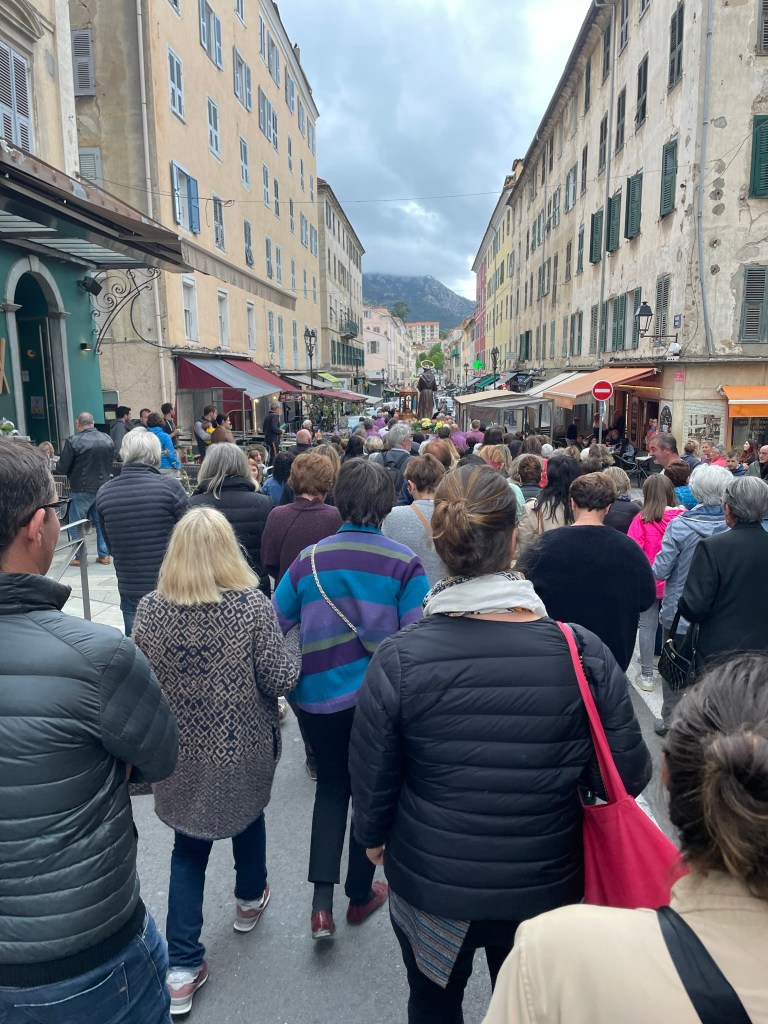
Once we arrived in Corte, we headed up to the old town and the historic citadel: not quite as impressive as Bonifacio’s seaside fortress but definitely worth the climb. The town is in a valley surrounded by very tall, craggy mountains, and the university occupies and employs much of the town. After an attempt at a challenging mountain hike on a trail that is used to link Corte to the GR20, we were discouraged by a looming thunderstorm (that never arrived) and settled for a nice stroll along the Sentier du Patrimoine that took us through the town, aided by helpful signs outlining the history of the area. After all that walking, we fell into a patio cafe for a drink and a sandwich and were serenaded by the nearby chaotically-pealing church bells — it was the Catholic Feast of the Ascension — and the sounds of the patrons inside the bar alternately singing or arguing, sometimes at the same time. On the way back to the train station, we ran into a procession from the local church that was being led by a sounder of priests and followed by the congregation, making its way through town, with four altar boys carrying a relic of the local patron saint. We joined in the parade with the chanting believers, unable to navigate around them on the narrow, winding streets, both of us cast back to our childhood as good Catholics, following the pack.
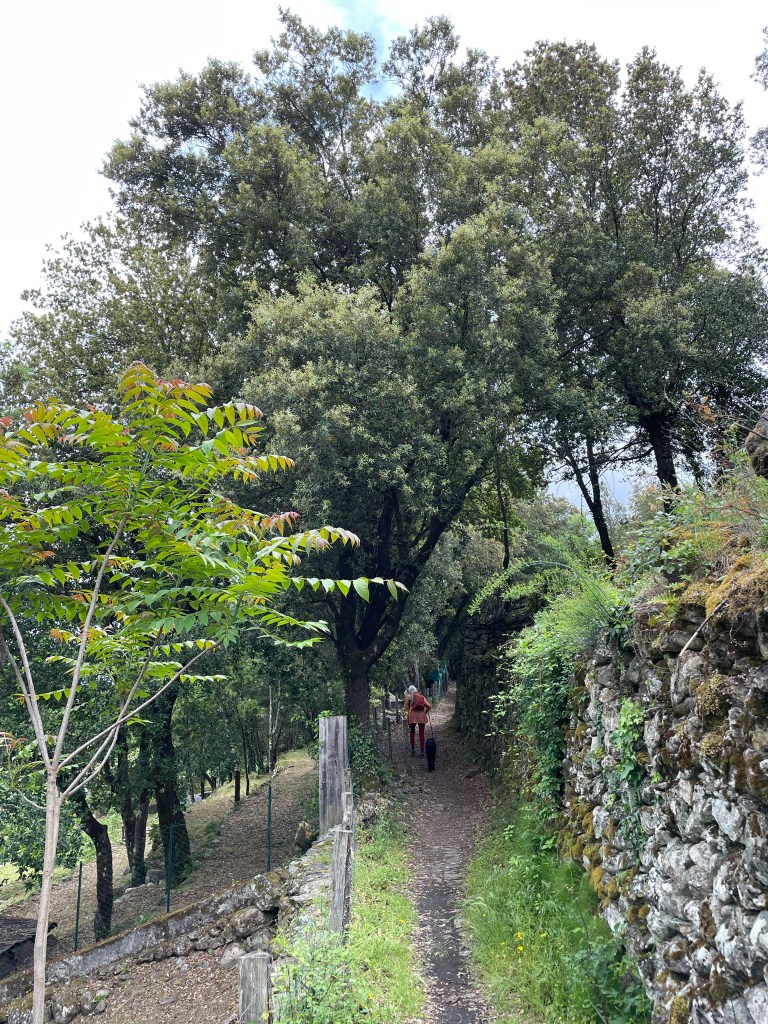

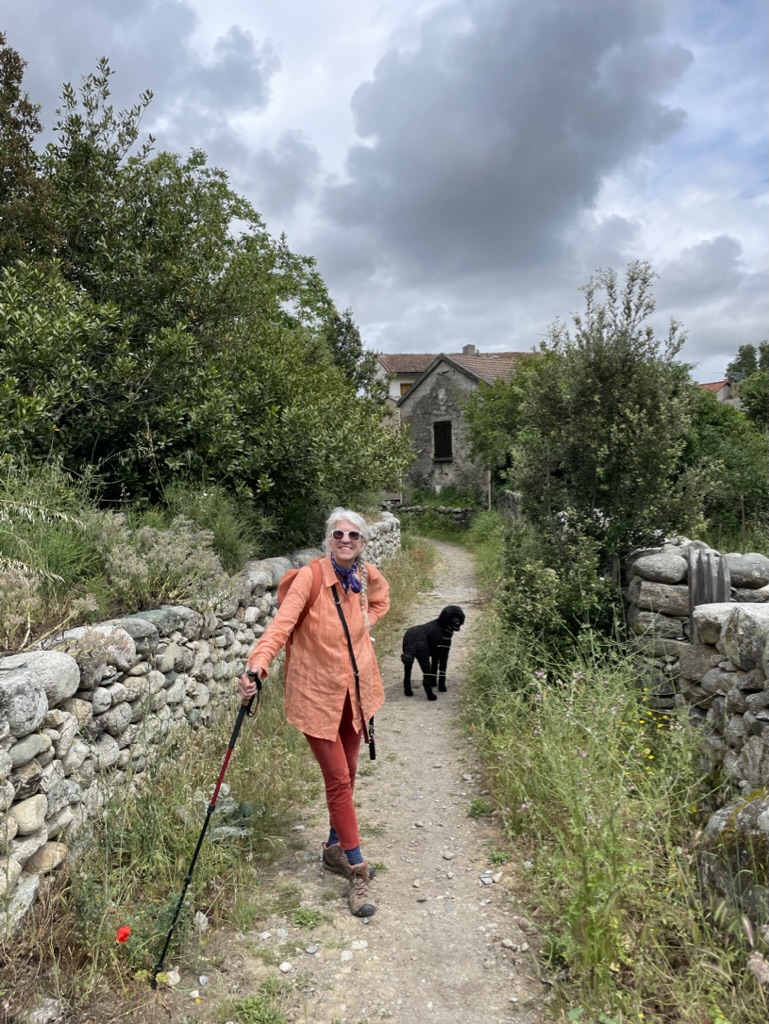


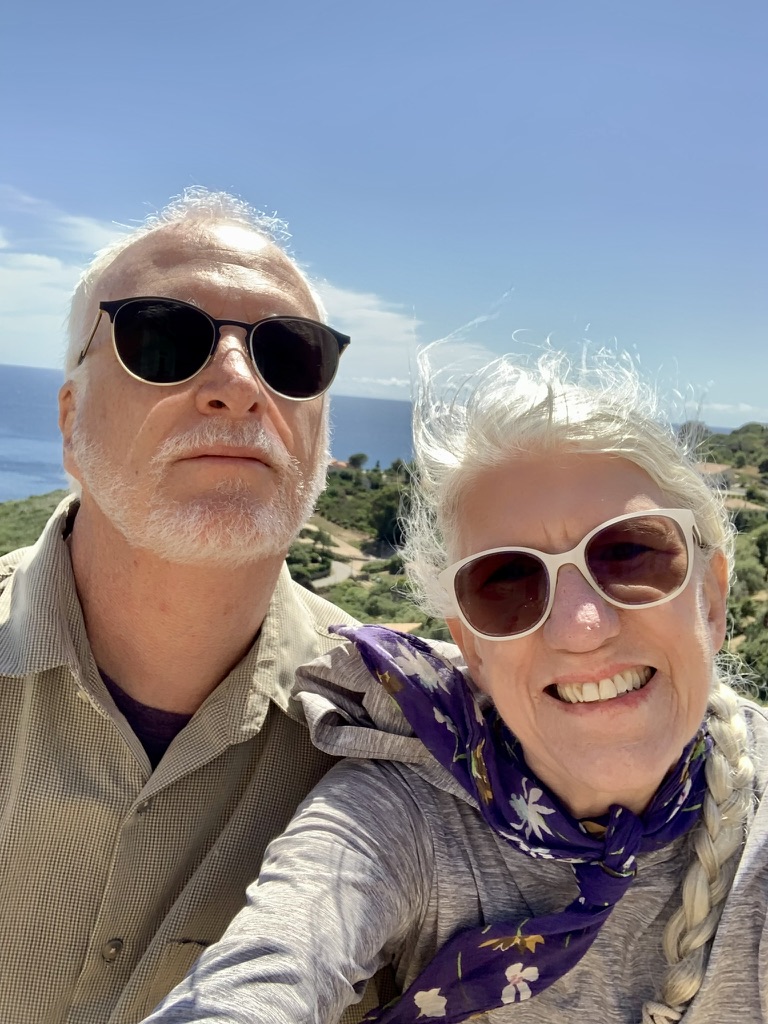
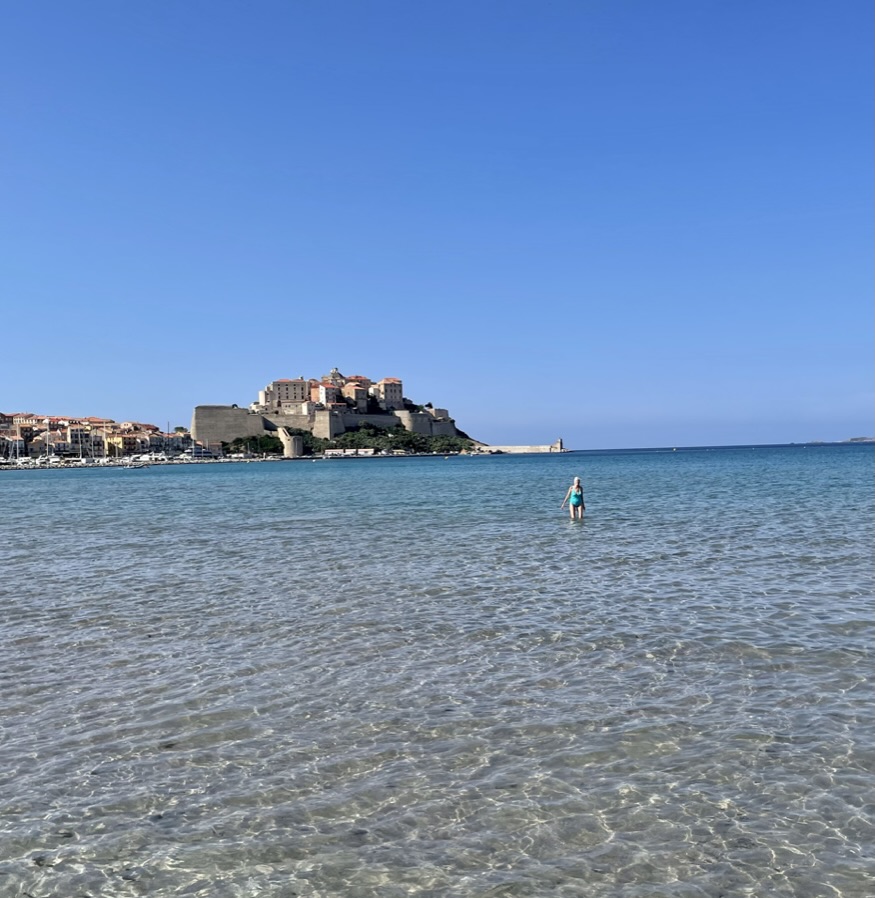
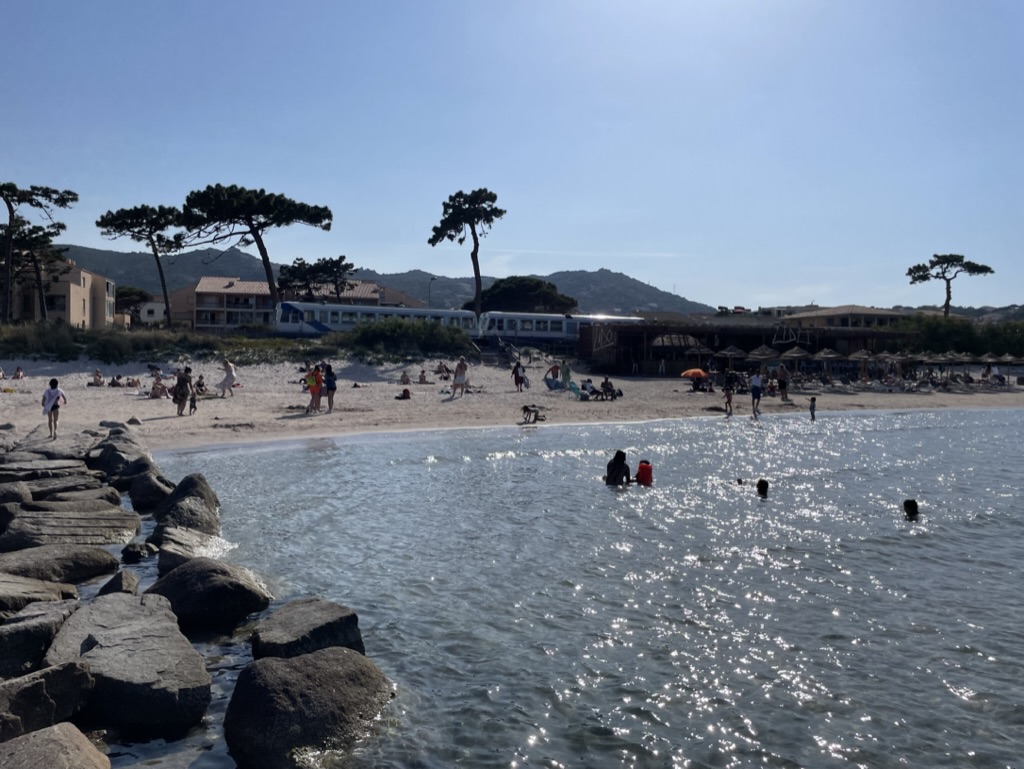
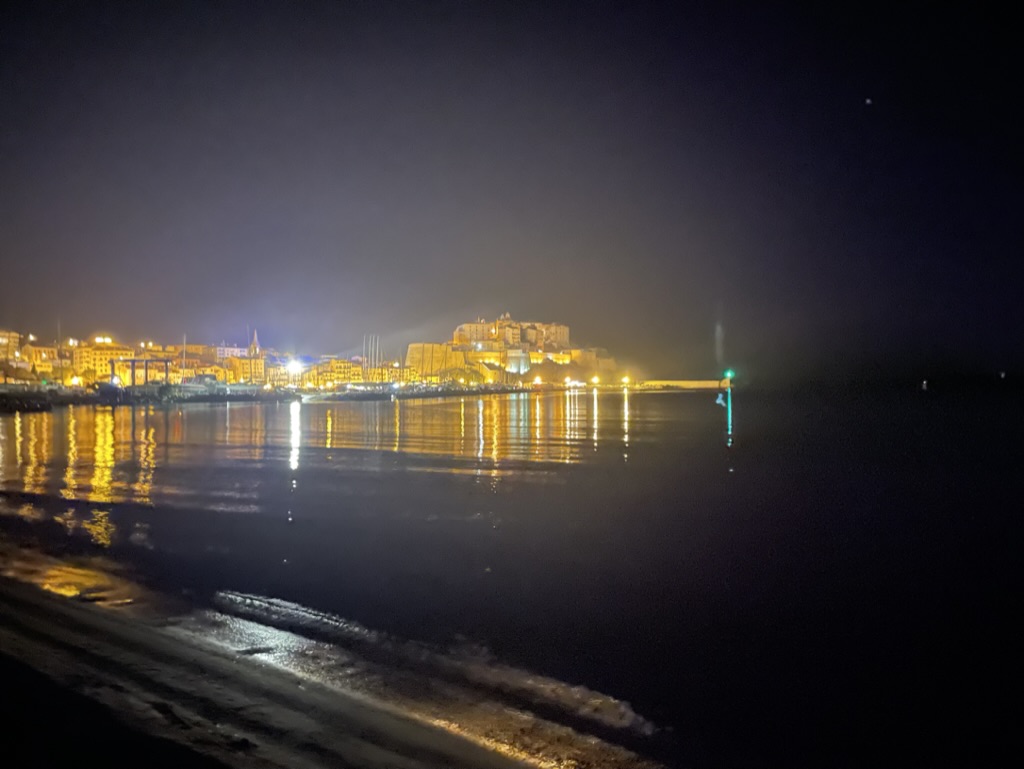
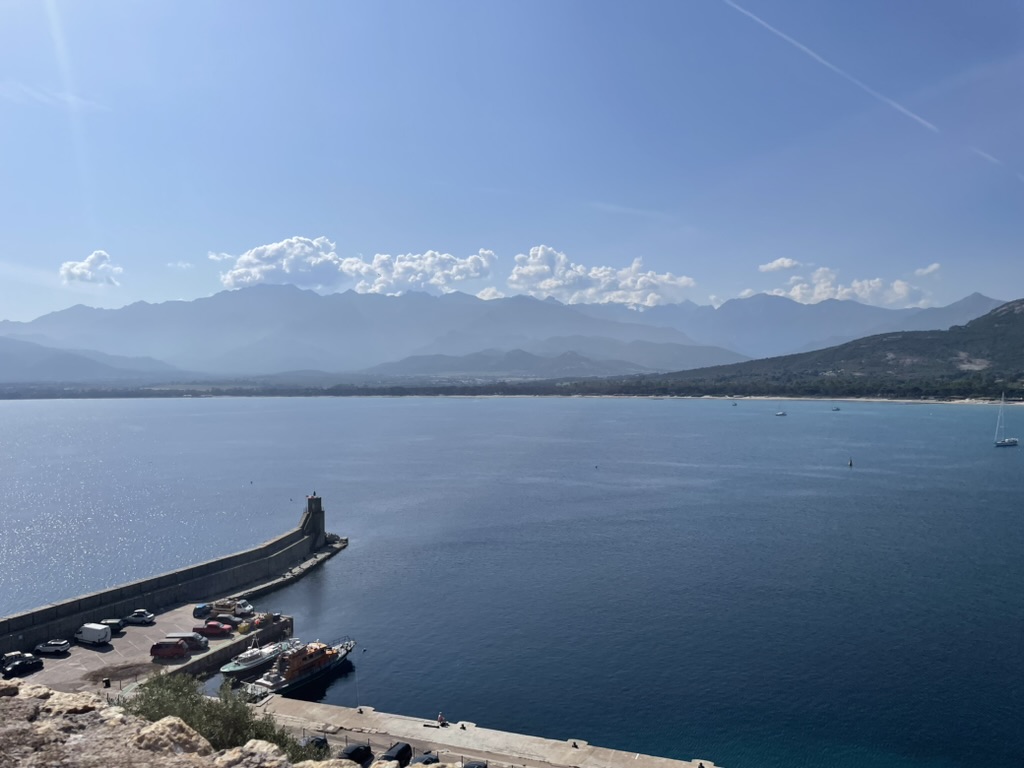
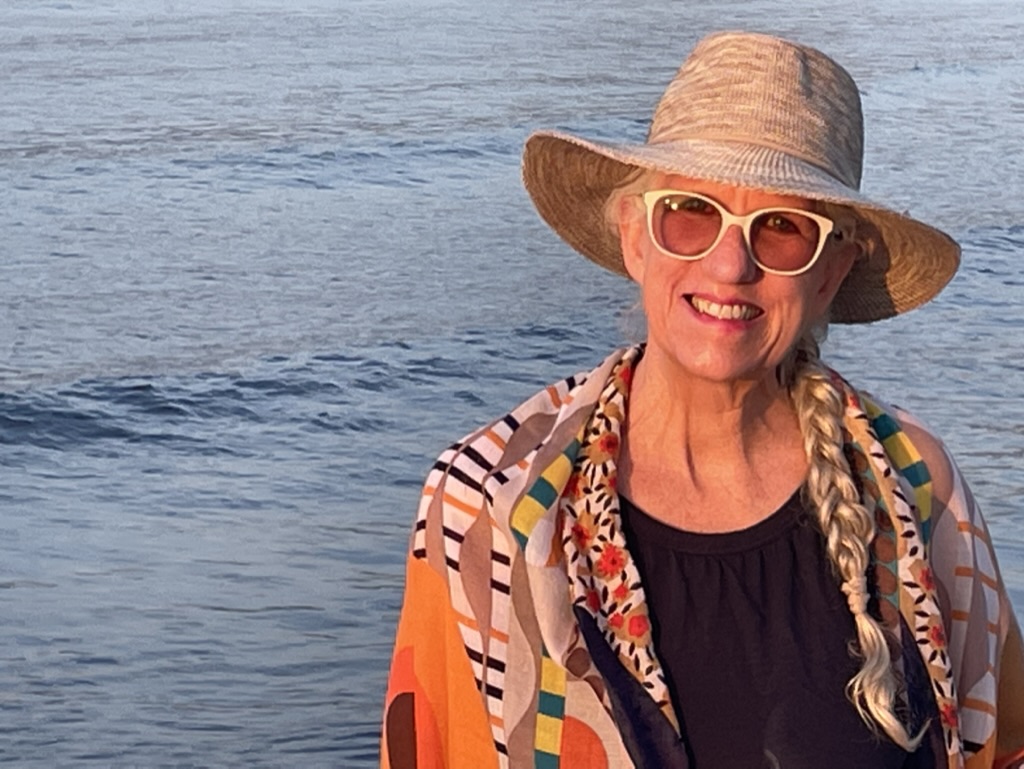
We took a few other day trips, including a memorable walk around Peri and a visit to the Fesch Museum, but, by the time we packed the car for a last hurrah weekend on the north coast, we were ready to leave Ajaccio. Calvi, on the northwestern tip of Corsica, is more of a vacation town than the capitol — lots of Germans on motorcycles — and we took a couple of days to explore their impressive citadel and then just lie on the beach and pretend we were on vacation. I mean to say that we don’t consider this whole adventure to be a vacation, we’re just living our retired lives but in different places. But lying on the beach on the Mediterranean, drinking cocktails on our chaise longue, and eating lunch at a table in the sand, that’s a vacation and a splurge we can’t afford to do every day.







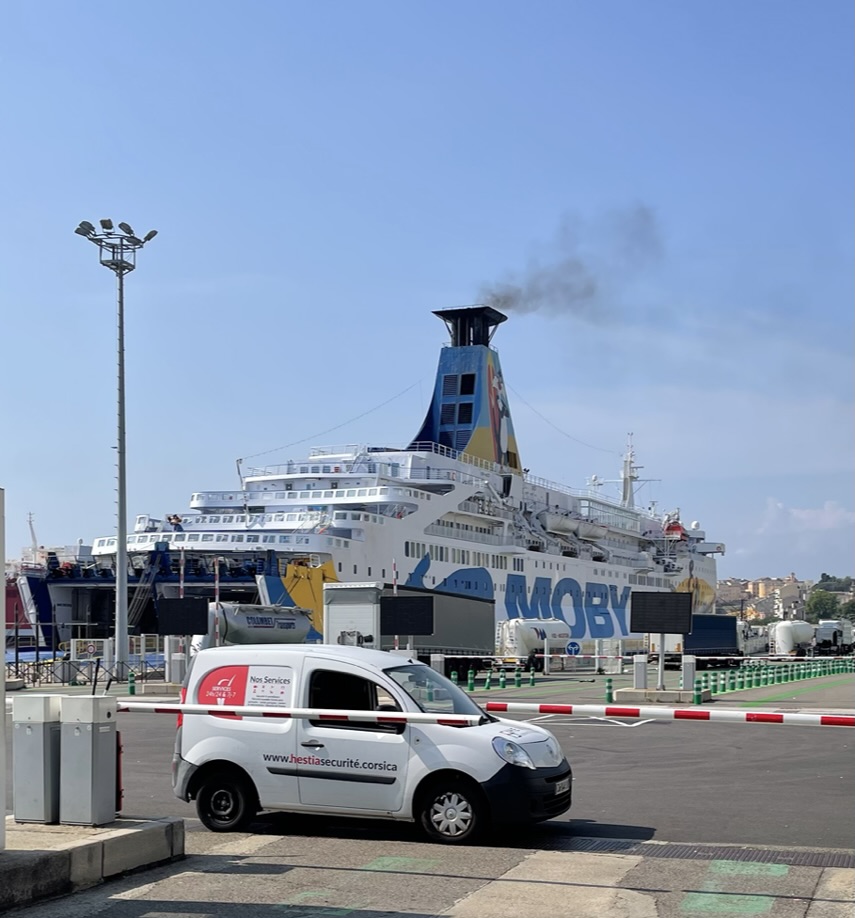
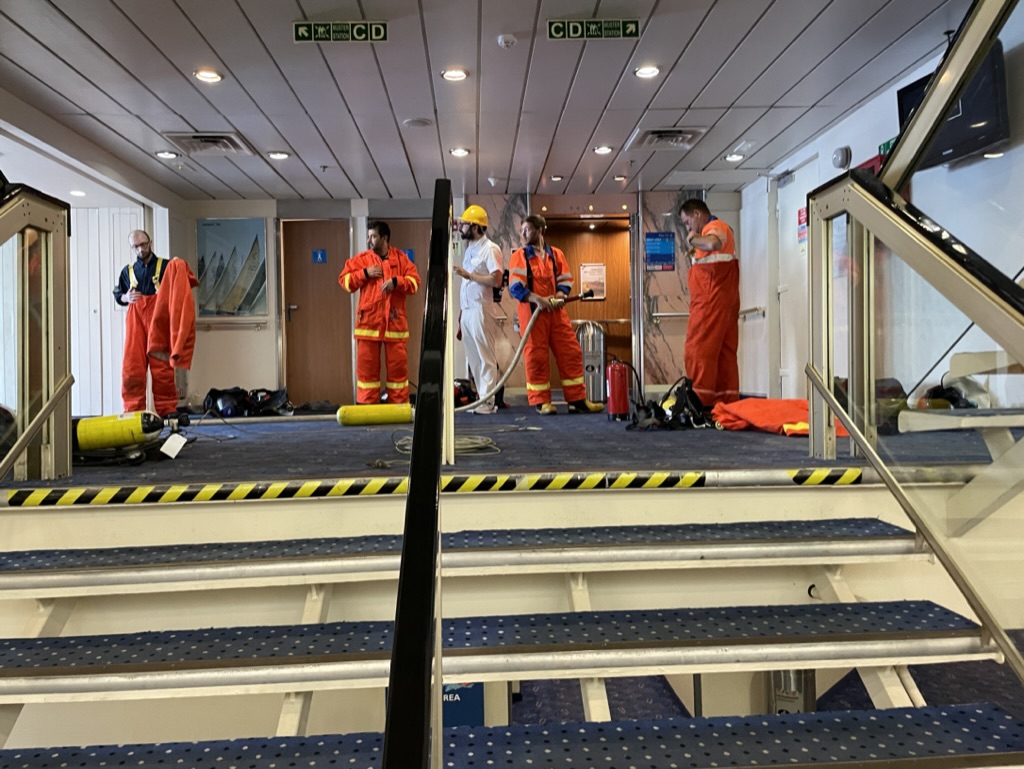

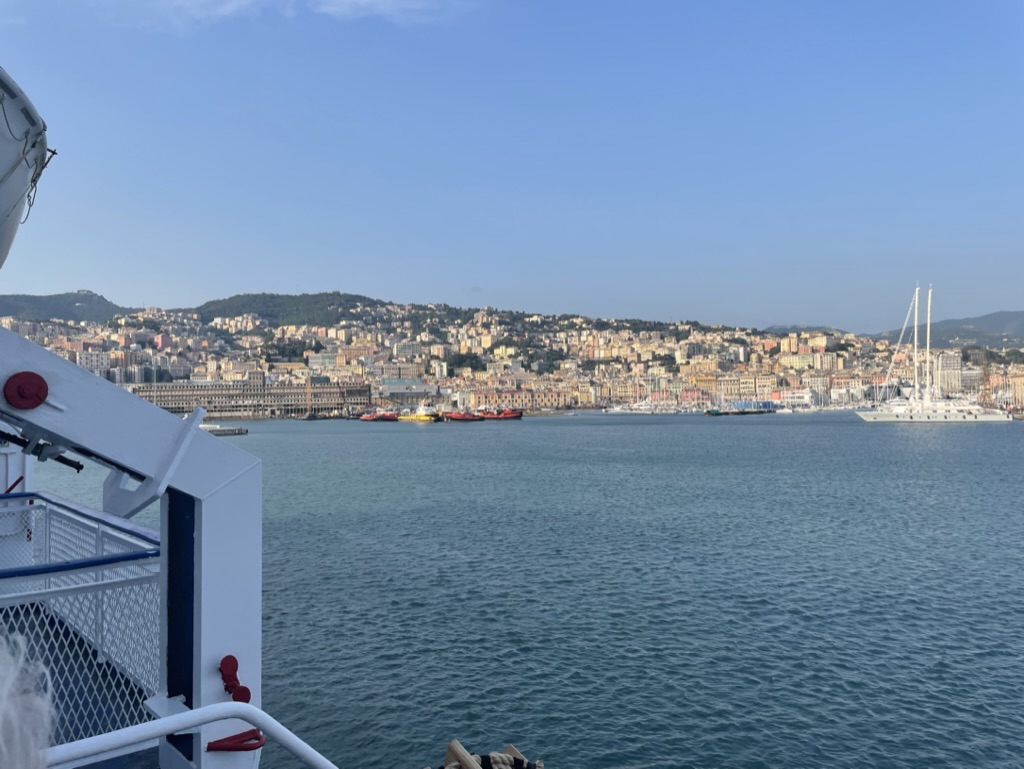
The next day, it was up early again for the drive to catch the ferry in Bastia, grabbing our last French croissant before we boarded the Italian-owned ferry, where the culture and language suddenly switched. Naturallement, it was a French holiday, the fourth such full-on-shutdown-everything recess since we’d arrived in Corsica. The crossing was smooth, and I didn’t even have to put on my scopolamine patch to avoid sea sickness. We arrived in Genoa and programmed our new address, about an hour north, into the GPS but, once again, the damned thing fought with us, tooth and digital nail, taking us west to the Genoa Airport. What is the name of Silvio Berlusconi was this thing thinking? We finally got on the correct Autostrada and found Novi Ligure and our Airbnb just outside the center.
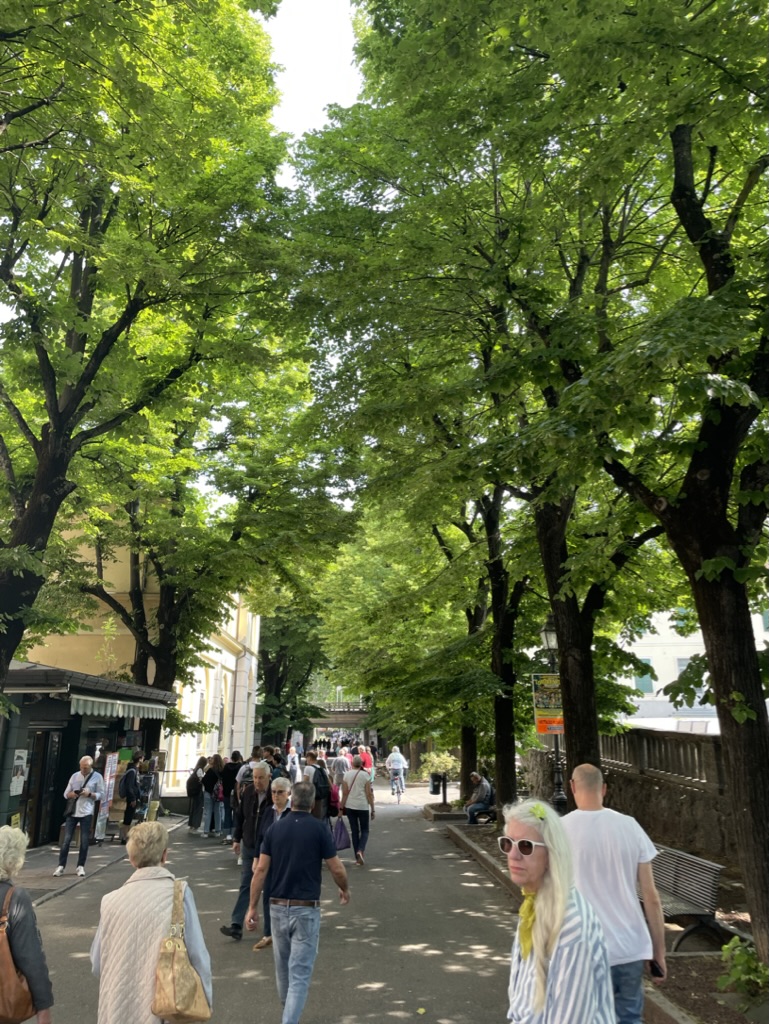
We’re four months into this adventure as I write this, with lots of travels ahead of us. And yes, we’re still having fun. Next up: adapting to life in Italy: from croissants and bonjour to focaccia and buongiorno.
 Calculating Route...
Keep up this fun adventure I am loving it all!
LikeLike
Brilliant writing, humour, and glam shots, especially of Coco and Denise. Keep on travelling!
LikeLike
So a huge Tweety bird on the Looney Tunes ferry? As always I’m there.
LikeLike
I think your camera is more than adequate. Great shots, portraits and I love the captions. I think you picked that up from your Mom. Again, I learned stuff, laughed and am so glad you both are enjoying your jaunt through the Old Country.
LikeLiked by 1 person
Thanks Big Brother!
LikeLike