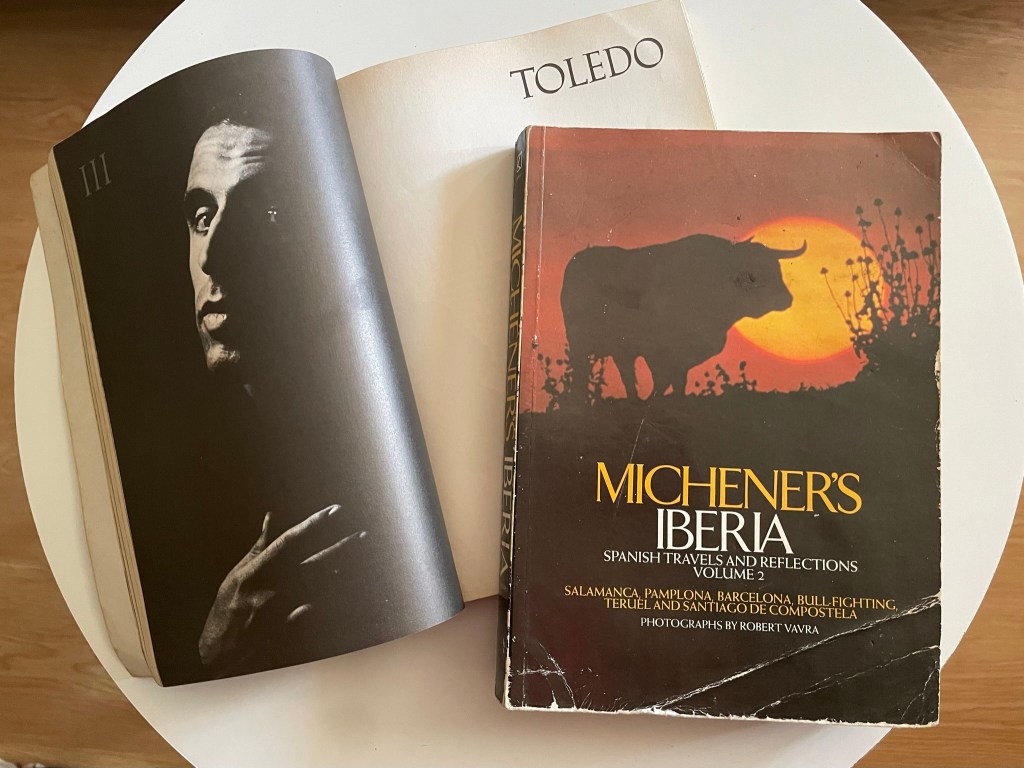
Right before we left Pierrefitte in France, we found two books by James Michener at the little free library (in English!) that documented his time in 1960s Spain. Both volumes are full of Michener’s famous in-depth research, with a lot of history of the different areas and stories of day-to-day life in Franco’s Spain. To us, it reads like a blog, and it’s not unlike what we’re trying to accomplish here. Of course, neither of us are as talented a writer as good old Uncle Jim (we’re not related and he was adopted), but one thing that I definitely share with him is his wordiness! Here’s our latest installment and it’s a long one so pour yourself an extra-big cup of coffee and dig in. Or you can just look at the pictures. We don’t judge.

Just about two weeks ago, we arrived at our current stop, Castiello de Jaca, a small town just north of Jaca, a small city on the slopes of the Pyrenees in the Spanish state of Aragon. It’s only 33 miles from our last place in France but the drive was two and a half hours, the bulk of that on narrow, winding mountain roads. The last part of the trip brings you through the five-mile-long, toll-free Somport Tunnel — about as long as that fifty-euro Fréjus tunnel – and, voila, you’re in Spain. The State of Aragon, to be exact.
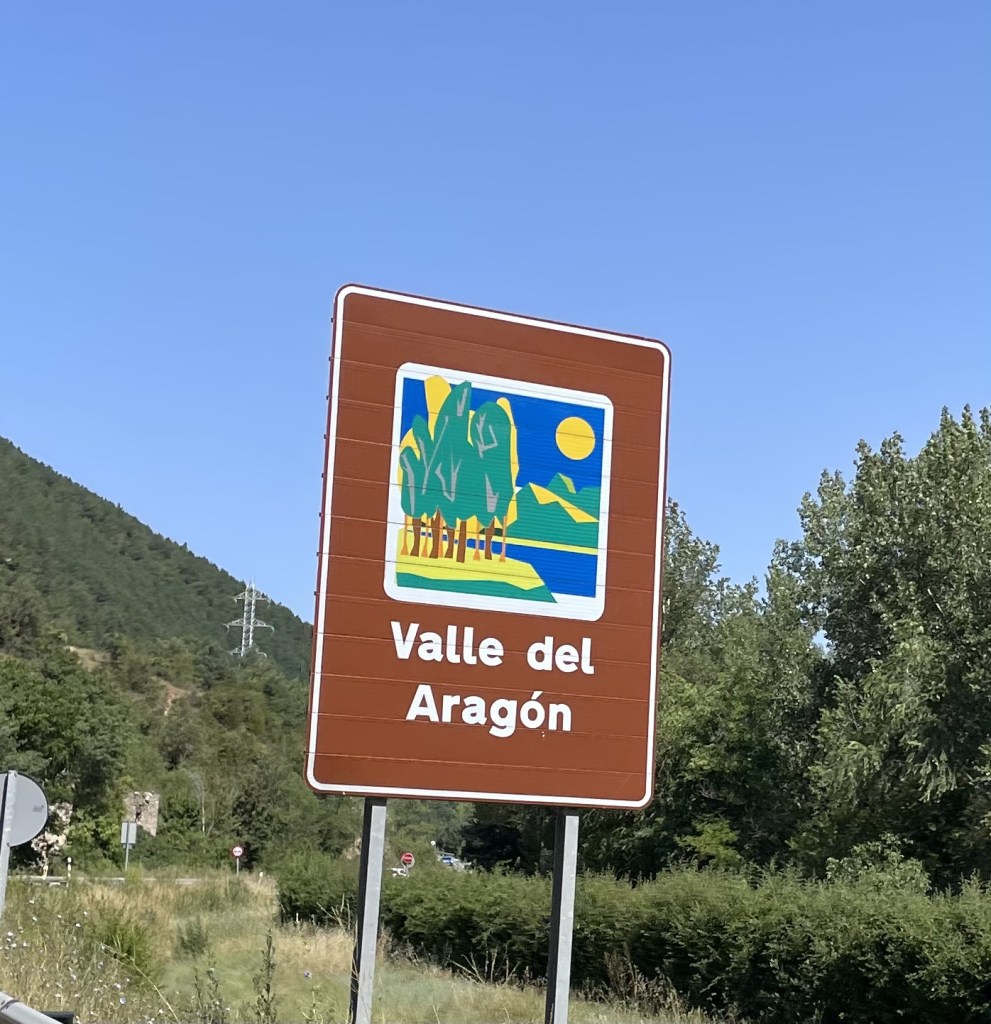
You’re still in the Pyrenees (or los Pirineos, as the Spanish call them) but a lot has changed: it’s a much drier climate, so all the flora is different and there’s a lot more barren rock than on the French side. It’s also much brighter — our eyes hurt in the daylight — a phenomenon we finally discovered is due to the extra one thousand feet of elevation that this village has over Pierrefitte. In short, it looks like… Spain. It also takes about 15 minutes for my allergies — relatively quiescent since Provence — to kick in and I have to dig in my bag for the Nasacort. Just down the hill from the tunnel sits Castiello de Jaca, half historic old town up on the hill and, across the highway, in the lowlands, half resort housing.
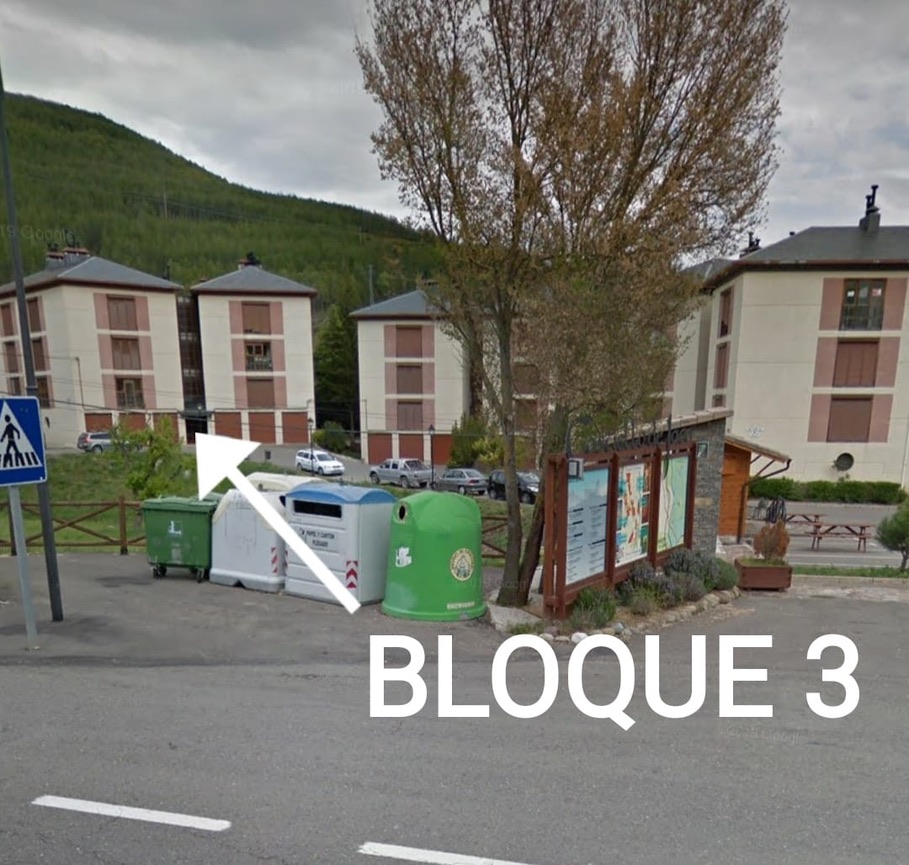
We are, of course, in the resort housing, in the third of a trio of really ugly buildings built in the 1970s, when the area boomed with the opening of the Canfranc ski resort. Our apartment is on the third floor — and remember that in Europe, the first floor is zero — and it turns out there’s no elevator in the building. Gosh, I’m sure that I checked that when I was booking this in October, I assure Denise but she’s not looking happy as we lug our heavy suitcases up the stairs. Once inside, the apartment is immediately disappointing, like a 1970s motel room with really bad art on the walls. At least there’s a balcony, albeit one with a view of the busy parking lot. I try to log on to the internet but can’t find the log-in information anywhere so I message Ricardo, our host. “Oh, there’s no internet in the apartment, Stephen,” is his reply and now Denise is really giving me a nasty look. How can we live without the internet, we wonder. How can we deprive ourselves of Netflix and our friends of this blog, so essential to their lives?
Before we can register our disappointment, Ricardo messages me back to tell me that he will have a technician out on Wednesday to install the wi-fi. I thank him profusely and ask a question about the dog. There’s a long pause and he writes back to inform me that the apartment has a no-pet policy. Now Denise is ready to throw me off the balcony — what the hell was I thinking when I booked this place? No stairs, internet, or pets? I thought I was being so careful when checking out properties on Airbnb but my filters must have dropped on this one. I immediately wrote Ricardo back to apologize and tell him that I never would have booked the place if I had known, adding that Coco is a quiet dog who doesn’t shed. He wrote back after a few minutes and said that it was okay, but we’d have to pay a little extra in cleaning fees. Phew! I dodged two bullets there but thought I’d wait a day or so before I asked him to install an elevator in the building.

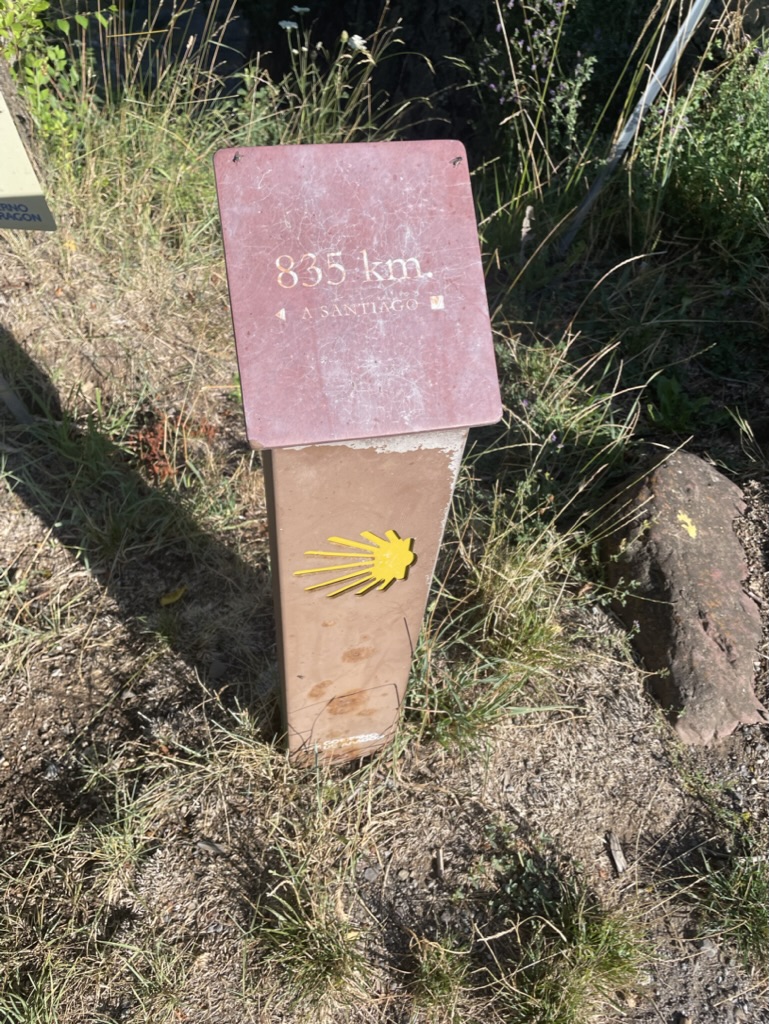
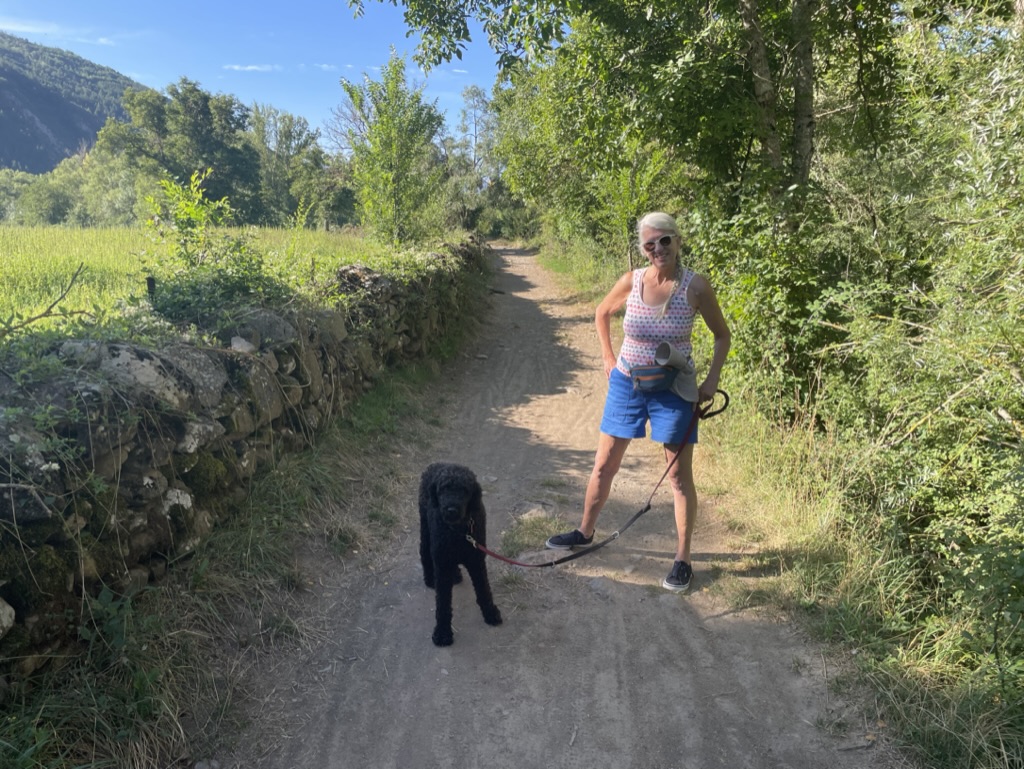
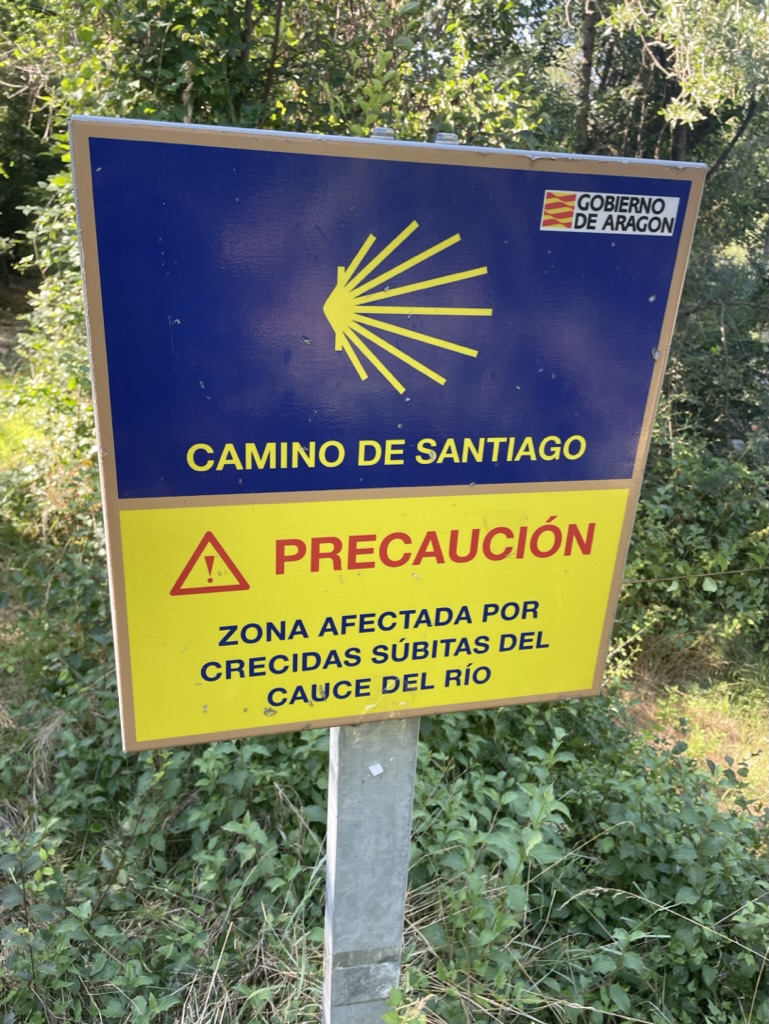
Once we got outside, however, we realized that we were in a special place: for starters, the Camino de Santiago ran right through our parking lot and continued on its way to Santiago de Compostela, 853 kilometers away. As Denise pointed out in her essay on Lourdes, we’re both lapsed Catholics but I’ve been fascinated by the Camino ever since I heard two friends talk about their journeys on the road in the early 2000s. Shortly after that, I was home sick from work and watched The Way starring Martin Sheen, a picture about a dad mourning his son by walking the Camino, that moved me in a way that I blame on the flu medicine. I’m not crying, you’re crying.
We took a walk a little way down that path and came upon a young German peregrina who was walking the Camino by herself. She had started in Toulouse — one of the historic starting points — and was planning to make it to León, time permitting. We didn’t ask her why she was doing it — it was none of our business — but we did ask lots of logistical questions, just in case we ever decided to do it ourselves. It’s an intriguing idea, at least in theory, and we did once take a bus from Porto to Santiago de Compostela, though that did not seem to impress the other pilgrims at the church. Coco loves the trail and frequently takes off on side paths to explore fields or the river.
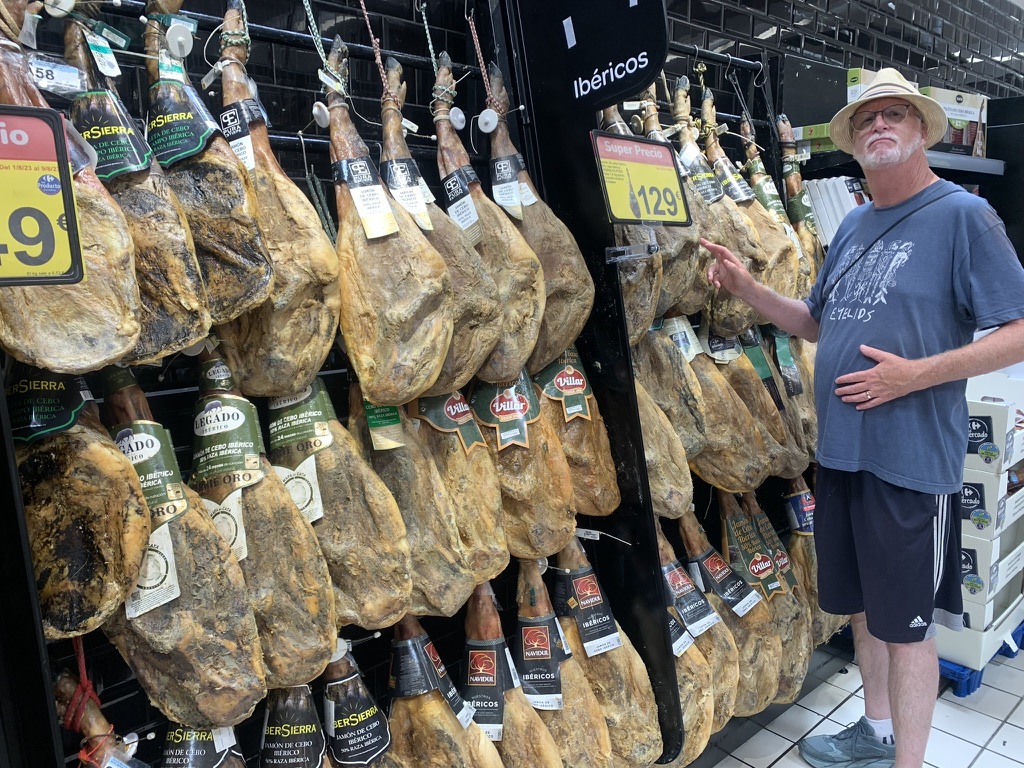
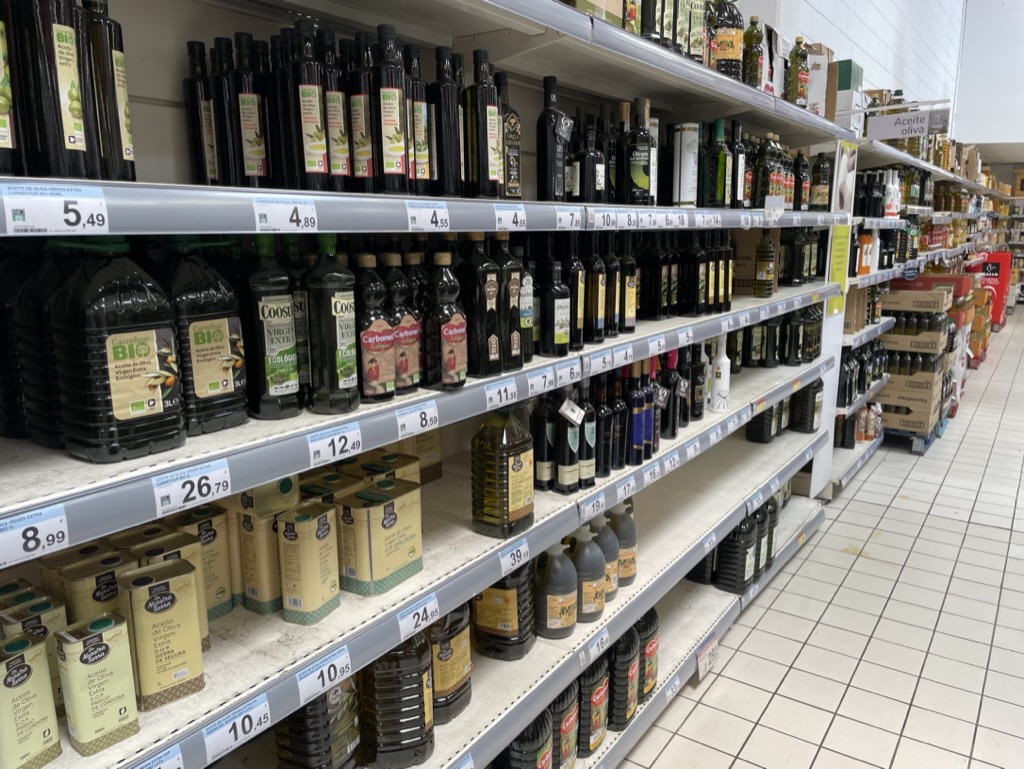
After our morning on the Camino, we had to deal with more secular matters and headed to the local Carrefour to stock up on grub. Like the French, the Spanish like choices in their supermarkets and the aisles are filled with dozens of cheeses, chocolates, and biscuits. Since it’s Spain, there was an entire section of jamón ibérico, all greasy and exposed, next to the deli section, and a whole aisle of sherry and vermut, from discount to top shelf brands. The Spanish, like the French, love their fresh bread but the pan de barra can’t hold a candle to a crunchy French baguette. It’s crusty but the inside is like sugarless cotton candy. I guess it’s okay for sandwiches but it’s still not my favorite. It’s too bad there isn’t a French bread shop closer to the Spanish border: I’d be all over that. The prices in Spain rival those of France, Ireland, and Italy, which is to say that our weekly shopping is about 40% cheaper than in the States. At least that helps balance out the lopsided difference in US and EU gas prices. Gas prices in Spain are about a nickel cheaper per liter than France and that adds up when the tank on our car is fifty liters.
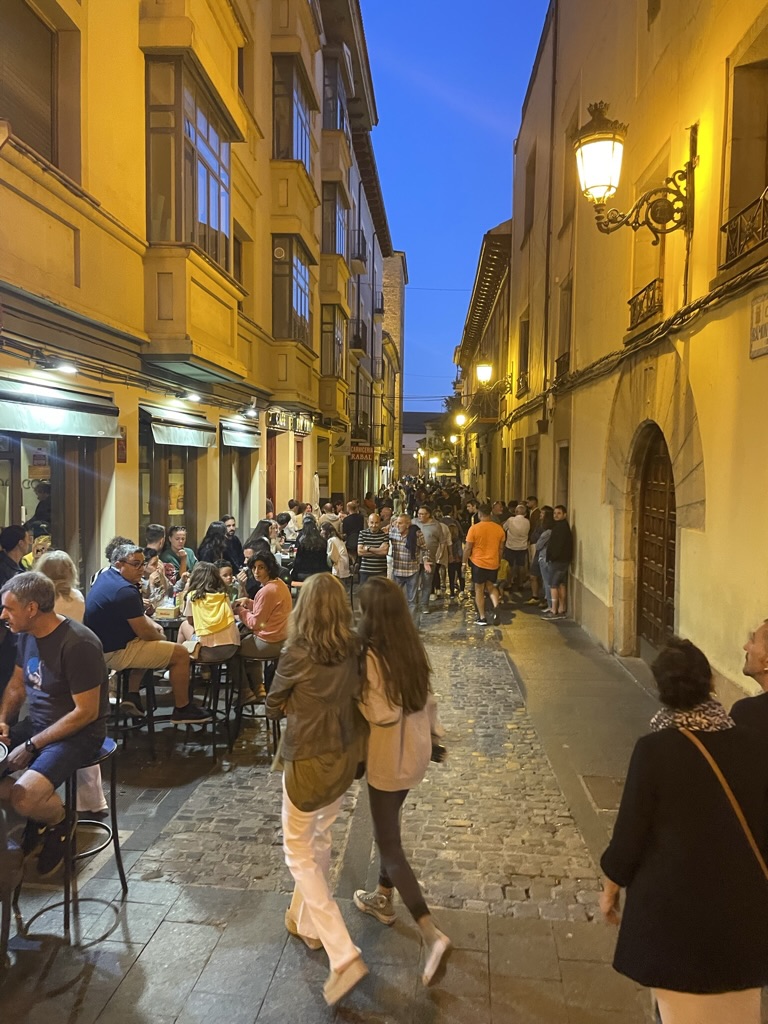
After spending most of Wednesday waiting for the cable guy — an ordeal that, trust me, gains no excitement when occurring in a foreign country — we headed into Jaca to visit the tourist information office. It’s a small city dating back to the second century BCE, and the old town was probably built when the locals recaptured the area from the Moors around 1063. It was once an important city for trade and the seat of power in Aragon but nowadays it’s mostly famous as the childhood home of Georgina Rodrîguez, model, social media influencer, and soccer star Ronaldo’s latest baby momma. We strolled the ancient streets and made mental notes on restaurants to check out on future visits. The gal at the tourist office hooked us up with tons of maps and recommendations, enough to keep us busy for the next few weeks at the very least. The best tip, however, was to check out the Folklore Festival that was opening that night at theaters — and street corners — all over town. We bought tickets for a few events and headed back to Castiello de Jaca.


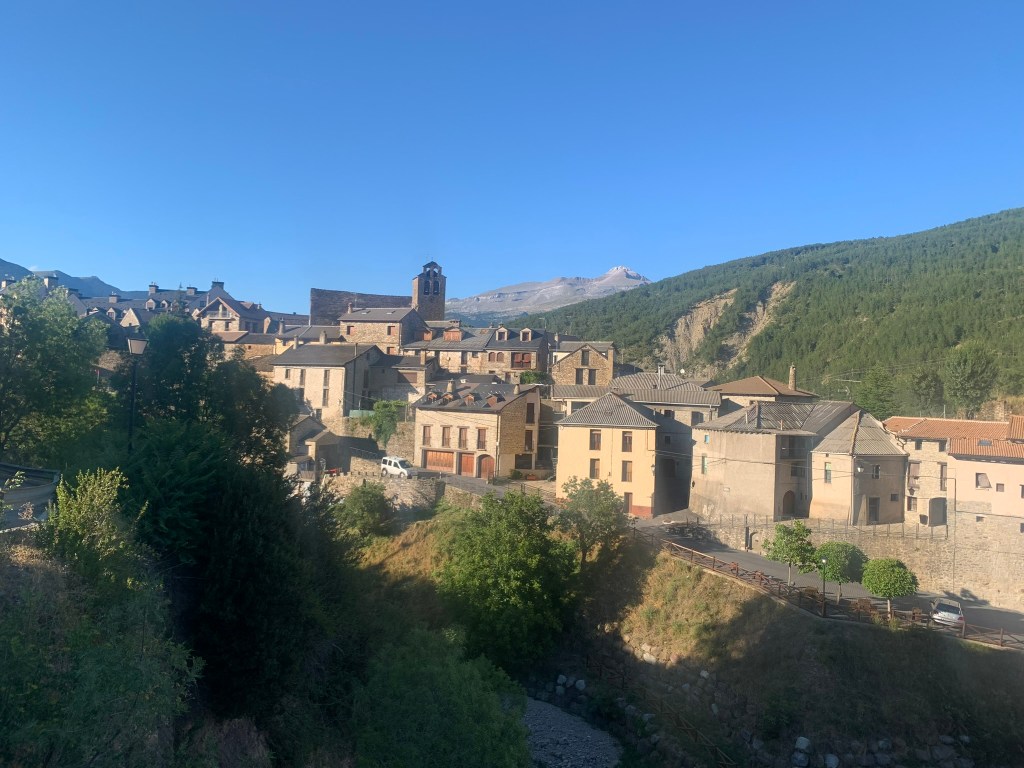
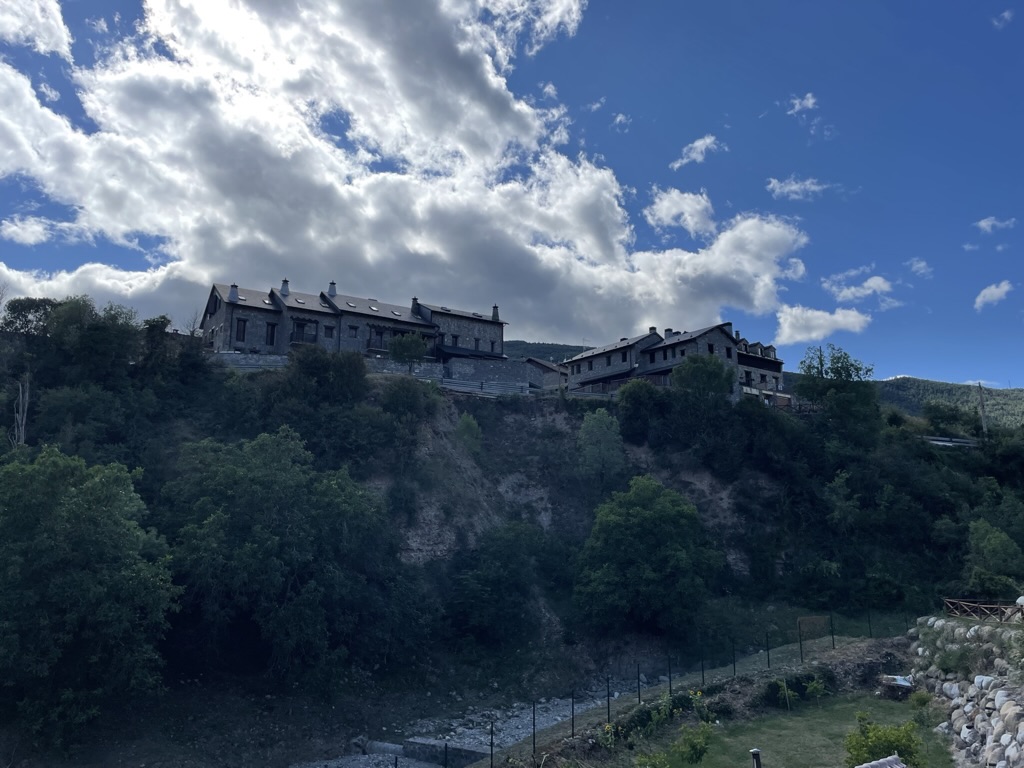
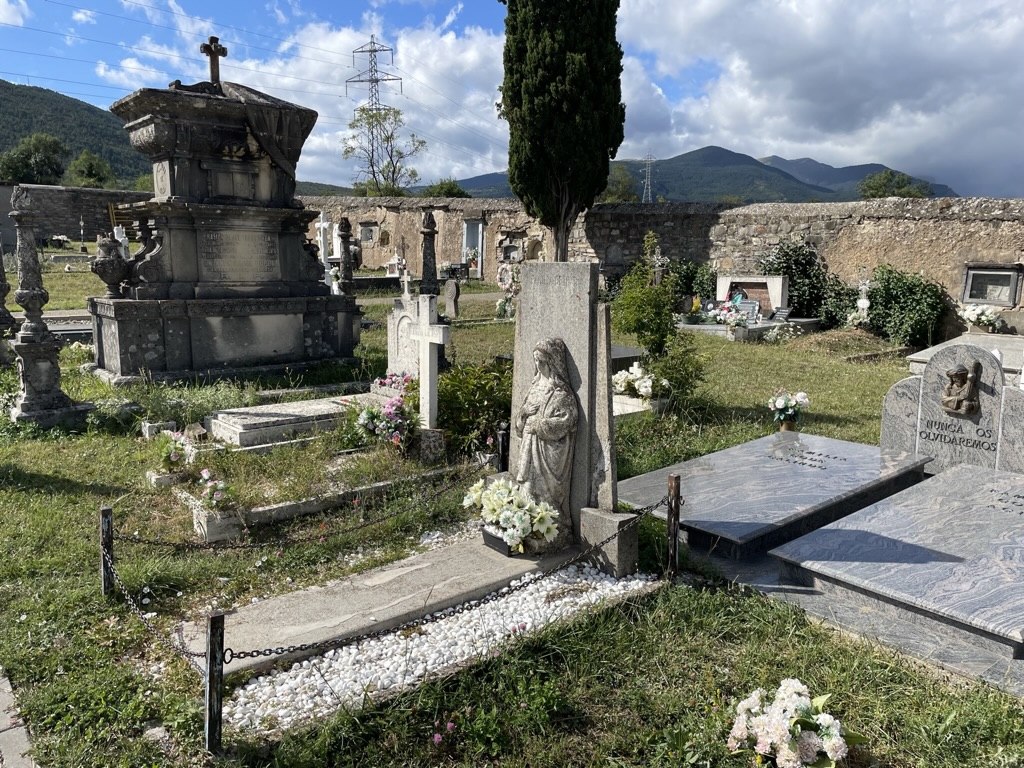
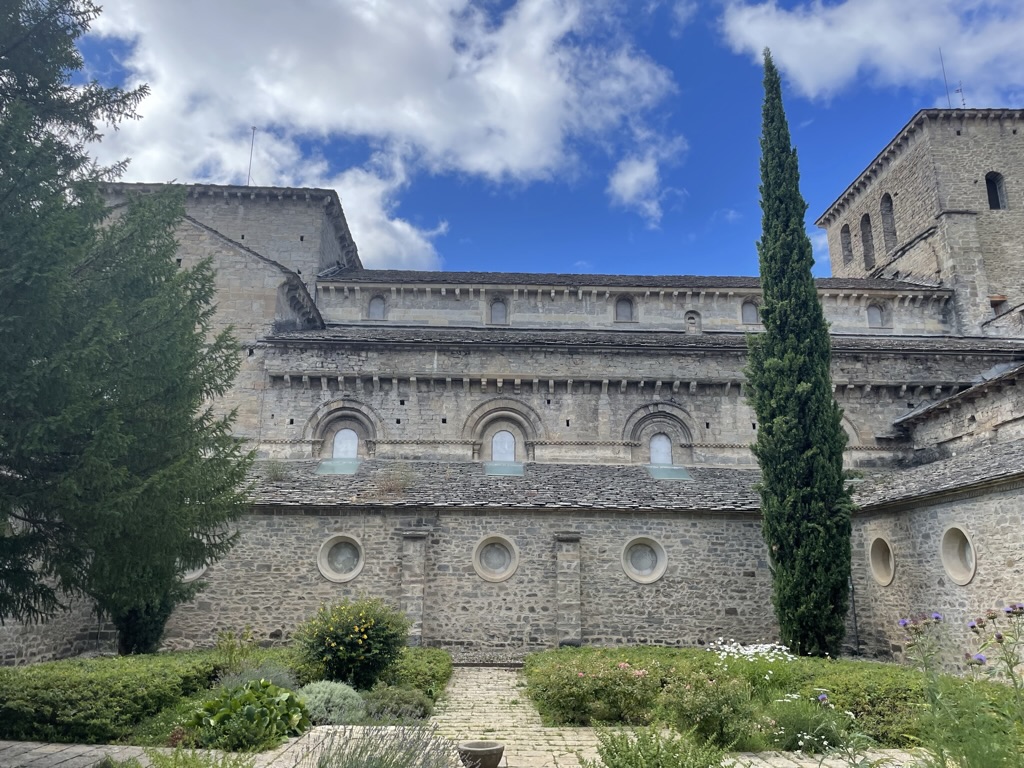
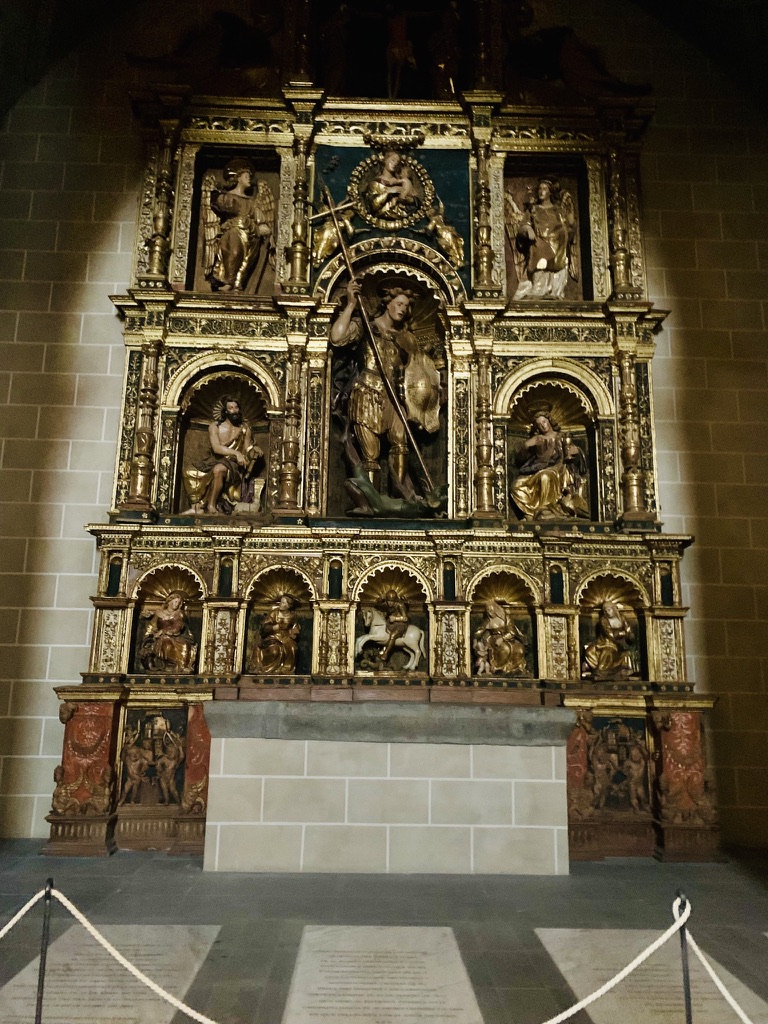
That night, after dinner, we explored Castiello de Jaca’s old town section. It’s a steep walk up to the top of the village, which is actually five ‘barrios’ loosely joined into a town. There’s a church, of course, but one that distinguishes itself by having several relics — conveniently kept in a reliquary — on the premises. The Camino de Santiago comes out of the hill behind the town and makes its way down through the streets before crossing the highway and traversing our parking lot. At first glance, you think the housing is all well-preserved medieval stock but, on closer inspection, some of it is period-correct new construction that fits in with the original homes while providing all mod cons. The stunning views from the top of town are of several Pyrenean peaks, stretching from France to Jaca and our little down-market development at the bottom of the hill.
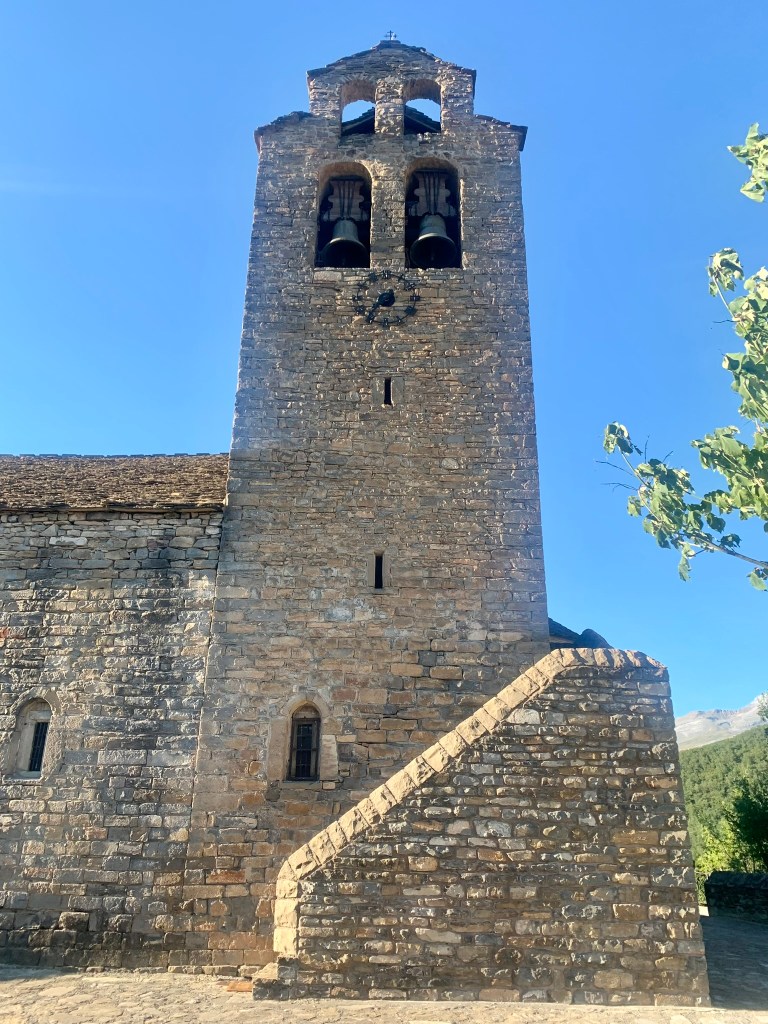


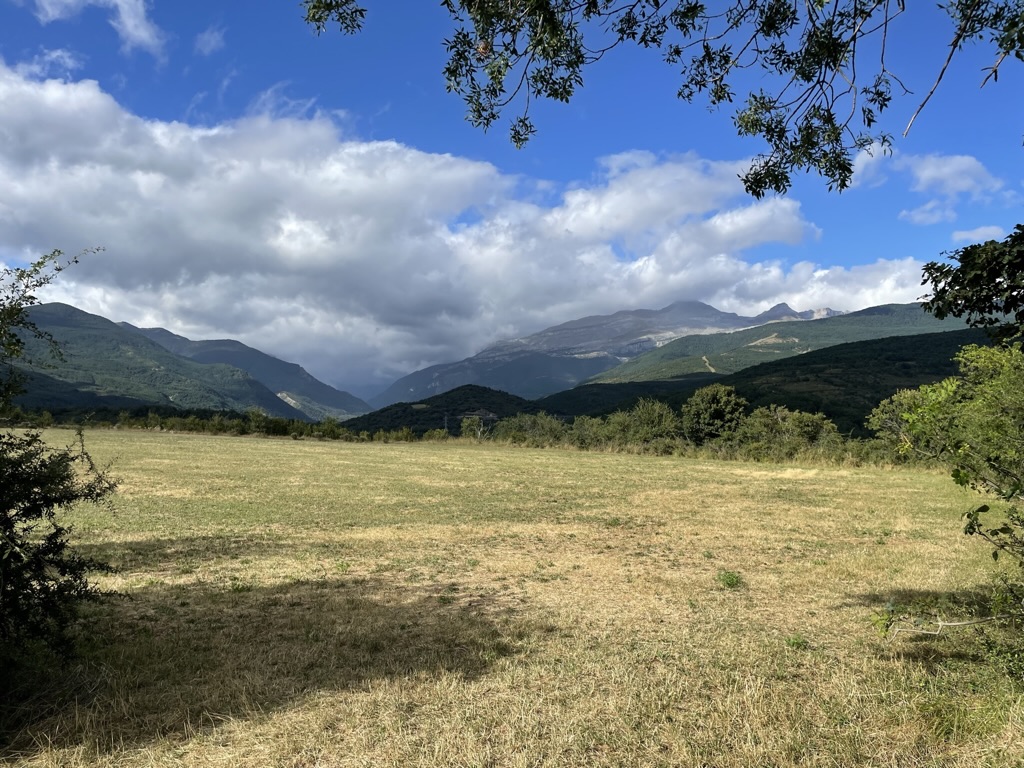
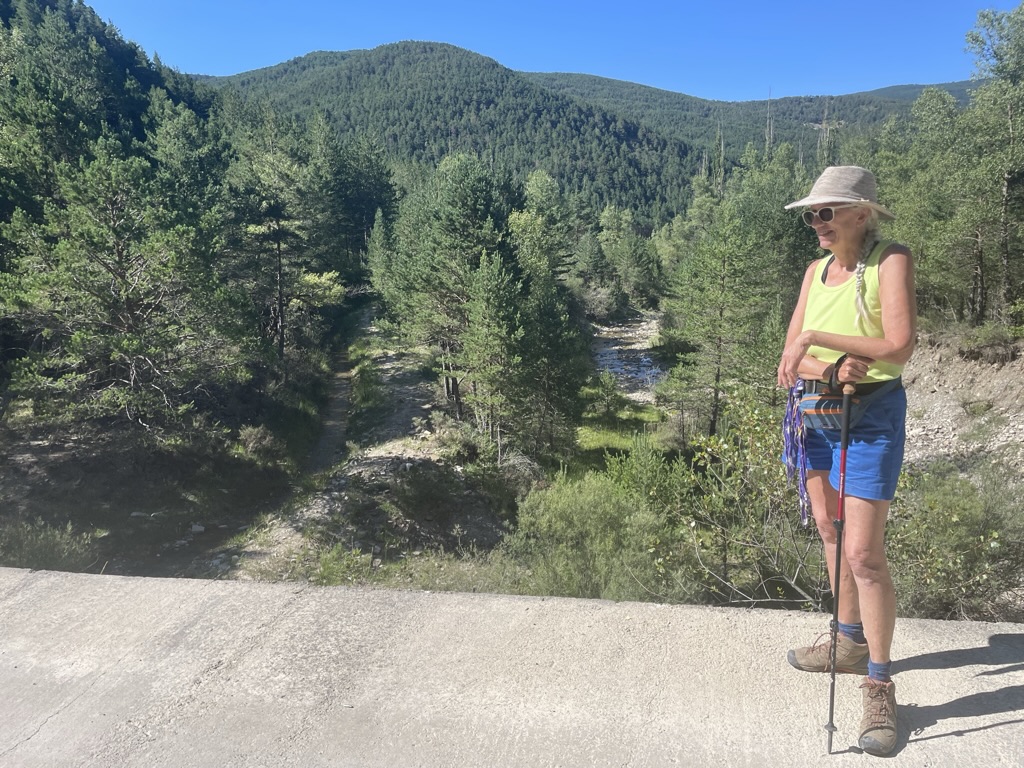
The next day we took an eight-mile hike up the Garcipollera Valley to the chapel of Santa Maria de Iguacel and made trail buddies along the way with a young family from Barcelona. We asked them questions about what it was like to live in Spain — it’s getting more expensive and wages not keeping up – and they queried us about life in the United States. The mom asked Denise an interesting question: she said that the movies and television shows she had seen depicted Americans as only coming home for the holidays and she wanted to know if that was true to life. It’s apparently a strange concept to Spaniards that families would only get together once a year. Denise told her it certainly wasn’t unusual, given the size of the country, to only see relatives at Christmas, Thanksgiving, or Hanukkah. She seemed flabbergasted by this concept. They pointed out that the valley used to be full of people but, sometime in the mid-century, Generalissimo Franco had ordered everyone out of the valley in order to enact some flood-prevention measures. One town, Villanovilla, stubbornly refused to leave, however, and there is still a hotel and a restaurant there.
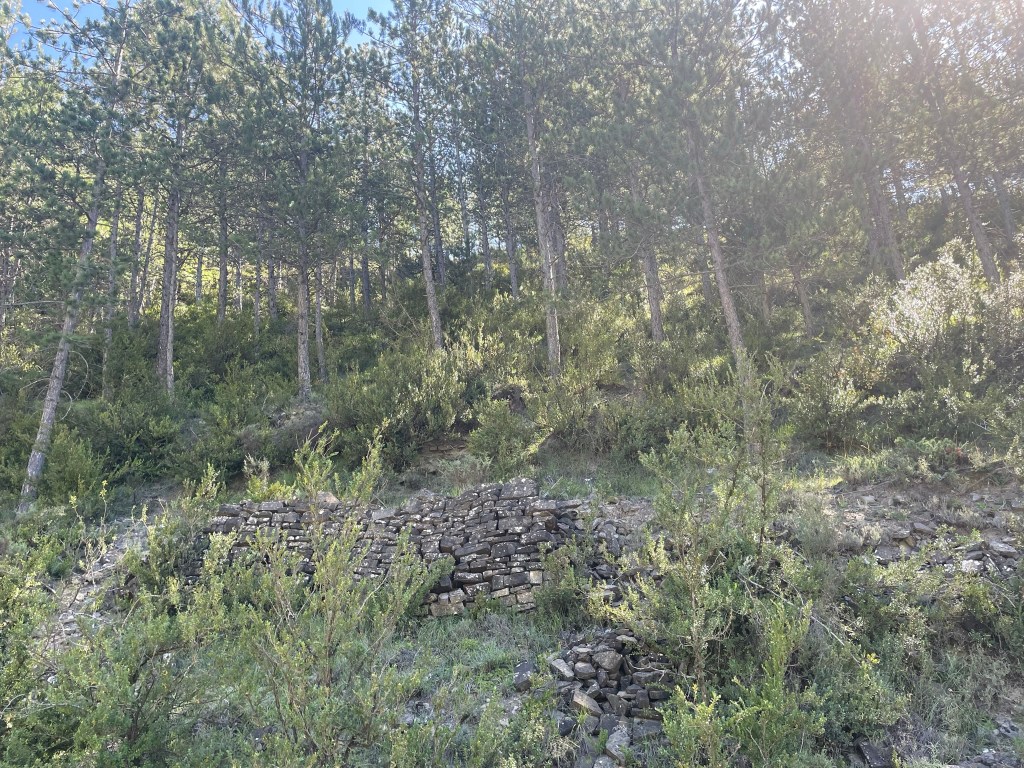


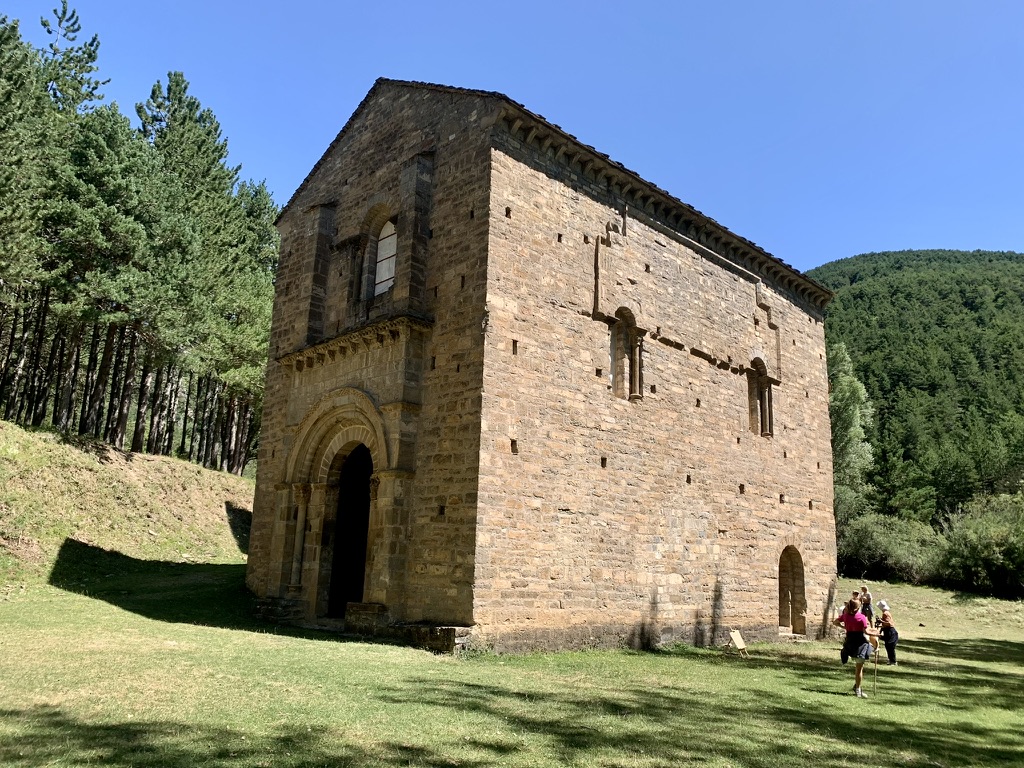
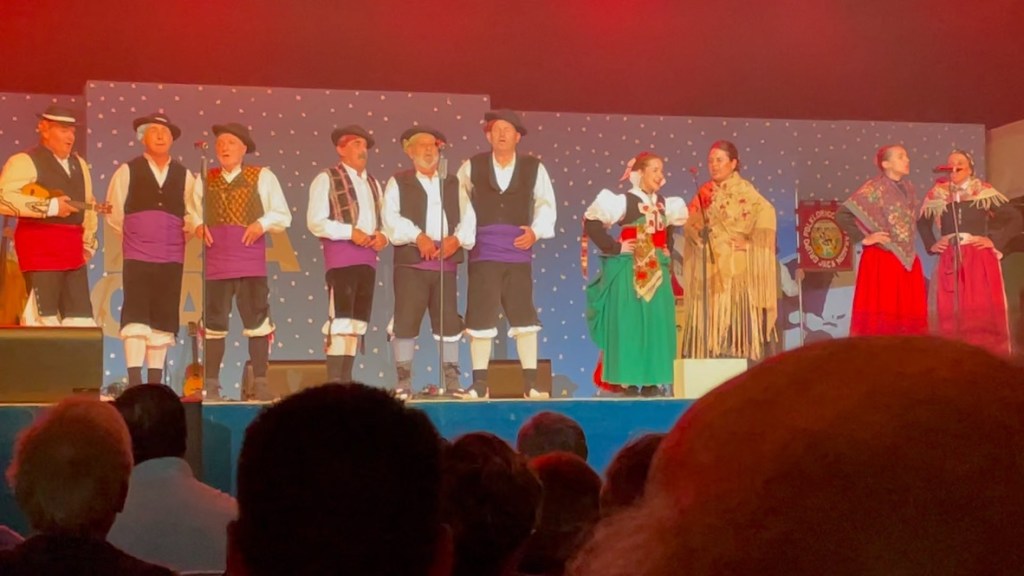
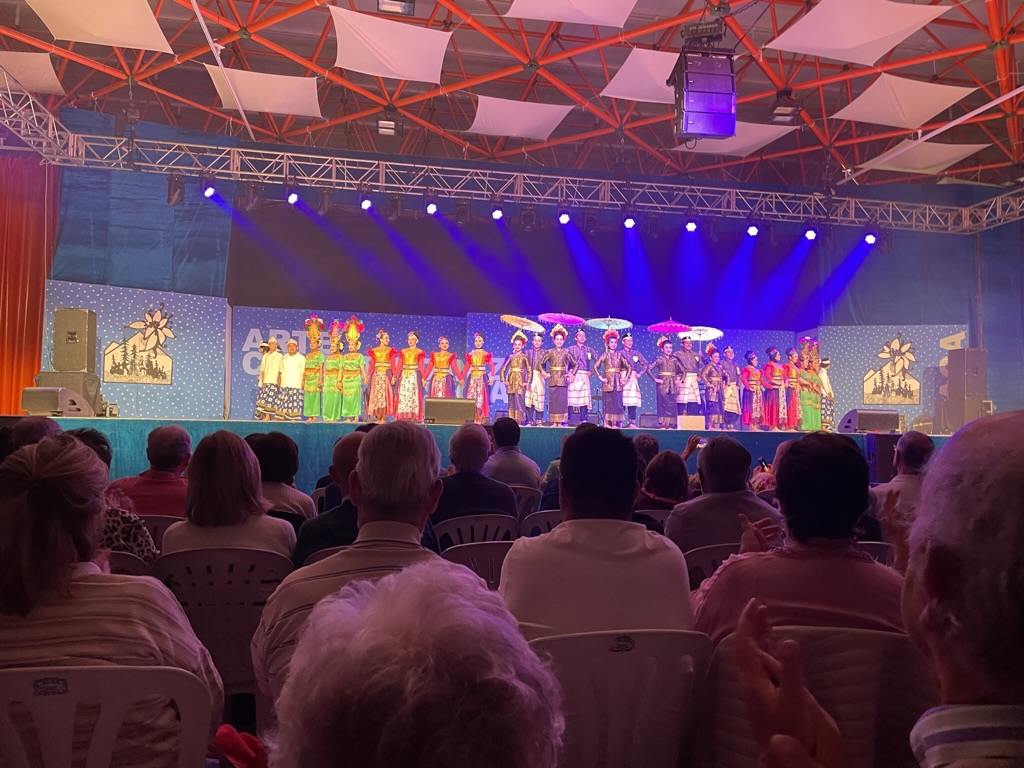
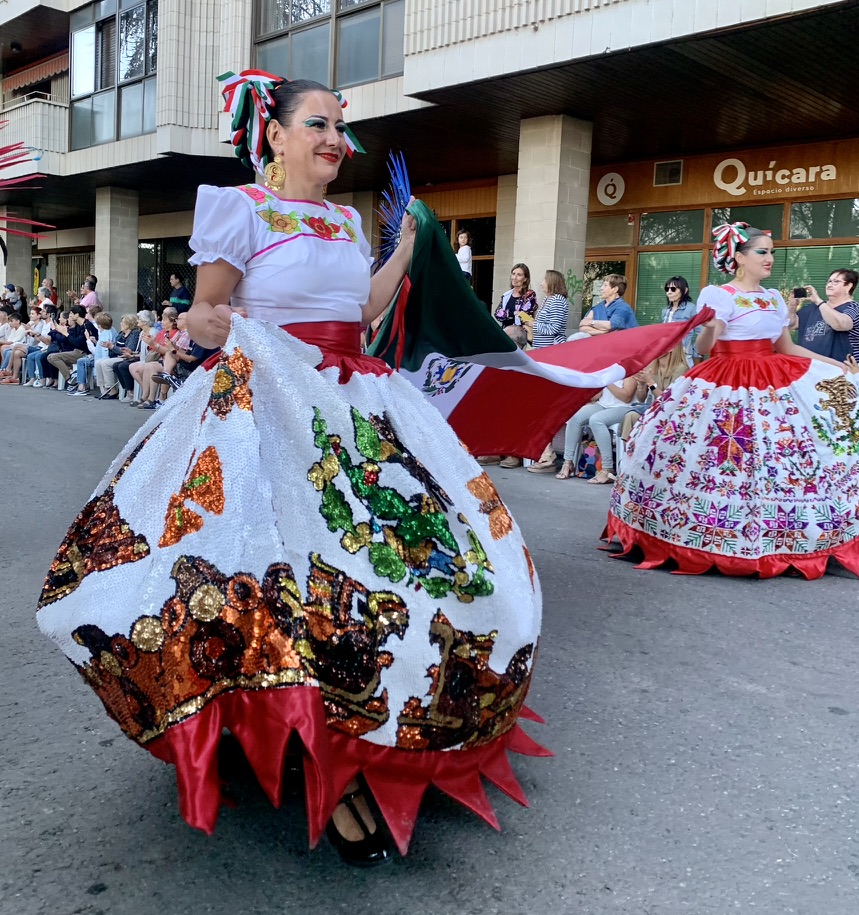
After the hike, we had a disco nap because our folklore concert started at 10:30 AT NIGHT! We had a little dinner in Jaca, a delicious tapas plate with the local sausage, patatas bravas, and grilled padron peppers, and then walked to the theater, which was sold out. It didn’t occur to me until then that this was the first indoor event we’d been to since our weekend in Dublin, where I had caught Covid, and I was a little freaked out. A friend of ours recently caught the coronavirus and, after recovering, developed blood clots in her lungs, causing her to be hospitalized for a few days. (She’s doing okay now.) However, there was nothing I could do so I just decided to enjoy the show. The organizers had invited groups from all over the world and this show was a revue of six of those outfits, starting with a traditional big band from Jaca playing local folk music. After that, however, things got very interesting very quickly with KTF Radha Sarisha, a music-and-dance group from all over Indonesia, and a tango-themed troupe from Uruguay. The stage revolved, so when one group was finished, they spun out of sight and a new group arrived, ready to perform. The Ezimnyama Dance Company from Zimbabwe blew the roof off the sucker with their depiction of a hunt and the evening finished with a traditional Mexican wedding dance by Guadalupe Omexochitl. We both left with a new appreciation for traditional folk music and dance. What had we been missing all these years?
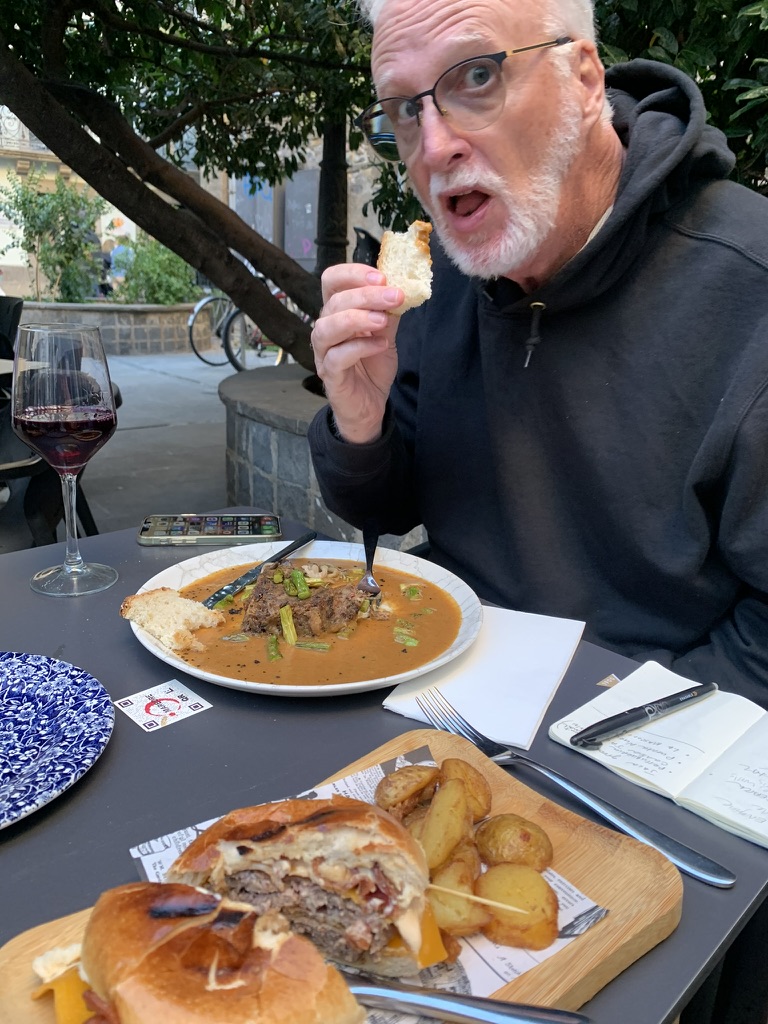
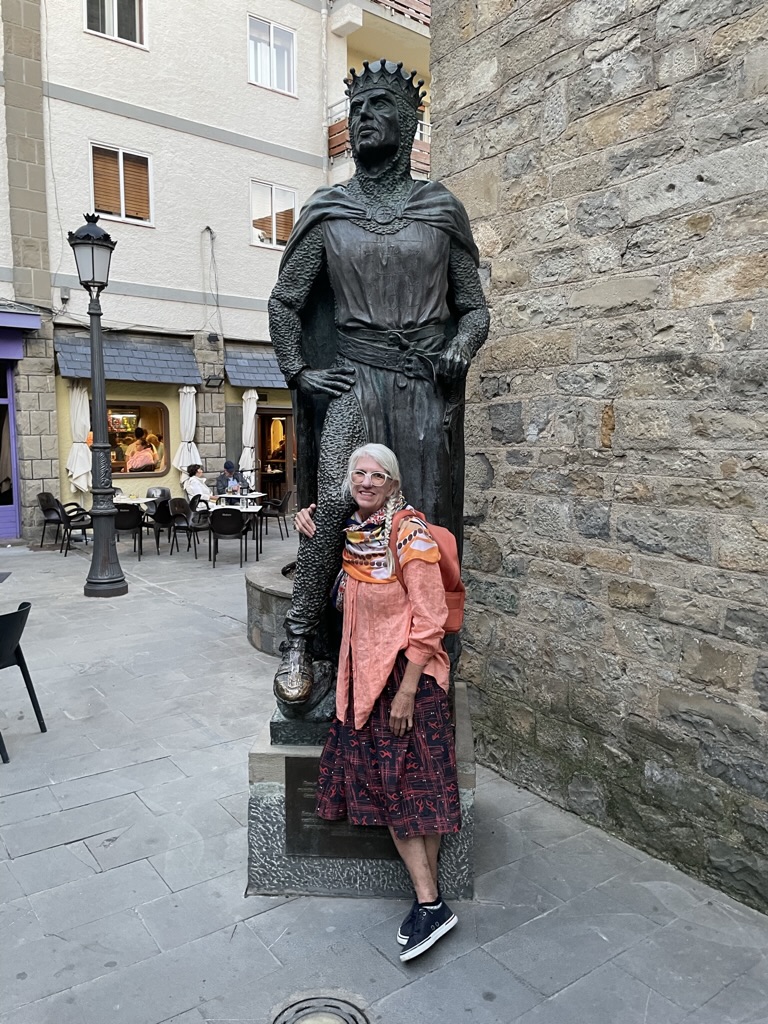



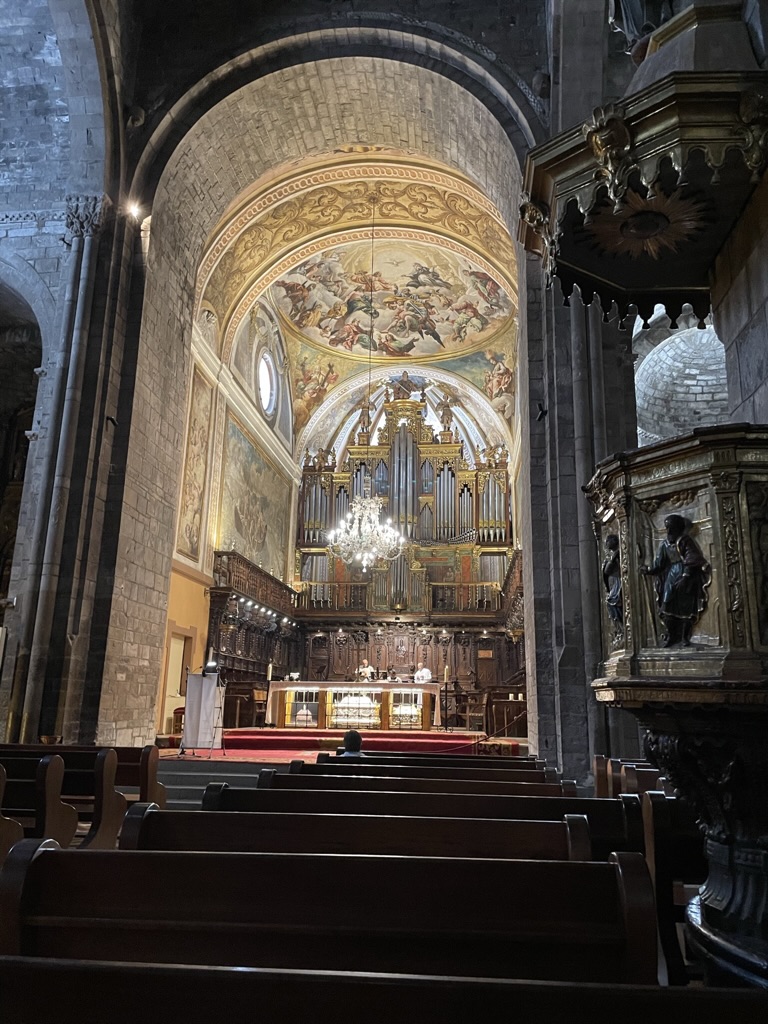
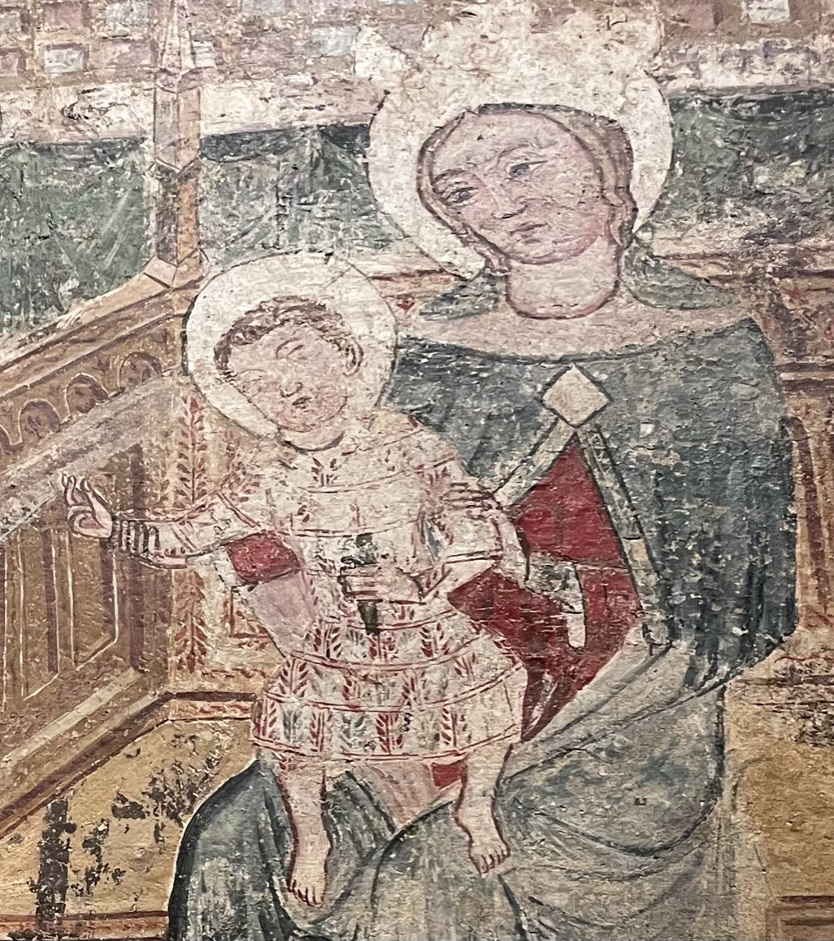
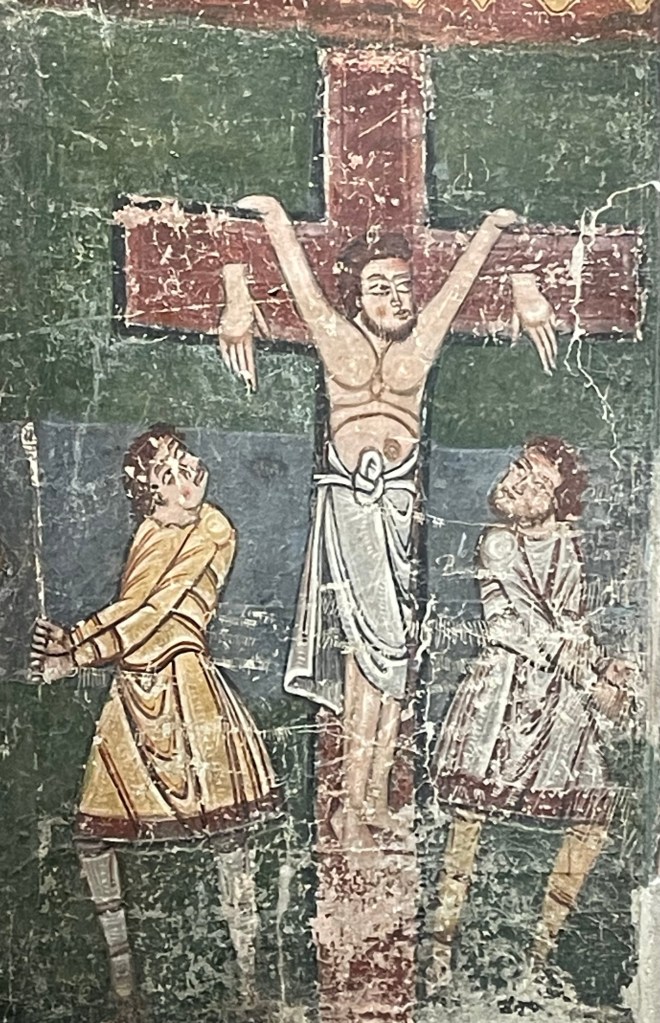
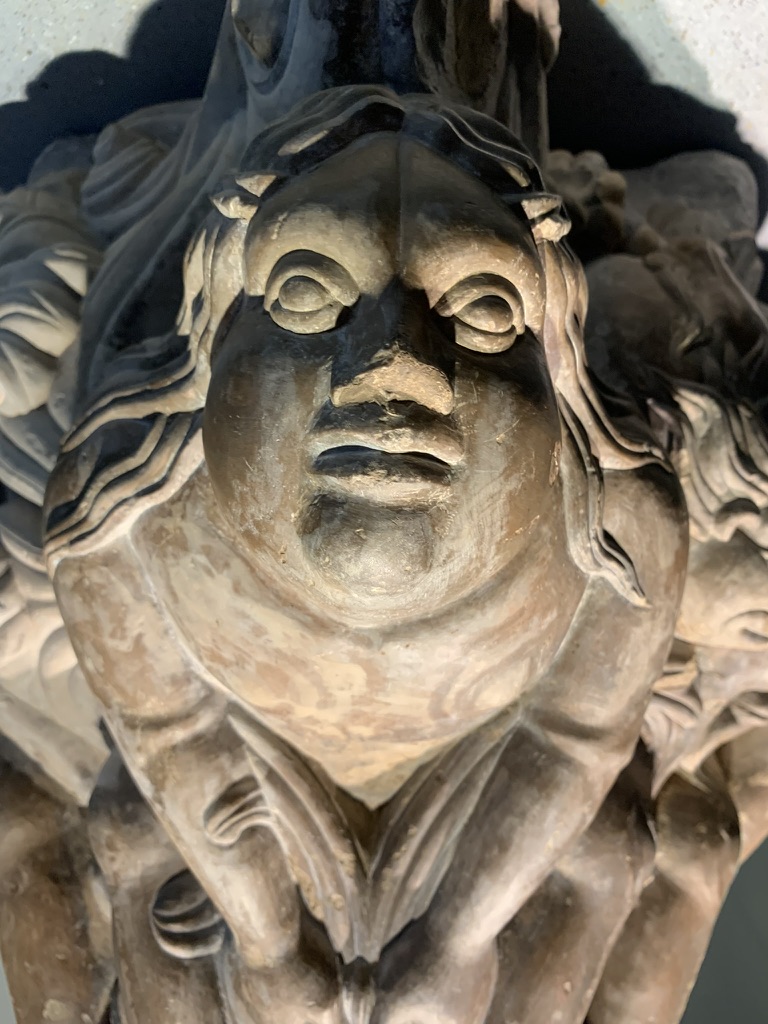
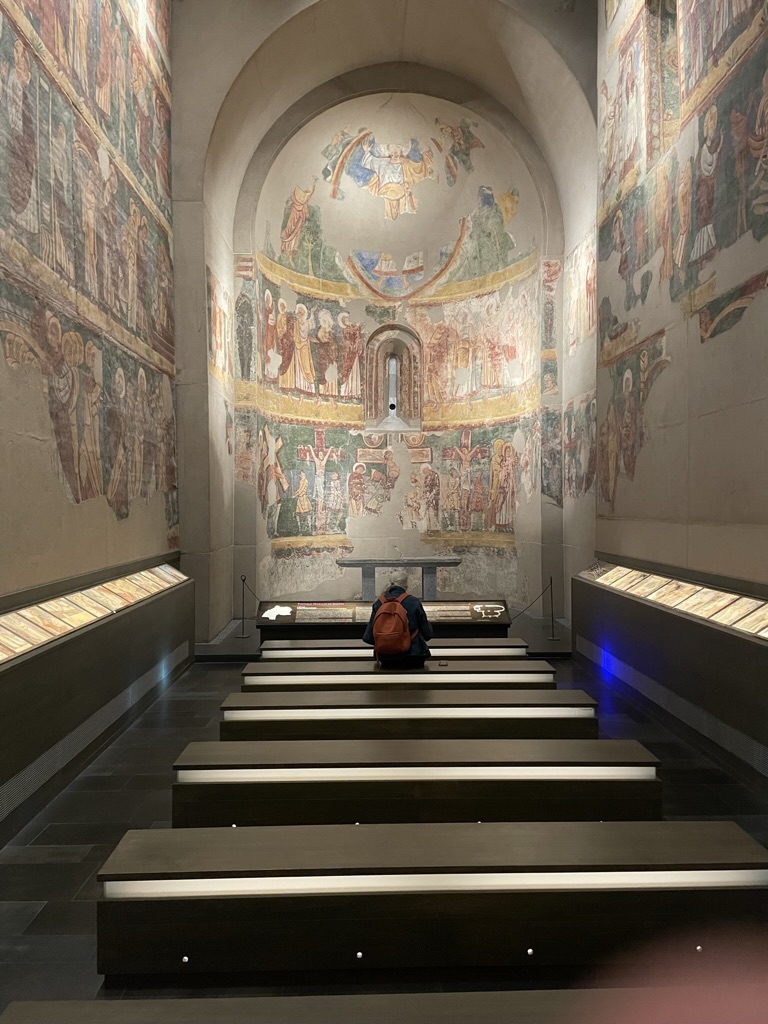
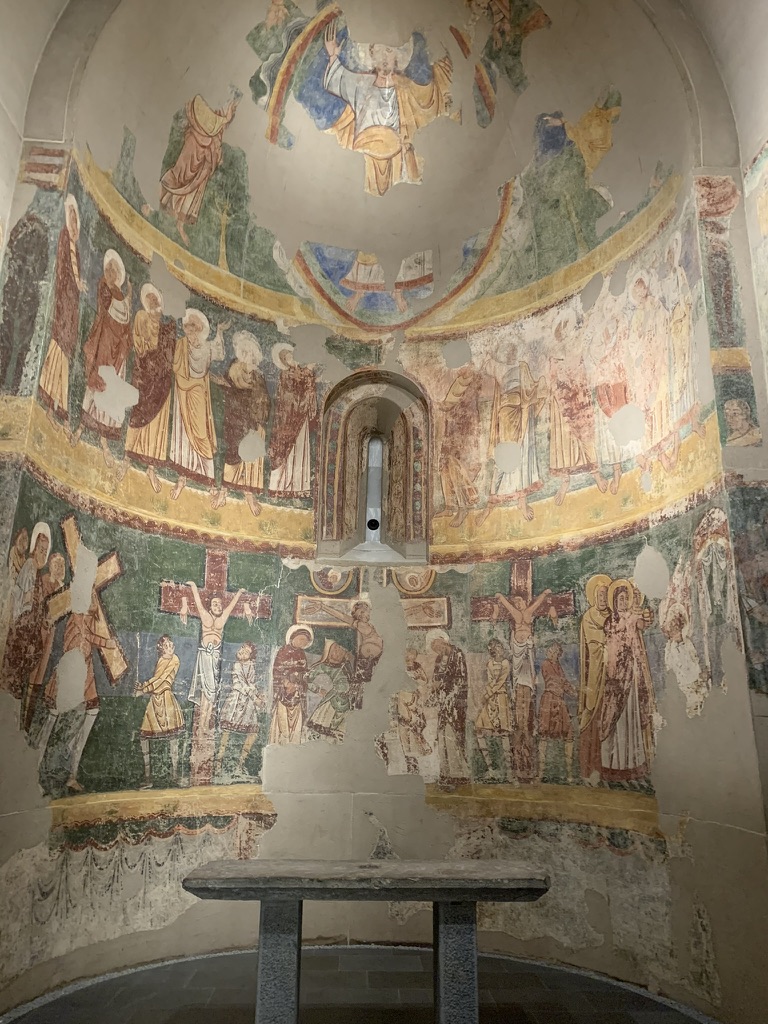
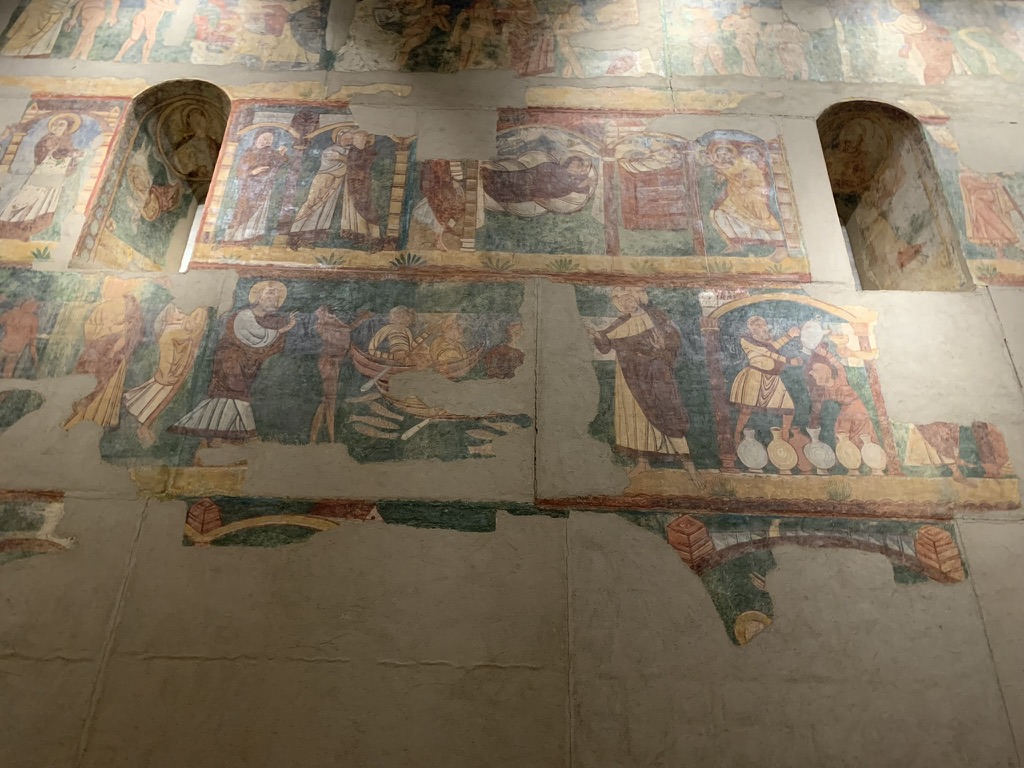
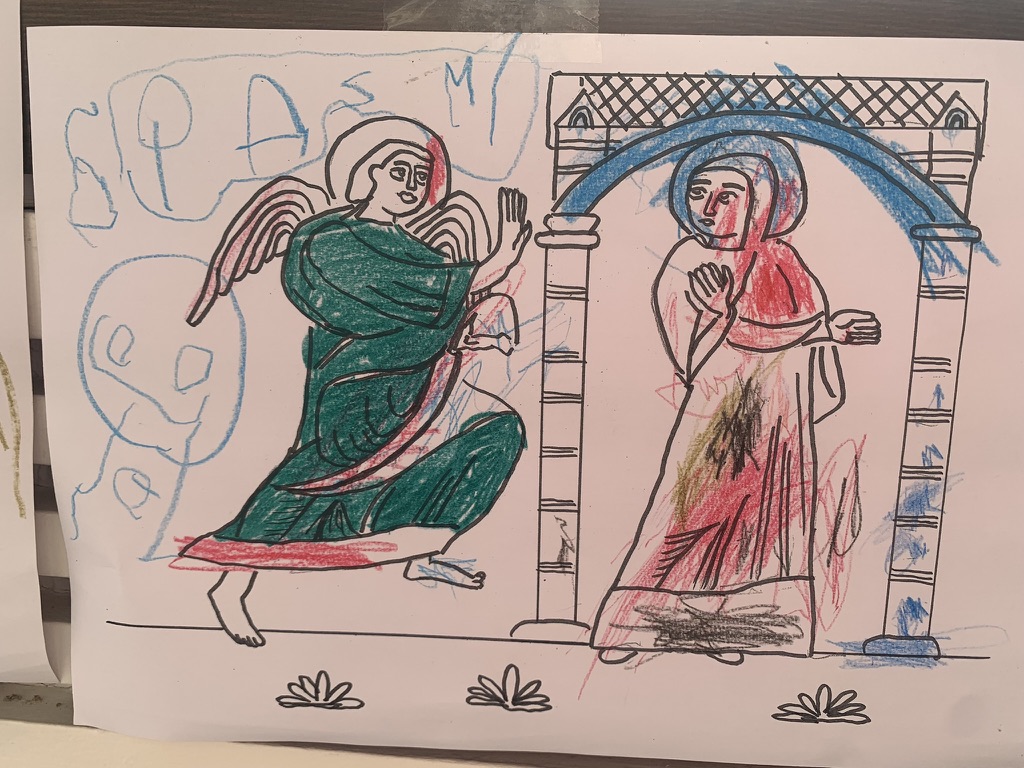
Friday morning, we got up early to take Coco to her grooming appointment in Jaca. The gal who runs the place also has a standard poodle so that put Coco at ease as she got her beauty treatment. We used the free time to go to the Diocesan Museum of Jaca, which doesn’t allow dogs. Usually, when that happens, we try to give Coco a good morning workout so she’s exhausted by the time we sneak away. We wouldn’t leave her alone for too long at home, but there are some attractions we don’t want to miss. This museum has an incredible collection of medieval mural paintings that were removed from disused local churches (like the one we visited in Garcipollera) and carefully restored and placed on the walls of the museum. The artwork is Romanesque and functioned as the Nexflix of the time for the illiterate people, telling the Bible stories on the walls of the chapels. It’s pretty crudely drawn stuff, but Denise is drawn to this particular style of art. We picked up Coco, who now looked gorgeous, and walked around the Jaca Citadel, a garrison built in the 1600s.



We chose this part of the Pyrenees because I thought the high altitude would correlate to lower temperatures but that hasn’t been the case. The nights are cool but the daytime temperatures have been climbing since we arrived. Luckily, one of the perks of this Airbnb is access to a nice community swimming pool on the grounds. We found the optimal time to swim in order to avoid the hordes of randy teens was during the traditional ‘siesta’ time (more about that tradition in later posts.) We have been enjoying bobbing around in the deep end of the icy pool, getting our physical therapy even if kids splash around us.
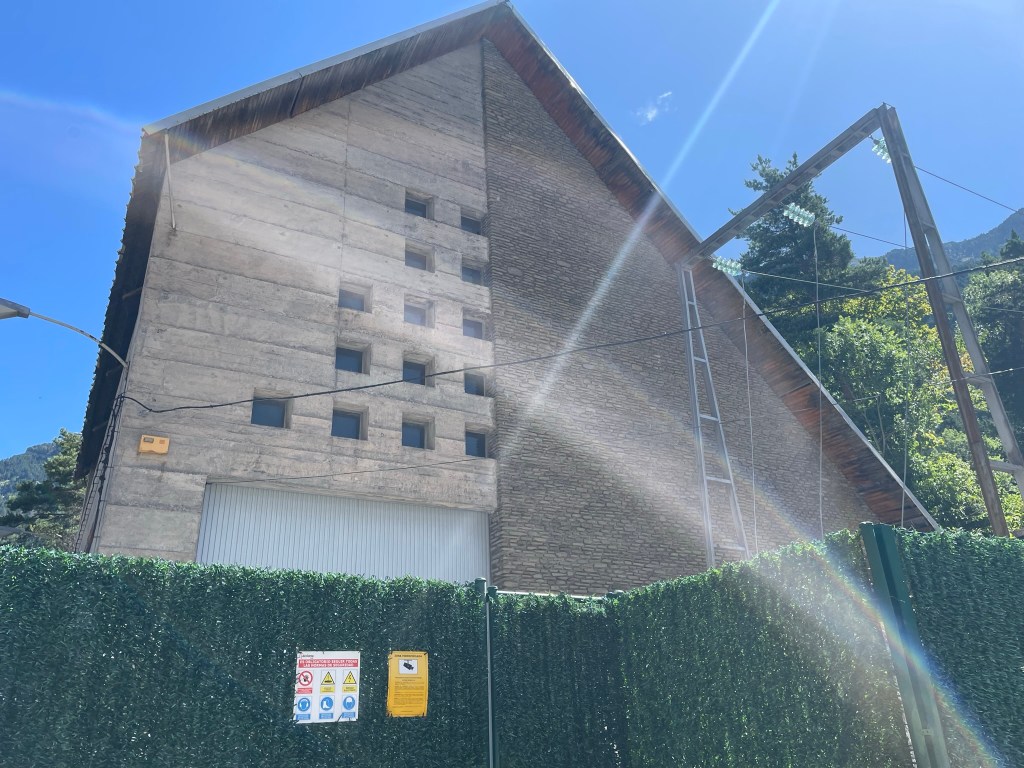
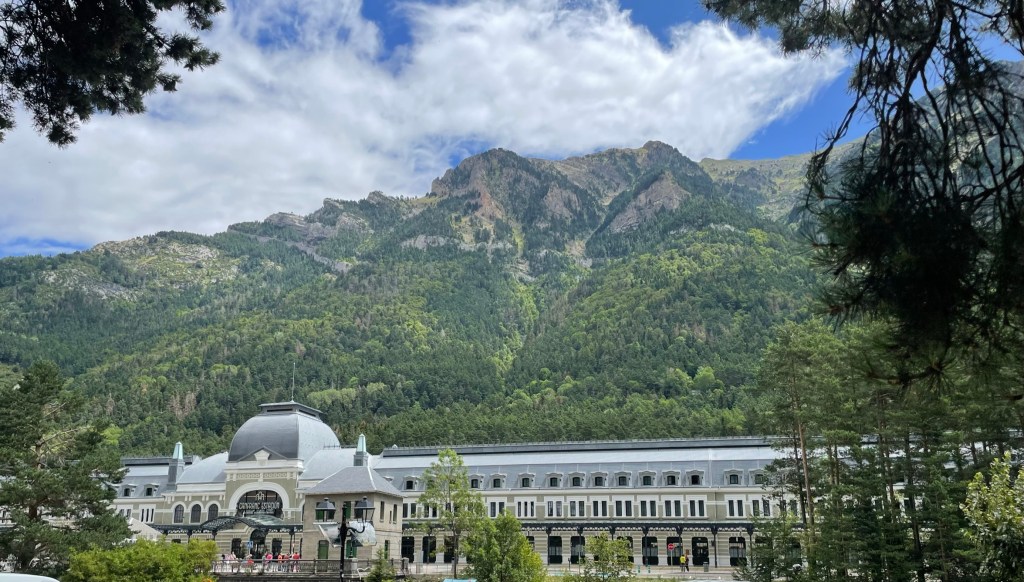
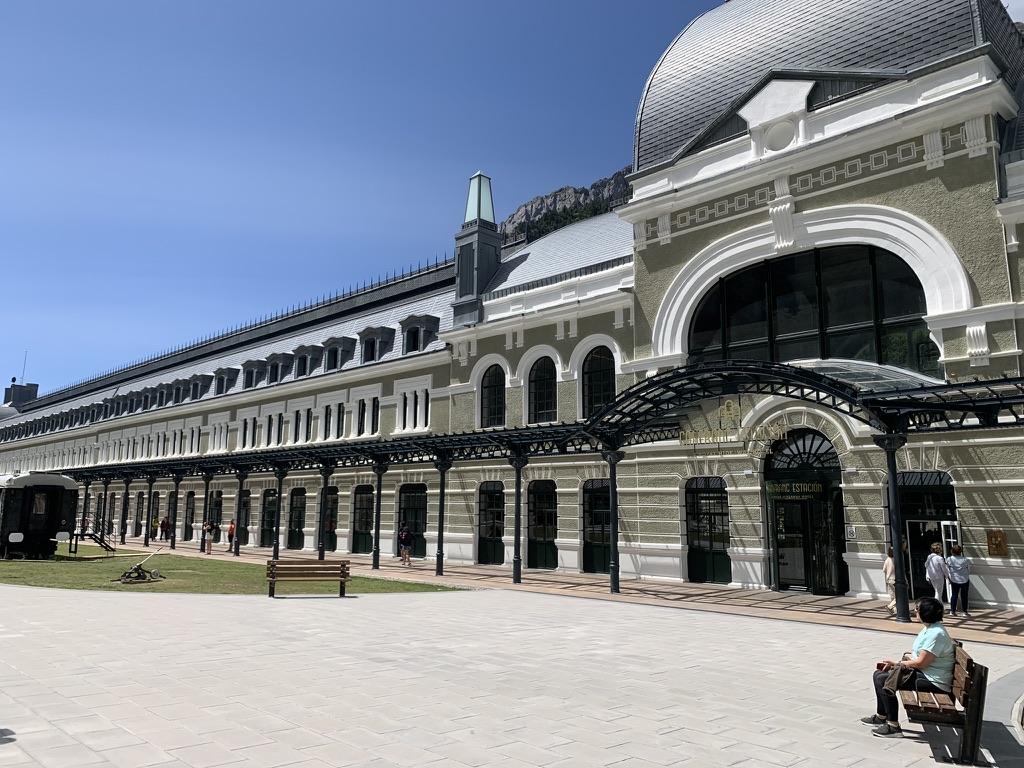
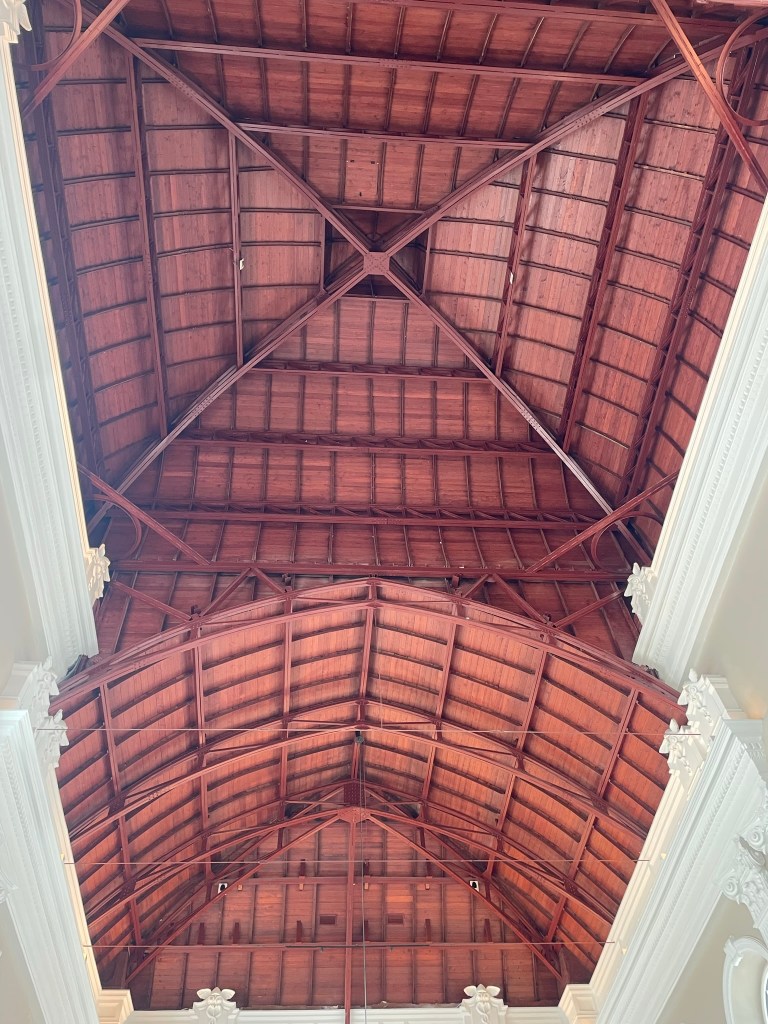
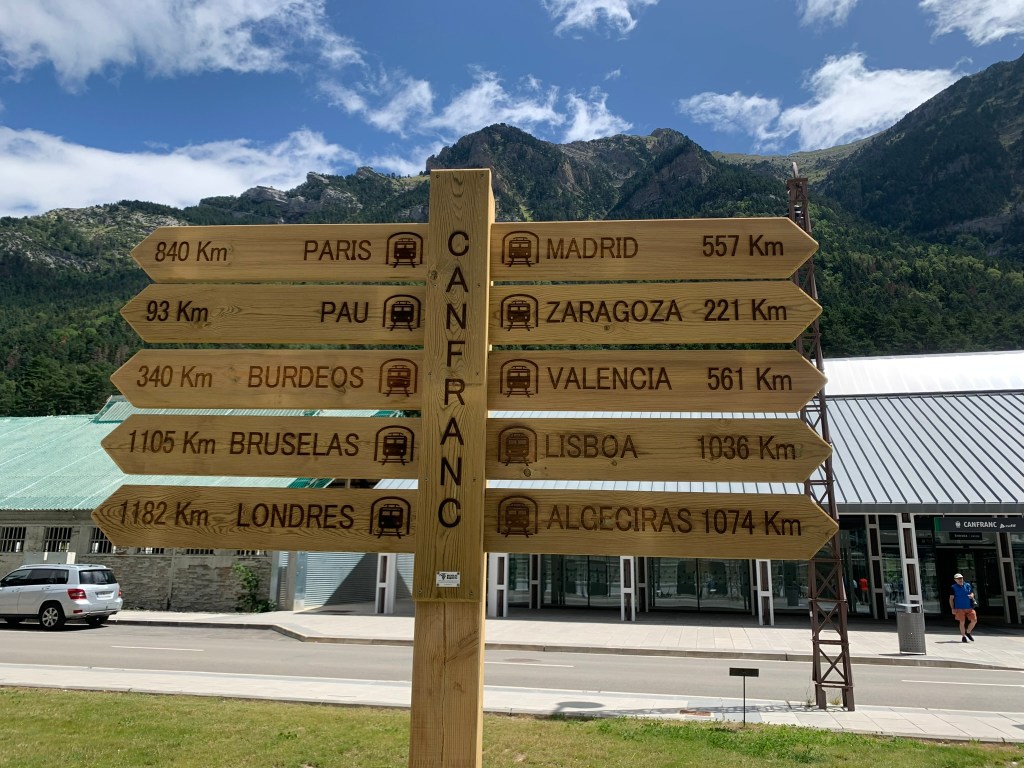
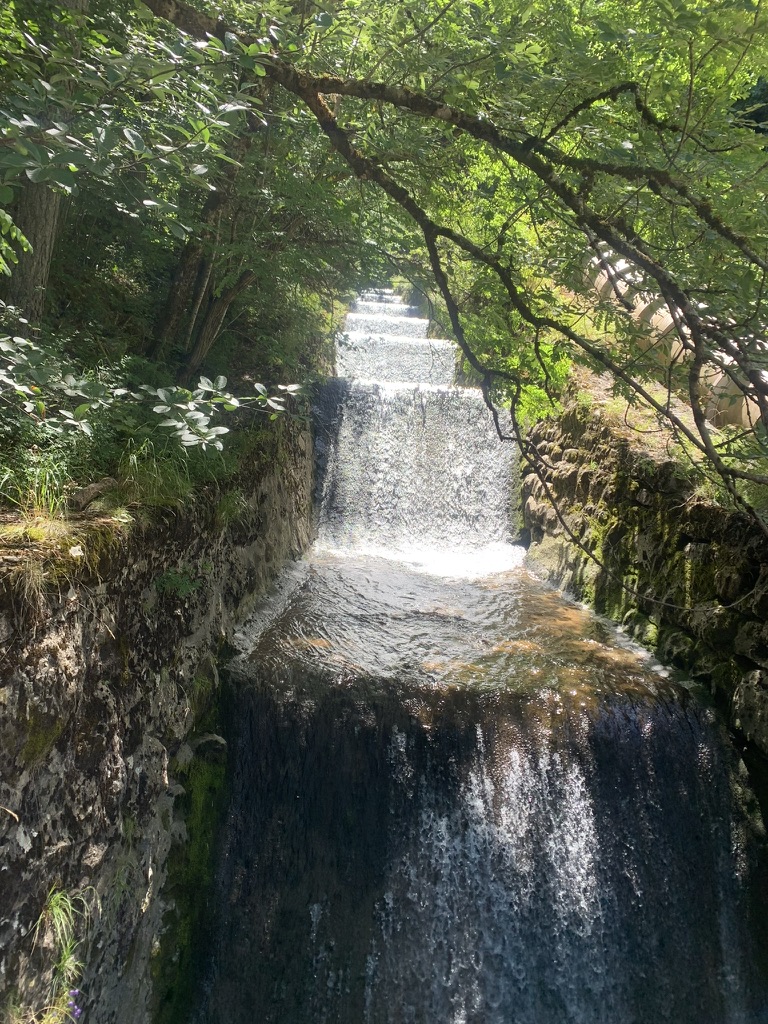
Saturday morning, we headed up the highway to the border town of Canfranc (which we can’t help calling “Cab Franc” after a favorite wine varietal), where there’s a historic train station, now converted into a hotel. A train used to run through here on its way between Huesca and Pau, but a giant crash in 1970 put an end to the service. It’s now a booming ski town and we took a loop walk around the town and the station, dipping into the hotel for a peek at how the other half travels. There’s a nicely designed hydroelectric plant there and the remnants of Linea P, a series of fortifications that Franco had built after the Spanish Civil War to defend Spain against Republican attacks from the north. We didn’t take any pictures because the place was crawling with young kids and we didn’t want to seem creepy but definitely check out the hyperlink.

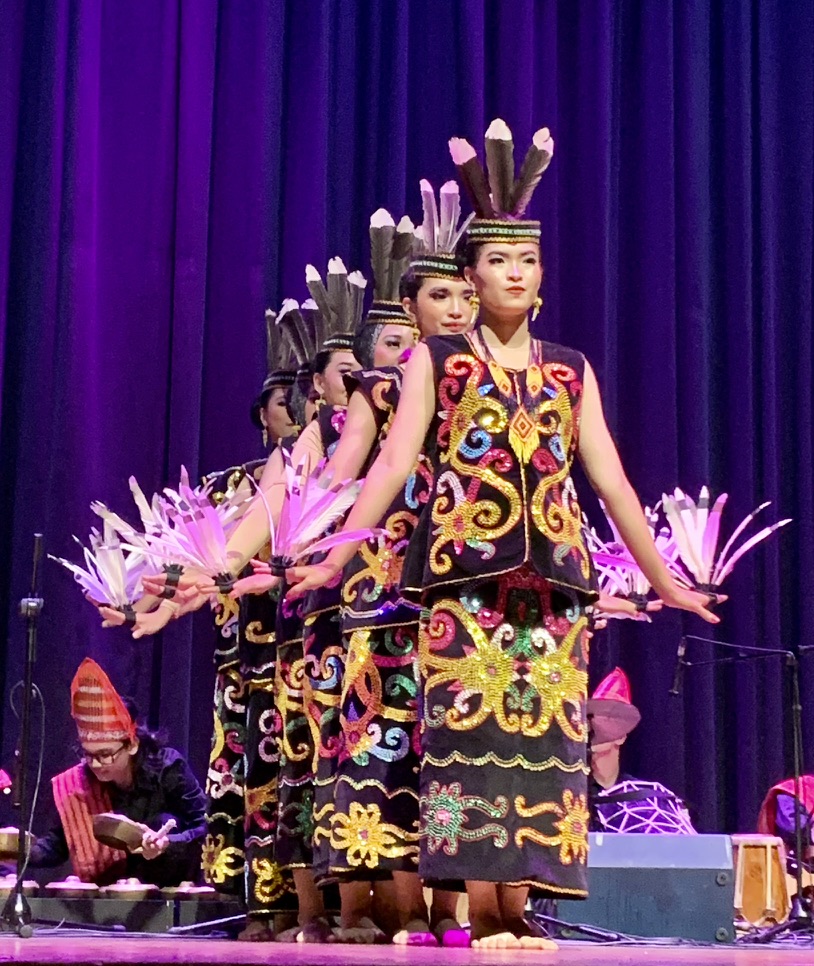
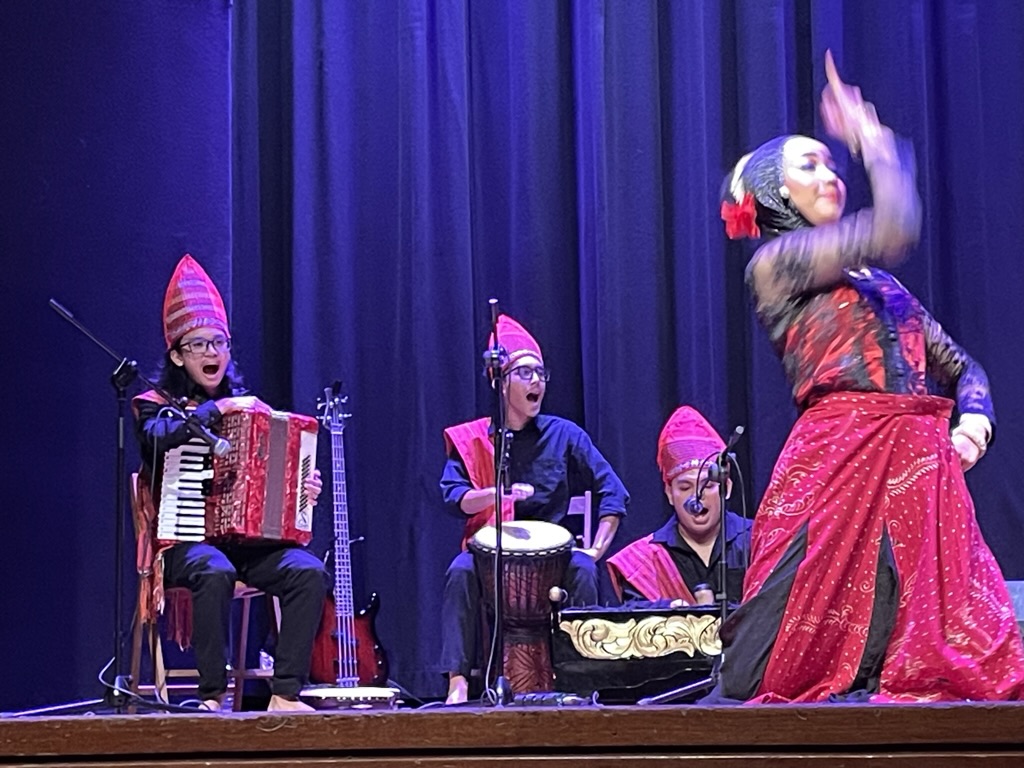
Saturday evening, we attended another folklorico concert, this time with only two groups, each giving an extended performance. I was happy to see the Indonesian group again, this time performing different pieces from each of the many islands of their home country, all with different styles of costumes. The band is excellent, with many of the players switching instruments multiple times during a performance. Next up was a very professional group from Uganda called the Crane Performers, led by the jovial and rotund Gordon. He was interviewed before the set and spoke in English, which was then translated for the Spanish crowd, much to our amusement. For the next hour, the music and dancing did not stop and, at the end of the show, the group invited the audience up on the stage to dance with them. Of course, they didn’t need to ask Denise twice and she and others from the crowd quickly joined the celebration. I selflessly stayed behind to document the event.



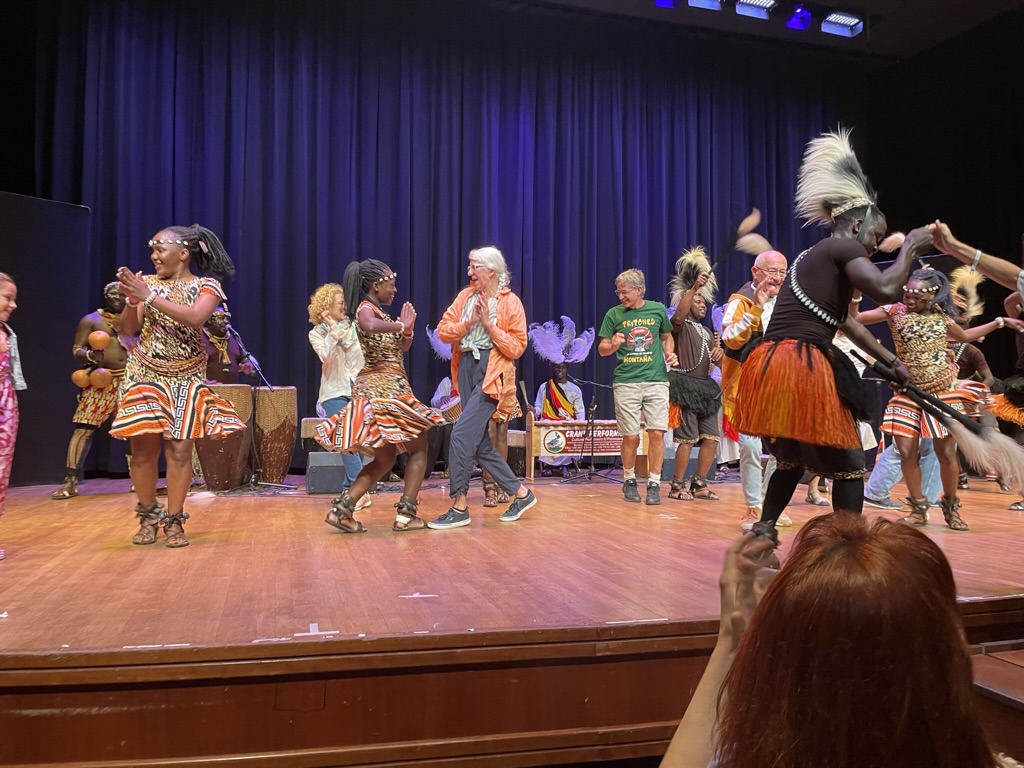
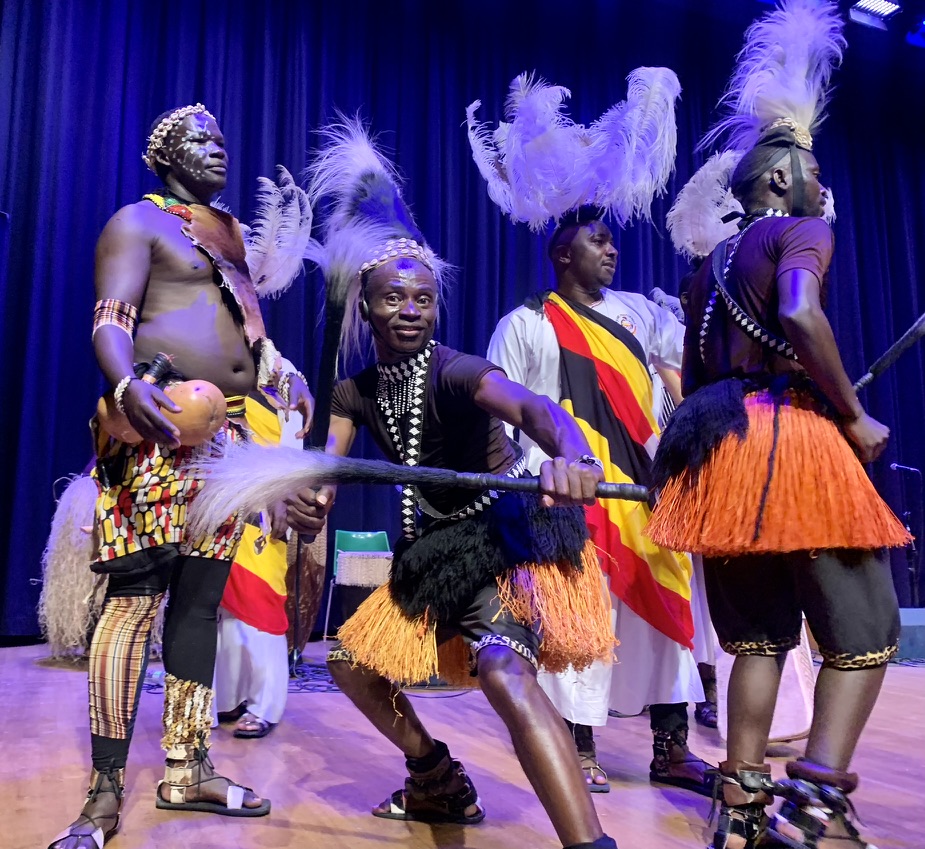
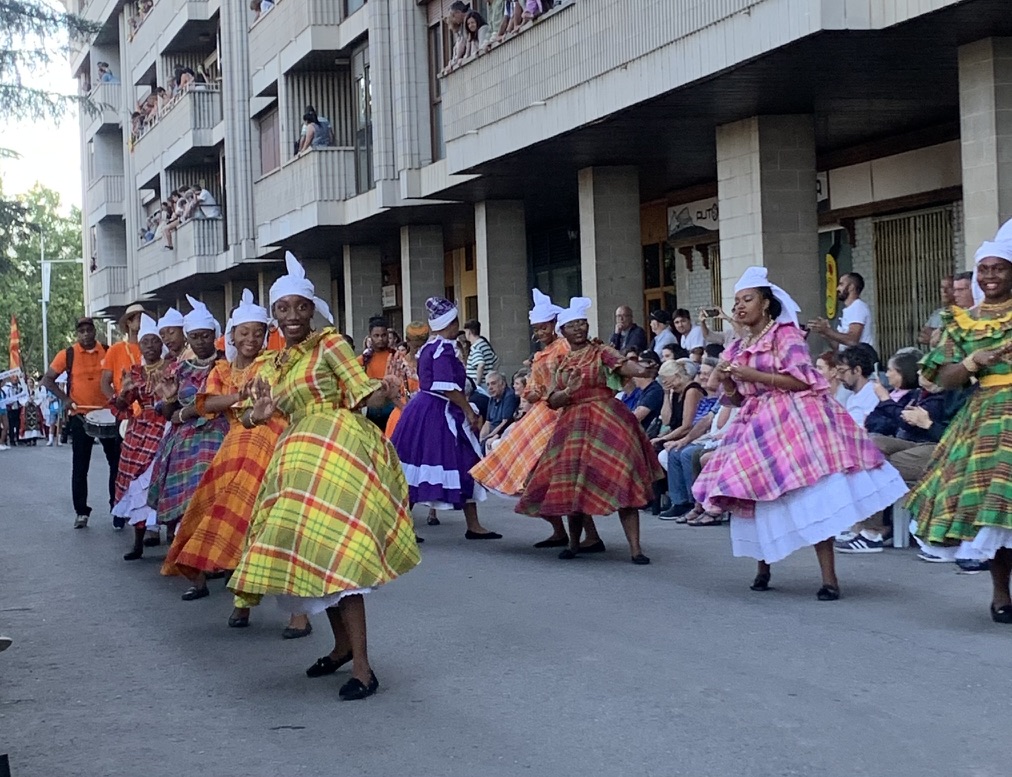
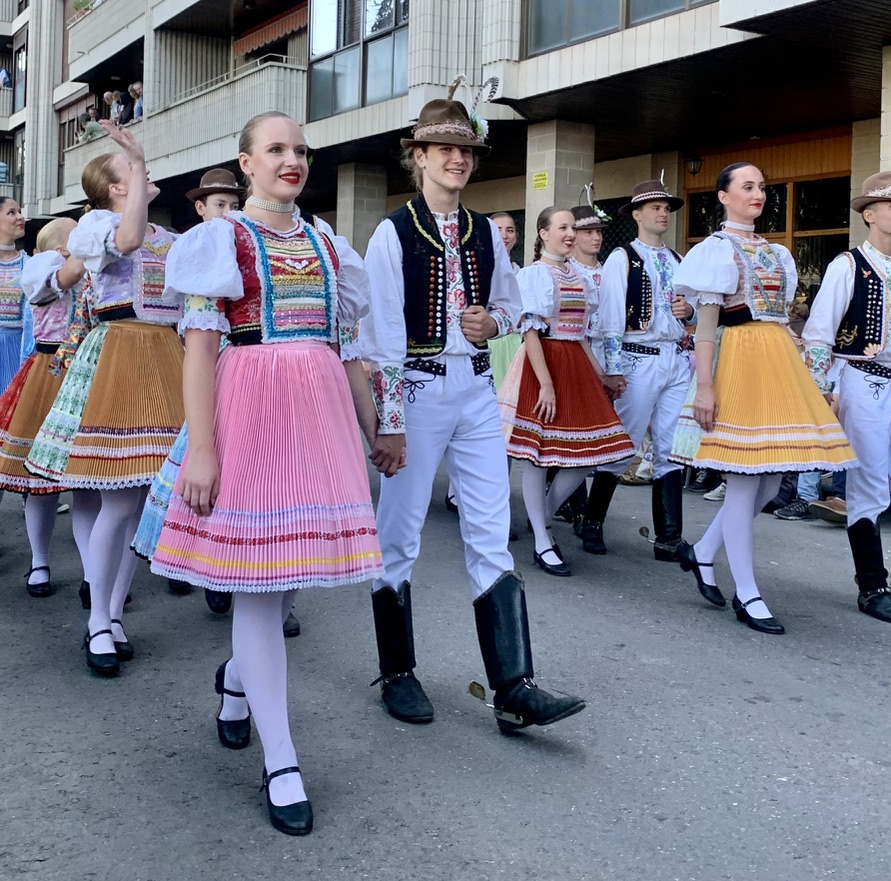
The next day, all eighteen groups from the festival participated in a three-kilometer-long parade through the streets of Jaca and we splurged on a couple of tickets for chairs so that we would have a front-row seat. The whole festival — or at least what we’d seen of it — was amazing and I think there’s a circuit of these festivals in Europe during the summer and the bands just bus from one to the other. It’s a pretty amazing way to spend your holidays, especially if you’re coming from Africa or South America. I mean, not everyone gets to spend time in the childhood home of Ronaldo’s girlfriend.
That’s a wrap on our first week — and semana dos is filled with lots more excitement that you won’t want to miss! Please consider signing up for the newsletter. WordPress doesn’t make it easy but if you comment or send me an email, I’ll add you to the list. Hasta!
 Calculating Route...

Fascinating! What an adventure you’re having! Please add me to the email list.
LikeLiked by 1 person
Thanks Nora! You’re all signed up.
LikeLike
None of these Spanish churches are A.F.C.?
LikeLiked by 1 person
Management regrets the omission and promises that your favorite series will return next week.
LikeLike
I love these photos and their captions, also you must be thrilled that Devo showed up at the festival!
LikeLiked by 1 person
Thank you for this beautiful blog! I love traveling with you two and Coco the poodle!
LikeLiked by 1 person
thank you, Leenie!
LikeLike
Love it!
LikeLiked by 1 person
Thanks, Cindy. Love to the family.
LikeLike
I enjoyed this so much, even though I thought nothing could top the French travelogues for me, given my own interest in that country. I have been to Jaca, but my recall is sketchy, as we were driving from Granada to Pau in two days, or something daft. I chuckled at lots of things, including many of the photo captions – Bloque 3 does indeed say it all, hehe. If it makes you feel any better, I presided over a WiFi installation in France during my stay for *someone else*! Oh, if you fancy doing a pilgrim walk, a friend in Stafford walked on her own from Canterbury to Rome in 80 days. Or was that Jules Verne? Her feet were like leather by the end of it, I do remember that, because we felt them.
LikeLiked by 1 person
Our four mile hike on the Camino disabused us of any notion about doing the legitimate distance.
LikeLiked by 1 person