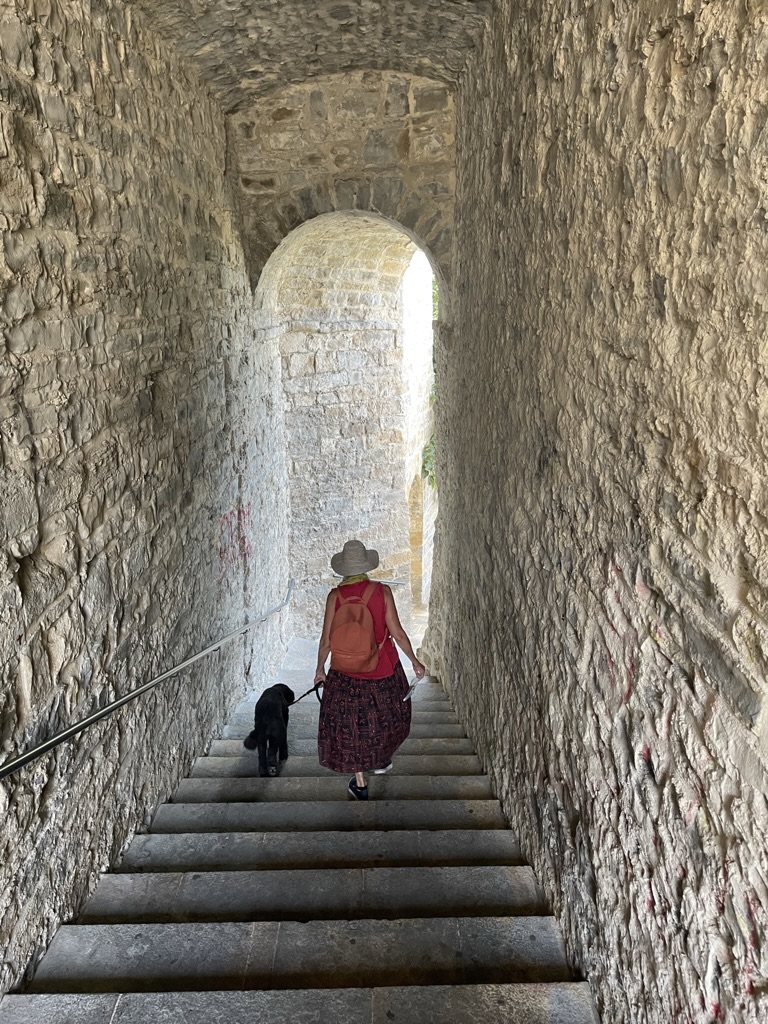
Don’t get me wrong, we loved France and the French people (even the Corsicans, who insist they are NOT French!) and ditto for Italy and the Italians, but after a couple of weeks in Spain, we definitely feel more relaxed than on those prior stops. Why is that, I wonder? The first reason might be the language: we just feel more comfortable with Spanish, even if we don’t speak it anywhere near competently. Denise took a few semesters of Español at Portland Community College before we left and I had passable medical Spanish from my years in the GI department at the hospital — although most of that doesn’t come in handy in day to day conversation, as you might imagine — but we all know the difference between learning a language and actually speaking it among the locals is huge. Spanish just sounds familiar to our west coast ears.
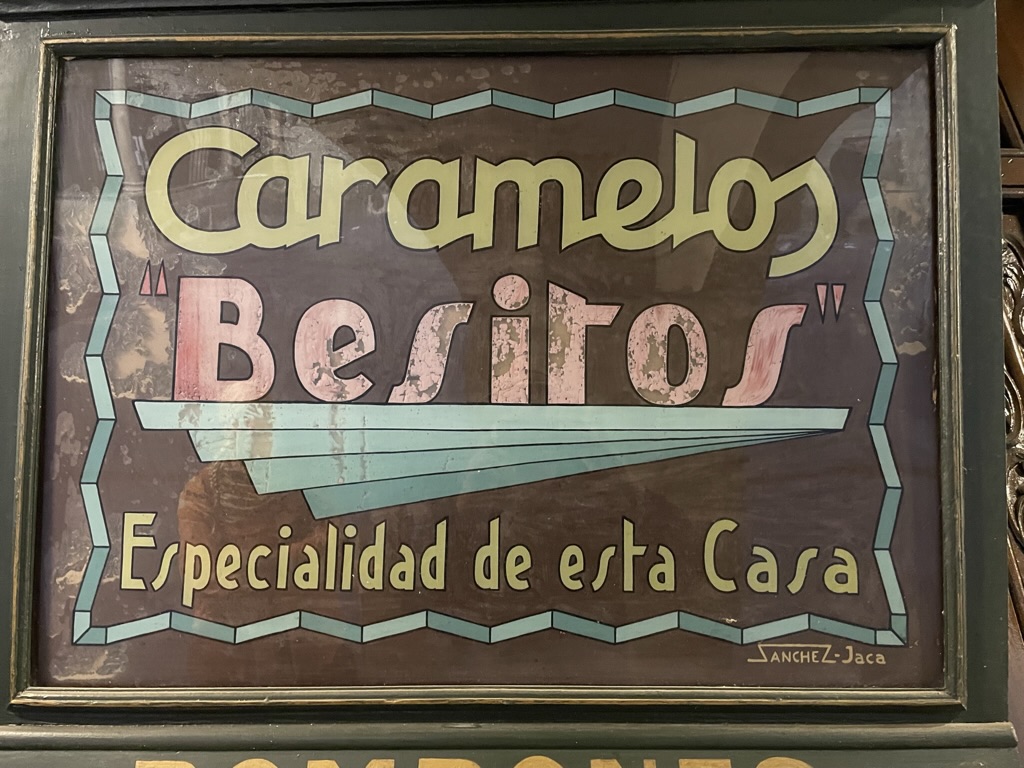
We picked up a little bit in France but it’s a very difficult language to learn, something that any French person will (proudly) tell you. Spanish is a more phonetic tongue so what you see is what you get. Still, we are able to do okay wherever we go and, of course, dear Google Translate is always nearby.
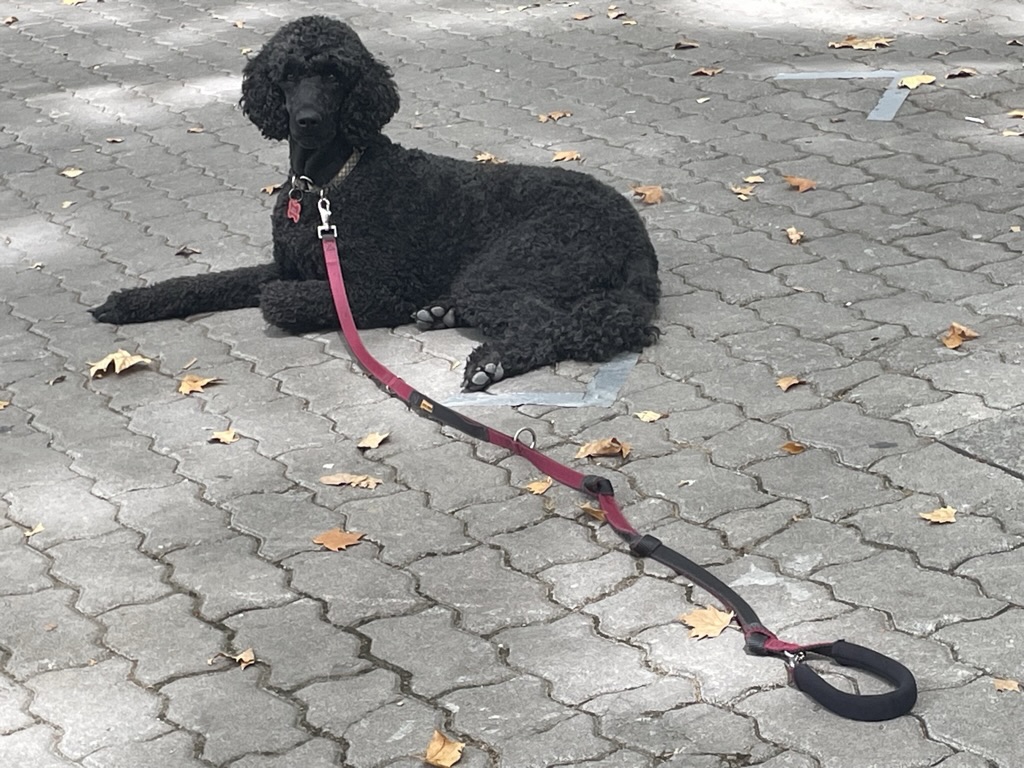
Another difference is that the Spanish are a little more relaxed, in general, than the French, particularly when it comes to dogs. All three countries have very friendly people but the French, in general, tend to be the more prickly when it comes to following rules. Case in point: in France and Italy, as in most of the USA, the drivers tend to park in the spaces provided for them at public car lots; in Spain, they get very creative and fill every available piece of tarmac. When we first encountered this comical system, we thought for sure our car would be blocked in but, as if guided by some unseen theodolite, they always manage to leave just enough room for the other cars to escape.
When we arrived in Europe, we expected to find the midday break, or siesta, in Spain but were surprised that it’s widespread in Italy and France too. Everything but the restaurants and bars shut down for many hours and, on Sundays, don’t reopen. At least in our part of Spain, the grocery stores, even giant Carrefour, are completely shut on Sunday. It takes a while to get used to that kind of schedule but it’s lovely that they all seem to have lunch with friends and family — including alcohol — and have a rest before going back to work.
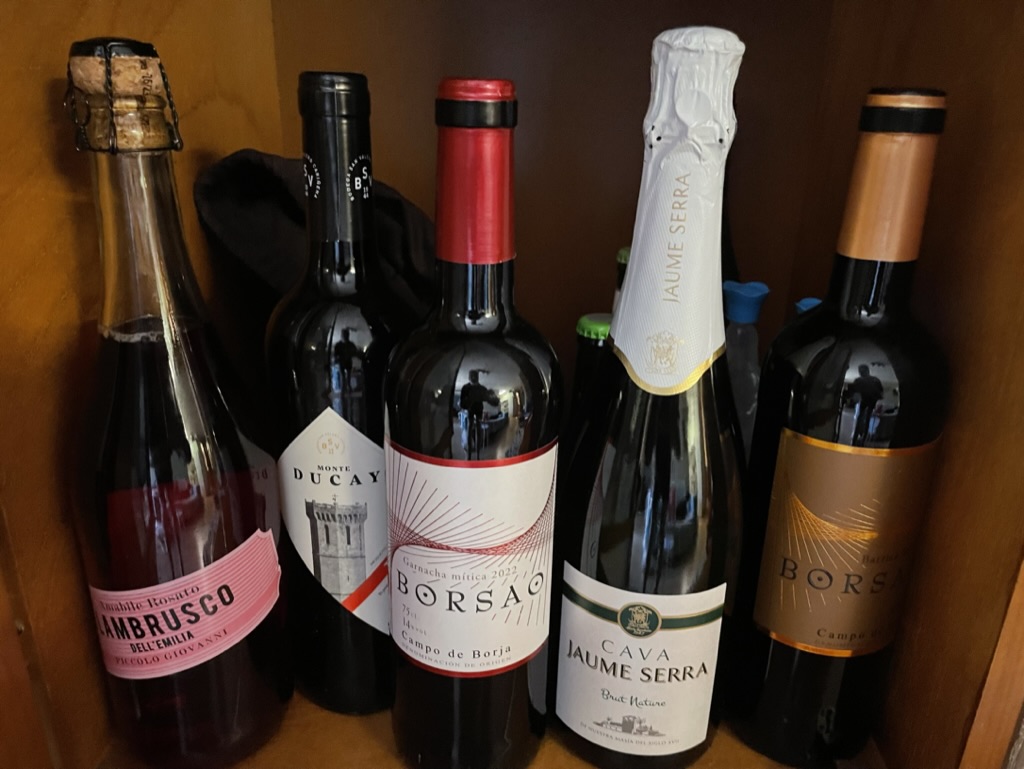
Other things we’ve observed:
-In France and Italy, everyone smokes, while in Spain, everyone and their brother smokes.
-We haven’t run into any mosquitos here in Jaca, something we fought in the other places, which is nice — maybe due to our higher elevation — but there’s plenty of flies.
-Thankfully, most Spanish drivers aren’t as impatient as their southern-European brethren and the tailgating and dangerous passing incidents are way down.
-Mountain bikers on the trails, however, are indeed crazy, zooming past us on the Camino at breakneck speeds without so much as a “a su derecha.” We’ve had a few run-ins with them where we exchange greetings in the internationally-known sign language of the extended middle finger. But enough with the amateur, armchair, anecdotal anthropology, let’s get into our travels!
One of our current hosts’ suggestions was to take a ride on the Petit Train of Artouste, which is actually back in France and, as the crow flies, not too far from our old stomping grounds in Pierrefitte. It is still just over an hour from us here in Spain so we packed the dog and a picnic and decided to make a day of it. The drive took us back to France through the Pyrenees, but over a road that we hadn’t traveled before and the views were stunning. We had no time to gawk, however, but promised ourselves we’d stop on the drive home and take in the beauty.
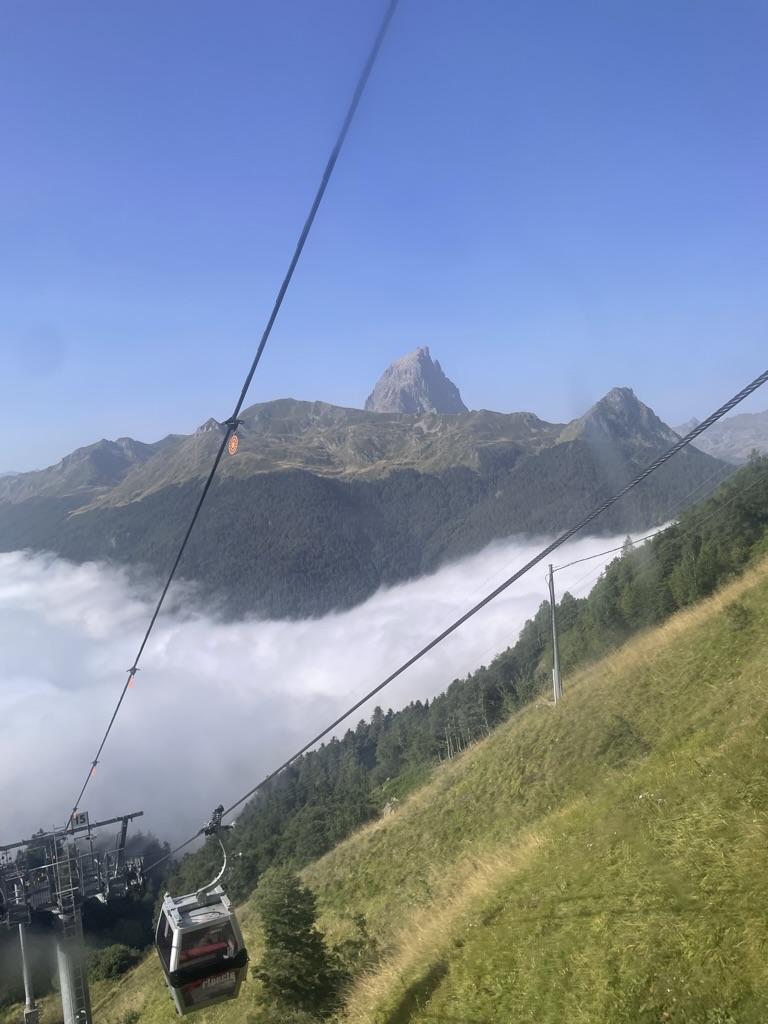
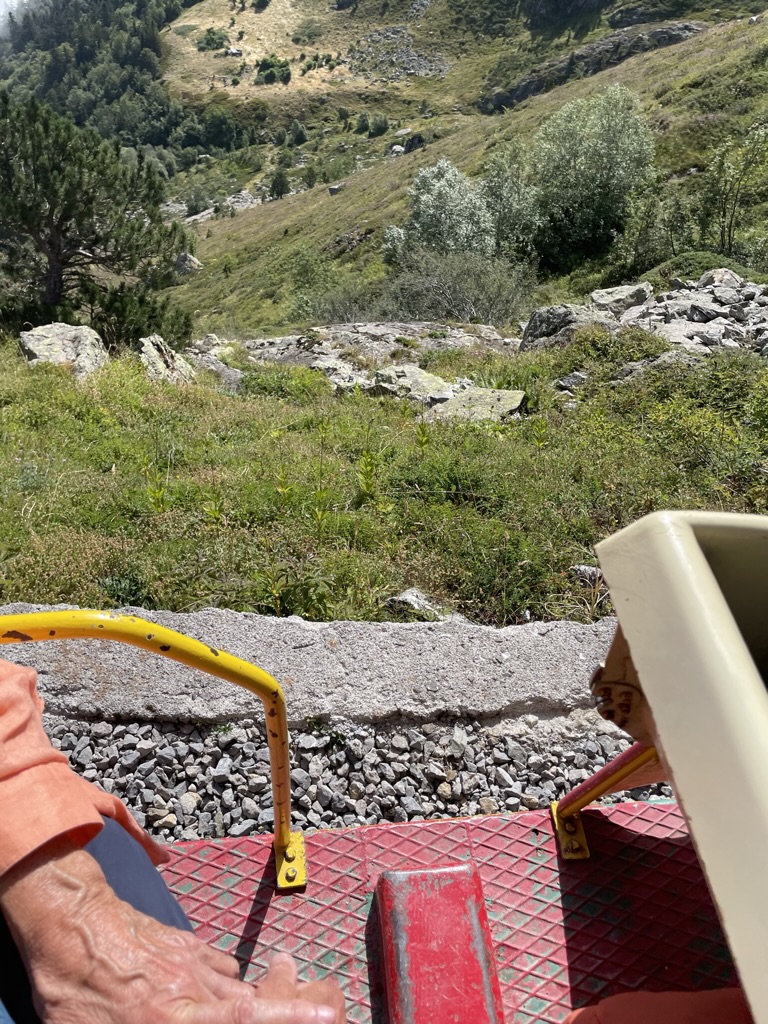
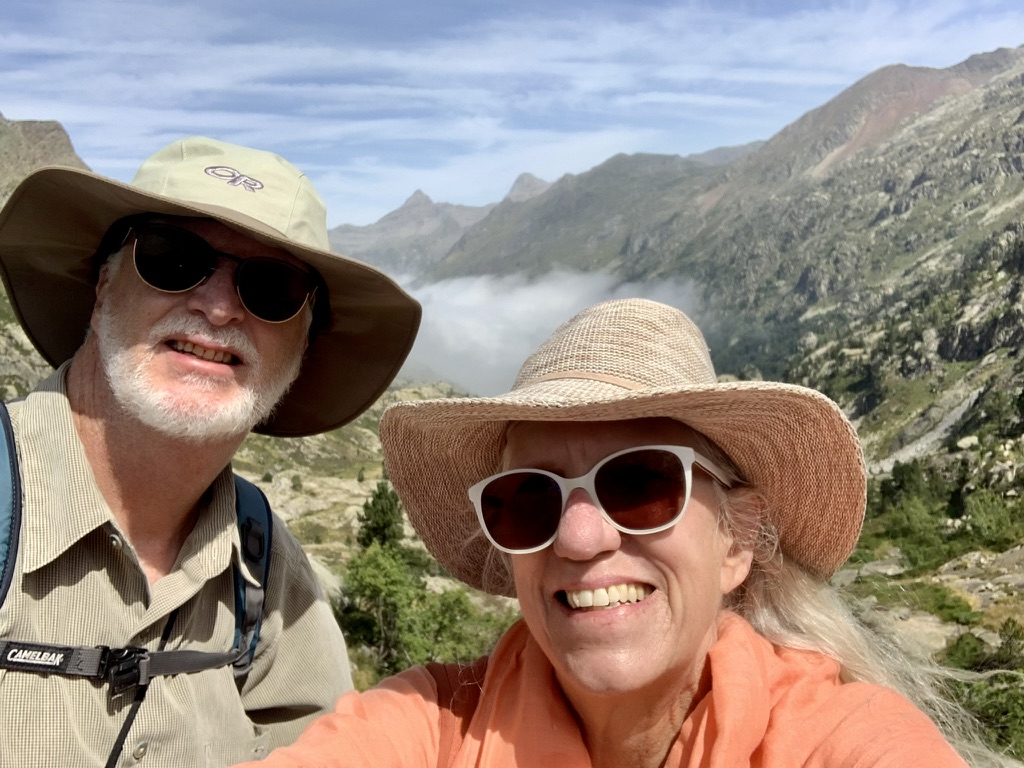
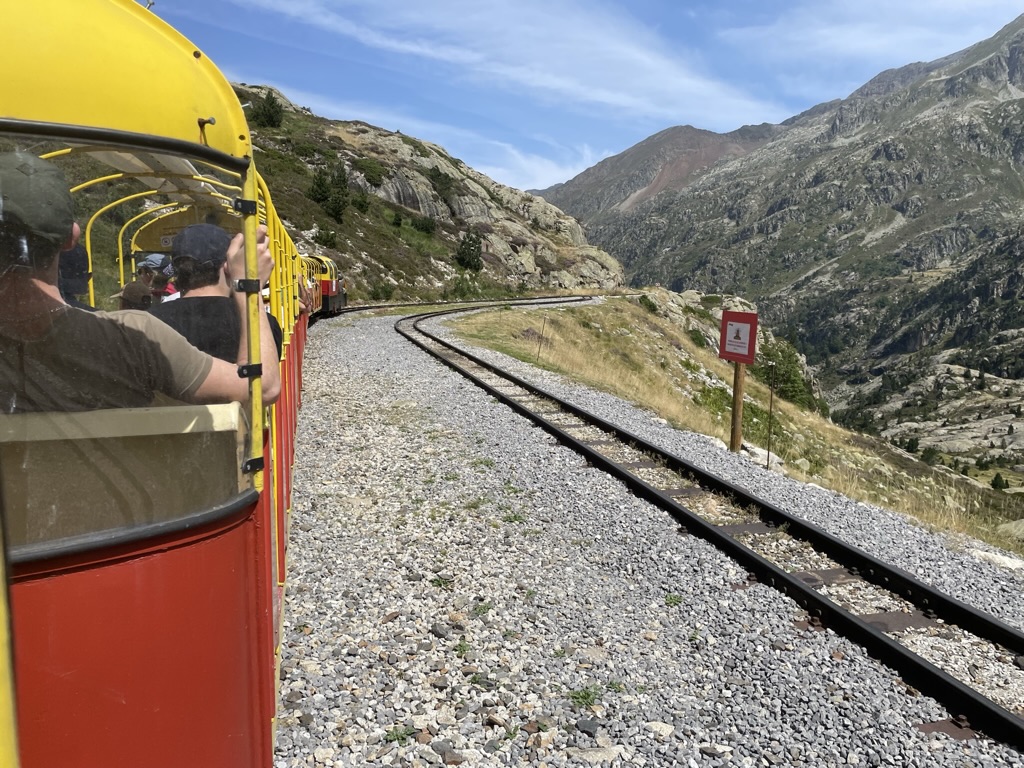
Once we parked at the fog-enshrouded bottom of the mountain, we had to take a gondola to the train station, a ride that takes you up 2000 feet in just 10 minutes, an eardrum-popping experience, but one that gets you above the clouds and offers a terrific view. The Petit Train, as it turns out, is not much different than the ubiquitous “little trains” that run through many European city centers — like one that we took in Carcassonne — except that it rides on narrow gauge rails. On the edge of a mountain. With nothing between you and a 2000-foot drop into a picturesque, rocky valley should something go awry. They kind of soft-sell that particular danger on the website but we’d come this far and, despite my fear of heights, I couldn’t let the side down.
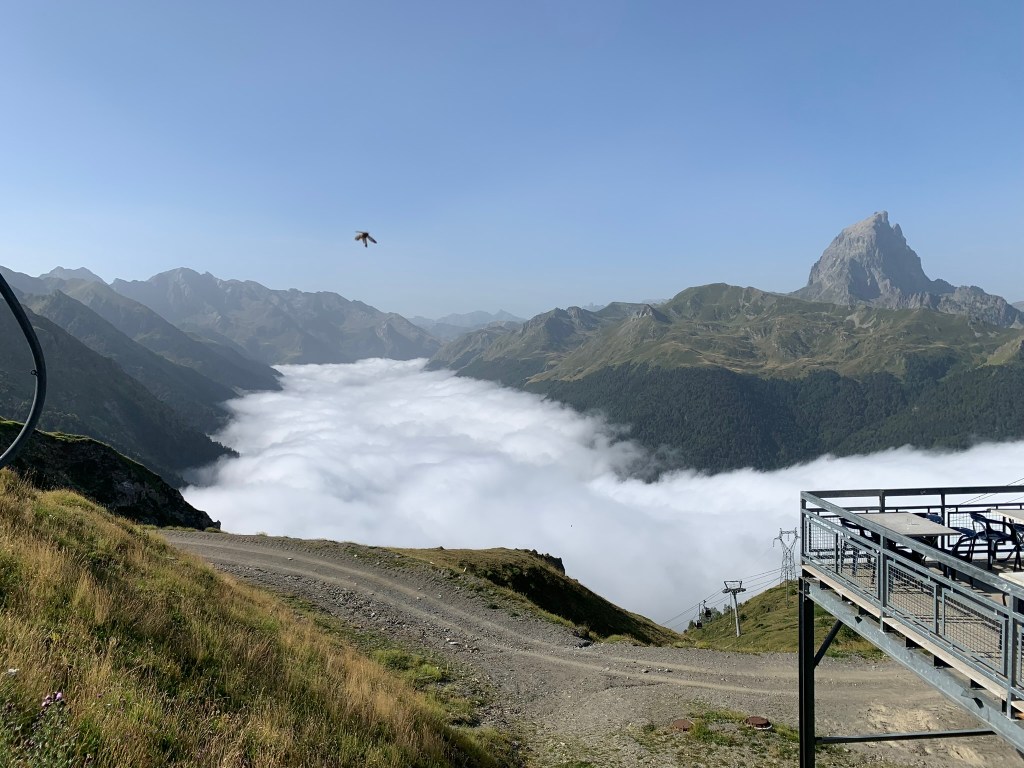
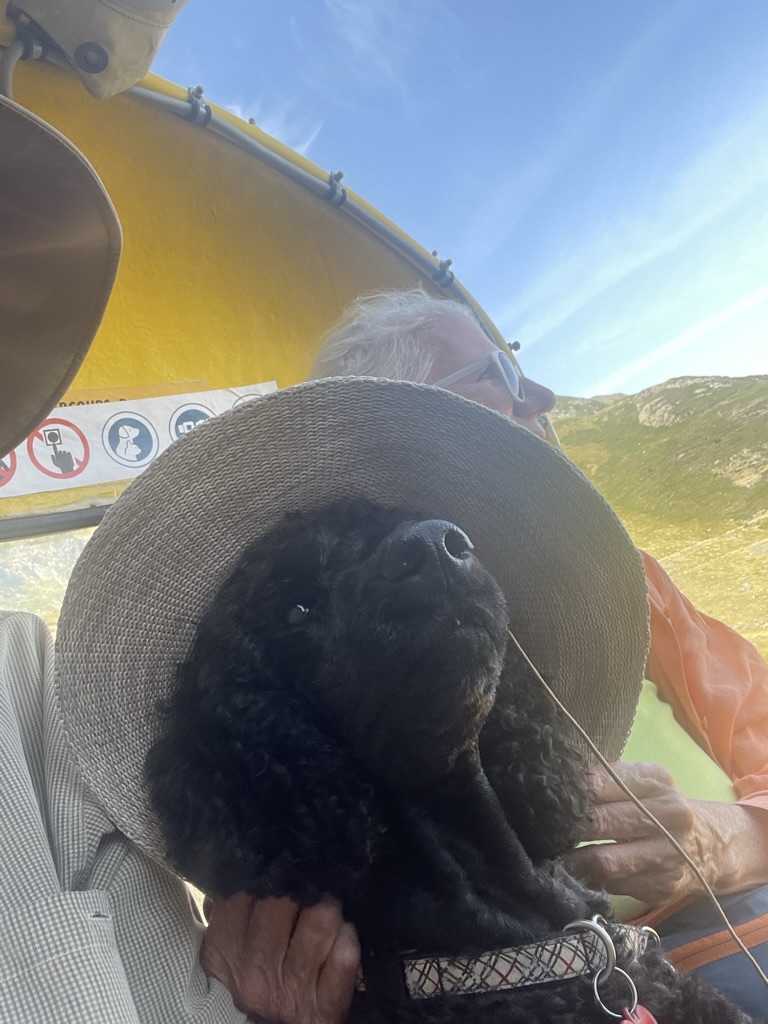
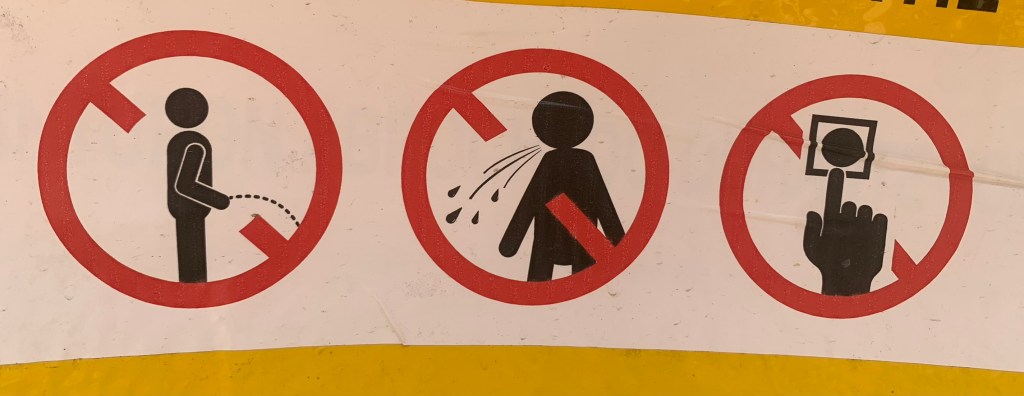
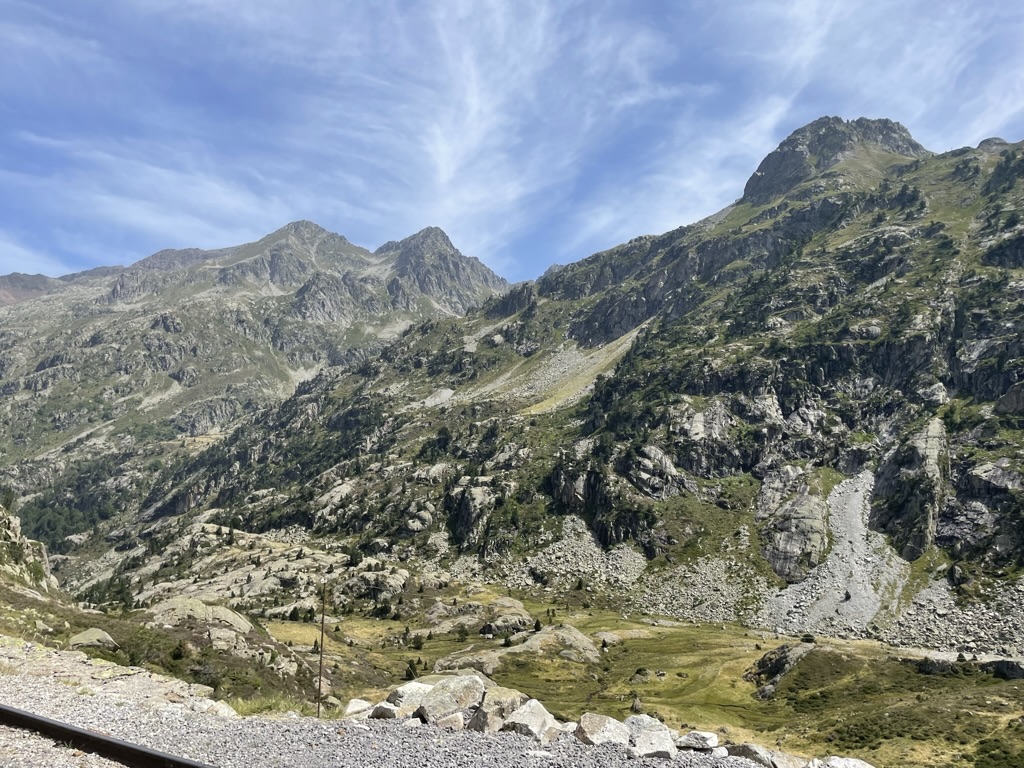
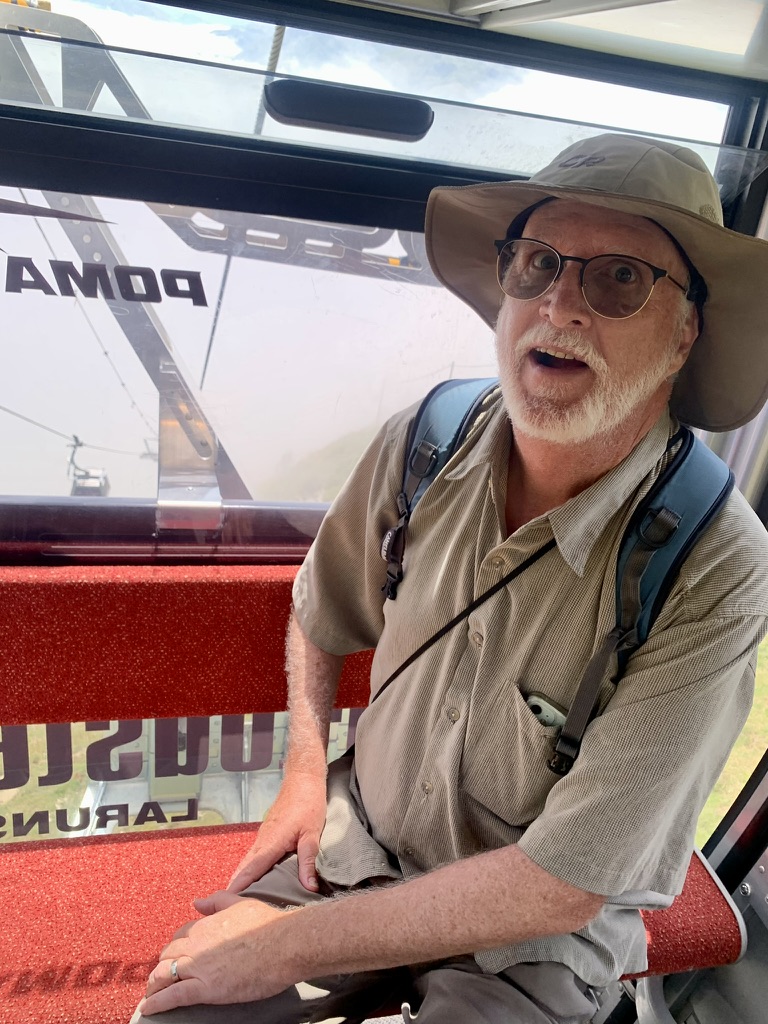
We all squeezed into the metal seat of our row, Coco none too happy with the situation, and headed off to Lac d’Artouste, a dammed lake about 55 minutes away. The rail system was originally built to take workers from the town to the dam worksite but now mostly functions as a diversion for vacationing families. The train journey starts out with two claustrophobia-inducing minutes in a tunnel with just centimeters of clearance on the sides and top of the cars. It’s very dark and smells of the diesel fuel that powers our engine and it reminds me of the pitch-black start of the Giant Dipper roller coaster in Santa Cruz. Once you’re out of the tunnel, the views of the valley below and the mountains above you are breathtaking, yet I can’t help but think as we careen around another hairpin turn, that one errant rock on the tracks and we’re rolling down the hill, stopping only when we reach the river way, way, way down there. We do get some nice looks at the colonies of marmots who inhabit these mountains and finally arrive at the station below the lake.
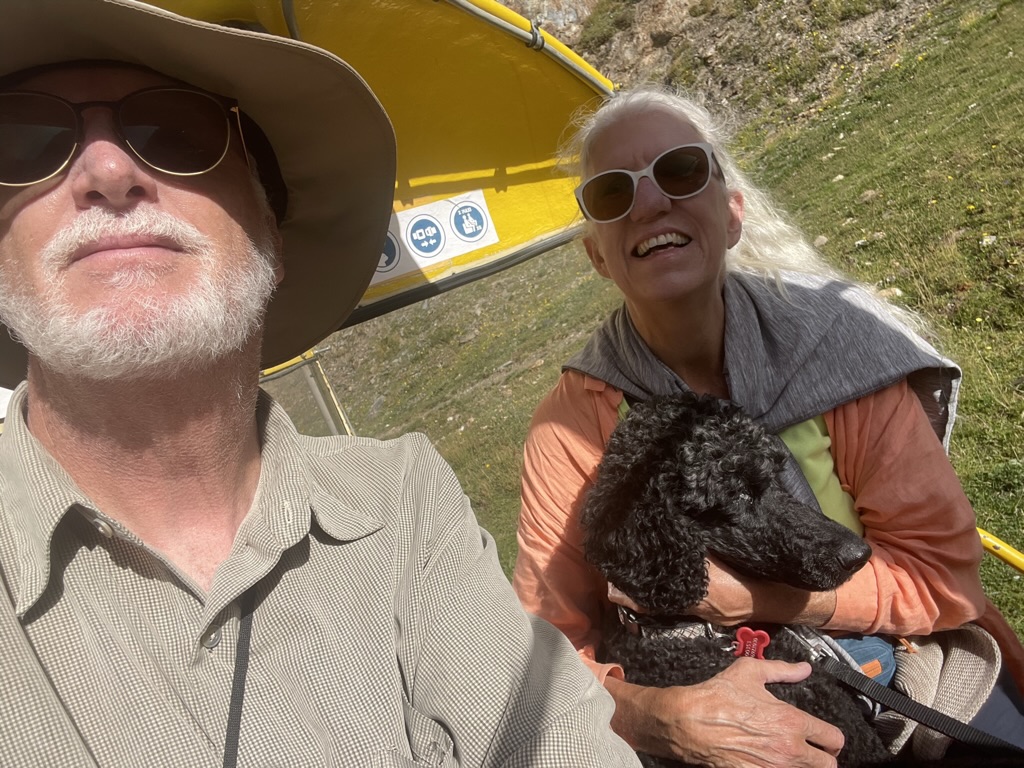
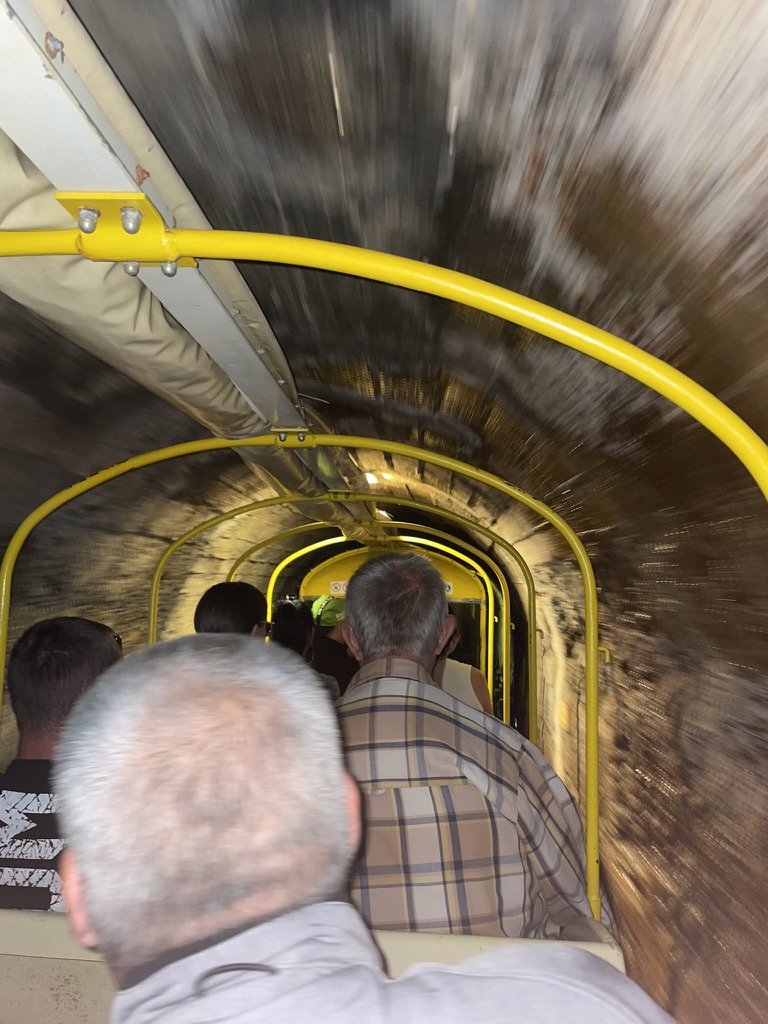
In the tunnel de la mort
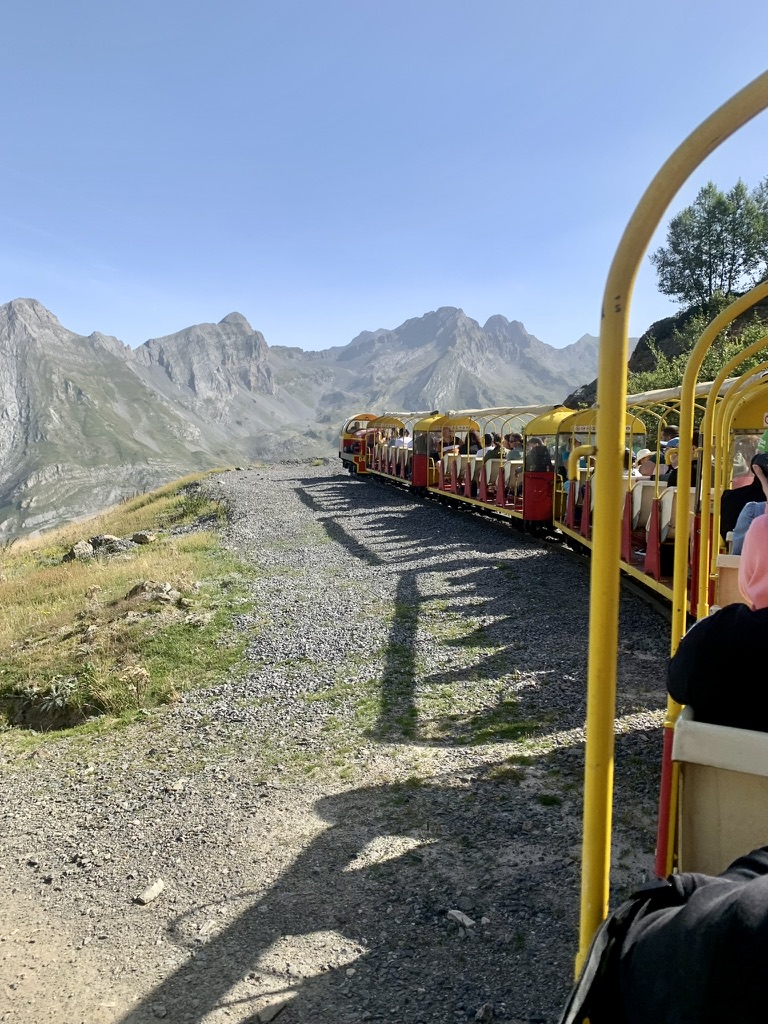
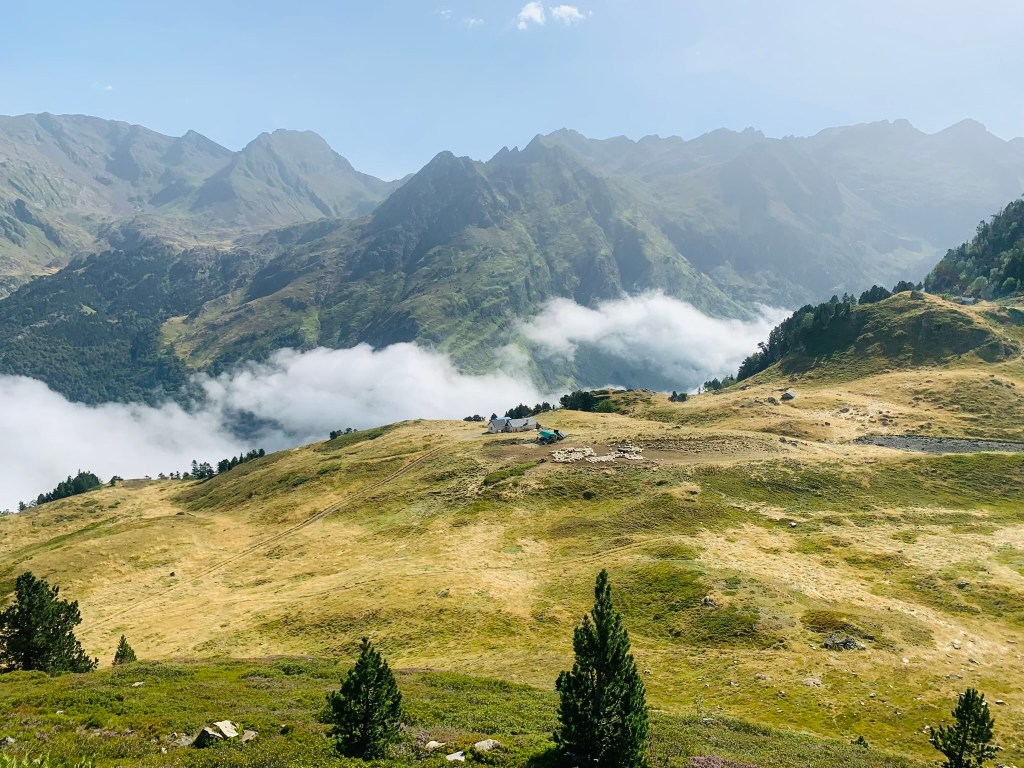
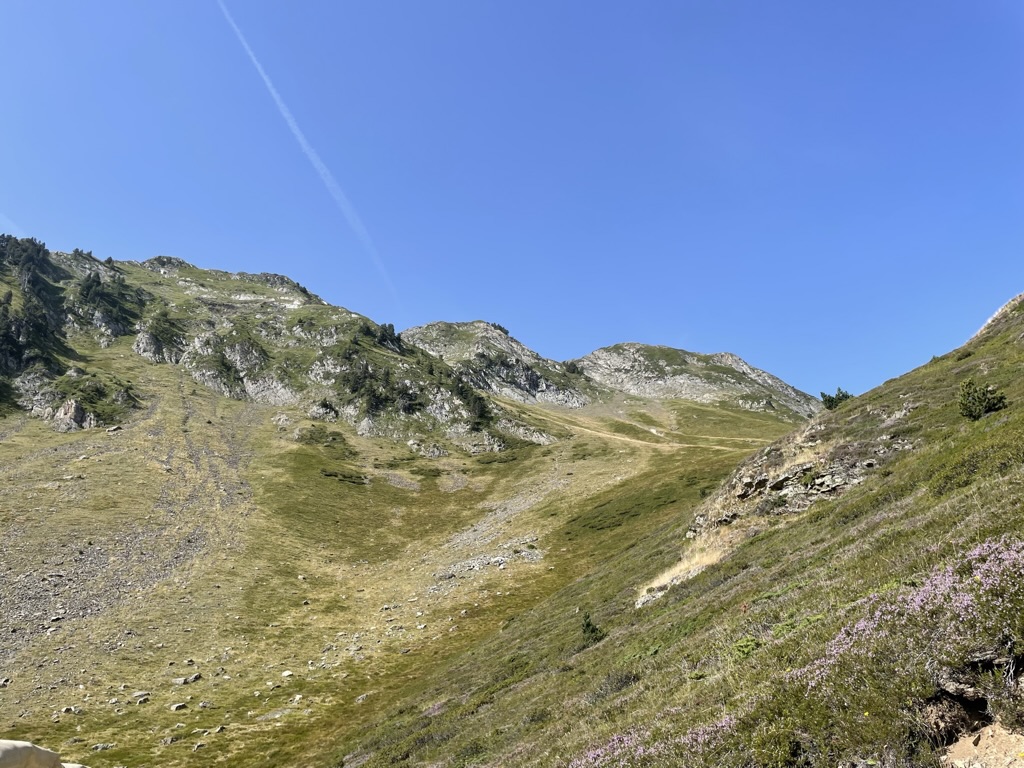
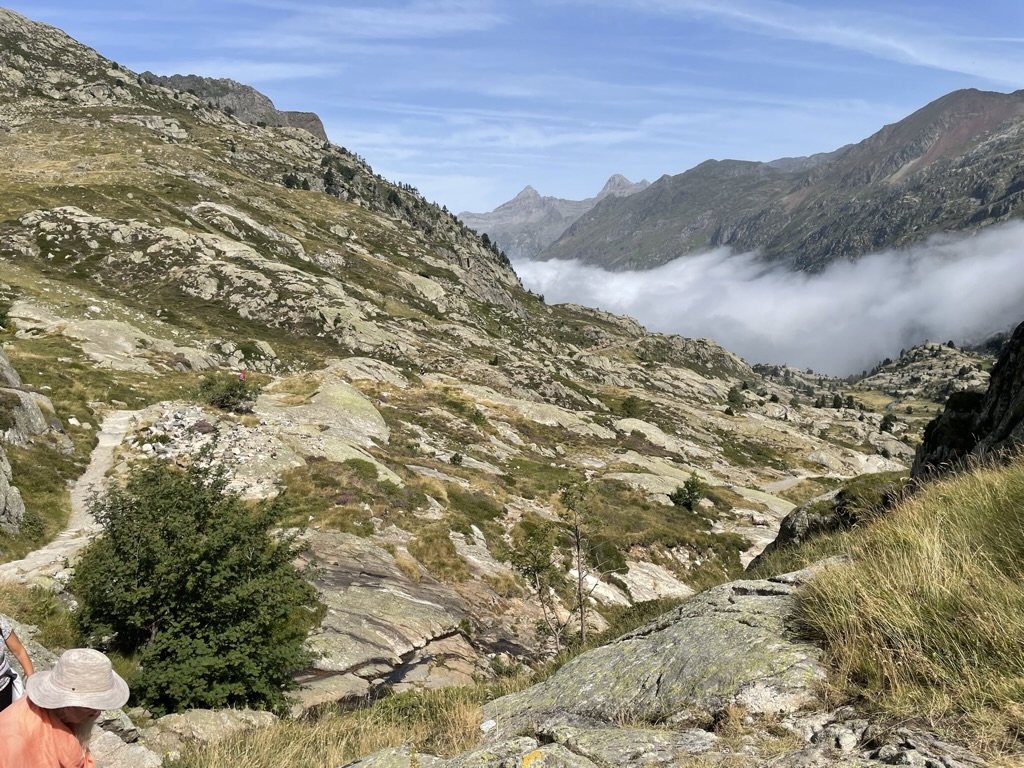
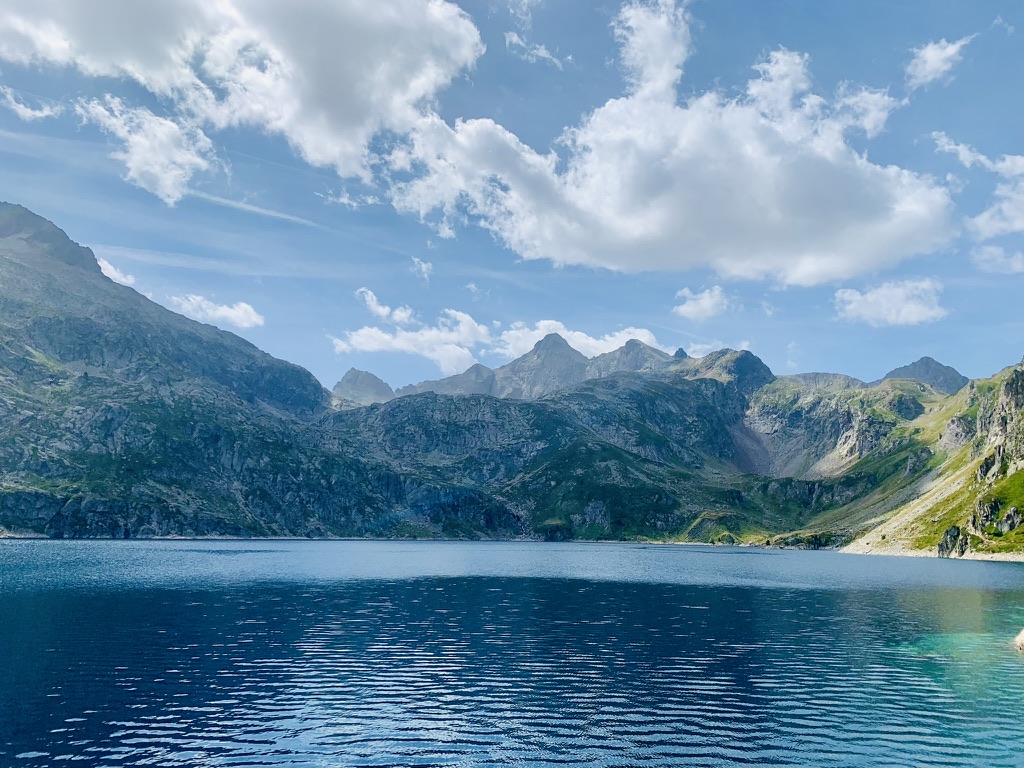
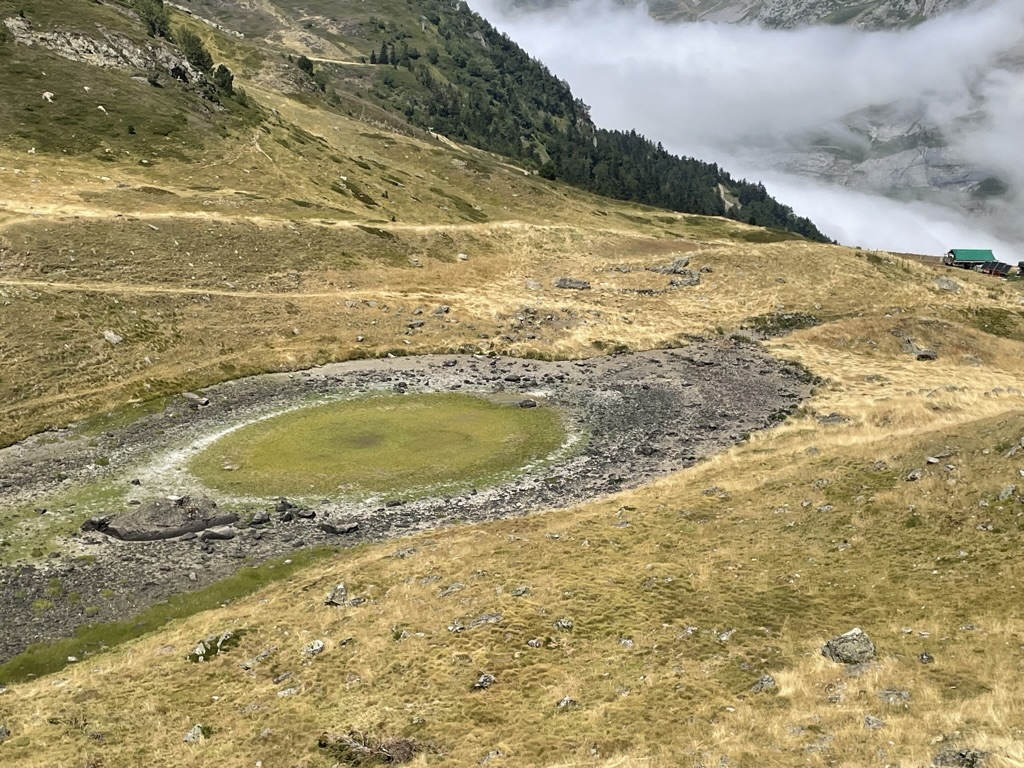
At the station, we discovered the other thing they don’t tell you: it’s about a thirty-minute, somewhat arduous climb up from the station to the actual lake, leaving you about twenty minutes of sightseeing time at the top before you have to head back to catch your assigned return train. When we realized this, we inquired about taking a later train back and were directed to the sign informing us of the eight-euro fee to change your return. You can buy an all-day ticket but that means six hours at the lake which would be a lot for Coco. We decided to make the best of it and started up the rocky trail to the lake. Once at the top, we wolfed down our sandwiches and took a scenic walk over the dam before we had to head back down to catch our train. At 27 euros a head (dogs free) for the day, it’s not cheap but I’m happy to pay for the guys who are out there all day clearing and checking the track to keep us from plummeting to certain death.

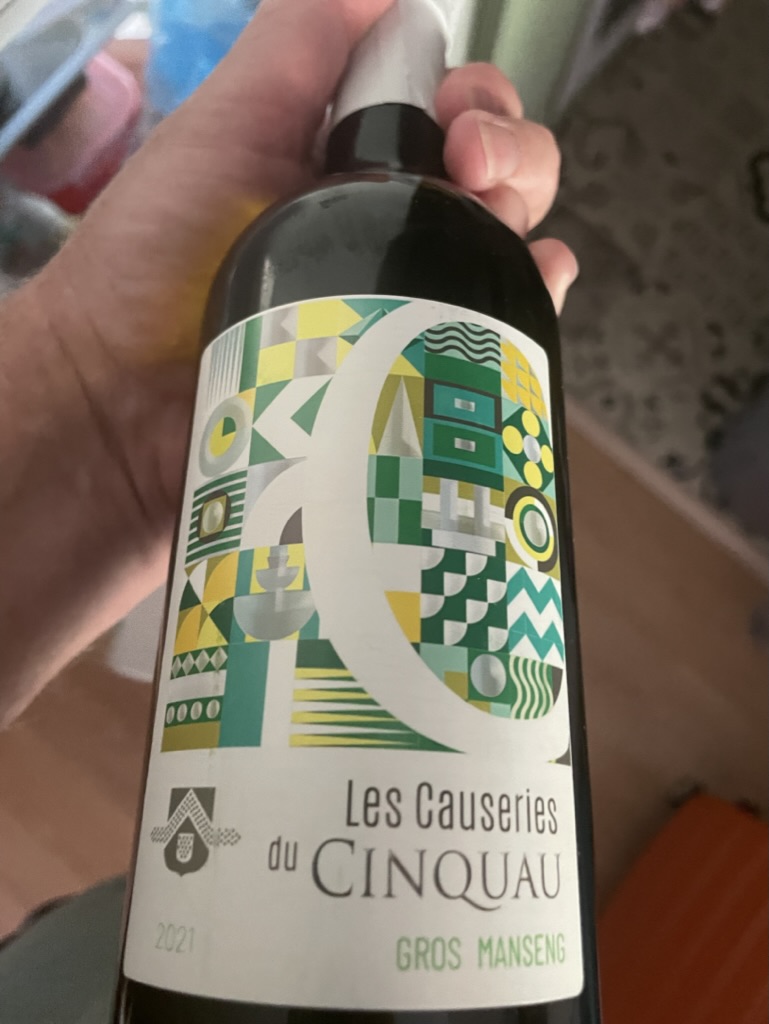
Before we left the parking lot, we saw someone doing a pop-up wine tasting station and, of course, we couldn’t resist saying bon jour. We met Pierre, a charming French vigneron in his 70s, wearing a black beret, and serving up some of his Jurançon whites. The domain is called Cinquau, just west of Pau, and the wines are made from unusual grapes, including Gros Manseng and Petit Courbu, neither of which we’ve heard of before. After tasting a few wines — swish and spit for the driver — we bought a bottle of his white blend and bid him adieu. (We forgot to take his picture, dammit!)
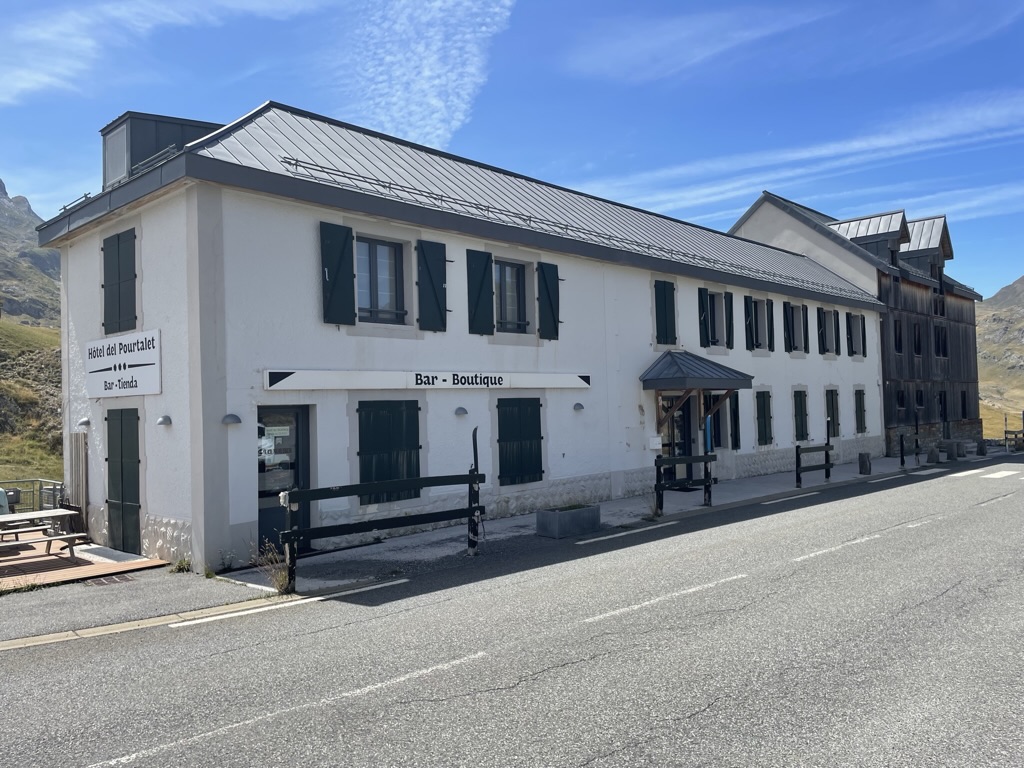
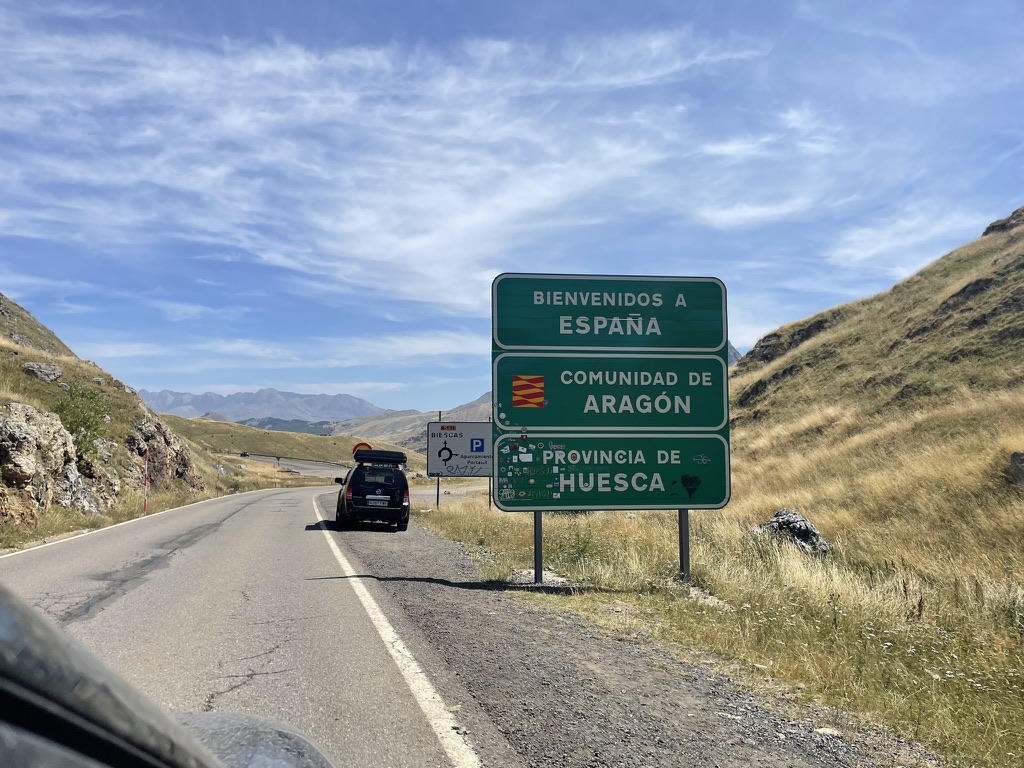
On the drive back, we made numerous stops at the viewpoints we had sped past earlier in the day, each one more amazing than the next. These mountains are ski runs during the winter and a hiker’s paradise in the off-season. It’s all a national park which forbids dogs even on leash so, unfortunately, we can’t bring Coco for a walk so we want to come back and explore without her. There are grazing sheep and cows on the open land and she gets freaked out by that. Speaking of those milk-producing beasts, we stopped at a roadside stand and bought some aged sheep’s cheese from the farmers. It’s amazing to us that sheepherding and cheesemaking has existed in these Pyrenees for millenia and continues today. As always, to be able to buy the agricultural products from the farmer-artisans is a treat. We reentered Spain over the Col du Pourtalet and the road took us past several beautiful lakes before things dried up as we approached the Huesca valley.


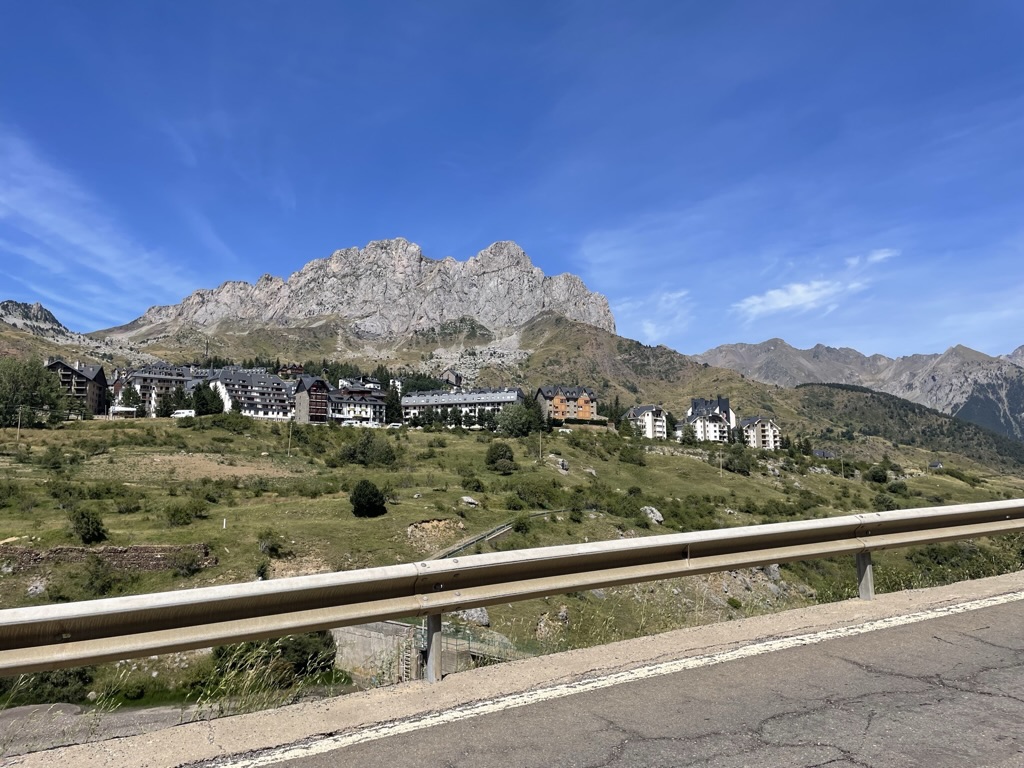
Back at the condo, we spend every morning hiking and most afternoons in the swimming pool attached to our charming complex. It’s not terribly hot here in August, thanks to the elevation — highest temp so far was 90F — but it’s a treat to have the pool, the only one we’ve had access to so far. For dinner, we cook something up using local ingredients and try to make enough for lunch leftovers the next day.
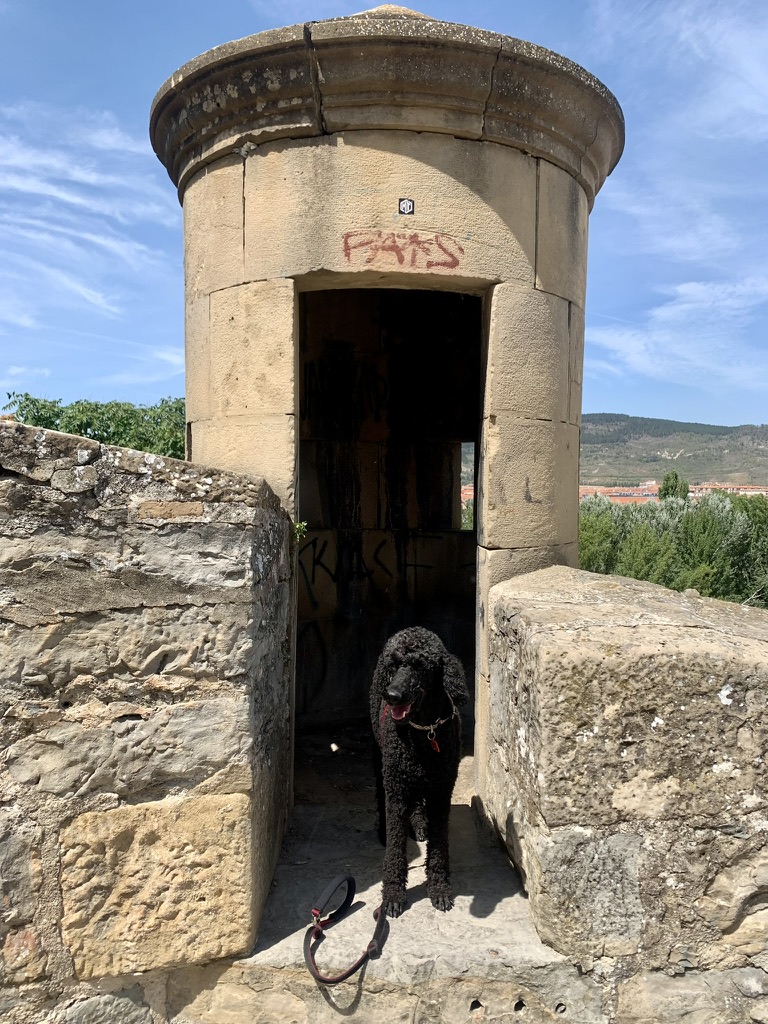
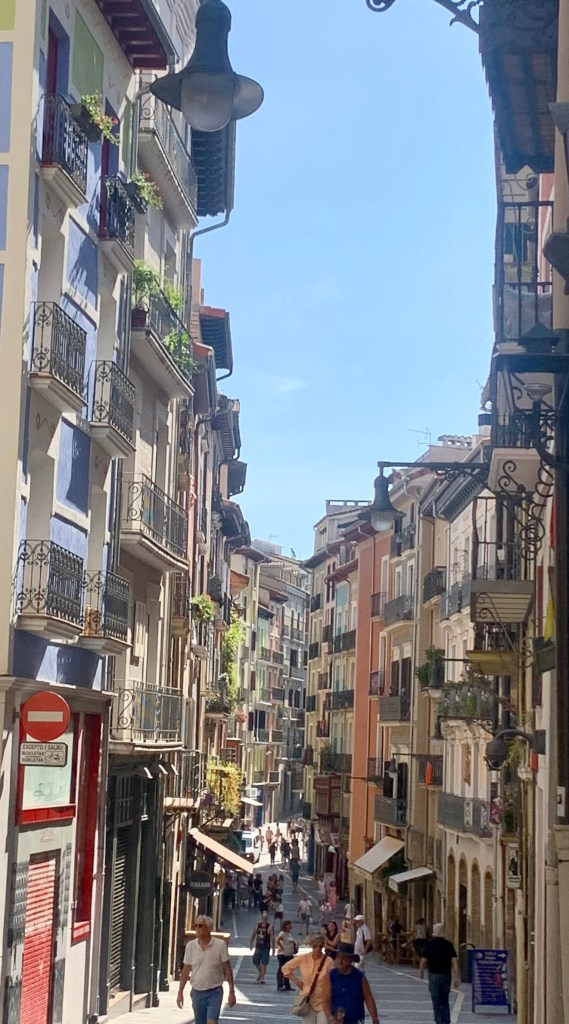
Last Saturday, we hit the road to visit the renowned city of Pamplona, famous for the running of the bulls ceremony during the Festival of San Fermin. Luckily, we missed that spectacle by about a month and were able to enjoy the city with relatively few tourists. It’s a major milestone for pilgrims on the Camino de Santiago, however, and there were a few of them around, their faces red from the sun — the 120 km path from Jaca to the city is almost completely exposed — and straining under the weight of their backpacks. But this is a lively city and there are plenty of things for them to see, do, eat, and drink. We stopped for a quick tapas of tortilla Española before exploring and the delicious serving, big enough for two, set us back two euros fifty.


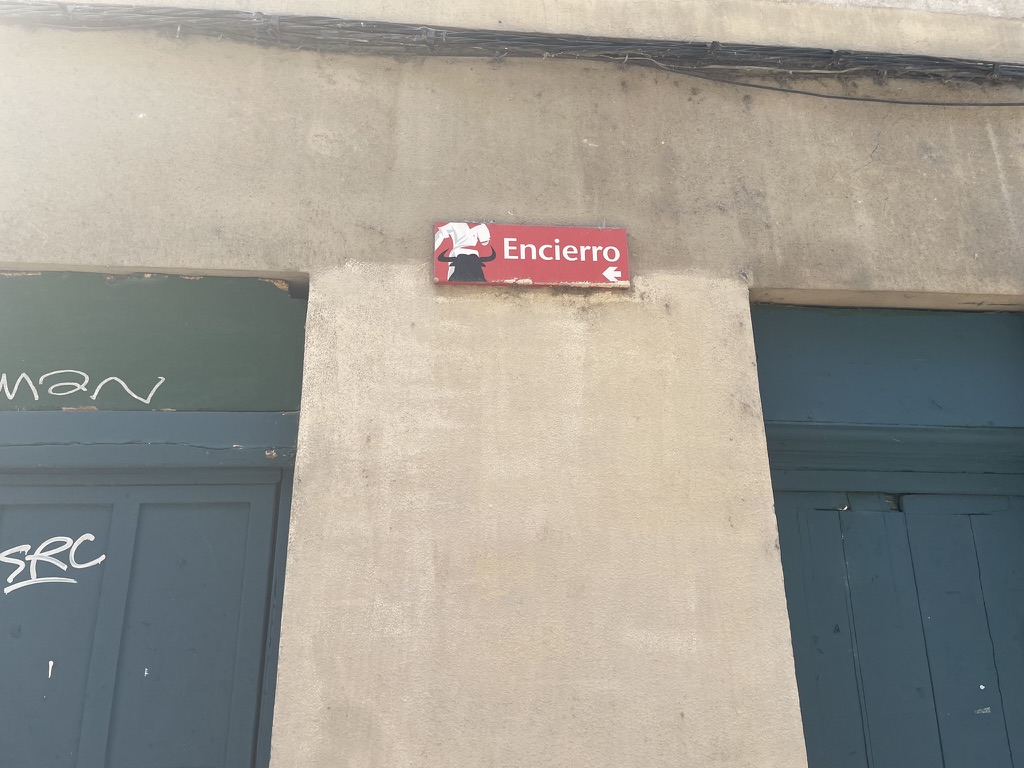
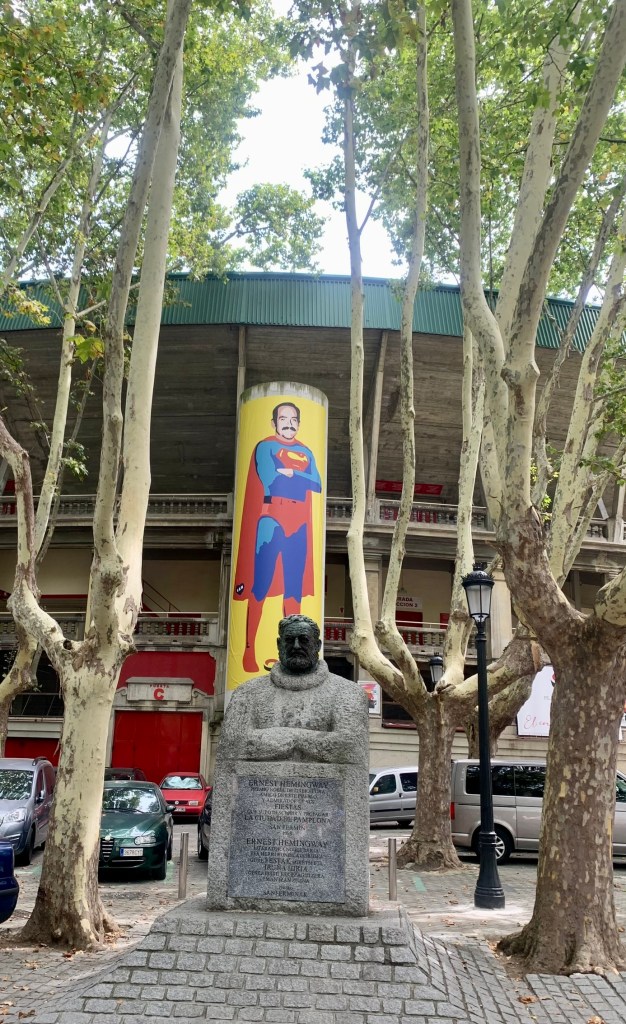
According to Michener’s Iberia, our unofficial guide to the area, Pamplona was a bit of a forgotten backwater before Ernest Hemingway fell in love with the city and immortalized it and the bull-running ceremony in his 1926 novel The Sun Also Rises. He helped turn the town into a major tourist attraction — at least for one fortnight a year — a kind of Mardi Gras, but with bullshit instead of beads. We followed the path of the run and you can see the square holes in the street where the wood and steel guardrails get planted every July, and the bullpen where the whole thing begins. There’s a tremendous amount of history here — archeologists have found lithic tools dating back 75,000 years — and it’s been occupied by the Romans, the Visigoths, the Muslims before the kingdom of Navarre was founded here in the early ninth-century. Of course, that bastard Napoleon Bonaparte had his way with the city for a few years, and it was one of the first cities to fall to Franco’s fascists in the Spanish Civil War. We won’t mention City Slickers.


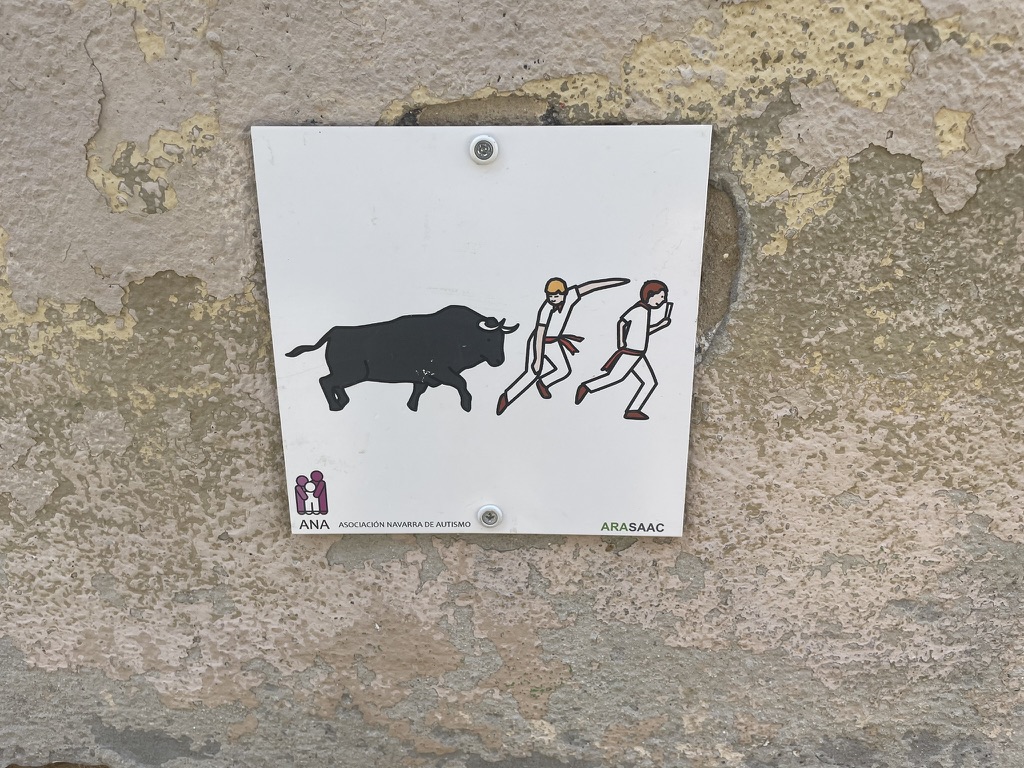
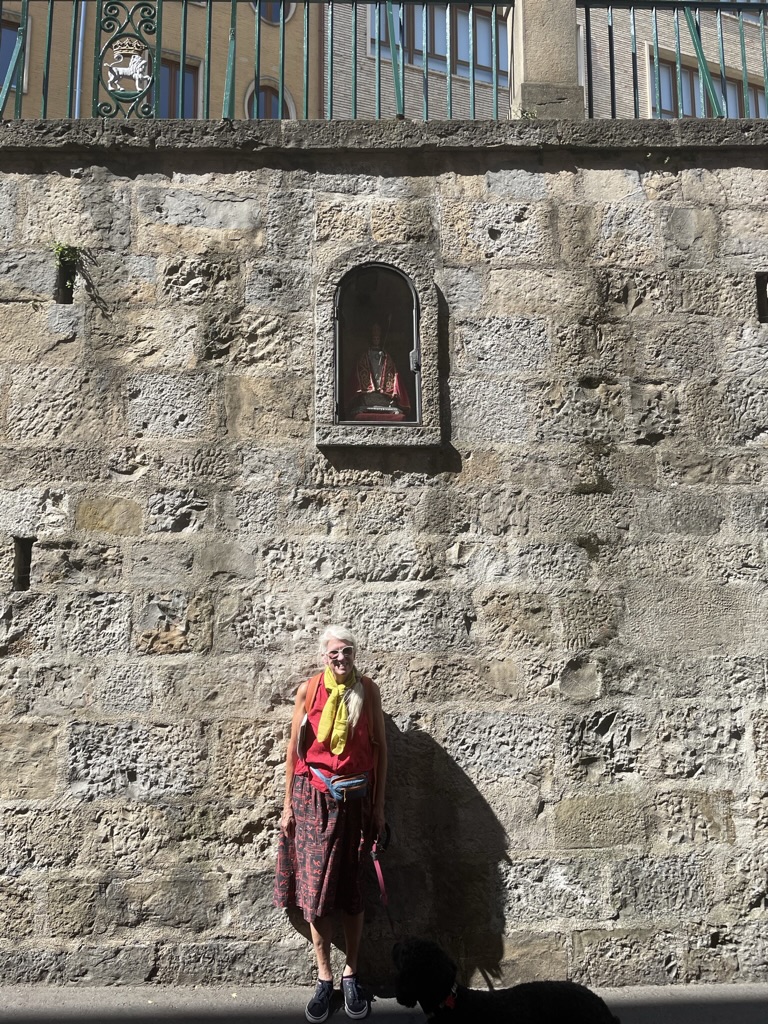
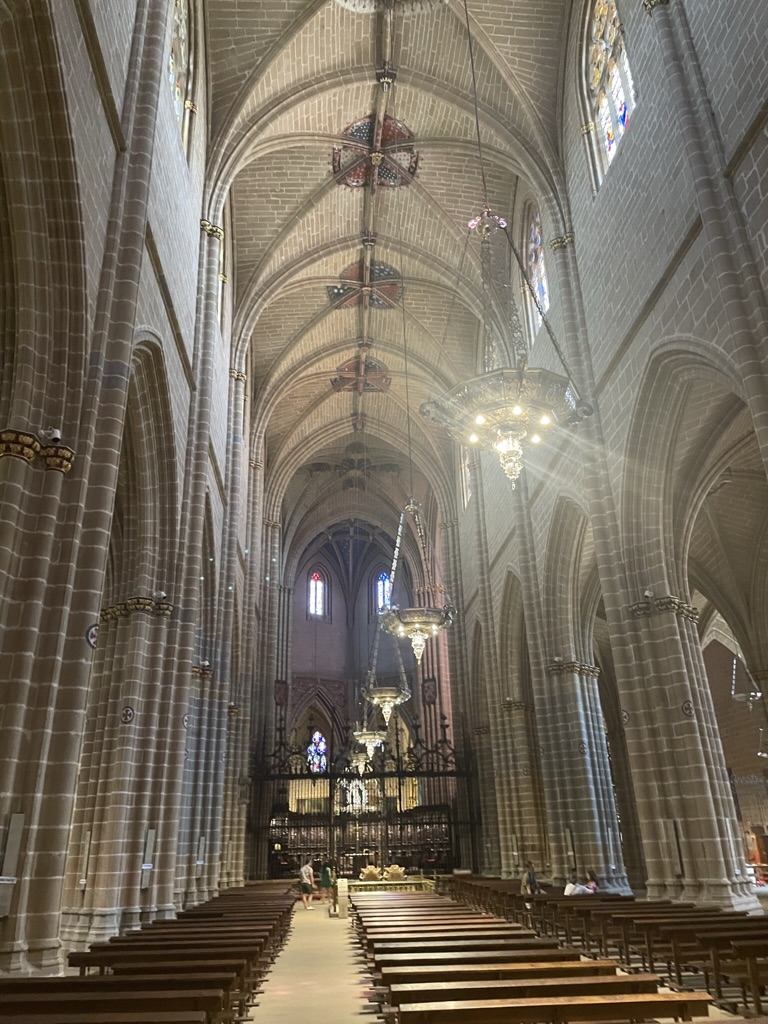
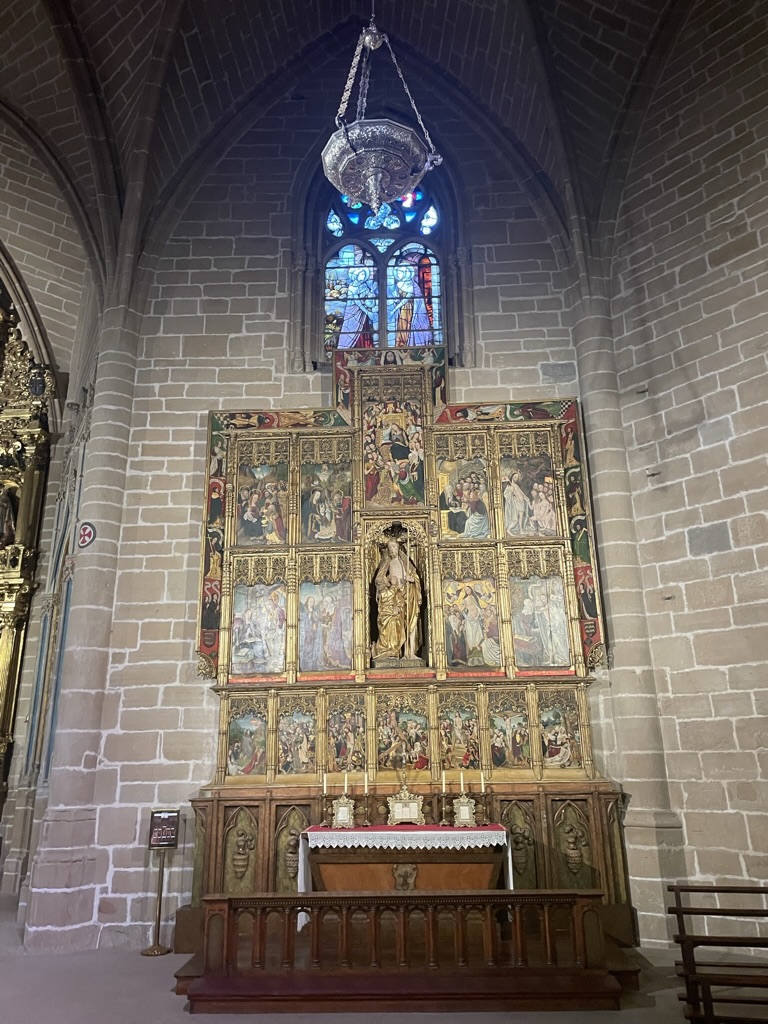
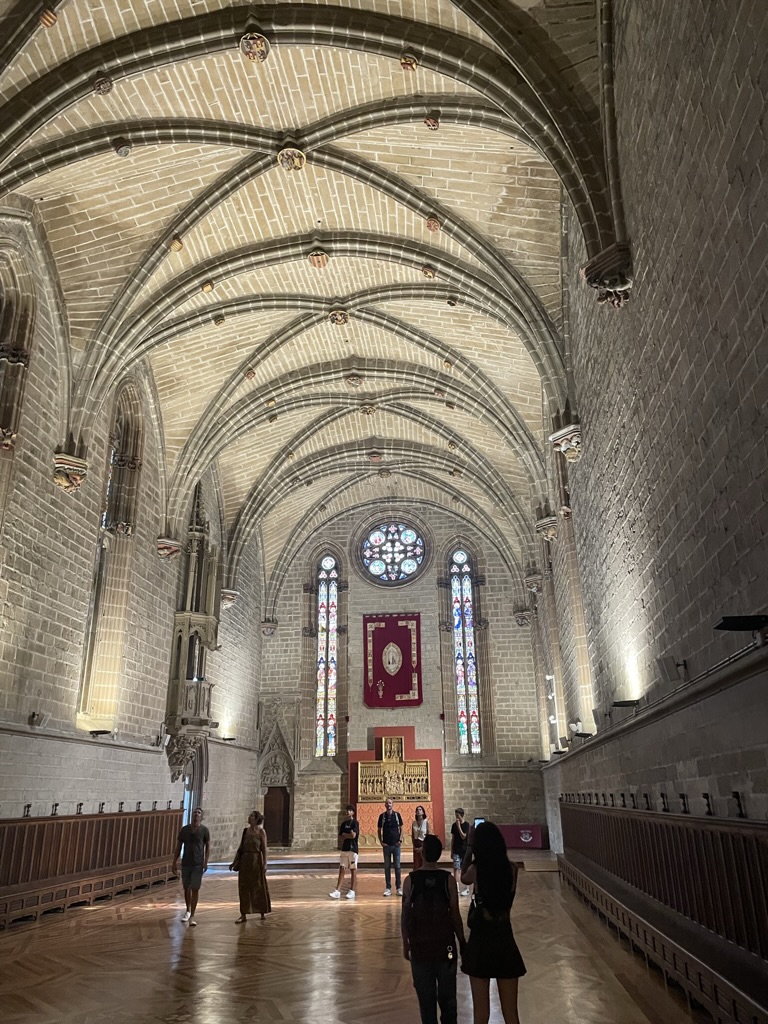
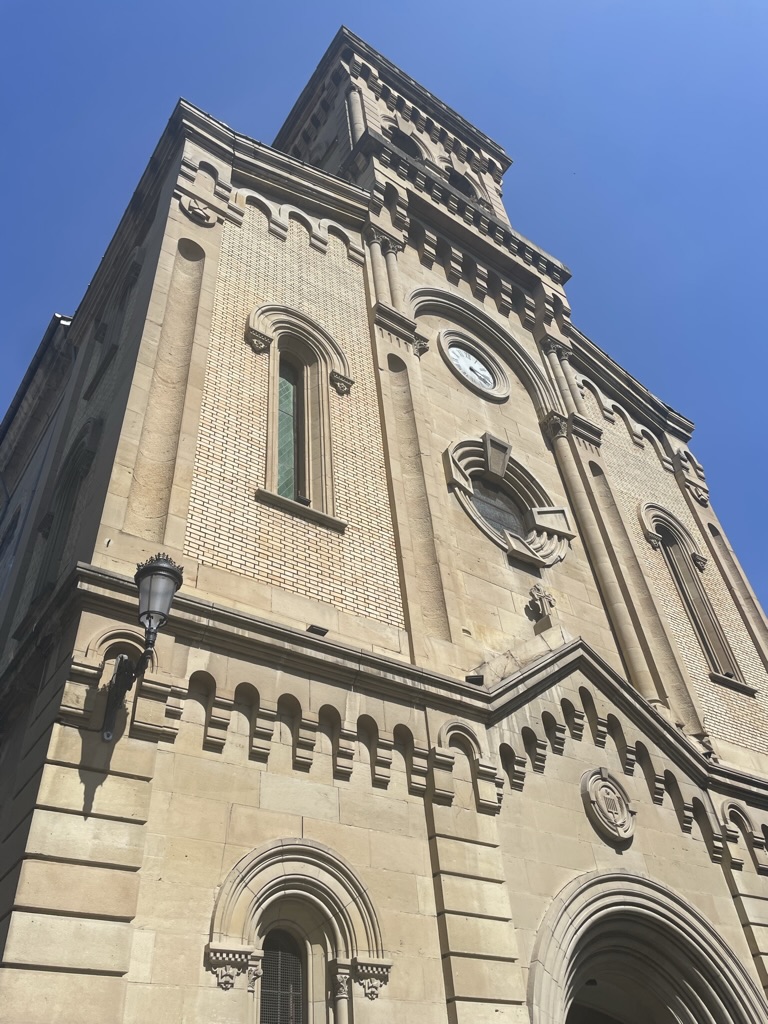
We passed on an pricey guided tour of the city’s bullring and instead walked along the old city wall to the Cathedral of Pamplona, an ornate and stately church finished in 1501. I have to admit, the place impressed even this non-believer with its beauty. Inside, there’s a great atmosphere with calming music and aromatic incense, and it doesn’t hurt that it is 15 degrees cooler than the blazing streets of Pamplona. I usually get bored in churches but I could have spent the afternoon there.


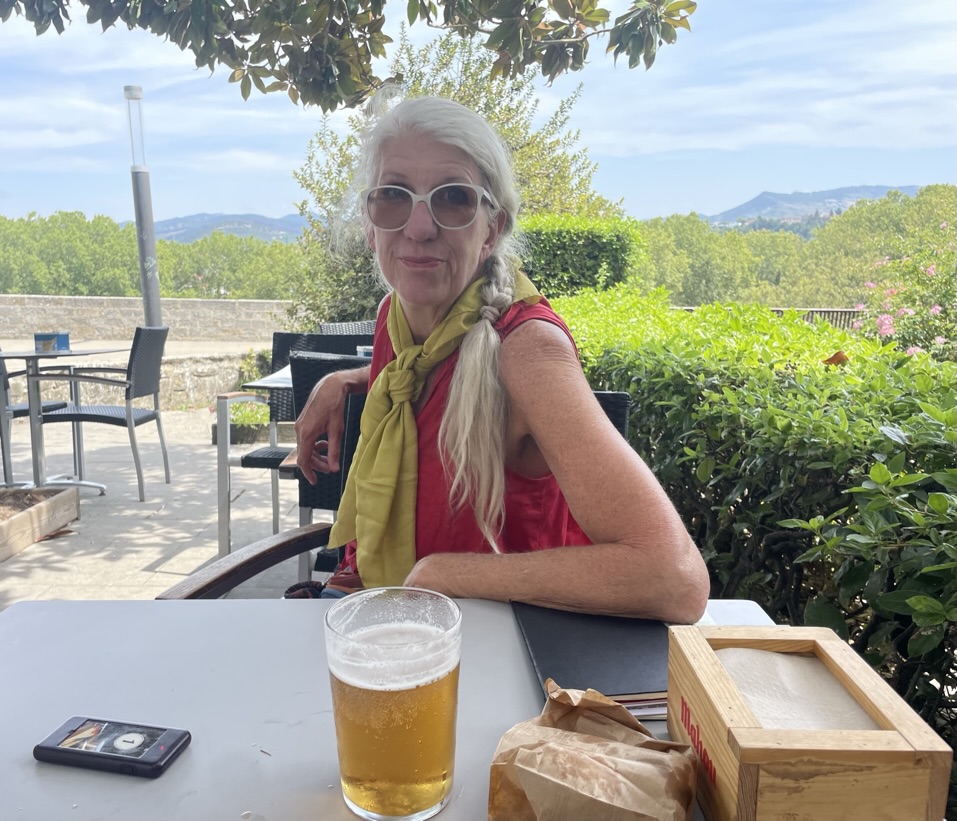
After church, we found an al fresco pintxos joint on the walls of the old fortress and over-ordered — note to self: each plate comes with two items — some local specialties. The four plates and two drinks for each of us came to just over twenty euros, and we still had enough food to make a full dinner that night. We purposely skipped the street in the old town that was lined with Pintxos restaurants and stuffed with locals and tourists devouring the small plates but, if we went back, we would definitely go there for lunch and for the experience. After lunch, we walked along the fortress walls overlooking the residential part of the city — mostly ugly, modern apartment buildings, unfortunately — ending up at Jardines de la Taconera, a tree-lined city park, and all three of us took a little siesta on (or under, in Coco’s case) a park bench.

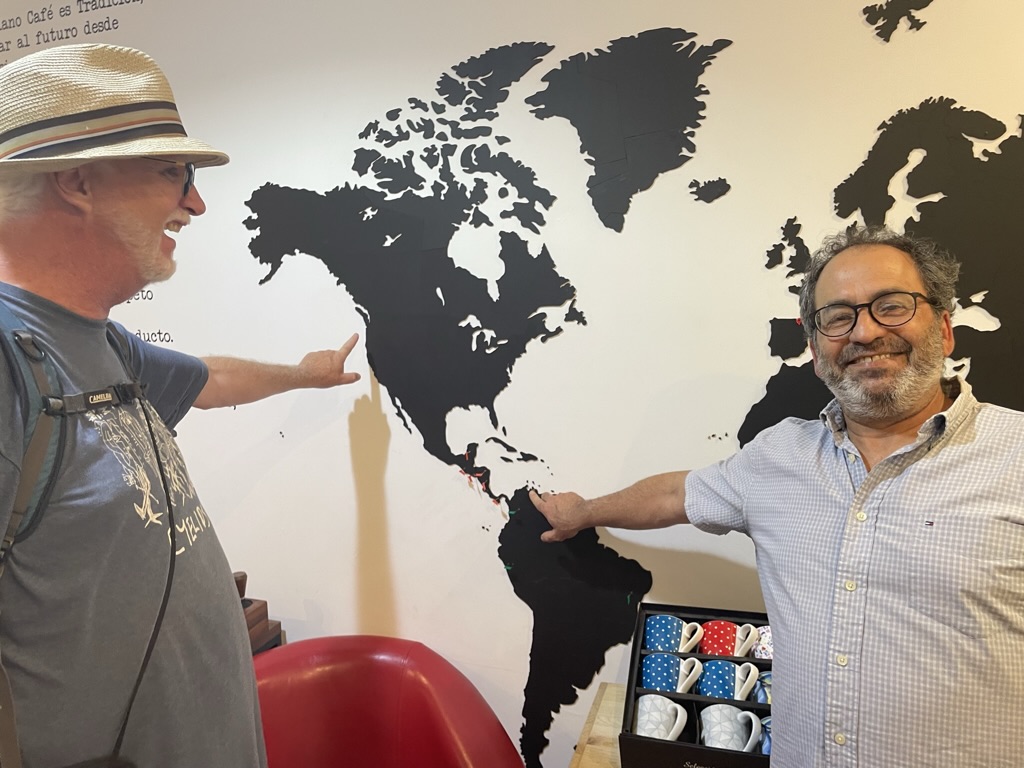
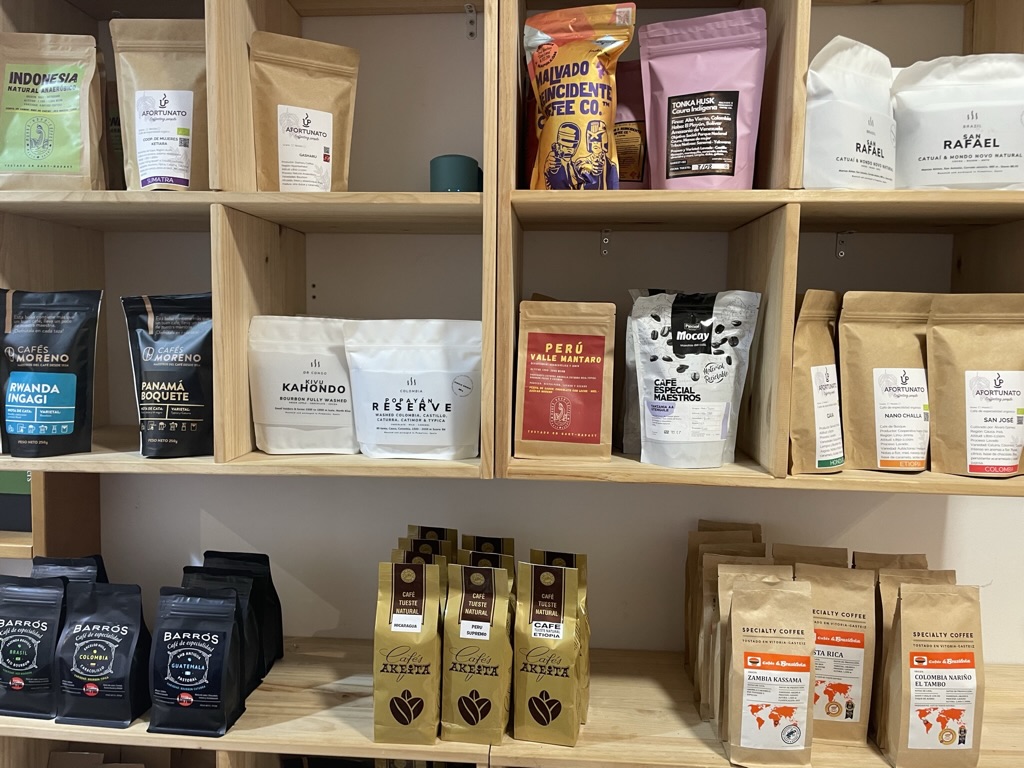
On the way back to the car, we passed by the storefront of a coffee roastery and, always on the lookout for excellent java, I ducked in while Denise went across the street to check out a crafts shop. My timing was excellent as the gregarious owner was making a pot of coffee for some other customers who were in the process of purchasing a pour-over set up. After we enjoyed our coffees, the other couple left and Roberto, the owner and a Venezuelan by birth, animatedly talked me through his bean selection, showing a knowledge and passion of the product that I appreciated. Good coffee is essential to our mental well-being on this journey and, to that end, Denise and I have accumulated a nice French Press (they call them presse in France, I learned, humbly refusing credit) and a compact but high-quality hand grinder. Although we can’t control the quality of the apartments we stay in, we can at least regulate the coffee experience, and that goes a long way to getting our days started correctly. As we bade farewell to Roberto, he let us know that we’d always have a home at this shop in Pamplona.
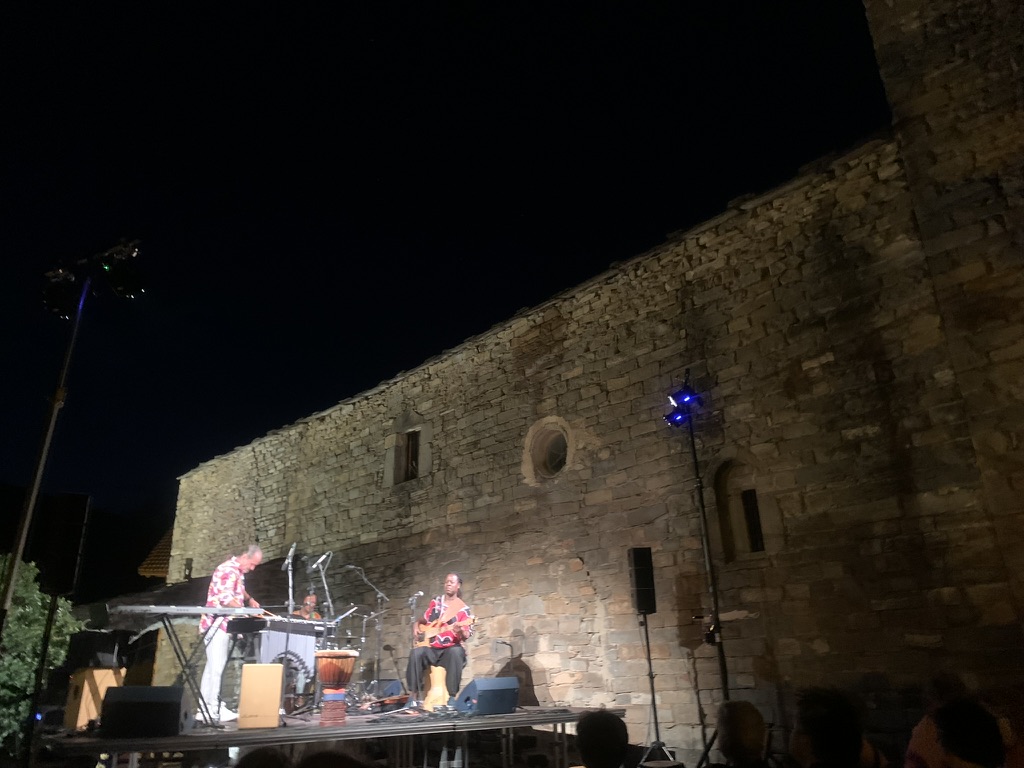
To wrap up our second week in Castiello de Jaca, we took an evening walk to the church at the top of the hill to check out the last night of their three-night jazz festival. Earlier in the day, we came across a young couple on the Camino and were chatting about the weather when I noticed that the guy was playing a tambourine with such skill, I immediately put it together that he was one of the musicians featured that evening. They were a three-piece combo, featuring our new friend Alan from Brazil on percussion, a Spanish vibes player named Angel, and, the star of the show, Childo Tomas, a singer and multi-instrumentalist from Mozambique. Many of the songs would build from Childo’s simple bass guitar figures and grow into entrancing polyrhythmic mini-symphonies, the three musicians making a lovely racket under the stars.
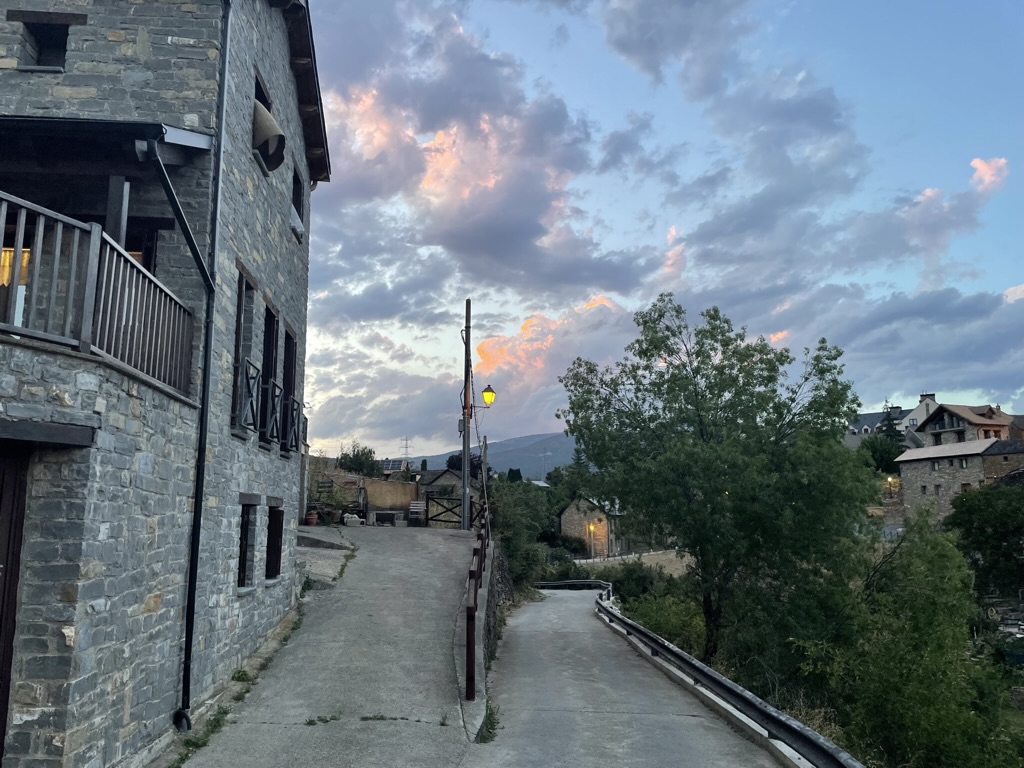

As we walked down the hill after the concert, we did a quick half-time check-in on how things were going for us in Castiello de Jaca: we had to admit that the apartment was not the best and that the weather was warmer than we hoped for. But we agreed that the area was incredibly beautiful in a very different way than the French side of the mountains, and that the townspeople, a few bicyclists excluded, were a lovely bunch of folks.
Since things have slowed down a little with the heat, we’ll probably just do a wrap-up blog in a couple of weeks, before we embark on a week-long, multi-stop trip that will eventually land us in Oporto, Portugal, our home for September and October. Thanks for reading! Come visit!
 Calculating Route...
“… break on through to the other side”!!! Now reading THAT started MY day out right. You kill me😅😆😁😘 Love the photos, your missives, your own selves and your stunningly beautiful Coco. Uncle Leo is proud of your reaction to the Pamplona cathedral.🫶🙏😇
LikeLiked by 1 person
hey Ellen- Thanks for reading! I see that you are safe from Hilary, that’s good news!
LikeLike
Cheers!
Sent from the all new AOL app for iOS
LikeLike
Que bueno! Did your town go nuts with the World Cup victory yesterday?
LikeLiked by 1 person
I was laid out with food poisoning so I missed the whole fiesta
LikeLike
On the Lac d’Artouste side trip of death, Steve looks like the guy in Jurassic Park just before he gets eaten . . . “Must go faster! Must go faster!”
LikeLiked by 1 person
Thanks for the tip for our next globe-trotting trip: Don’t forget to pack the theodolite!
LikeLiked by 1 person
That comment was supposed to be posted under the name RT Slattery. Knowing which browser and blog in which one is typing is confusing to old men. c
LikeLiked by 1 person
Another great post, with breathtaking scenery! I was amused at how little time you were able to stay by the lake – unless you wanted to spend all day there. I also applaud your coinage of “lakey”. I think the captions to your pictures may well be the unsung highlight of your posts (I am duly singing them here) and are not to be overlooked. I also smiled at the notion of your being able to regulate your coffee experience if not your accommodation. That is why I carry decaf tea bags on my person, even if I have to pay full price for them to be used in lieu of caffeinated ones. I hope you aren’t thinking of retiring to Spain now…?
LikeLiked by 1 person
The jury is still out but Spain and France are neck and neck!
LikeLike